
DIY Composting: Building an Easy and Effective Compost Bin on a Budget
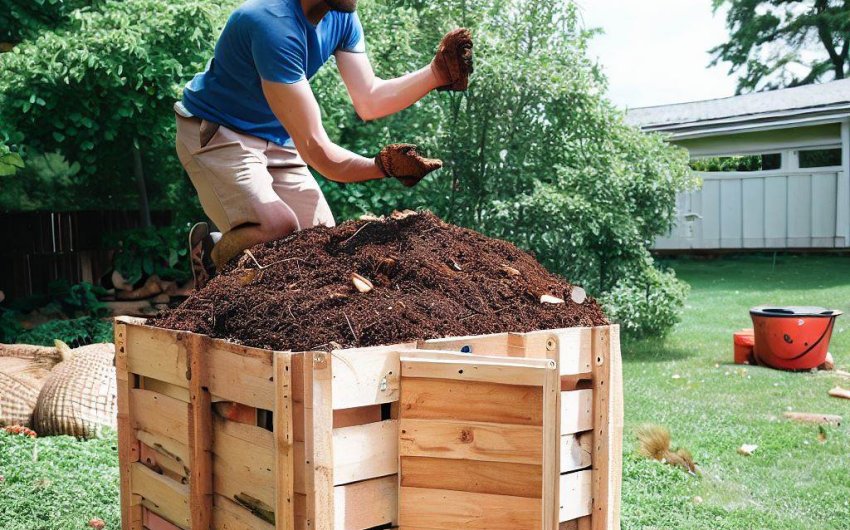
Yes, DIY composting is a fantastic and accessible way to start recycling your organic waste, and building an easy and effective compost bin on a budget is surprisingly straightforward. Many common, inexpensive, or repurposed materials can be transformed into functional composting systems that efficiently produce nutrient-rich soil amendment for your garden.
Why Choose to DIY Your Compost Bin?
Choosing to DIY your compost bin offers several compelling advantages over purchasing a pre-made unit, particularly when you're aiming for an easy and effective compost bin on a budget. It's a hands-on approach that provides flexibility and satisfaction.
What are the Cost Savings of Building Your Own Bin?
The cost savings of building your own compost bin are significant, making DIY composting an incredibly attractive option for budget-conscious gardeners. You can often create a fully functional system for a fraction of the price of commercial bins.
- Free Materials: Many effective DIY compost bins can be constructed from materials you already have, or can source for free. Examples include:
- Wood pallets: Often available for free from local businesses (check first!).
- Chicken wire or hardware cloth: Relatively inexpensive and can be found at hardware stores.
- Repurposed plastic containers: Old trash cans, storage bins, or even large barrels can be converted.
- Fencing scraps, concrete blocks, bricks: Leftover construction materials.
- Reduced Upfront Investment: Commercial compost bins, especially tumblers or large enclosed units, can range from $100 to $500 or more. A DIY bin, even with purchased new materials, often costs less than $50.
- Long-Term Savings: By producing your own compost, you eliminate the need to purchase bagged compost, potting mix, or synthetic fertilizers, leading to continuous savings in your gardening budget year after year.
Building your own bin not only saves money upfront but contributes to a more economically sustainable gardening practice.
How Does DIYing Offer Customization and Flexibility?
DIYing your compost bin offers unparalleled customization and flexibility, allowing you to tailor the system precisely to your specific needs, the amount of waste you produce, and the space you have available. This adaptability is a major advantage over rigid commercial options.
Benefits of customization and flexibility:
- Size: You can build a bin to match your exact waste volume, whether it's a small urban worm bin or a large three-bin system for extensive yard waste.
- Shape: Adapt the shape to fit awkward garden corners, narrow side yards, or blend into existing landscaping.
- Materials: Choose materials that are readily available to you, or that complement your garden's aesthetic (e.g., natural wood for a rustic look).
- Composting Method: Design your bin specifically for hot composting (e.g., three-bin system), cold composting (e.g., simple open pile), or even a specialized system like a worm farm.
- Features: Add custom features like removable front panels for easy harvest, hinged lids, or even built-in aeration channels.
- Expandability: Many DIY designs (like pallet bins) can be easily expanded as your composting needs grow.
- Repurposing: It encourages creative repurposing of materials that might otherwise go to landfill, further enhancing its eco-friendly appeal.
This ability to custom-build ensures you get an easy and effective compost bin on a budget that perfectly fits your unique composting journey.
What are the Environmental Benefits of Using Repurposed Materials?
The environmental benefits of using repurposed materials for your DIY compost bin are significant, extending beyond just waste diversion to include resource conservation and a reduced carbon footprint. It's a truly sustainable approach to composting.
Environmental benefits of repurposing:
- Reduces Landfill Waste: Instead of materials like old pallets, plastic bins, or scrap lumber ending up in landfills, they are given a new, useful life.
- Conserves Resources: Using existing materials means you're not consuming new raw materials (e.g., virgin plastic or freshly cut timber) that would otherwise be used to manufacture a new compost bin. This saves energy and natural resources.
- Lowers Carbon Footprint: The production of new goods (even compost bins) has an associated carbon footprint from manufacturing, transportation, and raw material extraction. Repurposing avoids this.
- Reduces Pollution: Less manufacturing means less industrial pollution.
- Promotes Circular Economy: It's a prime example of a circular economy, where resources are reused and recycled, rather than following a linear "take-make-dispose" model.
- Inspires Others: A visible DIY compost bin made from repurposed materials can inspire neighbors and friends to consider similar eco-friendly projects, creating a ripple effect of sustainability.
By choosing to DIY your compost bin, you're not just creating a tool; you're making an active statement about resourcefulness and environmental responsibility.
What Are the Easiest DIY Compost Bin Designs?
For those looking to build an easy and effective compost bin on a budget, several simple DIY designs stand out for their straightforward construction, affordability, and functionality. These designs require minimal tools and expertise.
How to Build a Simple Wire Mesh Compost Bin?
Building a simple wire mesh compost bin is one of the easiest and most budget-friendly DIY projects for composting, requiring minimal materials and tools. It's highly effective for aerated, cold composting of yard waste.
Materials needed:
- Wire Mesh/Chicken Wire/Hardware Cloth: A roll of galvanized wire mesh (e.g., 2-3 feet wide, 10-12 feet long).
- Heavy-Duty Wire or Zip Ties: For securing the ends.
- Wire Cutters: To cut the mesh.
- Gloves: To protect your hands from sharp wire.
Step-by-step construction:
- Cut the Mesh: Cut a length of wire mesh about 10-12 feet (3-3.6 meters) long (this will create a bin roughly 3-4 feet in diameter).
- Form a Cylinder: Bring the two ends of the wire mesh together to form a cylinder.
- Secure the Ends: Use heavy-duty wire or zip ties to securely fasten the overlapping ends of the mesh, creating a rigid circular bin.
- Place in Location: Set the cylinder directly on the ground in your chosen compost spot.
Pros of a wire mesh bin:
- Inexpensive/Free: Very low material cost.
- Excellent Aeration: The open mesh allows superb airflow.
- Easy Access: Can be easily moved or unfastened to access finished compost.
- Expandable: Can easily make multiple bins or connect them.
Cons:
- Pest Access: Offers no barrier to rodents if food scraps are exposed.
- Less Tidy: Visually more rustic.
- Dries Out Faster: Requires more attention to moisture in dry climates.
This design is ideal for beginners with plenty of yard waste who prioritize ease of build and aeration.
How to Construct a Sturdy Wood Pallet Compost Bin?
Constructing a sturdy wood pallet compost bin is another excellent DIY option that is very budget-friendly (often free) and creates a robust, contained system, particularly suitable for medium to large volumes of yard and kitchen waste.
Materials needed:
- Wood Pallets: 3 or 4 standard wooden shipping pallets (ensure they are HT (heat-treated) and not MB (methyl bromide treated) for safety).
- Heavy-Duty Wire, Zip Ties, or Bolts/Screws: For connecting the pallets.
- Drill (if using bolts/screws):
- Gloves: To prevent splinters.
Step-by-step construction (3-sided bin):
- Select Pallets: Choose three pallets of similar size that are in good condition.
- Position: Stand two pallets upright, forming a corner.
- Connect: Securely fasten them together using heavy-duty wire, zip ties, or bolts/screws.
- Add Third Side: Position the third pallet to form the back wall, connecting it to the side pallets.
- Place in Location: Set the three-sided bin directly on the ground.
- Optional Front: For easier turning and harvest, you can leave the front open or use a fourth pallet attached with hinges or removable pins.
Pros of a pallet bin:
- Potentially Free: Often can source pallets for free.
- Sturdy and Durable: Creates a robust structure.
- Good Aeration: Gaps in the pallets allow airflow.
- Customizable: Can easily be adapted to a two or three-bin system.
- Good Heat Retention: The solid wood helps retain heat better than wire mesh.
Cons:
- Heavier: Pallets can be heavy and require some effort to move.
- Pest Access: Still offers gaps for rodents if not fully secured at the bottom or if food scraps are exposed.
- Splinters: Wear gloves.
A pallet bin is a great solution for those who want a strong, contained system and can source free materials, ideal for an easy and effective compost bin on a budget.
How to Repurpose a Plastic Trash Can for Composting?
Repurposing a plastic trash can for composting is a quick, easy, and very budget-friendly DIY project that creates a contained system for smaller volumes of kitchen and yard waste. It's particularly useful for those in urban settings.
Materials needed:
- Plastic Trash Can: A sturdy plastic trash can (e.g., 20-30 gallon) with a tight-fitting lid.
- Drill with a Large Bit (e.g., 1/2 inch or 1 inch):
- Brick or Pavers (optional): To elevate the bin slightly.
Step-by-step conversion:
- Drill Drainage Holes: Drill numerous holes in the bottom of the trash can for drainage.
- Drill Aeration Holes: Drill numerous holes (spaced about 6-8 inches apart) around the sides of the trash can for aeration.
- Place in Location: Set the converted trash can directly on the ground, or on bricks/pavers to allow more airflow beneath.
- Add Materials: Begin adding your compost materials in layers, ensuring a mix of "greens" and "browns."
Pros of a repurposed trash can:
- Very Inexpensive: Can use an old can or buy a new one affordably.
- Quick to Make: Fast conversion.
- Good Containment: Keeps contents tidy and helps contain odors.
- Decent Pest Deterrent: The lid and solid sides deter many pests.
- Mobile: Can be moved if needed (when not full).
Cons:
- Limited Aeration: May require more frequent manual aeration (poking holes with a stick) compared to open bins or tumblers.
- Difficulty Turning: Hard to turn the contents inside, so more suited for cold composting or a simple "dig-and-drop" method.
- Harvesting: Often requires emptying the bin to access finished compost.
This DIY bin is excellent for beginners who prioritize low cost, containment, and space efficiency, making it an easy and effective compost bin on a budget.
What Tools and Materials Do You Need for DIY Bin Construction?
Even for the simplest DIY compost bin construction, having the right tools and materials on hand makes the process smoother, safer, and more efficient. Most items are basic and readily available.
What Basic Hand Tools are Essential?
For most DIY compost bin constructions, only a few basic hand tools are truly essential. These tools are common household items or easily affordable from a hardware store.
Essential basic hand tools:
- Measuring Tape: For accurately sizing your bin or cutting materials.
- Marker or Pencil: For marking cut lines or drill spots.
- Wire Cutters: Absolutely essential for wire mesh or chicken wire bins. Choose a sturdy pair.
- Utility Knife or Box Cutter: For cutting cardboard or plastic sheeting.
- Work Gloves: Crucial for protecting your hands from splinters (wood pallets) or sharp edges (wire mesh). Look for gardening gloves with good grip.
- Drill (Corded or Cordless): For drilling holes in plastic bins or for pre-drilling holes for screws/bolts in wooden pallets.
- Drill Bits: Assorted sizes, including a large one (e.g., 1/2 to 1 inch) for aeration/drainage holes in plastic bins.
- Hammer: If using nails for wooden bins.
- Screwdriver (Manual or Drill Bits): If using screws for wooden bins.
Having these tools ready before you start will prevent interruptions and make your DIY build much smoother.
What Recycled or Repurposed Materials Can You Use?
One of the greatest benefits of DIY composting is the ability to use recycled or repurposed materials, dramatically reducing costs and environmental impact. Look around your home or local area for these gems.
Excellent recycled/repurposed materials:
- Wood Pallets: As discussed, these are fantastic for building sturdy bins. Always look for "HT" (Heat Treated) stamp, not "MB" (Methyl Bromide).
- Plastic Drums/Barrels: Clean, food-grade plastic drums (e.g., 55-gallon) can be repurposed into larger compost bins, sometimes even tumblers, with proper cutting and hole drilling.
- Old Plastic Trash Cans: Perfect for small, enclosed bins as described above.
- Chicken Wire/Hardware Cloth: If you have leftover fencing material.
- Wooden Boards/Scraps: Leftover lumber from other projects.
- Cinder Blocks/Bricks: Can be stacked to create open compost bins.
- Old Plastic Milk Jugs/Bottles: Can be cut and used as "lids" for small bins or even cut up and mixed into a pile for aeration (ensure clean).
- Shredded Paper/Cardboard: Excellent "brown" material for your compost, but also for lining bins or creating a temporary barrier.
Always ensure any repurposed materials are clean and free of harmful chemicals before using them for composting.
What Inexpensive New Materials Are Worth Buying?
Even if aiming for an easy and effective compost bin on a budget, some inexpensive new materials might be worth buying to ensure durability, functionality, or a neater appearance. These typically have a low cost but high impact.
Worthwhile inexpensive new materials:
- Galvanized Wire Mesh/Chicken Wire: If you don't have repurposed mesh, a roll of galvanized wire mesh is relatively cheap and crucial for wire bins. It's more durable than plastic mesh.
- Heavy-Duty Zip Ties or Wire: For securely fastening bin components, especially for wire or pallet bins.
- Hinges and Latches: For wooden bins, these can make lids or access doors much more functional.
- Plastic Sheeting or Tarp: A cheap heavy-duty tarp can be used as a temporary lid for open piles (to retain moisture/heat or prevent waterlogging) or to line the bottom of a bin if drainage is an issue.
- Small Buckets or Containers: For a kitchen compost pail, a purpose-built kitchen compost pail with a lid is worth the small investment for odor control.
- Compost Thermometer: While not for the bin itself, a compost thermometer (around $20-30) is a highly valuable tool for monitoring heat and is a wise budget investment for serious composters.
- Gloves: A good pair of gardening gloves for handling materials.
These minimal purchases can significantly improve the functionality and longevity of your DIY compost bin without breaking the bank.
How Do You Ensure Your DIY Bin is Effective for Composting?
Building an easy and effective compost bin on a budget is just the start; you also need to ensure its design promotes the actual composting process. Effectiveness hinges on enabling proper aeration, moisture, and pest control.
How to Ensure Proper Aeration in Your DIY Bin?
To ensure proper aeration in your DIY bin, which is critical for healthy, fast decomposition, you need to design for good airflow, especially if you're not planning frequent manual turning. Aerobic microbes thrive with oxygen.
Methods for ensuring proper aeration:
- Bin Type:
- Open Bins (Wire/Pallet): Naturally provide excellent airflow due to their gaps and open structure.
- Plastic Bins: Require you to drill numerous large (e.g., 1-inch) holes around the sides and bottom.
- Tumblers: Designed for easy aeration through rotation.
- Bottom Airflow:
- Place your bin directly on soil/ground, ideally on a base of coarse material (small branches, gravel, old pallets) to allow air to be drawn up from beneath.
- Elevate plastic bins slightly on bricks or pavers if they have a solid bottom with drainage holes.
- Bulky "Browns": Incorporate plenty of bulky, carbon-rich materials like shredded leaves, straw, and small, shredded twigs. These create air pockets within the pile, preventing compaction.
- Layering: Alternate layers of "greens" (which can be dense) with "browns" to maintain an open structure.
- Turning (Manual or Tumbling): Even with good passive aeration, regular turning is the most effective way to introduce oxygen and mix materials. For static bins, use a compost aerator tool to poke holes and lift material.
Proper aeration prevents foul odors and ensures your DIY compost bin is truly effective.
How to Design for Optimal Moisture Management?
To design for optimal moisture management in your DIY compost bin, you need to consider both drainage (to prevent waterlogging) and moisture retention (to prevent drying out). A balanced approach keeps your compost at the ideal "wrung-out sponge" consistency.
Design features for moisture management:
- Drainage:
- Open Bottom: Most DIY bins (wire, pallet) should be open at the bottom, placed directly on well-drained soil, to allow excess water to escape into the ground.
- Drainage Holes: If repurposing a plastic container, drill ample drainage holes in the bottom.
- Coarse Base: Starting with a layer of coarse material (twigs, gravel) at the bottom also aids drainage.
- Moisture Retention:
- Lid/Cover: A lid or cover (e.g., a simple tarp, a piece of wood) for your bin is important, especially in dry climates or during dry spells. It helps retain moisture and prevents the pile from drying out too quickly.
- Enclosed Bins: Plastic bins and tumblers naturally retain more moisture than open bins due to their solid walls.
- Shaded Location: Placing your bin in partial shade helps prevent rapid evaporation.
- Material Mix: The right balance of "greens" (often moist) and "browns" (often dry and absorbent) helps regulate the overall moisture content of the pile.
Designing for both drainage and retention helps you maintain the perfect moisture level with minimal manual watering, making your DIY composting system effective.
How to Make Your DIY Bin Pest-Proof or Pest-Resistant?
To make your DIY bin pest-proof or highly pest-resistant is a key concern for beginners, especially if you're composting kitchen scraps. While no system is 100% impenetrable, smart design choices can deter most unwanted visitors.
Methods for pest-proofing or resistance:
- Enclosed Structure:
- Solid Walls: Bins made from solid plastic (repurposed trash cans) or tightly joined wood pallets (filling gaps) offer better physical barriers than wire mesh.
- Secure Lid: Ensure your bin has a tight-fitting, weighted, or latchable lid that cannot be easily dislodged by raccoons or opossums.
- Compost Tumbler: Naturally pest-proof due to its sealed, elevated design.
- Bottom Barrier: For open-bottom bins (wire, pallet), place a layer of 1/4-inch or 1/2-inch hardware cloth underneath the bin and secure it to the sides. This prevents rodents from burrowing up into the pile.
- Elevate the Bin: Raising the bin off the ground (e.g., on bricks or sturdy legs) deters burrowing pests and improves airflow.
- Material Management (Most Important!): Even the best bin is useless if you add problematic materials.
- NEVER Add: Meat, bones, fish, dairy, oily foods, pet waste. These are primary pest attractants.
- Bury All Food Scraps: Always bury kitchen scraps (fruit/vegetable peels) deep within the compost pile (at least 6-8 inches) and cover them with a thick layer of "browns."
- Cleanliness: Keep the area around the bin clean, free of spilled food waste.
By combining good design with strict material management, you can create a highly pest-resistant DIY compost bin that will successfully produce compost for your garden.