
How to Create a Garden Layout for Small Spaces?
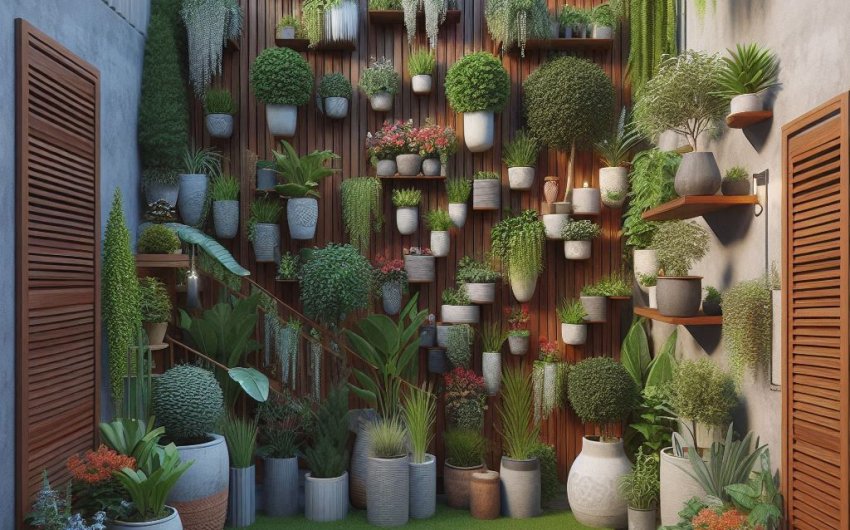
To create a garden layout for small spaces, focus on maximizing vertical growth, utilizing containers, and selecting compact or multi-functional plant varieties. Strategic design principles like zoning and thoughtful pathways can make even the tiniest area feel expansive and productive.
What Are the Key Principles for Small Space Garden Design?
Designing a garden layout for small spaces is about smart planning and maximizing every inch. It's not just about fitting things in, but about creating an efficient and beautiful environment.
Verticality: Grow Up, Not Out
The most effective strategy for small garden layouts is to embrace vertical gardening. When horizontal space is limited, the only way to expand is upwards.
- Wall-Mounted Planters: Utilize vertical wall space on fences, shed walls, or house exteriors for herbs, small edibles, or flowers.
- Tiered Planters: Stacked planters allow you to grow multiple plants in a compact footprint.
- Trellises and Arbors: Grow vining plants like cucumbers, pole beans, peas, or small gourds upwards on supports.
- Hanging Baskets: Utilize overhead space for cascading plants, strawberries, or cherry tomatoes.
- Vertical Garden Towers: Self-contained systems that allow multiple plants to grow upwards in a central column. A Vertical Garden Tower can be a game-changer.
Container Gardening: Flexible and Adaptable
Containers offer immense flexibility and control, making them ideal for small space gardening.
- Portability: Move plants to optimize sunlight, protect from harsh weather, or rearrange for a fresh look.
- Soil Control: Use specific soil mixes tailored to each plant's needs.
- Pest Control: Easier to isolate and treat individual plant issues.
- Variety: Use different sized and shaped containers to add visual interest.
- Drainage: Ensure all containers have drainage holes to prevent root rot.
Compact and Dwarf Varieties: Choose Wisely
Select plants that naturally stay small or have an upright growth habit.
- Bush Beans instead of Pole Beans (unless trellising): Bush varieties are more compact.
- Dwarf Fruit Trees: Many fruit trees are available in dwarf or columnar forms, suitable for pots or tight spots.
- Compact Tomatoes: "Determinate" or "bush" varieties are better for containers than sprawling "indeterminate" types.
- Mini Vegetables: Radishes, carrots, and lettuces can be grown in shallower containers.
Multi-Functional Elements: Double Duty
Every item in a small garden should ideally serve more than one purpose.
- Bench with Storage: A seating area that also holds tools or small pots.
- Raised Bed with Integrated Seating: A raised bed that has a wide enough edge to sit on.
- Water Feature/Bird Bath: Provides aesthetic appeal and attracts wildlife while being a focal point.
How Do You Plan the Layout of a Small Garden?
Effective planning is crucial for maximizing the potential of a small garden layout. It’s about more than just fitting plants; it's about creating flow and purpose.
Assess Your Space: The Foundation
Before you draw anything, understand your existing environment.
- Measure: Accurately measure the dimensions of your entire garden area (balcony, patio, yard).
- Sunlight Mapping: Track how many hours of direct sunlight different areas receive throughout the day. This is critical for plant placement.
- Existing Features: Note permanent features like walls, fences, doors, windows, and spigots.
- Drainage: Identify any areas prone to pooling water.
- Utilities: Mark any underground pipes or electrical lines.
- Wind Patterns: Understand where the strongest winds come from.
Define Your Purpose: What Do You Want?
Be realistic about what your small space can provide.
- Edible Garden: Do you want to grow vegetables, herbs, or fruit? Prioritize your favorite, most used crops.
- Ornamental Garden: Focus on flowers, shrubs, or decorative elements for beauty and relaxation.
- Mixed Use: A blend of edibles and ornamentals.
- Outdoor Living Space: Is the primary goal to create an inviting area for relaxing, dining, or entertaining? The garden becomes an extension of your home.
- Privacy: Do you need screening from neighbors or unsightly views?
Create Zones: Divide and Conquer
Even in small spaces, defining distinct zones can improve functionality and perceived size.
- Active Zone: High-traffic areas, seating, dining space, or main pathways. Keep these clear.
- Growing Zone: Where your main plants are located.
- Utility Zone: Storage for tools, compost bin (if space allows), or recycling. Keep this discreet.
- Relaxation Zone: A quiet corner with a comfortable chair, perhaps a small water feature or fragrant plants.
Draw a Plan: Visualize Your Layout
- Scale Drawing: Sketch your garden space on graph paper. Use a consistent scale (e.g., 1 square = 1 foot or 30 cm).
- Rough Draft: Start with rough sketches, brainstorming different ideas. Don't worry about perfection at this stage.
- Circles for Movement: Draw circles to represent areas of movement and activity.
- Bubble Diagramming: Use bubbles to represent different "rooms" or zones in your garden (e.g., "eating area," "herb garden," "reading nook").
- Refine and Detail: Once you have a basic layout, add details like plant types, container sizes, and furniture.
- Consider a Professional Tool: For more detailed plans, consider using online garden design software. A Garden Planner Software Subscription can help visualize.
How Can Containers Maximize Small Garden Space?
Container gardening is a cornerstone of a successful small space garden layout, offering unmatched flexibility and control.
Choosing the Right Containers
- Drainage Holes: Every container must have drainage holes. Without them, roots will rot.
- Size: Match the container size to the plant's mature root system. A general guide:
- Herbs/Lettuce: 6-8 inch (15-20 cm) pots
- Bush Beans/Peppers: 10-12 inch (25-30 cm) pots
- Determinate Tomatoes/Small Eggplant: 15-20 inch (38-50 cm) pots or 5-gallon buckets
- Dwarf Fruit Trees: Large containers, 20-gallon (75 liter) or larger.
- Material:
- Terracotta: Classic, porous, breathes well, but dries out quickly.
- Plastic: Lightweight, retains moisture well, wide range of colors/styles, but can overheat in direct sun.
- Fabric Grow Bags: Excellent for aeration and drainage, ideal for potatoes, root vegetables, or larger plants. A Fabric Grow Bag 10 Gallon is very versatile.
- Ceramic/Glazed: Decorative, retains moisture, heavier.
Strategic Placement of Containers
- Vertical Stacking: Use tiered planters or stackable garden planters to grow multiple plants vertically.
- Rail Planters: Attach planters to railings on balconies or decks, freeing up floor space.
- Hanging Baskets: Utilize overhead space for cascading flowers or trailing edibles like strawberries.
- Movable Caddies: Place heavy pots on plant caddies with wheels so they can be easily moved to optimize sun exposure or for rearranging. A Plant Caddy with Wheels is a back-saver.
- Varying Heights: Use containers of different heights to add visual interest and layers to your garden.
Soil and Watering for Containers
- Potting Mix: Always use a high-quality, well-draining potting mix formulated for containers. Never use garden soil, which will compact and hinder drainage.
- Moisture Retention: Containers dry out faster. Consider adding coco coir or vermiculite to your potting mix to improve moisture retention.
- Consistent Watering: Container plants need more frequent watering, sometimes daily in hot, sunny weather. Check soil moisture regularly.
Table: Container Options for Small Spaces
| Container Type | Best Use | Pros | Cons |
|---|---|---|---|
| Fabric Grow Bags | Root crops, larger vegetables (tomatoes, peppers) | Excellent aeration & drainage, lightweight, reusable | Less decorative, can dry out quickly |
| Tiered Planters | Herbs, small edibles, flowers | Maximizes vertical space, creates focal point | Can be heavy when filled, uniform planting |
| Rail Planters | Herbs, trailing flowers, small edibles | Utilizes unused railing space, saves floor space | Limited size, often exposed to elements |
| Hanging Baskets | Flowers, strawberries, cherry tomatoes, herbs | Utilizes overhead space, adds visual appeal | Dries out very quickly, need strong support |
| Large Plastic/Ceramic Pots | Dwarf fruit trees, large shrubs, single large vegetable | Durable, wide variety of styles | Can be heavy, plastic may overheat roots |
How Can Vertical Gardening Maximize Production in Small Spaces?
Vertical gardening is the most impactful technique for expanding your growing area when you're creating a garden layout for small spaces. It allows you to transform walls, fences, and even air space into productive zones.
Types of Vertical Garden Structures
- Trellises: Essential for vining vegetables and fruits.
- Materials: Wood, metal, plastic, or even netting.
- Plants: Pole beans, cucumbers, peas, small melons, indeterminate tomatoes, climbing nasturtiums, sweet potatoes. A Expandable Wooden Trellis can fit various spaces.
- Arbors and Pergolas: Provide support for larger vining plants and create inviting overhead shade.
- Plants: Grapes, wisteria, hardy kiwi.
- Wall-Mounted Planters/Pockets: Systems that attach directly to vertical surfaces.
- Materials: Fabric pockets, plastic modules, reclaimed pallet planters.
- Plants: Herbs, lettuce, strawberries, leafy greens, small annual flowers. A Wall-Mounted Fabric Planter makes efficient use of space.
- Vertical Garden Towers: Freestanding or rotatable towers with multiple planting pockets.
- Plants: Strawberries, herbs, lettuce, small leafy greens, some flowering annuals.
- Benefits: Highly efficient, can be moved, often have built-in watering systems.
- Stackable Planters: Modular pots that stack on top of each other.
- Plants: Herbs, strawberries, small flowers.
- Benefits: Saves floor space, easy to assemble.
Designing Your Vertical Garden
- Assess the Wall/Surface: Check the weight-bearing capacity of fences, walls, or railings. Ensure good sunlight exposure for the plants you choose.
- Match Plants to Structure:
- Heavy fruiting vines (like gourds) need very sturdy trellises.
- Shallow-rooted plants (lettuce, herbs) work well in wall pockets.
- Consider Watering: Vertical gardens can dry out quickly. Plan for efficient watering, whether it's manual daily watering, a drip irrigation system, or self-watering towers.
- Accessibility: Ensure you can easily reach all plants for watering, harvesting, and pest checks.
How Do You Select Plants for a Small Garden Layout?
Careful plant selection is crucial for successful small space garden design. Focus on varieties that are compact, productive, and well-suited to container life.
Choose Compact Varieties
- "Dwarf," "Bush," "Patio," "Compact," "Container" varieties: Look for these labels when purchasing seeds or plants.
- Vegetables:
- Tomatoes: "Determinate" or "bush" varieties (e.g., 'Patio,' 'Tiny Tim,' 'Celebrity').
- Cucumbers: 'Bush Pickle,' 'Spacemaster,' or vining types that can be trellised vertically.
- Squash/Zucchini: 'Bush Baby,' 'Patio Star,' or 'eight ball' types.
- Peppers: All peppers are generally good for containers, but dwarf varieties like 'Lunchbox' are even better.
- Eggplant: 'Patio Baby,' 'Hansel,' or 'Gretel.'
- Beans: 'Bush Blue Lake,' 'Provider.'
- Fruits:
- Dwarf Citrus: 'Meyer Lemon,' 'Lime,' 'Kumquat.'
- Columnar Fruit Trees: Apples and Pears that grow tall and narrow.
- Bush Berries: Dwarf blueberries, compact raspberries.
- Strawberries: Especially ever-bearing or day-neutral varieties in hanging baskets or vertical planters.
- Herbs: Most herbs (basil, mint, rosemary, thyme, chives) thrive in containers. Consider growing mint in its own pot as it spreads aggressively.
Consider Multi-Season or Continuous Harvest Plants
Maximize output by choosing plants that produce over a long season or can be succession planted.
- Cut-and-Come-Again Greens: Lettuce, spinach, kale, arugula can be harvested repeatedly by taking outer leaves.
- Bush Beans: Produce for a few weeks, then can be replanted for a second crop.
- Ever-bearing Strawberries: Produce berries throughout the summer.
- Herbs: Most herbs offer continuous harvesting.
Optimize Sunlight Needs
Match your chosen plants to the amount of sunlight each zone of your garden receives.
- Full Sun (6-8+ hours): Tomatoes, peppers, most vegetables, fruit trees.
- Partial Sun (4-6 hours): Leafy greens, herbs, bush beans, some root vegetables (radishes, carrots).
- Shade (less than 4 hours): Very few edibles thrive in deep shade, but some herbs (mint, parsley) and lettuce can tolerate partial shade.
Table: Excellent Plant Choices for Small Spaces
| Plant Type | Recommended Varieties (Examples) | Growth Habit | Sun Needs (Min.) | Container Size (Min.) |
|---|---|---|---|---|
| Tomatoes | 'Patio,' 'Tiny Tim,' 'Celebrity' | Determinate (bush) | Full Sun (6-8h) | 15-20 Gallon |
| Cucumbers | 'Bush Pickle,' 'Spacemaster' | Bush/Vining (trellis) | Full Sun (6-8h) | 10 Gallon |
| Peppers | Any pepper, 'Lunchbox' varieties | Bush | Full Sun (6-8h) | 5 Gallon |
| Lettuce | Loose leaf, Butterhead | Bush/Cut-and-Come | Partial Sun (4-6h) | 6-8 Inch |
| Strawberries | 'Eversweet,' 'Seascape' (ever-bearing) | Trailing | Full Sun (6-8h) | Hanging, Vertical, 8 Inch |
| Herbs | Basil, Mint (in own pot), Rosemary, Thyme, Chives | Bush/Upright | Partial to Full Sun | 6-8 Inch |
| Dwarf Citrus | 'Meyer Lemon,' 'Kumquat' | Dwarf Tree | Full Sun (6-8h) | 20 Gallon |
How Can Aesthetics and Flow Enhance a Small Garden?
Beyond just packing in plants, thoughtful design elements and attention to visual flow can make a small garden layout feel more expansive and inviting.
Pathways and Hardscaping: Defining Movement
- Clear Paths: Even narrow paths (18-24 inches or 45-60 cm wide) create a sense of movement and keep you from trampling plants.
- Curved Paths: A gently curving path can make a small space feel larger by obscuring the full view, creating a sense of mystery and exploration.
- Materials: Use light-colored pavers, gravel, or stepping stones to brighten the area and reflect light.
- Multi-Purpose Paving: Consider a small paved area that serves as both a patio and a thoroughfare.
Focal Points and Visual Tricks
- One Strong Focal Point: A single, well-chosen focal point (a small statue, a colorful pot, a water feature, or a specimen plant) can draw the eye and create an illusion of depth.
- Mirrors: A weatherproof outdoor mirror can create an illusion of more space and reflect light, effectively doubling the apparent size of the garden.
- Vertical Lines: Tall, narrow structures like obelisks, columnar trees, or vertical trellises draw the eye upwards, adding height and making the space feel taller.
- Strategic Lighting: Well-placed outdoor string lights or solar path lights can extend the usability of the garden into the evening and highlight key features. A Solar Powered Path Lights add ambiance.
Color and Texture: Adding Interest
- Color Palette: Use a cohesive color palette. Cool colors (blues, greens, purples) can make a space feel more expansive and serene. Bright pops of warm colors (reds, yellows, oranges) can draw attention to specific areas.
- Vary Textures: Combine plants with different leaf textures (fine, broad, glossy, fuzzy) and varied forms (spiky, rounded, trailing) to create visual richness and prevent monotony.
- Repetition: Repeating certain plants or colors in different parts of the garden creates a sense of unity and flow, tying the small space together.
Smart Furniture Choices: Comfort and Style
- Scale: Choose furniture that is proportionate to the size of your space. Overly large pieces will overwhelm a small garden.
- Folding Furniture: Folding bistro sets or chairs are ideal, as they can be stored away when not in use. A Folding Bistro Set offers flexibility.
- Built-in Seating: Benches built into raised beds or along a wall save space and can sometimes offer storage.
Layering Plants: Creating Depth
- Height Progression: Place taller plants at the back or against walls, medium-height plants in the middle, and shorter plants or groundcovers at the front. This creates layers and a sense of depth.
- Overlapping Foliage: Allow foliage to subtly overlap, softening edges and making the garden feel fuller and more integrated.
By combining practical space-saving techniques with thoughtful design principles, you can successfully create a garden layout for small spaces that is not only productive but also a beautiful and inviting extension of your living area.