
How to Grow Mushrooms Outdoors Using Logs?
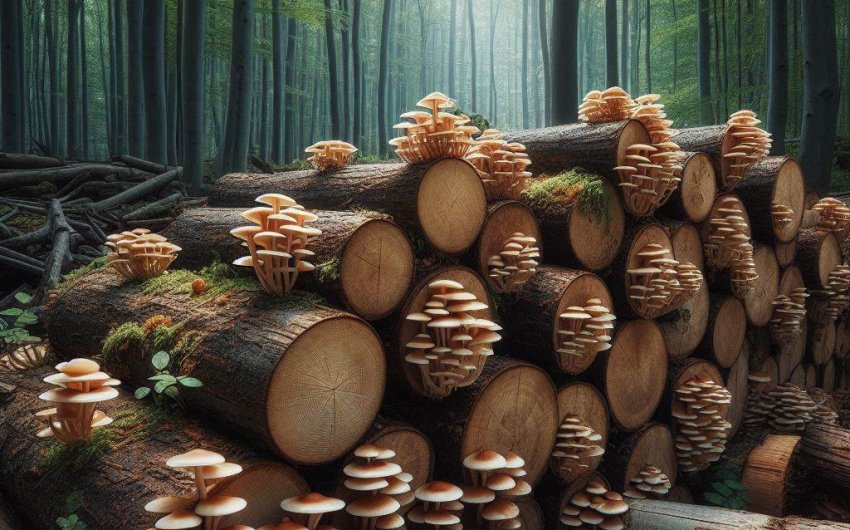
To grow mushrooms outdoors using logs, you'll inoculate freshly cut hardwood logs with mushroom spawn, allow the mycelium to colonize the wood over several months, and then introduce ideal conditions for fruiting. This method produces delicious gourmet mushrooms year after year from a single inoculation.
Why Grow Mushrooms on Logs Outdoors?
Growing mushrooms on logs outdoors is a rewarding and sustainable way to produce a steady supply of gourmet fungi right in your backyard. It mimics how many desirable mushrooms grow in nature, offering several distinct advantages.
Long-Term, Sustainable Harvest
Unlike indoor growing kits that often yield only one or two flushes, inoculated logs can produce mushrooms for several years.
- Perennial Production: Depending on the mushroom species and log size, a single log can produce mushrooms for 3 to 7 years, providing a consistent supply without needing to reinoculate annually.
- Low Maintenance: Once the logs are inoculated and properly "incubated," they require minimal ongoing care compared to garden plants or even indoor mushroom kits.
- Natural Method: It's a natural and organic way to grow, utilizing wood waste and benefiting from natural rainfall and temperature cycles.
Enhances Your Landscape
Mushroom logs can be integrated beautifully into your garden or woodland.
- Aesthetic Appeal: Logs with emerging mushrooms are visually appealing and add an interesting, natural element to your outdoor space.
- Biodiversity: They contribute to the ecological health of your garden by decomposing wood and providing habitat for various organisms.
- Educational: A fantastic project for families to observe the life cycle of fungi firsthand.
Delicious, Fresh Gourmet Mushrooms
Access to fresh, flavorful mushrooms is a major draw.
- Gourmet Varieties: This method is ideal for growing popular gourmet species like Shiitake, Oyster, Lion's Mane, and Maitake, which are often expensive in stores.
- Superior Flavor: Home-grown mushrooms often have a richer, more intense flavor than their store-bought counterparts.
- Food Security: Provides a self-sustaining source of nutrient-rich food.
What Are the Best Mushroom Species for Log Cultivation?
Choosing the right mushroom species for log cultivation is crucial for success, as different fungi have specific preferences for wood type, climate, and fruiting conditions.
Shiitake (Lentinula edodes): The Popular Choice
Shiitake mushrooms are one of the most popular and reliable species for log cultivation. They are prized for their rich, umami flavor and meaty texture.
- Wood Preference: Oak, Sweetgum, Maple, Beech, Ironwood, Birch, Poplar, Cherry (avoid conifers).
- Fruiting Conditions: Prefer cool, humid conditions; typically fruit in spring and fall. Can be "forced" to fruit by shocking (soaking logs in cold water).
- Yield: Good yields, consistent over 3-6 years.
- Beginner Friendly: Very forgiving and a great choice for first-time log growers.
Oyster Mushrooms (Pleurotus species): Fast Growers
Various Oyster mushroom species are fast colonizers and prolific fruiters, making them excellent for log cultivation. Different species (e.g., Pearl Oyster, Blue Oyster, Pink Oyster) have slightly different temperature preferences.
- Wood Preference: Aspen, Poplar, Oak, Elm, Maple, Willow, Birch. Many hardwoods work well.
- Fruiting Conditions: Often fruit in wider temperature ranges than Shiitake. Blue and Pearl Oysters prefer cooler temps; Pink Oysters prefer warmer temps. High humidity is key.
- Yield: Very fast colonization, often fruiting in less than a year. Prolific yields over 2-5 years.
- Beginner Friendly: Excellent for beginners due to their rapid colonization and reliable fruiting.
Lion's Mane (Hericium erinaceus): Unique and Medicinal
Lion's Mane is a unique-looking mushroom with a delicate, seafood-like flavor and reported health benefits.
- Wood Preference: Oak, Maple, Beech, American Elm.
- Fruiting Conditions: Typically fruits in late summer and fall when temperatures are moderate and humidity is high.
- Yield: Consistent yields, usually for 3-6 years.
- Beginner Friendly: Moderately easy to grow, very rewarding.
Maitake (Hen of the Woods) (Grifola frondosa): Slow but Rewarding
Maitake is a highly prized gourmet mushroom known for its rich flavor and medicinal properties. It forms large, leafy clusters.
- Wood Preference: Oak (especially), Elm.
- Fruiting Conditions: Fruits in late summer and fall, often at the base of logs or stumps.
- Yield: Slower to colonize (1-2 years), but once established, logs can produce for 5-8 years.
- Beginner Friendly: More challenging for beginners due to longer colonization time, but very rewarding.
Table: Common Mushroom Species for Log Cultivation
| Mushroom Species | Preferred Wood Types | Typical Fruiting Time | Colonization Time | Log Lifespan (Yield) | Beginner Friendly? |
|---|---|---|---|---|---|
| Shiitake | Oak, Sweetgum, Maple, Beech, Ironwood, Birch, Cherry | Spring, Fall | 6-12 months | 3-6 years | Yes |
| Oyster (Pearl/Blue) | Aspen, Poplar, Oak, Elm, Maple, Willow, Birch | Varies by strain, often spring/fall | 4-9 months | 2-5 years | Yes |
| Lion's Mane | Oak, Maple, Beech, American Elm | Late Summer, Fall | 6-12 months | 3-6 years | Moderately |
| Maitake | Oak, Elm | Late Summer, Fall | 1-2 years | 5-8 years | Less (due to time) |
What Kind of Logs Are Best for Mushroom Cultivation?
The type, size, and freshness of the logs you choose for mushroom cultivation are critical factors affecting the success and longevity of your project.
Hardwood Species: Essential for Success
Most edible gourmet mushrooms are saprophytic, meaning they feed on dead wood. They specifically prefer certain hardwood species.
- Ideal Woods:
- Oak (various species): Excellent for Shiitake, Oyster, Lion's Mane, and Maitake. Very dense and long-lasting.
- Maple (various species): Good for Shiitake, Oyster, Lion's Mane.
- Beech: Great for Shiitake and Lion's Mane.
- Poplar/Aspen: Excellent for Oyster mushrooms, relatively fast colonization due to softer wood.
- Sweetgum, Birch, Elm, Willow: Also suitable for various species.
- Woods to Avoid:
- Conifers (pine, fir, cedar, spruce): The resin in softwoods inhibits mushroom growth.
- Walnut, Black Locust, Eucalyptus: These woods contain inhibitory compounds.
- Pressure-treated wood: Contains chemicals toxic to fungi and unsafe for consumption.
Log Size and Freshness: Optimizing Colonization and Yield
- Diameter: Aim for logs 4-8 inches (10-20 cm) in diameter. Smaller logs colonize faster but dry out more quickly and produce for fewer years. Larger logs take longer to colonize but yield more over a longer period.
- Length: 3-4 feet (approx. 1 meter) long is a manageable length for handling and allows for enough inoculation points.
- Freshness: The logs must be freshly cut. Inoculate logs within 2 weeks of felling the tree. The cambium layer (just under the bark) should still be alive and vibrant. This is crucial because:
- Nutrient Availability: The mushroom mycelium needs the sugars and starches in the living wood.
- Competitor Fungi: Older logs may already be colonized by undesirable wild fungi or molds, which will outcompete your mushroom spawn.
- Healthy Trees: Use logs from healthy trees that were not diseased or stressed before felling.
Sourcing Logs
- Pruning: If you or a neighbor prune hardwood trees, ask for suitable logs.
- Arborists: Contact local arborists. They often have access to fresh hardwood logs they need to dispose of. Explain what you're doing.
- Woodlots/Forests: If you have access to forested land, sustainably harvest suitable trees.
Table: Log Characteristics for Mushroom Cultivation
| Characteristic | Ideal Specification | Reason |
|---|---|---|
| Wood Type | Hardwoods (Oak, Maple, Beech, Poplar, Elm, Sweetgum, Birch) | Contain necessary nutrients for desired fungi |
| Diameter | 4-8 inches (10-20 cm) | Balances colonization speed and log lifespan |
| Length | 3-4 feet (approx. 1 meter) | Manageable size, good for multiple inoculations |
| Freshness | Cut within 2 weeks of felling | Maximizes nutrient availability, minimizes competitor fungi |
| Health | From healthy, living trees | Ensures vitality of wood for colonization |
How Do You Inoculate Mushroom Logs with Spawn?
Inoculating mushroom logs involves introducing mushroom spawn into prepared holes in the log, effectively planting the fungal "seed" into its food source. This process requires specific tools and good hygiene.
Types of Mushroom Spawn
- Plug Spawn: Small wooden dowels inoculated with mushroom mycelium. This is the most common and easiest type for beginners to use with logs. A Shiitake Mushroom Plug Spawn Kit typically includes plugs and wax.
- Sawdust Spawn: Mycelium grown on sawdust. Requires more specialized tools (like an inoculation tool) to insert into logs.
- Thimble Spawn: Mycelium on small wooden thimbles that fit into pre-drilled holes.
Essential Tools for Inoculation
- Drill: A standard power drill (corded or cordless) is essential.
- Drill Bit: A 8.5 mm (or 5/16 inch) drill bit, preferably a mushroom inoculation drill bit with a stop collar to ensure consistent depth (about 1.25 inches or 3 cm deep). A Mushroom Plug Drill Bit is highly recommended.
- Hammer: To gently tap the plug spawn fully into the drilled holes.
- Inoculation Tool (Optional): If using sawdust spawn, a specialized plunger-style tool speeds up the process.
- Mushroom Wax: Food-grade cheese wax or beeswax for sealing the inoculated holes. This protects the spawn from drying out, contamination, and pests.
- Wax Applicator: A dauber or natural bristle brush for applying melted wax.
- Heat Source: A small pot or slow cooker to melt the wax.
Step-by-Step Inoculation Process
Inoculation is best done on a cool, overcast day to prevent the spawn from drying out.
- Prepare the Logs: Lay your freshly cut logs on a clean surface.
- Drill Holes:
- Drill holes about 1-1.5 inches (2.5-3.8 cm) deep, in a diamond pattern along the log.
- Space holes 4-6 inches (10-15 cm) apart within the row, and offset subsequent rows by 2-3 inches (5-7.5 cm). This allows the mycelium to spread evenly.
- Aim for about 50-60 holes per 4-foot log.
- Insert Spawn:
- For plug spawn: Gently tap a plug into each hole with a hammer until it is flush with the log surface. Be careful not to damage the bark.
- For sawdust spawn: Use your inoculation tool to pack spawn tightly into each hole.
- Seal Holes with Wax:
- Melt your mushroom wax in a pot (a small electric slow cooker works well to maintain temperature).
- Using a dauber or brush, apply a thick layer of melted wax over each inoculated hole. Ensure the wax completely seals the hole and a small area around it.
- Also, wax over any natural wounds, cuts, or the ends of the logs to prevent contamination and moisture loss.
Table: Inoculation Checklist
| Item | Purpose | Specification/Notes |
|---|---|---|
| Drill | Create holes for spawn | Power drill, steady hand |
| Drill Bit | Sized for plug spawn, consistent depth | 8.5 mm (5/16 inch) with stop collar, or specific to spawn type |
| Hammer | Insert plug spawn | Gentle taps to avoid damaging bark |
| Mushroom Spawn | Living fungal culture for inoculation | Choose type (plug, sawdust), certified pathogen-free |
| Mushroom Wax | Seal holes, protect spawn | Food-grade cheese wax or beeswax |
| Wax Applicator | Apply melted wax | Dauber or natural bristle brush |
| Heat Source | Melt wax | Small pot on hot plate, slow cooker |
What is the Incubation and Fruiting Process for Log Mushrooms?
After inoculation, the logs enter a period of "incubation" where the mycelium colonizes the wood. This is followed by "fruiting," when mushrooms emerge. Understanding these stages is key to growing mushrooms outdoors using logs.
Incubation (Spawn Run): The Mycelial Network
This is the longest stage, where the mushroom mycelium grows throughout the log.
- Location: Find a cool, shady, protected outdoor location for your inoculated logs.
- Ideal Spot: Underneath dense evergreen trees, in a shaded forest edge, or a north-facing side of a building.
- Avoid: Direct sunlight (dries logs out), open, windy areas, or areas with standing water.
- Stacking:
- Crib Stacking: Logs are stacked criss-cross, like Lincoln Logs, allowing for good airflow.
- Lean-to Stack: Logs are leaned against a sturdy object or another log for support.
- Shady Ground: Can be laid directly on the shady ground, but elevate them slightly on smaller logs or bricks to prevent contact with soil, which can introduce competitor fungi.
- Moisture: This is critical during incubation.
- Natural Rainfall: If you live in a climate with regular rainfall, this may be sufficient.
- Supplemental Watering: If rainfall is scarce or during dry periods, sprinkle the logs with water 2-3 times a week, especially if they feel light. You want them consistently moist, but not waterlogged.
- Timeframe: Incubation can take anywhere from 6 months to 2 years, depending on the mushroom species, log diameter, and environmental conditions. You might see white patches of mycelium on the log ends, which indicates successful colonization.
Fruiting: The Mushroom Bloom
Once colonization is complete, it's time for the logs to produce mushrooms.
- Natural Fruiting: Many species will naturally fruit when conditions are ideal – typically after a cold shock (like a significant temperature drop or cold rain) and followed by warm, humid weather. This often happens in spring and fall.
- Forcing (Shiitake): For Shiitake, you can "force" logs to fruit for more predictable harvests.
- Cold Shock: Submerge fully colonized logs in cold (40-50°F or 4-10°C) water for 12-24 hours. You might need to weigh them down.
- Fruiting Chamber (Optional): After shocking, move logs to a high-humidity area (e.g., a shaded spot under a tarp, or a damp part of the garden).
- Waiting: Mushrooms typically appear 5-10 days after shocking.
- Harvesting: Harvest mushrooms when they are young and firm, before the caps flatten out or gills become too exposed. Twist or cut the mushroom off cleanly at the base.
- Re-Fruiting: After a flush, let the log rest for 6-12 weeks before re-shocking (if applicable) or waiting for the next natural flush. Logs will produce mushrooms annually for several years until the wood is depleted.
Table: Incubation vs. Fruiting Stages
| Stage | Characteristics | Key Conditions | Duration |
|---|---|---|---|
| Incubation | Mycelium colonizes the wood, no visible mushrooms | Cool, shady, protected, consistent moisture | 6 months - 2 years |
| Fruiting | Mushrooms emerge from log | Specific temperature drops, high humidity | A few days per flush, multiple flushes per year |
What Are Common Problems and Troubleshooting Tips for Log Mushrooms?
While growing mushrooms on logs is relatively low-maintenance, issues can arise. Knowing common problems and how to troubleshoot them can save your efforts and ensure a successful harvest.
No Mushrooms After Incubation Period
This is a common frustration, but usually has a logical explanation.
- Insufficient Colonization: The mycelium might not have fully colonized the log yet. This often happens if the logs were too old when inoculated, too dry, or the temperature wasn't optimal during incubation.
- Solution: Be patient. Check log ends for signs of white mycelial growth. If logs are very light, rehydrate them by soaking for 24 hours. Ensure consistent moisture and shade.
- Lack of Proper Fruiting Trigger: The logs haven't experienced the right conditions to signal them to fruit.
- Solution: For Shiitake, try shocking them with a cold water soak. For other species, ensure consistent humidity, a temperature drop, or significant rainfall.
- Drying Out: The most common killer of log mushroom projects. If logs dry out completely during incubation or fruiting, the mycelium will die.
- Solution: Ensure logs are in a consistently shady, protected spot. Water regularly during dry spells. You can cover logs with a permeable tarp or shade cloth to retain moisture.
Contamination: Unwanted Fungi or Molds
Competitor fungi or molds can outcompete your desired mushroom spawn.
- Symptoms: Green, black, or blue fuzzy molds on the log surface or in the drilled holes; or unwanted wild mushrooms appearing instead of your intended species.
- Cause: Logs were too old (already colonized), poor sanitation during inoculation, or excessive moisture/poor airflow leading to surface molds.
- Solution:
- Prevention: Use freshly cut, healthy logs. Be clean during inoculation. Ensure proper sealing with wax. Provide good airflow in the incubation area.
- Treatment: For surface molds, you can try gently scrubbing them off with a stiff brush and water, then improving airflow. If your inoculated mushroom mycelium has taken hold, it usually outcompetes minor molds. If the entire log is taken over by another fungus, it might be a lost cause.
Pests Affecting Logs or Mushrooms
- Slugs and Snails: These can chew holes in developing mushrooms.
- Solution: Hand-pick them. Create barriers (e.g., copper tape). Elevate logs on racks or stakes if possible. Some natural deterrents like diatomaceous earth can be applied around the log area (but avoid getting on mushrooms).
- Fungus Gnats/Other Insects: Can sometimes be a nuisance, especially during fruiting.
- Solution: Generally not a major threat to the logs themselves. Good air circulation helps.
- Rodents/Squirrels: May nibble on mushrooms.
- Solution: Not much you can do if growing outdoors. Harvest mushrooms promptly.
Log Degradation or Too Short a Lifespan
- Cause: Using logs that were too small, not dense enough wood, or insufficient protection from elements.
- Solution:
- Prevention: Use larger, denser hardwood logs for longer production.
- Location: Ensure logs are in a protected, shaded area that doesn't experience extreme temperature swings or constant dampness.
By addressing these common issues and remaining observant, you can successfully grow mushrooms outdoors using logs, enjoying years of delicious, home-grown gourmet fungi.