
How Often Should I Water My Garden?
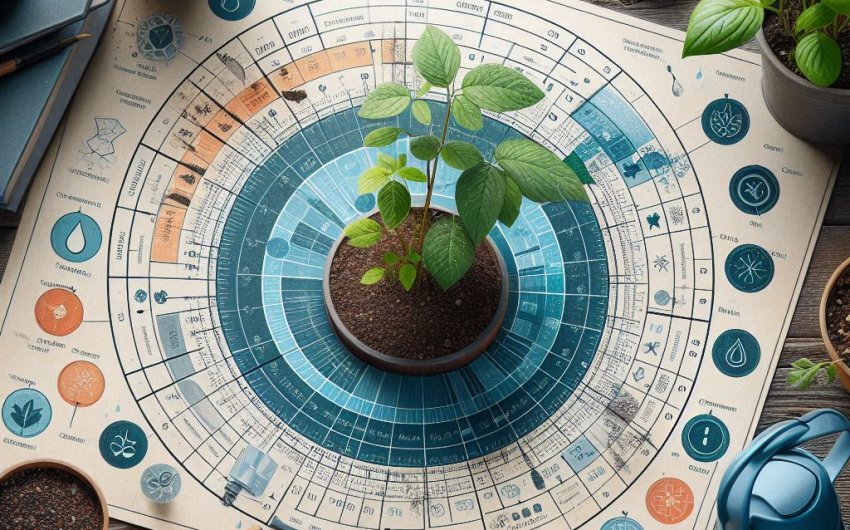
You've carefully chosen your plants, prepared your soil, and perhaps even nurtured seedlings indoors. Now, they're in the garden, ready to thrive. But a crucial question looms over every gardener: how often should I water my garden? It's a fundamental aspect of plant care, yet one that causes constant confusion. Too little water, and your plants wilt and starve. Too much, and you risk drowning roots and inviting diseases like root rot.
There's no single, simple answer to the question of watering frequency. Your garden is a dynamic ecosystem, constantly changing with the weather, the plants you grow, and the type of soil you have. Learning to read your plants and your soil is key to mastering the art of garden watering, ensuring your plants receive just the right amount of hydration for robust growth and abundant blooms or harvests.
Why Is Proper Watering So Important?
Water is the lifeblood of your garden. It's not just something plants drink; it's involved in nearly every aspect of their survival and growth. Getting your watering practices right is fundamental to the health and productivity of your plants. It influences everything from how well they stand up to pests and diseases to the quality of your harvest.
Understanding the vital roles water plays for plants helps explain why proper watering is perhaps the most important skill a gardener can master. It's far more than just "adding water."
Essential for Photosynthesis
At the very core of plant life is photosynthesis, the amazing process by which plants convert sunlight into energy. Water is a critical ingredient in this process.
- The Recipe: Photosynthesis uses sunlight, carbon dioxide (from the air), and water to create sugars (food for the plant) and release oxygen. The chemical formula is often simplified as: $$6 \text{CO}_2 + 6 \text{H}_2\text{O} + \text{Light Energy} \rightarrow \text{C}6\text{H}>{12}\text{O}_6 + 6 \text{O}_2$$ Where \( \mathrm{H}_2\mathrm{O} \) is water and \( \mathrm{C}_6\mathrm{H}_{12}\mathrm{O}_6 \) is glucose (a sugar).
- Water Transport: Water is absorbed by the roots and travels up through the plant's stems to its leaves, where photosynthesis primarily occurs. This movement is powered by transpiration – water evaporating from tiny pores (stomata) on the leaves, pulling more water up from the roots.
- Wilting and Reduced Photosynthesis: If a plant doesn't get enough water, its leaves will wilt. The stomata will close to conserve moisture, which also prevents carbon dioxide from entering the leaves. Without carbon dioxide, photosynthesis effectively shuts down, meaning the plant can't make its food.
- Direct Impact on Growth: Without continuous photosynthesis, a plant cannot grow, produce flowers, or develop fruits and vegetables. Insufficient water directly translates to stunted growth and poor yields.
Ensuring your plants have enough water for photosynthesis is non-negotiable for their survival and vigor.
Nutrient Uptake and Transport
Water isn't just a raw material for photosynthesis; it's also the vehicle that carries nutrients throughout the plant. Without sufficient water, even the most fertile soil won't be able to feed your plants effectively.
- Nutrient Dissolution: Most nutrients in the soil (like nitrogen, phosphorus, and potassium) are present in solid forms. Plants can only absorb these nutrients when they are dissolved in water. Water acts as a solvent, making the nutrients available for uptake by the roots.
- Movement Through Roots: Once dissolved, the nutrient-rich water moves into the roots through a process called osmosis. As water moves from an area of higher concentration (the soil) to lower concentration (inside the root cells), it carries dissolved nutrients with it.
- Transportation System: After absorption, water continues its journey through the plant's vascular system (like tiny pipes called xylem) all the way up to the leaves, flowers, and fruits. As it moves, it delivers the dissolved nutrients to every part of the plant where they are needed for growth and development.
- Stressed Plants: If a plant is underwatered, its ability to absorb and transport nutrients is severely hampered, even if the nutrients are abundant in the soil. This leads to nutrient deficiencies, visible as yellowing leaves, stunted growth, and poor overall health.
Therefore, adequate watering is essential for ensuring your plants not only get water but also receive all the vital nutrients they need to grow strong and healthy.
Maintaining Plant Turgor (Structure)
Have you ever seen a plant look perky and upright, then hours later appear limp and floppy? That's the difference water makes to a plant's turgor. Turgor pressure is the internal water pressure within plant cells that gives them rigidity and helps the plant stand upright.
- Like an Inflated Balloon: Think of each plant cell as a tiny balloon. When it's full of water, it's firm and pushes against the cell walls, making the entire leaf or stem stiff. This is turgor pressure.
- Support System: This internal pressure provides structural support for the entire plant, allowing stems to stand tall and leaves to spread out to capture sunlight efficiently.
- Wilting: When a plant doesn't have enough water, these "balloons" (cells) start to deflate. The turgor pressure drops, and the leaves and stems become limp and wilt. This is the plant's way of telling you it's thirsty and trying to conserve what little water it has by reducing its surface area exposed to the sun.
- Recovery: Often, a wilted plant can quickly bounce back to full turgor after being properly watered, as its cells rehydrate. However, prolonged or severe wilting can lead to permanent damage and tissue death.
Maintaining sufficient turgor through proper watering is crucial for your plants to physically support themselves, effectively photosynthesize, and generally look healthy and vibrant.
Regulating Temperature
Plants, much like humans, need to regulate their internal temperature, especially during hot weather. Water plays a vital role in this process, helping plants stay cool and preventing them from overheating.
- Evaporative Cooling (Transpiration): The primary way plants cool themselves is through transpiration. This is the process where water vapor evaporates from the tiny pores (stomata) on their leaves.
- Think of it like sweating in humans. As water evaporates from the leaf surface, it carries away heat energy, thereby cooling the plant down.
- Water Movement: For transpiration to occur effectively, there must be a continuous flow of water from the roots, through the stems, and out through the leaves.
- Overheating and Stress: If a plant is underwatered, it will close its stomata to conserve moisture. While this helps prevent water loss, it also shuts down the cooling mechanism. The plant's internal temperature can rise too high, leading to heat stress, scorched leaves, and even death.
- Protecting from Sunburn: Adequate water also helps the plant maintain its turgor and upright posture, allowing leaves to orient themselves optimally to avoid direct midday sun or to shade fruits, preventing sunburn.
By providing enough water, you're not just hydrating your plants; you're also equipping them with an essential cooling system, protecting them from the damaging effects of excessive heat and sunlight.
Factors That Influence Watering Frequency
There's no magic "water every X days" rule for your entire garden because so many things affect how much water your plants need and how quickly the soil dries out. Being a good gardener means becoming a detective, paying attention to these different factors.
Understanding how soil type, plant type, weather, and the growing environment all play a role will help you create a watering schedule that truly meets your garden's ever-changing needs.
Soil Type
The soil type in your garden is one of the most critical factors influencing how often you need to water. Different soils hold water very differently.
- Sandy Soil:
- Characteristics: Made up of large particles with big spaces between them.
- Water Retention: Drains very quickly. Water runs through it almost immediately, like a sieve.
- Watering Frequency: Requires more frequent watering (e.g., every day or every other day in hot weather) because it doesn't hold much moisture. However, when you water, apply it deeply to encourage roots to grow down.
- Clay Soil:
- Characteristics: Made up of very small particles that are tightly packed.
- Water Retention: Holds a lot of water and drains very slowly. Can easily become waterlogged and compacted.
- Watering Frequency: Requires less frequent watering (e.g., once or twice a week, even less in mild weather) because it retains moisture for longer. When you water, apply it slowly to allow for absorption and prevent runoff. Be careful not to overwater, as this can lead to root rot.
- Loamy Soil (Ideal):
- Characteristics: A balanced mix of sand, silt, and clay, often with good organic matter.
- Water Retention: Drains well while still retaining enough moisture for plants. It has a good balance of large and small pore spaces.
- Watering Frequency: Generally requires moderate watering, less frequently than sandy soil but more frequently than heavy clay. It's the easiest soil to manage for watering.
- Amending Your Soil: You can improve your soil's water-holding capacity (for sandy soil) or drainage (for clay soil) by incorporating plenty of organic matter (like compost). Compost acts like a sponge, helping sandy soil hold water and improving the structure of clay soil to allow for better drainage and aeration. You can find organic garden compost readily available.
Knowing your soil type helps you understand its natural water retention and guides your watering frequency.
Plant Type and Needs
Just like people have different thirst levels, different plant types have widely varying watering needs. What's perfect for one plant could be deadly for another.
- Drought-Tolerant Plants:
- Characteristics: Many native plants, succulents, cacti, and Mediterranean herbs (like lavender or rosemary) are naturally adapted to dry conditions. They often have thick, waxy leaves; silvery foliage; or deep root systems to conserve water.
- Watering Frequency: Once established, they need very infrequent watering, often only during prolonged dry spells. Overwatering is a common killer for these plants.
- High Water Needs Plants:
- Characteristics: Many leafy vegetables (like lettuce or spinach), fruiting vegetables (like cucumbers or tomatoes), and tropical plants have high transpiration rates and lush foliage.
- Watering Frequency: Require consistent moisture and often more frequent watering, especially during hot, sunny weather and when fruiting. However, they still need good drainage to prevent root rot.
- Newly Planted vs. Established Plants:
- Newly Planted: All newly planted trees, shrubs, perennials, and annuals need consistent, regular watering until their root systems are established in their new environment. This can be for weeks or even a full growing season.
- Established Plants: Once established, their watering needs may decrease as their roots have grown deeper and can access more widespread moisture.
- Root System: Plants with shallow roots may need more frequent watering than those with deep taproots, which can reach water far below the surface.
Always research the specific watering requirements for each plant you grow. A generic "water every other day" schedule will not work for a diverse garden.
Weather and Climate
The weather and climate in your region play a huge, constantly changing role in how often your garden needs water. What was perfect yesterday might be completely wrong today.
- Temperature:
- Hot Weather: Plants lose water much faster through transpiration on hot days. High temperatures increase evaporation from the soil as well. You'll need to water more frequently during heatwaves.
- Cool Weather: In cooler temperatures, plants lose less water, and soil dries out more slowly. Watering frequency can be significantly reduced.
- Sunlight Intensity:
- Full Sun: Plants in direct, full sun will dry out much faster than those in shade or partial shade, even at the same temperature. They'll need more frequent watering.
- Shade: Plants in shadier spots will retain moisture longer and need less frequent watering.
- Humidity:
- Low Humidity (Dry Air): In dry climates or during periods of low humidity, water evaporates rapidly from both leaves and soil. More frequent watering is needed.
- High Humidity: In humid conditions, water evaporates more slowly. Soil stays moist longer, and plants lose less water through transpiration. Watering frequency can be reduced. Be cautious of overwatering in high humidity, as it can encourage fungal diseases.
- Wind:
- Windy Conditions: Wind significantly increases the rate of transpiration from leaves and evaporation from the soil surface, drying out plants and soil much faster. You'll need to water more often on windy days.
- Rainfall: This is an obvious one! Always account for natural rainfall. Use a rain gauge to accurately measure how much rain your garden received. If it rained enough, you might not need to water at all. Don't just assume; check the soil!
Being responsive to daily and seasonal weather changes is vital for effective garden watering. Your watering schedule should be flexible, not rigid.
Container vs. In-Ground Gardens
The growing environment – whether your plants are in containers or planted in-ground – drastically alters their watering needs. This is one of the most significant factors to consider.
- Container Gardens:
- Faster Drying: Soil in containers dries out much, much faster than soil in-ground. Containers (especially terracotta or clay pots) allow moisture to evaporate from all sides, not just the surface. They also have a limited volume of soil, so roots quickly use up available water.
- Limited Root Space: Roots are confined to the pot and can't spread out to seek moisture from a larger soil volume.
- Watering Frequency: Container plants almost always need more frequent watering, sometimes daily or even twice a day in hot, sunny, or windy conditions.
- Drainage Holes Essential: Without proper drainage holes in your pots, root rot is almost guaranteed. A proper plant pot with drainage holes is non-negotiable.
- In-Ground Gardens:
- Slower Drying: Soil in-ground dries out more slowly because it's insulated by the surrounding earth. Water can move laterally, and plants have access to a much larger volume of soil.
- Deeper Roots: Plants can develop deeper, more extensive root systems, making them more drought-tolerant once established.
- Watering Frequency: Typically need less frequent but deeper watering. The goal is to encourage those deep roots.
- Soil Type Dominant: The soil type (sandy, clay, loamy) has a more dominant role in watering frequency in-ground than in containers.
- Microclimates: Different areas in-ground might have varying moisture levels (e.g., under a tree vs. open sun), requiring different watering.
Understanding these differences is key. Your container plants will almost always be the "thirstiest" and demand the most attention when it comes to watering.
How to Determine When to Water?
Instead of relying on a rigid schedule, the best way to determine when to water your garden is to observe your plants and, most importantly, to check the soil moisture. Your plants can't speak, but they do send clear signals if you know what to look for.
Becoming a soil detective is perhaps the single most valuable skill in garden watering. It takes a little practice, but it will save your plants from both thirst and drowning.
The Finger Test (Best Method)
The finger test is the simplest, most effective, and oldest method for determining if your plants need water. It gives you a direct feel for the soil moisture level where the roots are.
- How to Do It:
- Insert Finger: Stick your finger (or a moisture meter, though a finger is often just as good and always available) 2-3 inches deep into the soil near the base of the plant. For larger plants or trees, go deeper, 4-6 inches.
- Feel the Soil:
- Dry: If the soil feels dry or barely damp at that depth, it's likely time to water.
- Moist: If it still feels cool and distinctly moist, wait.
- Soggy: If it feels squishy and waterlogged, you've likely overwatered, and you should definitely wait and address drainage.
- Adjust for Plant Type:
- Drought-Tolerant Plants (e.g., succulents, cacti, Mediterranean herbs): Allow the soil to dry out even deeper, perhaps 3-4 inches or even completely, before watering again.
- High Water Needs Plants (e.g., leafy greens, some annuals): Water when the top 1-2 inches are dry.
- Container vs. In-Ground:
- Containers: The soil in pots dries faster, so you might be checking every day or two, especially in hot weather.
- In-Ground: Soil dries slower, so you might check every few days or even once a week.
The finger test removes the guesswork. It tells you exactly what the roots are experiencing, making it your most reliable guide for watering.
Observe Plant Signals
Your plants will often tell you when they need water through various visual cues. Learning to interpret these plant signals is a crucial skill for responsive garden watering.
- Wilting/Drooping Leaves: This is the most common and obvious sign of thirst. Leaves will lose their firmness and start to sag or droop. They might look limp and lifeless.
- Caution: Remember that wilting can also be a symptom of root rot if the soil is constantly wet. Always combine this observation with the finger test!
- Dull or Grayish Foliage: Healthy leaves often have a vibrant, glossy appearance. When a plant is thirsty, its leaves might lose their luster and take on a dull, grayish, or somewhat faded green color.
- Crispy Edges or Browning: In severe underwatering, the edges or tips of leaves may start to turn brown and become crispy as plant tissue dies from dehydration.
- Stunted Growth or No New Growth: A chronically underwatered plant will stop growing or show very little new development. New leaves may be smaller than normal.
- Flower/Fruit Drop: If a plant is under severe water stress, it might drop its flowers or developing fruits to conserve energy and moisture, prioritizing survival over reproduction.
- Cracked or Pulled-Away Soil from Pot Edges: In container plants, if the potting mix shrinks significantly and pulls away from the sides of the pot, it's a clear sign that the soil is bone dry.
These plant signals are your warning system. When you see them, confirm with the finger test and then water thoroughly. Regular observation helps you catch thirst before it causes serious damage.
Use a Soil Moisture Meter
While the finger test is excellent, a soil moisture meter can provide an objective, quantifiable reading of the soil moisture level, especially for those who want a more precise tool or have difficulty with the finger test.
- How it Works: A soil moisture meter typically has a long probe that you insert into the soil. It then gives you a reading on a scale (often 1-10 or "Dry" to "Wet").
- Benefits:
- Accuracy: Provides a more precise reading of moisture levels at various depths.
- Consistency: Helps you water consistently by giving you a measurable baseline.
- Avoids Overwatering: Particularly useful for confirming when the soil is genuinely dry enough to water, reducing the risk of root rot.
- For Different Plants: Can help you learn the optimal moisture range for different plants.
- Considerations:
- Calibration: Some cheaper meters might not be perfectly accurate or consistent.
- Not a Replacement for Observation: Still combine its readings with your plant's visual cues and your own judgment.
- Placement: Insert the probe into the root zone, not just the surface. Avoid hitting large roots or rocks.
- Types: Simple analog meters are common and inexpensive. More advanced digital meters might also measure pH and light levels. A basic soil moisture meter is a great tool for any gardener.
A soil moisture meter is a helpful tool for removing some of the guesswork from watering, especially for beginners or for fussy plants.
Best Practices for Watering Your Garden
Knowing when to water is crucial, but knowing how to water is equally important. Best practices for watering ensure that your plants receive water effectively, minimize waste, and prevent problems like disease and root rot. It's about efficiency and plant health.
Implementing these techniques will make your watering efforts more successful and your garden more resilient.
Water Deeply and Infrequently
This is the golden rule of efficient and healthy garden watering: water deeply and infrequently.
- What "Deeply" Means: Apply enough water so that it penetrates several inches (4-6 inches for most annuals and vegetables, up to 12 inches for established perennials, shrubs, and trees) into the soil.
- For containers, water until you see water freely draining from the bottom holes.
- For in-ground gardens, use a rain gauge or a tuna can to measure an inch of water.
- Why Water Deeply?:
- Encourages Deep Roots: Deep watering encourages plants to send their roots down further into the soil. Deeper roots make plants more drought-tolerant, resilient to heat stress, and better able to find nutrients.
- Efficient Water Use: Less water is lost to surface evaporation.
- Nutrient Availability: Ensures nutrients are carried down into the root zone where they can be absorbed.
- What "Infrequently" Means: Allow the soil to dry out somewhat between waterings (using the finger test as your guide). Don't water every day unless you're dealing with very small seedlings, extremely hot weather, or rapidly draining containers.
- Why Water Infrequently?:
- Prevents Root Rot: Allows oxygen to return to the soil's pore spaces, preventing waterlogging and the conditions that lead to root rot.
- Strengthens Plant: Forces the plant to work a little for its water, making it stronger and more adaptable.
- Discourages Weeds: Drier surface soil can discourage the germination of weed seeds.
By watering deeply and infrequently, you train your plants to be self-sufficient and promote a robust, healthy root system.
Water at the Base of Plants
When applying water, direct it precisely where it's needed most: at the base of the plants, near the soil level. Avoid overhead watering (spraying water over the leaves) whenever possible.
- Why Water the Base?:
- Direct to Roots: Water goes straight to the root zone, minimizing waste from evaporation and runoff.
- Reduces Fungal Diseases: Consistently wet foliage creates an ideal environment for many fungal diseases (like powdery mildew, blight, or leaf spots) to develop and spread. Keeping leaves dry, especially overnight, greatly reduces this risk.
- Less Water Waste: Less water is lost to evaporation from wet leaves.
- How to Water the Base:
- Soaker Hoses: Ideal for beds and rows. They slowly weep water directly into the soil at the root zone, keeping foliage dry. A soaker hose system is very efficient.
- Drip Irrigation: Highly efficient systems that deliver water precisely to individual plants through emitters, minimizing waste and keeping foliage dry. A drip irrigation kit for gardens can be customized.
- Watering Cans: Perfect for containers or individual plants, allowing you to direct the stream precisely. A long spout watering can helps.
- Hand Watering (with nozzle): Use a hose with a gentle, non-spraying nozzle to direct water to the soil.
- When Overhead is Okay: For lawns, overhead sprinklers are necessary. For some plants, a rinse of the foliage can help remove dust or pests. If you must overhead water, do it in the early morning so leaves have plenty of time to dry before nightfall.
Watering at the base of plants is more efficient, healthier for your plants, and helps prevent disease.
Water in the Early Morning
The time of day you water your garden is surprisingly important, and early morning is almost always the best time.
- Why Early Morning is Best:
- Reduced Evaporation: Temperatures are cooler, and the sun is not yet intense, meaning less water is lost to evaporation from the soil surface before it can soak down to the roots.
- Optimal for Absorption: Plants are waking up and ready to absorb water to fuel their day's photosynthesis and transpiration.
- Foliage Dries Quickly: If any water gets on the leaves, the morning sun and warmth will quickly dry them off, minimizing the risk of fungal diseases that thrive on prolonged leaf wetness.
- Deters Pests: Many nocturnal pests, like slugs and snails, rely on moisture to move around. A dry surface in the morning makes their activity less comfortable.
- Why Avoid Midday:
- High Evaporation: The hottest part of the day leads to the most evaporation. A significant portion of your water could be lost before it even reaches the roots.
- Potential for Scorch: While often a myth, water droplets on leaves can sometimes act like tiny magnifying glasses and potentially cause leaf scorch in intense sun, especially on very delicate foliage.
- Why Avoid Evening/Night:
- Prolonged Wetness: Watering at night leaves foliage and soil surface wet for extended periods, creating ideal conditions for fungal diseases and attracting slugs and snails.
- Less Absorption: Plants slow down their metabolic processes at night, so water absorption isn't as efficient.
Making early morning watering a consistent habit is one of the easiest ways to improve your watering efficiency and plant health.
Use Mulch
Applying mulch to your garden beds is one of the simplest yet most effective water-saving strategies you can employ. It's like putting a blanket on your soil.
- What is Mulch?: Mulch is a layer of material (organic like wood chips, straw, shredded leaves, or inorganic like gravel) applied to the soil surface.
- How Mulch Helps with Watering:
- Reduces Evaporation: Mulch acts as a physical barrier, significantly reducing the amount of water that evaporates directly from the soil surface due to sun and wind. This means the soil stays moist for much longer, and you need to water less frequently.
- Retains Moisture: Organic mulches, as they break down, improve the soil's ability to hold onto water over time, making it more drought-tolerant.
- Suppresses Weeds: Mulch blocks sunlight, preventing many weed seeds from germinating. Fewer weeds mean less competition for water and nutrients with your desirable plants.
- Regulates Soil Temperature: Mulch insulates the soil, keeping it cooler in summer (reducing water evaporation) and warmer in winter (protecting roots).
- Adds Organic Matter: Organic mulches decompose over time, adding valuable organic matter to your soil, which improves its structure, drainage, and nutrient content. You can find bags of cedar mulch or straw mulch for gardens.
- How to Apply: Apply a 2-4 inch layer of mulch around your plants, keeping it a few inches away from the stems or trunks to prevent moisture buildup and potential rot.
Using mulch is an eco-friendly way to conserve water, reduce watering frequency, and create a healthier, more stable environment for your plants.