
How to Balance Carbon and Nitrogen in Composting?
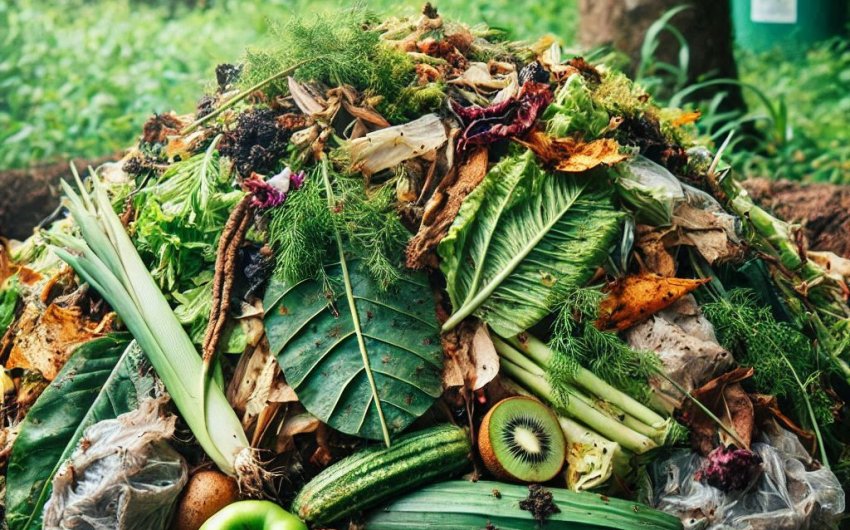
Composting is often described as a magical process, transforming kitchen scraps and garden waste into rich, dark, nutrient-filled soil amendment. While it might seem like a simple act of piling up organic materials, there's a science to successful composting, and at its heart lies a fundamental principle: the balance of carbon and nitrogen.
Often referred to as the "greens" and "browns," these two types of materials are the primary food source for the tiny microorganisms that do all the hard work of decomposition. Getting the ratio right is what makes a compost pile heat up, break down efficiently, and avoid common problems like foul odors or sluggish progress. It's the secret sauce to creating that perfect, crumbly, earthy-smelling compost your garden will love.
This comprehensive guide will demystify the carbon-to-nitrogen ratio in composting. We'll delve into what carbon and nitrogen materials are, why their balance is so crucial, how to estimate the ideal ratio, and practical strategies for achieving it in your own compost pile. Get ready to turn your compost pile into a perfectly balanced, decomposition powerhouse!
What are carbon and nitrogen in composting?
In the world of composting, carbon and nitrogen are the two essential building blocks that fuel the decomposition process. They are the primary food sources for the billions of microorganisms (bacteria, fungi, actinomycetes) that break down organic waste into rich compost. Understanding what they are and their roles is fundamental to effective composting.
1. Carbon (The "Browns")
- Role: Carbon provides the energy source for compost microorganisms. It's also the backbone of the organic matter itself, contributing to the bulk and structure of the compost pile. Think of carbon as the "food" that fuels the microbes.
- Characteristics:
- Typically dry, woody, fibrous, and brown in color.
- Break down slower than nitrogenous materials.
- Often provide good aeration and bulk to the pile.
- Common sources ("Browns"):
- Dry leaves: One of the most abundant and easiest sources.
- Shredded paper: Newspaper (black ink only), cardboard (torn or shredded, no glossy coatings or excessive tape).
- Straw or hay: Excellent for bulk and aeration.
- Wood chips / Sawdust: Good sources, but break down slowly; use in moderation.
- Pine needles: Can be acidic, use in moderation.
- Cornstalks / Dead plant stalks: Chop into smaller pieces.
- Dry grass clippings: If brown and dry.
2. Nitrogen (The "Greens")
- Role: Nitrogen provides the protein and moisture needed by compost microorganisms to grow and reproduce. Think of nitrogen as the "building blocks" that allow the microbes to multiply and do their work. It's the "activator" or "accelerator" of the compost pile.
- Characteristics:
- Typically moist, fresh, green, and softer in texture.
- Break down quickly and can generate heat.
- Can become smelly if there's too much.
- Common sources ("Greens"):
- Kitchen scraps: Fruit and vegetable peels, cores, wilted produce, coffee grounds (rich source), tea bags. Avoid meat, dairy, and oily foods for home composting (attract pests).
- Fresh grass clippings: Very high in nitrogen, can get slimy if too much is added at once.
- Green plant trimmings: Non-diseased, fresh plant material from the garden.
- Manure: From herbivores (chickens, rabbits, cows, horses). Excellent nitrogen source, adds beneficial microbes.
- Weeds: Young, non-seeding weeds.
The Carbon-to-Nitrogen Ratio (C:N Ratio)
The relationship between carbon and nitrogen is expressed as the C:N ratio. This ratio is a measure of the amount of carbon relative to the amount of nitrogen in a material.
- For example, if a material has a C:N ratio of (30:1), it means it contains 30 parts carbon for every 1 part nitrogen.
- Ideal range: The ideal C:N ratio for rapid and efficient composting is generally considered to be around (25:1) to (30:1).
Understanding these two main categories and their individual roles is the first step in learning how to balance carbon and nitrogen in composting to achieve a fast, efficient, and odor-free decomposition process.
Why is the Carbon-to-Nitrogen ratio so important in composting?
The carbon-to-nitrogen ratio (C:N ratio) is often called the "engine" of the compost pile. Getting this balance right is absolutely crucial for efficient, odor-free, and rapid decomposition. It directly impacts the activity of the microorganisms that do the work of breaking down organic matter.
1. Fueling the microorganisms
- Carbon for energy: Microorganisms, just like us, need energy to live and multiply. They get this energy from breaking down carbon-rich materials ("browns").
- Nitrogen for protein (growth): They also need nitrogen to build their own bodies (proteins) and reproduce. Nitrogen is essential for their population to grow large enough to tackle the compost pile.
- Analogy: Think of it like baking a cake. Carbon is the flour and sugar (energy/bulk), and nitrogen is the yeast (active ingredient that makes it work). You need the right proportion of both for the cake to rise (compost to break down).
2. Influencing decomposition speed
- Too much carbon (high C:N ratio): If your compost pile has too many "browns" (e.g., just dry leaves and wood chips), the C:N ratio will be too high (e.g., (80:1) or higher).
- Result: The microorganisms won't have enough nitrogen to build their populations and metabolize the carbon efficiently. Decomposition will be very slow, and the pile won't heat up. It will just sit there for a very long time, acting more like a dormant pile of leaves than an active compost bin.
- Too much nitrogen (low C:N ratio): If your compost pile has too many "greens" (e.g., just grass clippings and food scraps), the C:N ratio will be too low (e.g., (10:1)).
- Result: The microorganisms will have an excess of nitrogen. They will use what they need, and the rest will be released into the atmosphere as ammonia gas ((\text{NH}_3)). This results in a strong, unpleasant rotten egg or ammonia-like smell. It also means valuable nitrogen is being lost from your compost pile. The pile can also become slimy and anaerobic (lacking oxygen).
3. Preventing odors
- Balanced ratio, no smell: When the C:N ratio is ideal (around (25:1) to (30:1)), the microorganisms consume the carbon and nitrogen efficiently. Nitrogen is incorporated into microbial bodies rather than being released as ammonia gas. This results in an earthy, pleasant smell (or no smell at all).
- Anaerobic conditions: Too much nitrogen can also lead to a dense, wet, oxygen-deprived (anaerobic) environment, which produces foul-smelling compounds like hydrogen sulfide.
4. Heat generation
- Active composting needs heat: The metabolic activity of microorganisms generates heat. A compost pile that is properly balanced in its C:N ratio, along with adequate moisture and aeration, will reach temperatures in the range of (130-160^\circ\text{F}) ((55-70^\circ\text{C})).
- Benefits of heat: Hot composting speeds up decomposition, kills weed seeds, and eliminates many plant pathogens, creating safer and faster compost. An imbalanced pile (too high or too low in nitrogen) won't heat up properly.
In summary, balancing the carbon and nitrogen in composting is not just a suggestion; it's the fundamental principle that dictates the speed, smell, and overall quality of your finished compost. It ensures that your compost microorganisms have the perfect diet to efficiently transform your waste into valuable "black gold."
What is the ideal Carbon-to-Nitrogen (C:N) ratio for composting?
The ideal Carbon-to-Nitrogen (C:N) ratio for rapid and efficient composting is a widely studied and discussed topic in the composting world. While it's not an exact science for the home gardener, understanding the target range is key to success.
The target range: (25:1) to (30:1)
- Most composting experts agree that a starting C:N ratio of approximately (25:1) to (30:1) (meaning 25 to 30 parts carbon for every 1 part nitrogen by weight) is optimal for the microbial activity that drives decomposition.
- Why this range?:
- Just enough nitrogen: This ratio provides enough nitrogen for the microorganisms to build their bodies and reproduce efficiently.
- Efficient carbon consumption: It also ensures there's enough carbon to act as an energy source for these microbes, without an excess of nitrogen being lost as ammonia gas.
- Rapid decomposition: This balance allows the pile to heat up quickly and maintain high temperatures, accelerating the breakdown process.
Understanding C:N ratios of common materials
It's helpful to know the approximate C:N ratio of common composting materials. This helps you estimate and adjust your pile. Remember, these are averages, and specific values can vary.
| Material Type | Approximate C:N Ratio | Category (Roughly) |
|---|---|---|
| Greens (High Nitrogen) | ||
| Fresh Grass Clippings | 12:1 to 25:1 | Nitrogen Rich |
| Fruit & Veg Scraps | 15:1 to 25:1 | Nitrogen Rich |
| Coffee Grounds | 20:1 to 25:1 | Nitrogen Rich |
| Manure (Chicken/Cow) | 10:1 to 25:1 | Nitrogen Rich |
| Green Plant Trimmings | 20:1 to 30:1 | Nitrogen Rich |
| Browns (High Carbon) | ||
| Dry Leaves | 40:1 to 80:1 | Carbon Rich |
| Shredded Newspaper | 150:1 to 175:1 | Carbon Rich |
| Cardboard | 150:1 to 200:1 | Carbon Rich |
| Straw | 40:1 to 100:1 | Carbon Rich |
| Wood Chips / Sawdust | 100:1 to 500:1+ | Carbon Rich |
Source: Adapted from various composting guides, approximate values.
How to estimate the ratio for home composting
For the average home gardener, you don't need to be a chemist with precise measurements. A good rule of thumb is to aim for a volume ratio that visually looks correct:
- 2 to 3 parts "browns" to 1 part "greens" by volume.
- For example, for every bucket of kitchen scraps (greens), add 2-3 buckets of dry leaves or shredded cardboard (browns).
What happens if the ratio is off?
- Too much carbon (pile is mostly browns):
- Signs: Decomposition is very slow, the pile doesn't heat up, and it mostly just looks like a pile of dry leaves.
- Solution: Add more "greens" (kitchen scraps, fresh grass clippings, coffee grounds) and turn the pile.
- Too much nitrogen (pile is mostly greens):
- Signs: The pile smells strongly of ammonia (like rotten eggs or urine), and it might become slimy or very wet.
- Solution: Add more "browns" (dry leaves, shredded paper, wood chips) to absorb moisture and provide more carbon. Turn the pile to aerate it.
By understanding the ideal C:N ratio and the common sources of carbon and nitrogen, you can effectively manage your compost pile to ensure a fast, efficient, and odor-free decomposition process, creating high-quality compost for your garden.
How do you apply the C:N ratio practically in your compost bin?
Understanding the Carbon-to-Nitrogen (C:N) ratio in theory is one thing, but applying it practically in your everyday composting is another. For the home gardener, it's less about precise scientific measurement and more about visual estimation, layering, and paying attention to your compost pile's "signals."
1. The "Layering" Method
This is one of the easiest and most effective ways to build and maintain a balanced compost pile.
- Alternating layers: As you add materials, try to alternate layers of "greens" and "browns."
- Start with a base layer of coarse "browns" (like twigs or straw) to improve aeration at the bottom.
- Then add a few inches of "greens" (e.g., kitchen scraps).
- Follow immediately with a thicker layer (2-3 times the volume) of "browns" (dry leaves, shredded paper).
- Repeat this pattern.
- Why it works: This ensures that nitrogen-rich materials are quickly surrounded by carbon, which helps prevent odors and provides microbes with a balanced diet right from the start.
2. The "Maintain a Stash" Method
- Store browns: A key to consistent balancing is always having a readily available supply of "brown" materials.
- Collect and store dry leaves in bags during autumn.
- Shred cardboard or newspaper regularly and keep it in a dry bin near your compost.
- Have a pile of wood chips or straw ready.
- Why it works: This allows you to immediately cover fresh kitchen scraps (greens) with browns, preventing odors and attracting pests, and ensures you can correct an imbalance instantly.
3. Pay Attention to "Compost Signals" (Smell & Heat)
Your compost pile will tell you if its C:N ratio is off.
- Ammonia/Rotten Egg Smell (Too much Nitrogen/Greens):
- Signal: A strong, pungent, unpleasant smell like ammonia, rotten eggs, or rotting garbage. The pile might also feel slimy and wet.
- Action: Immediately add a substantial amount of "brown" materials (dry leaves, shredded paper, straw). Turn the pile vigorously to introduce oxygen and mix in the browns. This will absorb excess moisture and provide more carbon for the microbes to balance the nitrogen.
- No Heat/Slow Decomposition (Too much Carbon/Browns):
- Signal: The pile isn't heating up, decomposition is very slow, and it just looks like a dry pile of unrotted material.
- Action: Add more "green" materials (fresh kitchen scraps, fresh grass clippings, coffee grounds). Mix them in well. You may also need to add some water to ensure the pile is damp like a wrung-out sponge, as moisture is also essential for microbial activity.
4. Chopping and Shredding Materials
- Smaller pieces, faster breakdown: While not directly related to the C:N ratio, chopping or shredding your materials into smaller pieces (no larger than 1-2 inches) greatly increases the surface area for microbial activity. This means a faster, more efficient breakdown of both carbons and nitrogens.
- How to do it: Use garden shears for plant stalks, tear cardboard into small pieces, or use a leaf shredder for large volumes of leaves.
5. Turning the Pile Regularly
- Aeration and mixing: Regular turning (mixing your compost pile with a pitchfork or compost aerator) helps distribute materials, introduces oxygen (essential for aerobic microbes), and ensures that all parts of the pile get a chance to be in the hot, active center.
- Benefits: Aids in maintaining the ideal C:N balance by thoroughly mixing ingredients, reduces potential odors, and speeds up the overall composting process.
By following these practical steps, observing your compost, and making adjustments based on its signals, you'll become adept at maintaining the optimal Carbon-to-Nitrogen balance, transforming your organic waste into rich, dark compost with ease.
How do you estimate carbon and nitrogen ratios for specific materials?
For the average home gardener, a precise scientific measurement of carbon and nitrogen ratios for specific materials isn't practical or necessary. However, having a general understanding of where common composting materials fall on the C:N spectrum (i.e., whether they are mostly "brown" or "green") and their approximate ratio helps immensely in creating a balanced compost pile.
General categories for easy estimation
Think of composting materials in three broad categories:
High Nitrogen ("Greens" - low C:N ratio, typically <30:1):
- These are often fresh, moist, and soft. They provide the "kick-start" for your compost.
- Examples:
- Fresh grass clippings ((\approx 12-25:1)): Very high in nitrogen. Use in thin layers or mix well to prevent matting and odor.
- Fruit and vegetable scraps ((\approx 15-25:1)): Your daily kitchen waste. Great source of nitrogen and moisture.
- Coffee grounds ((\approx 20:1)): Excellent, often overlooked nitrogen source. They also provide good structure.
- Tea bags ((\approx 20:1)): Similar to coffee grounds.
- Fresh plant trimmings ((\approx 20-30:1)): Weeds (before seeding), spent annuals, young green plant parts.
- Manures (non-carnivore, e.g., chicken, cow, horse, rabbit) ((\approx 10-25:1)): Powerful nitrogen sources, but ensure they are from healthy, herbivorous animals.
High Carbon ("Browns" - high C:N ratio, typically >30:1):
- These are often dry, woody, and fibrous. They provide the bulk and structure, and prevent odors.
- Examples:
- Dry leaves ((\approx 40-80:1)): Excellent and abundant source. Rake them up in fall and store them for year-round use.
- Shredded paper ((\approx 150-175:1)): Newspaper (non-glossy, black ink), office paper. Shredded paper makes great bedding in a worm compost bin too.
- Cardboard ((\approx 150-200:1)): Corrugated cardboard (remove tape and labels), cereal boxes. Tear or shred into small pieces.
- Straw or Hay ((\approx 40-100:1)): Great for bulk, aeration, and absorbing excess moisture.
- Wood chips / Sawdust ((\approx 100-500:1+)): Higher carbon, breaks down slowly. Use in moderation and mix with plenty of greens. Avoid treated wood.
- Pine needles ((\approx 60-110:1)): Can be acidic; use in moderation.
Neutral/Balanced (roughly (25-30:1)):
- Some materials already have a relatively balanced C:N ratio on their own.
- Examples: Aged manure (well-rotted), some types of mixed garden waste (if balanced organically).
Practical estimation strategies for home composting
- The "2-3 parts browns to 1 part greens" rule: This is the most common and effective visual estimation. For every volume of green material you add (e.g., a bucket of kitchen scraps), add two to three times that volume of brown material (e.g., 2-3 buckets of dry leaves).
- Layering method: Build your pile in alternating layers, always following a thinner layer of greens with a thicker layer of browns. This helps ensure a balanced mix throughout.
- Keep a "browns" stash: Always have a ready supply of dry leaves, shredded paper, or straw next to your compost bin. This allows you to immediately cover fresh "greens" and adjust the ratio as needed.
- Observe and adjust: The best way to learn is by doing and observing.
- If it smells like ammonia: Too many greens. Add more browns and turn.
- If it's not heating up and is dry/sluggish: Too many browns or too little moisture. Add more greens and water, then turn.
- If it's working well: Earthy smell or no smell, warm in the middle, moist like a wrung-out sponge, breaking down visibly. Keep doing what you're doing!
By understanding the general categories and applying the simple volume ratio rule, you can effectively estimate and balance carbon and nitrogen in your compost without complex calculations, leading to a consistently performing and productive compost pile.
What are the signs of an imbalanced C:N ratio and how do you fix them?
Your compost pile is a living system, and it will give you clear signs if its Carbon-to-Nitrogen (C:N) ratio is off. Learning to read these signals is essential for troubleshooting and ensuring your composting process stays on track. Thankfully, most imbalances are easy to fix with a few adjustments.
1. Signs of Too Much Nitrogen ("Greens") - C:N Ratio is Too Low
This typically happens when you add too many kitchen scraps, fresh grass clippings, or other very moist, fast-decomposing "greens" without enough "brown" material to balance them out.
- Sign 1: Strong, Foul Odor (Ammonia/Rotten Eggs)
- Why: When there's an excess of nitrogen that microorganisms can't process fast enough, the nitrogen is released as ammonia gas ((\text{NH}_3)), which has a pungent, urine-like smell. If it smells like rotten eggs or rotting food, it's often due to anaerobic (oxygen-deprived) conditions caused by too much wet, dense "greens" compacting the pile.
- Solution:
- Add "browns": Immediately add a substantial amount of dry, carbon-rich materials like dry leaves, shredded newspaper, cardboard, or straw. These materials will provide the carbon needed to balance the nitrogen and absorb excess moisture.
- Turn the pile vigorously: Mix the newly added "browns" throughout the pile. Turning introduces oxygen, which is crucial for aerobic decomposition and helps eliminate anaerobic odors.
- Sign 2: Slimy, Mushy, or Soggy Pile
- Why: Too many moist "greens" without enough absorbent "browns" will make the pile excessively wet and dense. This restricts airflow, leading to anaerobic conditions and a slimy texture.
- Solution: Same as above – add more "browns" to absorb moisture and provide structure, then turn the pile well to aerate it. You might also temporarily stop adding wet "greens" until the pile dries out and balances.
2. Signs of Too Much Carbon ("Browns") - C:N Ratio is Too High
This often occurs when a compost pile is predominantly made up of dry leaves, wood chips, or shredded paper without enough nitrogen-rich "greens" to fuel the microbial activity.
- Sign 1: Very Slow or No Decomposition
- Why: The microorganisms don't have enough nitrogen (protein) to build their populations and actively break down the carbon. They are "starving" for nitrogen, so the process grinds to a halt.
- Solution:
- Add "greens": Introduce more nitrogen-rich materials like fresh kitchen scraps, fresh grass clippings, coffee grounds, or manure (from herbivores).
- Add water: Ensure the pile is consistently damp, like a wrung-out sponge. If it's too dry, decomposition also slows down dramatically, regardless of the C:N ratio. Water slowly until moisture is distributed throughout.
- Turn the pile: Mix in the new "greens" and ensure even moisture.
- Sign 2: The Pile Doesn't Heat Up
- Why: Heat generation in composting is a byproduct of vigorous microbial activity. If the decomposition is sluggish due to a lack of nitrogen (or moisture), the pile won't reach optimal temperatures ((130-160^\circ\text{F}) or (55-70^\circ\text{C})).
- Solution: Same as above – add more "greens" and ensure adequate moisture, then turn. A sudden infusion of nitrogen and water will often "kick-start" a cold pile into action.
General Tips for Troubleshooting:
- Check Moisture First: Before assuming a C:N imbalance, always check the moisture level. A dry pile will be slow even with a perfect C:N ratio, and a soggy pile can smell even with good ratios if it lacks oxygen.
- Turn, Turn, Turn: Aeration often fixes many minor problems. When in doubt, turn your pile.
- Be Patient: It takes a little time for the compost pile to respond to your adjustments. Observe over a few days.
By paying attention to these signs of an imbalanced C:N ratio and knowing how to adjust your inputs, you'll become a skilled composter, capable of maintaining a healthy, active, and productive compost pile.