
How to Deal with Maggots in Your Compost Bin?
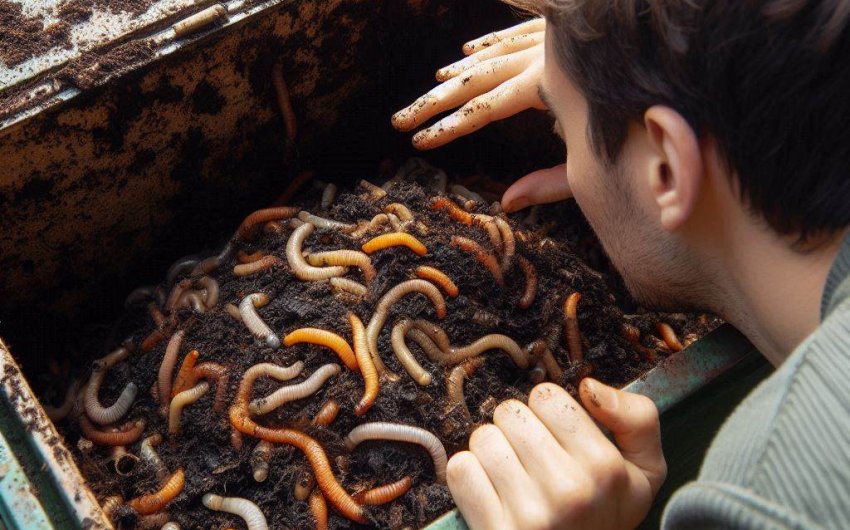
You eagerly open your compost bin, expecting to see rich, earthy goodness, and instead, you're met with a wriggling mass of white. Ugh! Maggots in your compost bin can be an unpleasant surprise, sparking a mix of disgust and concern. While they might look alarming, maggots are actually common in certain composting conditions. The good news is they're not harmful to your compost (in fact, some are beneficial!), but they do signal that your bin's conditions might need a tweak. This guide will help you understand why maggots appear in compost and, more importantly, how to deal with maggots in your compost bin effectively.
Understanding Maggots in Your Compost: Friend or Foe?
Before you panic, let's clarify who these wrigglers are and what they're doing.
What are Maggots in Compost?
Most of the time, the "maggots" you see in your compost bin are the larvae of fruit flies (Drosophila melanogaster) or black soldier flies (Hermetia illucens). They look like small, creamy-white worms.
- Fruit Fly Larvae: Tiny, almost translucent, often found in masses, especially on very fresh, uncovered fruit scraps. They complete their lifecycle very quickly.
- Black Soldier Fly Larvae (BSFL): Larger, darker, and more robust-looking than fruit fly larvae. They are fantastic decomposers and are actually a desired organism in some composting systems because of how efficiently they consume organic waste. They can break down tough materials and even some meat/dairy that traditional composters avoid.
Are They Harmful to My Compost?
No! Neither fruit fly larvae nor black soldier fly larvae are harmful to your compost.
- Decomposers: They are part of the natural decomposition process, actively breaking down organic matter. In fact, Black Soldier Fly Larvae (BSFL) are highly efficient and can speed up decomposition, especially of food waste.
- Not a Threat to Plants: They won't harm your garden plants when you use the finished compost. They only feed on decaying organic matter.
- Not the "Bad" Kind: These are not housefly maggots, which are often associated with filth and disease (though even those are decomposers). The ones in your compost are usually harmless compost helpers.
Why Do I Have Maggots?
Maggots appear in compost because flies have laid eggs there. Flies are attracted to specific conditions:
- Exposed Food Scraps: Especially fruit and vegetable peels, and any meat/dairy if you're adding it. Flies can easily land and lay eggs.
- Excess Moisture: A compost pile that is too wet or soggy creates an ideal breeding ground.
- Lack of Browns/Aeration: An imbalance (too many "greens," not enough "browns") often leads to overly wet, dense conditions that flies love.
- Low Temperature: If your compost pile isn't heating up properly (i.e., it's a cold compost pile), it becomes an attractive environment for flies to lay eggs, as the eggs/larvae won't be killed by heat.
So, while not harmful, a maggot infestation often signals that your composting conditions are a bit out of whack, usually too wet and lacking air.
How to Deal with Maggots in Your Compost Bin: Effective Strategies
The goal isn't necessarily to eliminate every single maggot (especially if they're BSFL), but to manage their numbers and optimize your compost conditions to make it less appealing to flies.
Strategy 1: Adjust Your Greens-to-Browns Ratio (Most Important!)
This is the fundamental fix for most compost problems, including maggots.
- Cause: Too many "greens" (nitrogen-rich, like food scraps and fresh grass clippings) and not enough "browns" (carbon-rich, like dry leaves, straw, shredded paper/cardboard). This imbalance makes the pile wet, dense, and attractive to flies.
- Solution: Add more "browns."
- Layer generously: Whenever you add new food scraps (greens), make sure to cover them with a thick layer of dry leaves, straw, wood chips, or shredded cardboard/newspaper. Aim for 2-3 parts browns to 1 part greens by volume.
- Mix it in: If your bin is already maggot-ridden, add a substantial amount of dry browns and then thoroughly mix (turn) the entire contents of your compost bin or tumble it vigorously. This will help dry out the soggy parts and create air pockets.
- Store Browns: It’s always a good idea to have a dedicated stash of dry "browns" (like a bag of dry leaves) next to your compost bin for easy access. A bag of shredded paper for composting can also work.
Strategy 2: Improve Aeration (Turning is Key!)
Flies and their larvae prefer stagnant, oxygen-deprived environments.
- Cause: Lack of oxygen due to insufficient turning, or a dense, compacted pile.
- Solution: Turn your compost bin regularly and thoroughly.
- Frequency: Aim to turn your compost pile (or tumble your bin) every few days, or at least once a week. For a very active pile, even daily turning can help.
- How to Turn: Use a pitchfork or a compost aerator tool to thoroughly mix the contents. For tumblers, give it 5-10 good spins. This introduces oxygen, helps distribute moisture, and exposes maggots to new, less desirable (drier, hotter) environments.
- Break Up Clumps: As you turn, break apart any large, wet, or dense clumps.
Strategy 3: Control Moisture Levels
- Cause: Compost pile is too wet or soggy. This creates ideal breeding conditions for flies.
- Solution: Dry it out or add more browns.
- Add Browns: As mentioned in Strategy 1, adding dry, absorbent browns is the best way to soak up excess moisture.
- Increase Airflow: More turning will help evaporate excess moisture.
- Shelter: If your compost bin is exposed to a lot of rain, consider covering it with a tarp or a lid to prevent it from getting waterlogged.
Strategy 4: Bury Food Scraps Deeply
- Cause: Flies are attracted to fresh, exposed food scraps on the surface of your compost.
- Solution: Always bury new food scraps in the middle of your compost pile.
- When adding kitchen waste, dig a hole or create a depression in the existing compost, dump the scraps in, and then cover them with at least 6-8 inches (15-20 cm) of other compost material or dry "browns." This makes it much harder for flies to access them and lay eggs.
Strategy 5: Avoid Certain Materials (or treat them carefully)
- Meat, Dairy, Fats, Oily Foods: These are highly attractive to flies (and other pests like rodents). Many traditional composting guides recommend avoiding these entirely, especially in open bins or if you're new to composting. If you do compost them (e.g., in a very hot pile or a sealed compost tumbler), ensure they are buried deeply and composted very actively.
- Cooked Foods: These can also be more attractive to pests and lead to odors if not managed well. Stick to raw fruit and vegetable scraps for easier composting.
Strategy 6: Increase Heat (Hot Composting)
- Cause: A cold or sluggish compost pile doesn't kill fly eggs or larvae. Flies prefer a cooler environment for laying eggs.
- Solution: Focus on getting your compost pile hot.
- Follow all the steps for hot composting: proper C:N ratio, optimal moisture, small particle size, and frequent turning.
- A hot pile (consistently above 130°F / 55°C) will kill most fly eggs and larvae.
Strategy 7: Use a Well-Sealed Compost Bin
- Cause: An open pile or a bin with large gaps makes it easy for flies to enter and exit.
- Solution:
- Lid: Ensure your compost bin or tumbler has a tight-fitting lid. Always keep it closed when not adding materials.
- Tumblers: Compost tumblers are naturally more sealed, which helps keep flies out. A dual-chamber compost tumbler offers an enclosed environment.
- Repair Gaps: If your bin has holes or large openings, consider patching them with mesh or hardware cloth.
Don't Forget the Benefits of Black Soldier Fly Larvae (BSFL)
While "maggots" often conjure negative images, it's worth noting that if you suspect you have Black Soldier Fly Larvae (BSFL) (they are larger and darker), they are actually beneficial decomposers.
- Highly Efficient: They break down organic waste incredibly fast, often much faster than traditional composting.
- Odorless: They don't produce odors.
- Nutrient-Rich Castings: Their waste product is excellent for plants.
- Self-Harvesting: Mature BSFL often crawl out of the compost looking for a dry place to pupate, making them easy to collect if you want to use them as feed for chickens or dispose of them.
- Tolerant: They can handle a wider range of food scraps, including some meat and dairy, which are typically avoided in traditional compost.
- If you have BSFL and don't mind them, you might even consider setting up a dedicated black soldier fly composter to harness their power.
When to Be Concerned (and What to Do)
While most maggots are harmless, there are rare cases where you might need to take more drastic action:
- Overwhelming Infestation: If the sheer number of maggots is truly unbearable and you can't get the pile under control.
- Persistent Odor: If the smell is constant and strong, indicating a severe anaerobic problem.
- Housefly Maggots: While less common in well-managed compost, if you strongly suspect housefly maggots (often associated with pet waste or excessive meat/dairy), you might want to stop adding materials to that batch, let it fully decompose and heat up, or even double-bag the offending materials and dispose of them.
In these rare cases, the best course of action is often to:
- Add a lot of very dry browns.
- Turn the pile completely inside out.
- Stop adding new "green" materials for a week or two, allowing the existing material to process.
- If extremely severe, you may need to empty the bin, spread the materials in a thin layer to dry out for a day (if permitted), and then rebuild the pile with a better balance.
Maggots in your compost bin are a very common occurrence and, in most cases, a sign that your compost just needs a little adjustment. By focusing on the fundamentals of composting – balancing your greens and browns, ensuring proper moisture, and especially providing plenty of aeration through regular turning – you can quickly create an environment that's perfect for decomposition and much less appealing to flies. Embrace the process, make those simple adjustments, and enjoy your journey to creating rich, maggot-free "black gold" for your garden!