
How to Make Hot Compost in 30 Days or Less?
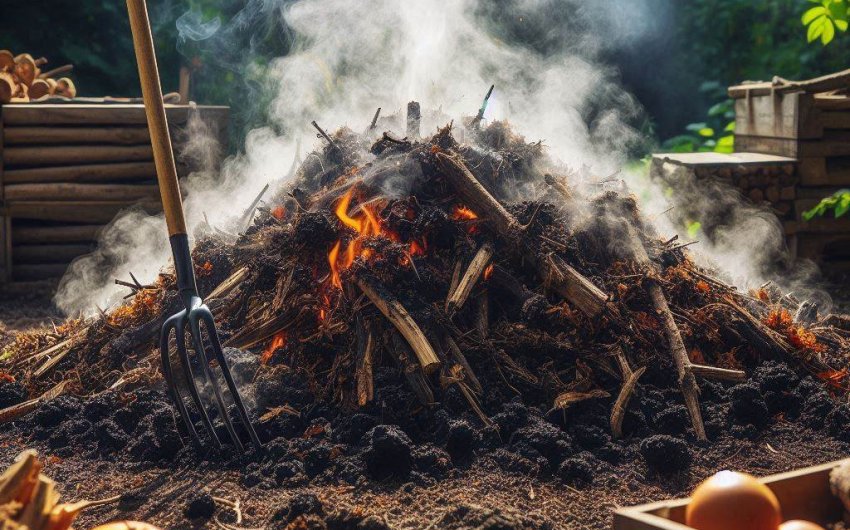
You can make hot compost in 30 days or less by balancing carbon and nitrogen materials, maintaining optimal moisture, and turning the pile frequently. This accelerated process relies on microbial activity fueled by the right conditions.
What is Hot Composting and Why Do It?
Hot composting is an accelerated composting method that breaks down organic matter quickly, often in a matter of weeks. It differs from traditional cold composting, which can take many months or even years. The primary reason to hot compost is speed; you get usable compost much faster. It also effectively kills weed seeds and pathogens due to the high temperatures achieved, making for a cleaner, safer end product for your garden. This method produces nutrient-rich soil amendments that significantly improve soil structure, water retention, and plant health.
How Does Hot Composting Work?
Hot composting relies on the rapid reproduction and activity of thermophilic bacteria. These microorganisms thrive in temperatures between 130°F and 160°F (55°C to 71°C). When you provide the right balance of "greens" (nitrogen) and "browns" (carbon), along with adequate moisture and oxygen, these bacteria break down organic materials at an incredibly fast rate, generating heat in the process. This heat is the hallmark of a successful hot compost pile.
What Materials Do You Need for Hot Composting?
To achieve rapid decomposition, you need a balanced mix of "greens" (nitrogen-rich materials) and "browns" (carbon-rich materials). Think of it as a diet for your compost microbes.
Carbon-Rich "Browns"
"Browns" provide the energy source for the microbes and create the bulk of your compost pile. They are typically dry and contain high amounts of carbon.
- Dry leaves: Excellent bulk material, readily available in autumn. Shredding them helps.
- Shredded cardboard: Avoid shiny or heavily printed cardboard. Great for adding structure.
- Wood chips: Small chips break down faster.
- Straw: Provides good aeration.
- Sawdust: Use sparingly, as it can be slow to break down and may require extra nitrogen.
- Pine needles: Acidic, so use in moderation unless your soil needs it.
- Newspaper (shredded): Avoid glossy or colored inks.
Nitrogen-Rich "Greens"
"Greens" provide the protein for the microbes, fueling their rapid reproduction and heat generation. They are typically fresh and moist.
- Fresh grass clippings: A common and excellent nitrogen source. Avoid thick layers that can become anaerobic.
- Vegetable and fruit scraps: Kitchen waste like peels, cores, and spoiled produce.
- Coffee grounds: Very high in nitrogen, also a good worm attractant.
- Tea bags: Remove staples first.
- Manure (herbivore): Cow, horse, chicken, or rabbit manure are excellent activators. Avoid pet waste from carnivores (cats, dogs) due to potential pathogens.
- Green plant trimmings: From your garden, but avoid diseased plants or those with mature seeds.
Water and Air
Besides greens and browns, water is crucial for microbial activity. The pile should be consistently moist, like a wrung-out sponge. Too dry, and decomposition slows down; too wet, and it becomes anaerobic and smelly. Air (oxygen) is also essential for aerobic decomposition. Turning the pile regularly introduces oxygen, preventing putrefaction and promoting efficient breakdown.
What's the Ideal Carbon-to-Nitrogen Ratio?
The ideal carbon-to-nitrogen (C:N) ratio for hot composting is approximately 25-30 parts carbon to 1 part nitrogen (25-30:1). Getting this ratio right is key to rapid decomposition and heat generation.
- Too much nitrogen: The pile can become slimy, compact, and smelly (ammonia odor). It will decompose too quickly without enough carbon to balance it.
- Too much carbon: The pile will be slow to heat up and decompose. It won't have enough nitrogen to fuel microbial growth.
How to Estimate the C:N Ratio
You don't need a scientific calculator to get this right. Think in terms of volume:
- Aim for about 2 parts brown materials for every 1 part green materials by volume.
- For example, if you add two buckets of dry leaves, add one bucket of fresh grass clippings.
- Experience will guide you. If your pile isn't heating up, add more greens. If it's slimy or smells like ammonia, add more browns.
How to Build a Hot Compost Pile?
Building your pile correctly from the start sets the stage for rapid decomposition.
Choosing Your Location
Select a spot that is:
- Shaded: Prevents the pile from drying out too quickly.
- Well-drained: Avoid waterlogging.
- Accessible: Easy to add materials and turn.
- Not too close to your house: Although a healthy pile shouldn't smell bad, it's best to keep some distance.
Preparing Materials
- Chop or shred materials: Smaller pieces break down much faster. Use a garden shredder or simply chop with pruning shears or a shovel. Aim for pieces no larger than 2 inches (5 cm).
- Mix well: Don't layer greens and browns like a lasagna. Mix them thoroughly as you build the pile to ensure even distribution of carbon and nitrogen, and good airflow.
Building Method
- Start with a base of coarse browns: This provides drainage and air circulation. Think woody stems or small branches.
- Add layers of mixed greens and browns: Continuously mix them as you add. A good strategy is to add a batch of browns, then a smaller batch of greens on top, then mix them together.
- Moisten as you go: Water each layer as you add it until it's damp, like a squeezed-out sponge.
- Aim for size: A minimum pile size of 3 feet by 3 feet by 3 feet (1 meter by 1 meter by 1 meter) is generally recommended for hot composting. This volume helps retain the heat generated by the microbes. Smaller piles struggle to maintain temperature. Larger piles might become too dense and anaerobic.
- Consider a compost bin: A compost bin or a compost tumbler can help contain the pile and make turning easier. However, an open pile works just as well if built correctly.
How to Maintain a Hot Compost Pile for 30 Days?
Maintaining the right conditions is crucial for achieving quick compost. This involves monitoring temperature, moisture, and turning the pile regularly.
Monitoring Temperature
Temperature is your primary indicator of microbial activity.
- Initial heat-up: A properly built pile should start heating up within 24 to 48 hours.
- Ideal temperature range: Aim for 130°F to 160°F (55°C to 71°C). Below this, decomposition is slower; above 160°F, beneficial microbes start to die off.
- Tools: Use a compost thermometer to check the temperature regularly, ideally daily or every other day. Insert it deep into the center of the pile.
Maintaining Moisture
- "Wring-out sponge" consistency: The pile should feel consistently damp, not soggy or dry.
- How to check: Squeeze a handful of material from the center of the pile. A few drops of water should emerge. If it drips heavily, it's too wet; if no water comes out, it's too dry.
- Adjusting moisture:
- Too dry: Add water gradually as you turn the pile.
- Too wet: Add more dry carbon materials (shredded cardboard, dry leaves) and turn thoroughly to introduce air.
Turning the Pile (Aeration)
Turning the pile is perhaps the most critical step for rapid hot composting. It aerates the pile, distributes moisture and nutrients, and moves outer, cooler material to the hotter center.
- Frequency:
- First few days: Turn the pile every day once the temperature reaches its peak (130°F-160°F).
- After 1-2 weeks: As the temperature starts to drop more slowly, you can turn every 2-3 days.
- How to turn: Use a compost fork or pitchfork. Break up any clumps, ensuring outer, cooler material is moved to the center, and inner, hotter material is moved to the outside.
- When to turn: Turn the pile whenever the internal temperature drops below 130°F (55°C). This indicates that the microbes are running out of oxygen. Turning reintroduces oxygen, and the temperature should rise again within hours.
What Are Common Problems and How to Solve Them?
Even with the best intentions, hot composting can present challenges. Here are common issues and their solutions.
Pile Isn't Heating Up
- Problem: The most common sign that something is off.
- Causes:
- Insufficient nitrogen: Not enough "greens."
- Too much carbon: Overwhelmed by "browns."
- Too dry: Microbes need water to thrive.
- Too small: The pile can't retain heat.
- Lack of aeration: Not enough oxygen for microbes.
- Materials too large: Large pieces break down slowly.
- Solutions:
- Add nitrogen: Incorporate more fresh grass clippings, coffee grounds, or manure.
- Add water: Moisten the pile thoroughly as you turn it.
- Turn the pile: Reintroduce oxygen.
- Chop materials finer: If materials are too large, re-shred them.
- Increase pile size: Build a larger pile, at least 3x3x3 feet.
Pile Smells Bad (Ammonia or Rotten Egg Smell)
- Problem: Unpleasant odors usually indicate anaerobic conditions.
- Causes:
- Ammonia smell: Too much nitrogen and not enough carbon.
- Rotten egg or sulfur smell: Too wet and not enough air.
- Solutions:
- Ammonia: Add more dry, carbon-rich materials (shredded leaves, straw, cardboard) and turn the pile well to aerate.
- Rotten egg: Add dry carbon materials to absorb excess moisture, then turn the pile frequently to introduce oxygen. Ensure good drainage at the base.
Pile is Attracting Pests
- Problem: Rodents, flies, or other pests.
- Causes:
- Unburied food scraps: Exposed kitchen waste is an open invitation.
- Meat, dairy, or oily foods: These should never go into a compost pile, especially a hot one. They attract pests and can become rancid.
- Solutions:
- Bury food scraps: Always bury new kitchen scraps deep within the pile's hot core.
- Avoid problematic materials: Strictly exclude meat, bones, dairy products, oils, and pet waste.
- Maintain heat: A hot pile generally deters pests, as the temperatures are too high for many.
Pile is Too Wet
- Problem: Soggy, slimy, or compact material.
- Causes:
- Too much rain: Unprotected piles in heavy rain.
- Too much green, wet material: Excess grass clippings without enough browns.
- Insufficient drainage: Poor base.
- Solutions:
- Add dry browns: Incorporate shredded cardboard, dry leaves, or straw to absorb excess moisture.
- Turn frequently: This introduces air and helps dry out the pile.
- Cover the pile: Use a tarp to protect it from excessive rain, ensuring it can still breathe.
When Is Your Compost Ready?
In a hot composting system, your compost can be ready in as little as 3-4 weeks, though 6-8 weeks is more common for truly finished compost. Here's how to tell:
- Appearance: It should be dark brown or black, crumbly, and uniform in texture. You shouldn't be able to distinguish the original materials.
- Smell: It should have a pleasant, earthy smell, like forest soil. There should be no foul or sour odors.
- Temperature: The pile should have returned to ambient temperature and no longer heat up when turned. This indicates that the active decomposition phase is complete.
- Texture: It should be fine and loose, easy to spread.
Curing (Optional, But Recommended)
Once your compost is "finished" by the above criteria, it's beneficial to let it cure for a few more weeks, or even months. This allows it to stabilize further, and any remaining larger pieces to break down fully. During curing, simply leave the pile untouched, perhaps covering it lightly to prevent it from drying out or getting waterlogged.
How to Use Your Finished Compost?
Your homemade hot compost is a valuable asset for your garden!
- Soil Amendment: Mix 1-2 inches of compost into the top 4-6 inches of your garden beds before planting. This enriches the soil, improves structure, and boosts water retention.
- Top Dressing: Spread a thin layer (1/2 to 1 inch) of compost around existing plants, trees, and shrubs. This slowly releases nutrients and acts as a mulch, suppressing weeds and conserving moisture.
- Potting Mix Component: Combine finished compost with peat moss or coco coir, perlite, and vermiculite to create your own nutrient-rich potting mix for containers. A good ratio might be 1 part compost, 1 part perlite/vermiculite, 2 parts peat/coco coir.
- Lawn Dressing: Apply a thin layer of screened compost over your lawn, then rake it in. It improves soil health, leading to a healthier, greener lawn.
- Starting Seeds: While pure compost can be too rich for delicate seedlings, you can use it as a small component in a seed-starting mix.
Hot Composting vs. Cold Composting: A Comparison
Understanding the differences helps you choose the right method for your needs.
| Feature | Hot Composting | Cold Composting |
|---|---|---|
| Speed | Fast (weeks to 2-3 months) | Slow (months to 1-2 years) |
| Effort | High (frequent turning, monitoring) | Low (add materials, largely ignore) |
| Materials | Requires balanced C:N ratio, chopped fine | Less strict C:N, can handle larger pieces |
| Temperature | High (130-160°F / 55-71°C) | Low (ambient temperature) |
| Weed Seeds/Pests | Kills most weed seeds and pathogens | May not kill weed seeds or pathogens |
| Pile Size | Needs a minimum size (3x3x3 ft) for heat retention | No minimum size, can be any pile |
| Odor | Earthy smell if done right, can smell if unbalanced | Can be smelly if not well-aerated or if meat/dairy added |
| End Product | Rich, uniform, finished compost | Variable quality, may have unfinished pieces |
Essential Tools for Hot Composting
Having the right equipment makes the process much easier and more efficient.
- Compost Thermometer: Reotemp Compost Thermometer is highly recommended for accurately monitoring internal pile temperature. Crucial for hot composting.
- Compost Fork or Pitchfork: A sturdy compost fork or a standard garden pitchfork is indispensable for turning and aerating the pile. Look for one with strong tines.
- Water Hose with Spray Nozzle: For moistening the pile. A nozzle that provides a gentle shower is ideal to avoid washing away nutrients.
- Shredder/Chipper (Optional but Recommended): A garden shredder or chipper quickly processes larger brown materials like branches and leaves into smaller, compostable pieces, significantly speeding up decomposition.
- Compost Bin/Tumbler (Optional): While not strictly necessary, a compost tumbler makes turning the pile incredibly easy, especially for those with limited space or physical strength. For larger volumes, a multi-bin system or simple wood pallet bins work well.
- Wheelbarrow or Tarp: Useful for transporting materials to and from your compost pile. A large tarp can also be used to mix materials evenly before adding them to the pile.
- Gloves: Protect your hands from dirt, splinters, and potential irritants.
Advanced Tips for Super-Fast Compost
If you're looking to push the boundaries of "30 days or less," consider these advanced techniques.
Consistent Particle Size
The more uniform and small your materials are, the faster they will break down. Aim for all materials to be less than 1-2 inches (2.5-5 cm) in size. Use your shredder diligently!
Optimal Moisture from the Start
Don't guess on moisture. As you build the pile, water each layer thoroughly until it's consistently damp, then do the "squeeze test" on a handful. This ensures microbes have moisture from day one.
Activators (Optional)
While a good C:N ratio is the best activator, some people use compost activators or a shovel full of finished compost or garden soil from a healthy ecosystem to kickstart microbial activity in a new pile. These introduce beneficial microbes. Just remember, they are not a substitute for proper material balance.
Frequent Turning and Re-piling
For maximum speed, turn the pile every day, or at least every other day, especially during the initial heating phase. Each turn should be a complete re-piling, ensuring the cooler outer layers are brought to the hot core. This also ensures oxygen saturation.
Managing Nitrogen "Spikes"
If you have a large influx of high-nitrogen material (like a massive lawn mowing), don't just dump it. Mix it thoroughly with a large volume of browns already in the pile or dry browns you have stockpiled. This prevents the pile from becoming anaerobic and smelly.
The Science Behind Hot Composting
Understanding the microbial processes at play helps you troubleshoot and optimize your hot compost pile.
Microbial Succession
Composting isn't just one type of microbe doing all the work. It's a succession of different groups:
- Mesophilic bacteria: These are active at moderate temperatures (50-100°F / 10-40°C). They start the initial breakdown of materials and begin heating the pile.
- Thermophilic bacteria: As the temperature rises, these heat-loving microbes take over (100-160°F / 40-71°C). They are the primary decomposers in hot composting, rapidly breaking down organic matter and generating significant heat. They are responsible for killing pathogens and weed seeds.
- Fungi and Actinomycetes: These also play a role, especially in breaking down tougher materials like wood. Actinomycetes, which look like a cross between bacteria and fungi, are often responsible for the earthy smell of good compost.
The Role of Oxygen (Aerobic Process)
Hot composting is an aerobic process, meaning it requires oxygen. When oxygen is present, microbes efficiently convert organic matter into carbon dioxide (CO₂), water (H₂O), and heat. Without enough oxygen (anaerobic conditions), different microbes take over, producing methane (a potent greenhouse gas), hydrogen sulfide (rotten egg smell), and other noxious compounds. Regular turning ensures a constant supply of oxygen.
Carbon as an Energy Source
Carbon provides the energy source for the microbes. They essentially "burn" carbon for their metabolic processes. Without sufficient carbon, the microbes starve, and decomposition slows.
Nitrogen for Reproduction
Nitrogen is essential for microbial protein synthesis and reproduction. It's the building block for their bodies. A lack of nitrogen limits microbial growth, slowing down the entire composting process.
Water as a Medium
Water acts as the transport medium for nutrients, allowing microbes to absorb them. It also facilitates chemical reactions. Too little water, and microbial activity ceases; too much, and it displaces air, leading to anaerobic conditions.
Surface Area Matters
The more surface area exposed on your compost materials, the more places microbes have to attach and begin their work. This is why shredding materials significantly increases decomposition speed. Every cut exposes fresh surfaces for microbial colonization.
Hot composting is a rewarding and efficient way to create nutrient-rich soil amendments for your garden in a short timeframe. By carefully balancing your greens and browns, maintaining optimal moisture, and diligently turning your pile, you can successfully make hot compost in 30 days or less. This method transforms organic waste into a valuable resource, closing the loop in your garden and enriching your soil for healthier, more vibrant plants.