
How to Test When Your Compost Is Ready to Use?
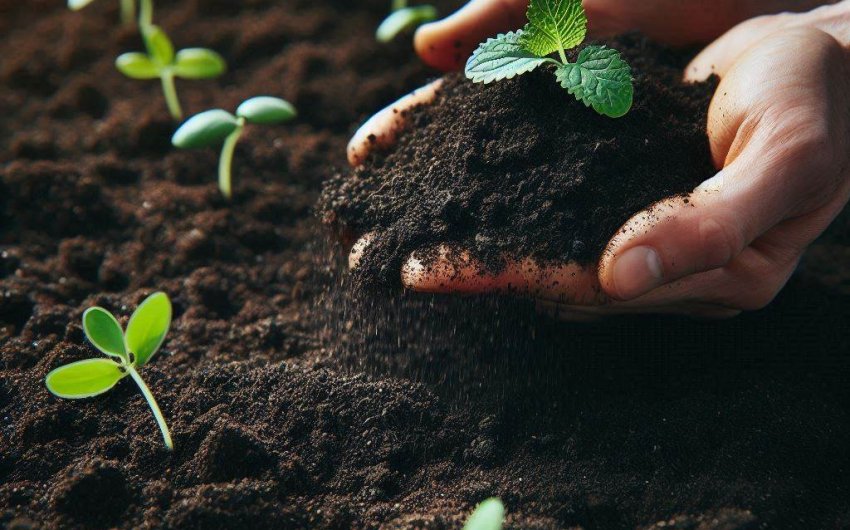
You’ve been diligently tossing your kitchen scraps and yard waste into your compost bin. You’ve turned it, watered it, and maybe even wrestled with some curious critters. Now, you’re eager to use that "black gold" in your garden. But how do you know when your compost is ready to use? It's not always as simple as a calendar date. Using compost that isn't fully "finished" can actually harm your plants instead of helping them. So, learning how to tell when your compost is truly ready is super important for healthy plants and a happy garden.
Why "Finished" Compost Matters
You might think, "What's the big deal? It's just dirt, right?" Not exactly. Compost isn't just dirt; it's a living, breathing soil amendment. And "finished" compost is a different beast from "unfinished" compost.
The Problem with Unfinished Compost
Imagine throwing raw food scraps directly onto your plants. Not only would it smell bad and attract pests, but it would also "steal" nutrients from your plants as it breaks down. This is similar to what happens with unfinished compost.
- Nutrient Tie-Up (Nitrogen Drawdown): As organic materials break down in your compost pile, microbes (tiny living things) do all the hard work. If these microbes are still very active when you put the compost on your plants, they will keep breaking down the carbon-rich materials. To do this, they need nitrogen. They'll take this nitrogen from the soil, effectively "stealing" it from your plants. This is called nitrogen drawdown. Your plants will look yellow and sickly because they can't get enough nitrogen to grow.
- Heat Generation: Active decomposition in a compost pile creates heat. If you put very "hot" unfinished compost directly around delicate plant roots, it can literally burn them. This is especially true if you use it as a potting mix.
- Weed Seeds and Pathogens: If your compost pile didn't get hot enough (around 130-160°F or 54-71°C) during its active phase, it might still contain viable weed seeds or harmful plant pathogens (disease-causing germs). You definitely don't want to spread these in your garden.
- Pest Attraction: Unfinished compost might still contain recognizable food scraps that can attract unwanted guests like rodents or insects to your garden beds.
- Phytotoxins: In some cases, unfinished compost can contain compounds called phytotoxins (phyto means plant, toxin means poison). These are substances that can harm plant growth. They usually break down as the compost fully matures.
The Benefits of Finished Compost
On the flip side, fully finished compost is a garden superpower.
- Stable Nutrients: The decomposition process has slowed down. The nutrients are now in a stable form that plants can easily use over time. No nitrogen drawdown!
- Improved Soil Structure: Finished compost is crumbly and rich. It improves clay soils by loosening them, and it helps sandy soils hold more water and nutrients.
- Enhanced Water Retention: It acts like a sponge, helping your soil hold onto moisture.
- Beneficial Microbes: It's teeming with a healthy community of microbes that promote plant health and fight off diseases.
- Weed and Pathogen Free: If hot composted correctly, it's free of weed seeds and harmful pathogens.
- No Unpleasant Odors: It smells earthy and pleasant, like a forest floor.
So, getting it right is worth the wait.
The Visual Clues: What to Look For
The easiest way to tell if your compost is ready to use is by looking at it. Your eyes are your first, and often best, tool.
Color
- Ready: Your compost should be a uniform, deep brown or black color. Think of rich chocolate cake crumbs.
- Not Ready: If you still see bright green leaves, orange carrot peels, or white potato skins, it's definitely not ready. It should be a consistent dark color.
Texture
- Ready: Finished compost should be loose, crumbly, and uniform in texture. It should feel like very fine, moist soil. You shouldn't be able to easily identify individual pieces of the original ingredients, except maybe a few stubborn twigs or avocado pits. It should crumble easily in your hand.
- Not Ready: If it's clumpy, slimy, or you can still clearly see things like eggshells, banana peels, or large wood chips, it needs more time.
Odor
- Ready: The smell test is key. Finished compost should smell earthy, like fresh forest soil after a rain. It's a pleasant, slightly sweet, wholesome smell.
- Not Ready: If it smells sour, ammonia-like (like cat urine), rotten, or like sulfur (rotten eggs), it's not ready. These smells usually mean the pile is too wet, lacks oxygen, or has too much nitrogen. It's still actively breaking down in an anaerobic (without oxygen) way.
Temperature (Cool Down)
- Ready: A compost pile that is ready to use will be cool to the touch, roughly the same temperature as the outside air. The intense heating phase of decomposition has ended.
- Not Ready: If you stick your hand into the pile and it feels warm or hot, it's still actively decomposing and not ready. You can also use a compost thermometer to check this more accurately. A reading consistently below 100°F (38°C) and approaching ambient temperature indicates maturity.
Original Ingredients Gone
- Ready: You should no longer be able to easily identify most of the original materials you put in. A piece of wood might still be recognizable, but an apple core should be long gone.
- Not Ready: If you can still see recognizable pieces of fruit, vegetables, or even paper, it needs more time.
The Practical Tests: Beyond What You See
While visual clues are great, sometimes you need a little more certainty. Here are some practical ways to test your compost.
The Squeeze Test (Moisture)
This test helps you check both moisture and texture.
- How to do it: Grab a handful of compost from the middle of the pile. Squeeze it firmly in your fist.
- Ready: A few drops of water should come out, but it shouldn't be soaking wet. When you open your hand, the compost should hold its shape loosely, but easily fall apart with a gentle poke. This indicates ideal moisture and a crumbly texture.
- Not Ready: If water streams out, it's too wet. If it stays in a solid ball like clay, it's too wet or too compacted. If it's bone dry and crumbles immediately, it's too dry (and decomposition has likely stalled).
The Germination Test (Sprout Test)
This is a classic and very reliable way to see if your compost has any harmful phytotoxins or if it will cause nitrogen drawdown. If the seeds sprout and grow well, your compost is good to go. If they struggle or die, it's not ready.
- What you need: Two small pots or containers, some of your compost, some regular potting soil (as a control), and some fast-sprouting seeds (like radish or mustard seeds).
- How to do it:
- Fill one pot with your suspect compost.
- Fill the second pot with the regular potting soil (this is your control group).
- Plant about 10-15 seeds in each pot. Don't crowd them.
- Water both pots gently.
- Place them in a warm, bright spot.
- Keep them consistently moist, but not soggy.
- What to look for:
- Ready: After 3-7 days, the seeds in your compost should sprout just as well, if not better, than the seeds in the regular potting soil. The seedlings should look strong and green.
- Not Ready: If seeds in the compost sprout slowly, don't sprout at all, or if the seedlings look weak, yellow, or stunted compared to the control group, your compost is not fully finished. It might have phytotoxins or still be causing nitrogen drawdown.
The Screen Test (Sifting)
This isn't a test of readiness so much as a way to prepare your compost for use and identify unfinished material.
- How to do it: Use a compost sifter or a simple screen (like hardware cloth) to separate the fine, finished compost from any larger, undecomposed pieces.
- What you get: The fine material that passes through the screen is your beautiful, ready-to-use compost. The larger pieces that don't pass through can be put back into your compost pile to continue breaking down.
- Benefits: This gives you a truly uniform product, perfect for potting mixes or top-dressing. A compost sifter can make this job much easier.
Advanced Testing (Optional)
For the truly dedicated gardener, there are a few more ways to assess compost quality, though these are usually not necessary for home gardeners.
pH Test
- How it works: You can use a soil pH testing kit to measure the pH of your compost.
- Ready: Finished compost usually has a neutral to slightly alkaline pH, typically between 6.0 and 8.0. The pH fluctuates during the composting process, becoming acidic in the early stages and then stabilizing as it matures.
- Not Ready: A very acidic pH (below 5.0) might indicate unfinished decomposition or too much acidic material in the pile.
Solvita Test
This is a more professional test used by commercial composters. It measures the carbon dioxide respiration (how much gas microbes are putting out) and ammonia levels, which are indicators of stability and maturity. This is usually beyond the scope of a home gardener but is interesting to know about.
Tips for Getting Your Compost Ready Faster
If your compost isn't ready and you want to speed things up, here are some common reasons it might be slow and what to do:
Not Hot Enough?
- Reason: Pile is too small, too dry, not enough nitrogen, or not enough air.
- Solution: Make sure your pile is at least 3x3x3 feet. Add more "greens" (fresh grass clippings, food scraps) to boost nitrogen. Add water until it's like a damp sponge. Turn it more often to add air.
Too Wet and Smelly?
- Reason: Not enough "browns" (carbon), or too much water, leading to anaerobic conditions.
- Solution: Add more "browns" (dry leaves, straw, shredded paper, wood chips). Turn the pile to introduce air and help it dry out. If it's really soggy, spread it out on a tarp for a day to air out.
Too Dry?
- Reason: Not enough moisture.
- Solution: Add water! Slowly sprinkle water over the pile as you turn it. Don't just dump a bucket on top, or it will run off. You want it damp all the way through.
Not Breaking Down Evenly?
- Reason: Not turning enough, or materials are too large.
- Solution: Turn the pile more frequently. Break up larger pieces of food waste or yard debris before adding them to the pile. A compost shredder can help with woody materials.
Patience is Key
Even with all the right steps, composting takes time. Depending on your method (cold vs. hot composting), the climate, and the materials you add, it can take anywhere from a few months (for a very active hot pile) to over a year (for a slower, cooler pile). Don't rush the process. A slow but steady compost pile is better than an unfinished one.
Using Your Finished Compost
Once your compost is ready to use, the possibilities are endless!
- Soil Amendment: Mix it into your garden beds before planting. It improves soil structure and fertility.
- Top-Dressing: Spread a 1-2 inch layer over the soil around existing plants. It slowly releases nutrients and retains moisture.
- Potting Mix: Mix it with an equal amount of sand, perlite, or coir to create a fantastic homemade potting mix for containers.
- Seed Starting: A very fine, screened compost can be used for seed starting, often mixed with a bit of perlite or vermiculite for drainage.
- Compost Tea: Steep finished compost in water for a day or two to make "compost tea" – a liquid fertilizer that's great for foliar feeding or watering plants. You can use a compost tea brewer for this.
Learning to recognize when your compost is ready to use is one of the most important skills for any composter. By paying attention to its look, feel, smell, and temperature, and performing a simple germination test, you can ensure that you’re adding beneficial, life-giving material to your garden, setting your plants up for success. Happy composting!