
How Can I Improve the Drainage in My Lawn?
There's nothing quite as frustrating as seeing puddles linger on your lawn days after a rain shower, or noticing areas where the grass looks yellow, thin, or even dead due to constant wetness. Poor lawn drainage is a common problem for many homeowners, and it's more than just an unsightly inconvenience. Standing water and soggy soil can harm your grass, encourage diseases, and even attract unwanted pests. It can make your yard unusable after even light rain, turning it into a muddy mess.
The good news is that most lawn drainage issues can be fixed. Understanding why water isn't draining properly is the first step. Whether you have heavy clay soil, a sloped yard, or just compacted areas, there are practical solutions you can implement. We'll explore the common causes of poor lawn drainage and provide a range of effective strategies, from simple soil improvements to more involved landscaping solutions, to help you reclaim a healthy, dry, and beautiful lawn.
What Causes Poor Lawn Drainage?
Before you can fix a lawn drainage problem, you need to understand its root cause. Often, it's a combination of factors related to your soil, the landscape, or human activity.
What Role Does Soil Type Play?
The type of soil you have is often the primary culprit for poor drainage.
- Heavy Clay Soil: This is the most common cause. Clay particles are very tiny and stick together tightly, leaving very little space for water and air. When clay soil gets wet, it becomes dense and impermeable, causing water to sit on the surface or drain extremely slowly. You can often tell if you have clay soil because it feels sticky when wet and can be rolled into a ball easily.
- Compacted Soil: Even if you don't have naturally heavy clay, any soil can become compacted over time.
- Reasons: Heavy foot traffic, vehicles driving on the lawn, construction activity, or even heavy machinery (like mowers) can press soil particles together.
- Effect: Compaction reduces the pore space in the soil, preventing water and air from moving through freely. Roots also struggle to grow in compacted soil.
- Hardpan Layer: Sometimes, there's a hard, impenetrable layer of compacted soil or a dense subsoil just below the surface. This "hardpan" acts like a barrier, stopping water from draining deeper. This can happen from repeated tilling at the same depth or natural soil formation.
How Does Landscape Slope Affect Drainage?
The shape and contour of your yard (its grade) play a huge role in how water moves.
- Flat Areas with Depressions: If your lawn is very flat, but has small dips or low spots, water will naturally collect there after rain, forming puddles.
- Improper Grading: Water should always flow away from your house foundation. If your yard slopes towards your house, or if the grade around your foundation is negative (sloping down), water will pool against the foundation, leading to serious drainage issues and potential water damage to your home.
- Excessive Slope/Runoff: Conversely, a very steep slope can cause water to run off too quickly, leading to erosion and not allowing enough water to soak into the ground where plants need it. While this isn't "poor drainage" in the sense of pooling, it still means insufficient water infiltration.
What About Other Contributing Factors?
- Thatch Buildup: Over time, a thick layer of undecomposed organic material (dead grass blades, stems) called thatch can accumulate on top of the soil. A thick thatch layer (over 1/2 inch) can act like a sponge, holding water on the surface and preventing it from reaching the soil.
- Underground Obstructions: Sometimes, buried rocks, construction debris, or even old tree roots can impede the natural flow of water underground, creating localized wet spots.
- Excessive Watering: If you're simply watering your lawn too much or too frequently, the soil doesn't have enough time to dry out between waterings, leading to constantly saturated conditions.
- Clogged Drains/Downspouts: If your roof's downspouts simply dump water directly onto the lawn without proper extension or connection to a drainage system, this can create massive localized puddling. Clogged gutters also lead to uncontrolled water flow.
Understanding which of these factors (or combination of factors) is causing your lawn drainage issue is the first step towards choosing the most effective solution.
How Can You Improve Soil-Related Drainage Issues?
If your lawn drainage problems are mainly due to heavy clay, compacted soil, or thatch buildup, improving the soil itself is the most effective long-term solution. These methods focus on making the soil more porous and healthier.
Why is Aeration Important?
Aeration is the process of making small holes or removing plugs of soil from your lawn.
- Benefits: It's fantastic for relieving soil compaction. The holes allow air, water, and nutrients to penetrate deeper into the soil, reaching the grass roots more effectively. This improves drainage, reduces runoff, and encourages deeper root growth, making your lawn more resilient.
- Core Aeration (Best Method): This involves removing small "plugs" or "cores" of soil from the lawn. This is the most effective way to alleviate compaction.
- Equipment: You can rent a Lawn Core Aerator from a tool rental store, or hire a professional lawn care service.
- Timing: Perform core aeration during your grass type's peak growing season (fall for cool-season grasses, late spring/early summer for warm-season grasses).
- Spike Aeration: This involves simply poking holes in the ground with a garden fork or spike aerator shoes. While it does create holes, it can also further compact the soil around the holes, making it less effective for severe compaction.
- Frequency: For very compacted lawns, aerate once or twice a year for several years until soil structure improves.
How Does Top-Dressing with Organic Matter Help?
Top-dressing means applying a thin layer of material (like compost) over your existing lawn.
- Compost is Key: Compost is the best material for top-dressing to improve drainage. It adds organic matter, which fundamentally changes soil structure.
- For clay soils, it helps aggregate the small particles, creating larger pores for drainage.
- For sandy soils, it adds spongy material that holds water and nutrients.
- Benefits: Over time, the organic matter works its way into the soil, permanently improving drainage, aeration, and fertility. It also feeds beneficial soil microbes.
- Method: After aeration (the holes help the compost penetrate), spread a thin (1/4 to 1/2 inch) layer of fine, screened Organic Compost for Lawns over your lawn. Use a rake or the back of a shovel to gently work it down into the grass blades.
- Timing: Best done after aeration, typically in fall or spring.
What About Dethatching?
If your lawn drainage problem is partly due to a thick layer of thatch (more than 1/2 inch thick), dethatching can help.
- Thatch: A layer of dead grass, stems, and roots that accumulates between the soil surface and the green grass blades. A thick layer can prevent water, air, and nutrients from reaching the soil.
- Method: Use a power dethatcher (which you can rent) or a Dethatching Rake to remove the excess thatch.
- Timing: Perform dethatching during your grass type's peak growth period (fall for cool-season, late spring/early summer for warm-season).
- Benefits: Improves water penetration, air circulation, and nutrient absorption.
By consistently implementing these soil-focused improvements, you can gradually transform your compacted or heavy clay soil into a healthier, more porous environment that drains much better.
How Can You Address Landscape-Related Drainage Issues?
If water is pooling due to the grade or slope of your yard, or issues with rainwater runoff, you'll need to consider landscaping solutions that redirect or absorb excess water.
What is Proper Grading?
Grading refers to the slope of your land. This is the first thing to check if water pools around your house foundation.
- Slope Away from House: The ground around your house foundation should always slope away from the house at a minimum rate of 1 inch per foot for the first 6-10 feet. This prevents water from pooling against the foundation and potentially seeping into your basement or crawl space.
- Filling Depressions: For low spots or depressions in the lawn where water consistently pools, you can fill them with a mixture of sand and topsoil, topped with compost, and then reseed or re-sod.
How Do You Manage Downspout Runoff?
Your roof can shed a large volume of water during rain. If this water is simply dumped onto the lawn near your foundation, it will create significant puddles and drainage problems.
- Downspout Extensions: Attach flexible or rigid Downspout Extensions to your downspouts to carry water at least 6-10 feet away from your house foundation.
- Connect to Drainage System: For more permanent solutions, connect downspouts to an underground drainage system (like a French drain or solid pipe) that carries the water further away, or even to a rain garden.
- Check Gutters: Ensure your gutters are clean and free of debris. Clogged gutters will cause water to overflow and run down your house, exacerbating drainage problems.
What is a French Drain?
A French drain is a trench filled with gravel and containing a perforated pipe that redirects excess groundwater and surface water away from a problem area.
- How it Works: Water enters the perforated pipe through small holes, flows along the pipe's length, and is then carried away to a lower, drier area (like a street, a storm drain, or a rain garden).
- Construction: Involves digging a trench (typically 6-18 inches wide and 18-24 inches deep), lining it with landscape fabric, laying a layer of gravel, placing the perforated pipe, covering with more gravel, and then wrapping with the fabric and backfilling with soil.
- Benefits: Very effective for intercepting subsurface water flow or diverting large volumes of surface water from a soggy area. You can find French Drain Kits for DIY projects.
- Considerations: Can be a significant undertaking, requiring proper planning for the outflow point.
What is a Rain Garden?
A rain garden is a shallow, vegetated depression designed to collect and absorb stormwater runoff from impervious surfaces like roofs, driveways, or compacted lawns.
- How it Works: Instead of water running off into storm drains, it's directed into the rain garden, where it slowly infiltrates the soil. The plants (often native and water-tolerant) filter pollutants, and the water recharges groundwater.
- Benefits: Excellent for managing localized pooling, improves water quality, creates attractive wildlife habitat.
- Construction: Involves excavating a depression, improving the soil with organic matter (like compost), and planting appropriate vegetation. You can find beautiful Rain Garden Plant Seeds to fill it.
Addressing these landscape and runoff issues can provide targeted and effective solutions for persistent lawn drainage problems.
What Are Some Other Ways to Improve Lawn Drainage?
Beyond the major fixes, several other practices can support better lawn drainage and overall lawn health.
How Does Proper Watering Help?
- Avoid Overwatering: Sometimes, the problem isn't the soil, but simply applying too much water too often. If your soil is consistently soggy, reduce your watering frequency.
- Deep and Infrequent: As discussed in eco-friendly lawn care, water deeply but infrequently. This encourages grass roots to grow deeper, making them more resilient and able to withstand periods between waterings.
- Check Before Watering: Stick your finger into the soil. If it's still moist, wait.
What About Changing Grass Types?
If your lawn drainage issues are mild or persistent despite other efforts, consider the type of grass you have.
- Water-Tolerant Grasses: Some grass types are more tolerant of wet conditions than others. For areas that tend to stay moist but don't have standing water, you might consider:
- Cool Season: Tall Fescue, Creeping Red Fescue, Perennial Ryegrass.
- Warm Season: Zoysiagrass, St. Augustinegrass.
- Overseeding: Overseed your lawn with Water Tolerant Grass Seed varieties that are better suited to your soil and moisture conditions.
Should I Install a Sump Pump?
For severe, persistent water accumulation in basements or very low-lying areas of the yard that are otherwise difficult to drain, a sump pump might be a necessary, though more invasive, solution.
- How it Works: A sump pump collects excess water in a basin (a sump pit) and then pumps it away from your property through a discharge pipe.
- Considerations: This is typically a last resort for chronic water problems. It requires professional installation and maintenance. You can find various Sump Pumps for Home.
What About Landscaping Alternatives for Problem Areas?
For areas with very poor lawn drainage where grass simply won't thrive, consider converting that section into a different type of landscape.
- Native Plantings: Replace grass with native plants that are tolerant of wet conditions. These can create beautiful and low-maintenance garden beds.
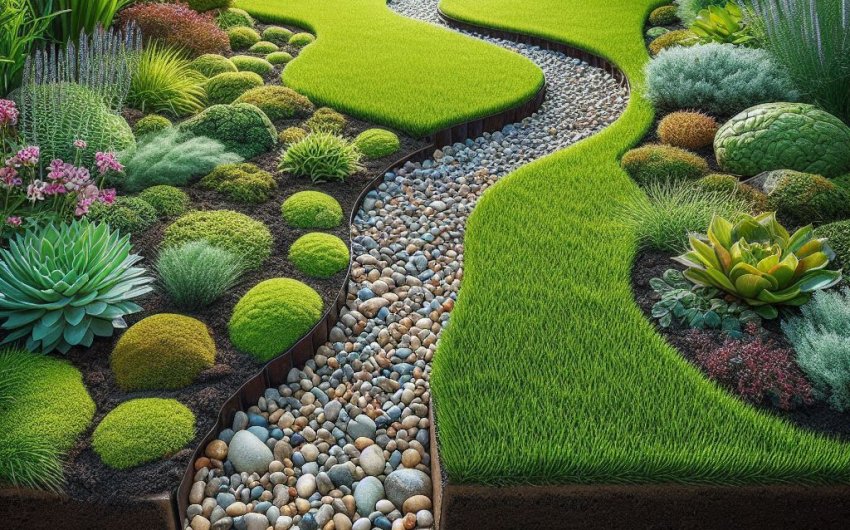
- Gravel Paths/Beds: Create a gravel path or a decorative gravel bed in the persistently wet area. This provides a functional and aesthetic solution that doesn't require good drainage for grass.
- Raised Garden Beds: Build Raised Garden Beds in soggy areas and fill them with well-draining soil, allowing you to grow plants that wouldn't survive in the native soil.
Improving lawn drainage can be a multi-faceted process, often requiring a combination of these solutions. By systematically addressing the root causes, you can transform a soggy, problematic lawn into a healthy, dry, and beautiful outdoor space.