
Insect Integration: Adding Deceased Bugs to Compost for Garden Growth!
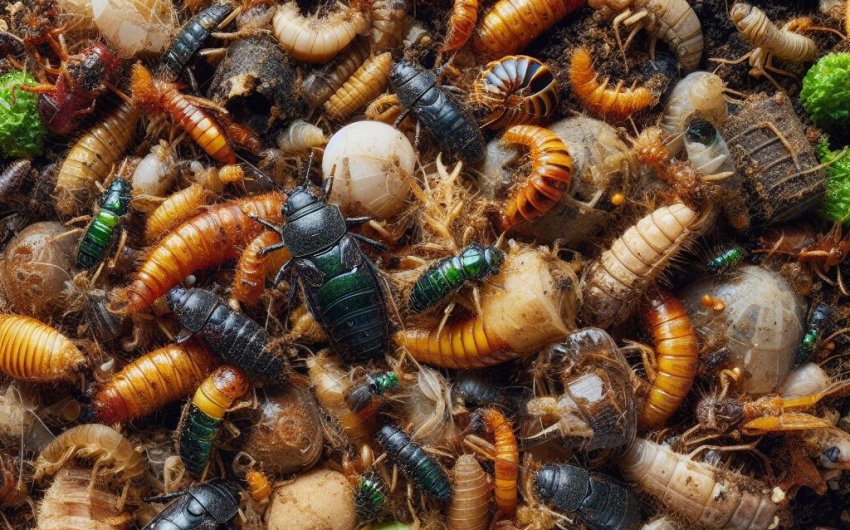
Composting is a wonderful way to recycle organic waste, turning what might otherwise be thrown away into a rich, dark material that nourishes your garden. Most of us are familiar with adding kitchen scraps, yard trimmings, and perhaps even shredded paper to our compost bins. These "greens" and "browns" form the backbone of a healthy compost pile, breaking down into valuable soil amendments.
But what about other forms of organic matter? Specifically, what about insects? It might seem a bit unusual at first, but integrating deceased bugs into your compost is not only a natural and effective way to recycle, but it also brings unique benefits to your composting process and ultimately, to your garden's growth. After all, insects are a natural part of any ecosystem, and when they die, their nutrients return to the soil.
This guide will delve into the fascinating and practical aspect of adding deceased insects to your compost. We'll explore the benefits they bring, which types are safe to add, the best practices for their inclusion, and how this seemingly small act can contribute to a healthier, more vibrant garden. Get ready to rethink what you can (and should) be adding to your compost pile!
Why add deceased bugs to your compost?
The idea of adding deceased bugs to compost might strike some as unconventional, or even a bit gross, but from a composting and ecological perspective, it makes perfect sense. These tiny creatures, often overlooked, actually offer several valuable contributions to your compost pile and, by extension, your garden's health.
1. Rich source of nitrogen
- Protein powerhouse: Insects are primarily made up of protein, and protein is rich in nitrogen. Nitrogen is one of the three main macronutrients (N-P-K) that plants need for healthy growth, especially for lush green foliage.
- Balancing the greens and browns: Compost piles thrive on a good balance of "greens" (nitrogen-rich materials) and "browns" (carbon-rich materials). While kitchen scraps and grass clippings provide nitrogen, small quantities of insects can supplement this, especially if you have an abundance of browns. They act as a concentrated "green" component.
- Faster decomposition: Nitrogen is essential for the microorganisms that break down organic matter. Adding nitrogen-rich insects can help speed up the decomposition process, particularly if your pile is heavy on carbon materials.
2. Contains valuable micronutrients
- Beyond N-P-K: While nitrogen is a primary benefit, insects also contain a range of other essential micronutrients that plants need in smaller amounts. These can include phosphorus, potassium, calcium, magnesium, iron, and zinc, among others.
- Chitin: Insect exoskeletons are made of chitin, a complex carbohydrate that, when broken down, can promote beneficial microbial activity in the soil. Some studies suggest chitin may even help suppress certain plant diseases and nematodes.
3. Natural recycling and closing the loop
- Ecological cycle: In nature, when an insect dies, its body decomposes, and its nutrients are returned to the soil to be reused by plants. Adding insects to your compost is simply replicating this natural cycle in your garden.
- Waste reduction: Instead of sweeping up dead insects and throwing them in the trash, composting them ensures their valuable components are repurposed for beneficial use in your garden.
- Supporting the soil food web: By providing this diverse organic matter, you're feeding the vast community of microorganisms, fungi, and other invertebrates (like beneficial worms and microbes) that make your compost pile work.
4. Minimal effort for significant gain
- No special processing: Unlike some materials that need chopping or shredding, small insects require no special preparation. You can simply toss them into the pile.
- Convenient disposal: It's an easy and clean way to dispose of individual insects you find around the house or garden.
While large quantities of insects are unlikely to be a regular addition for most home composters, the occasional inclusion of deceased bugs offers a simple yet effective way to enrich your compost with valuable nutrients, contributing to a healthier and more vibrant garden ecosystem.
What kind of deceased bugs are safe to add to compost?
When considering integrating deceased bugs into compost, it's important to be selective. While most common household and garden insects are safe to add, there are a few categories you should generally avoid to ensure the health and safety of your compost and garden.
Generally safe to add (and beneficial)
These are the vast majority of insects you're likely to encounter and collect.
- Common household insects:
- Flies: House flies, fruit flies (dead ones, of course!).
- Spiders: While not technically insects (they're arachnids), dead spiders are perfectly fine to add.
- Ants: Dead ants are a good source of nitrogen.
- Mosquitoes: Dead mosquitoes are fine.
- Moths and butterflies: Dead moths and butterflies.
- Beetles: Most common garden beetles (e.g., ladybugs, ground beetles) are fine.
- Garden pests (non-diseased):
- Aphids: If you've collected a bunch of dead aphids (e.g., after spraying with insecticidal soap), they can go in.
- Slugs and snails: (Technically mollusks, not insects, but often collected as garden pests). Small numbers are fine, but ensure they are thoroughly dead to prevent them from crawling out of the pile. They can be a source of disease if not fully composted.
- Caterpillars: Dead caterpillars from your garden.
- Any naturally deceased insect: If you find dead bugs indoors or out, that haven't been killed with harmful chemicals, they're generally good to go.
Bugs to generally AVOID adding (or use extreme caution)
There are a few instances where caution or avoidance is best:
- Insects killed with synthetic pesticides:
- Why avoid: If you've used strong, persistent chemical pesticides to kill bugs (especially those listed as systemic or long-residual), these chemicals can remain active on or within the insect's body. Adding them to your compost could potentially introduce harmful chemicals into your finished compost, which you then use on your edible garden. This defeats the purpose of organic composting.
- Recommendation: If you've used such pesticides, dispose of the dead bugs in the regular trash, not the compost. If you're using organic sprays like insecticidal soap or neem oil, these break down rapidly and are generally safe for composting dead insects.
- Insects that carry plant diseases:
- Why avoid (caution): While a hot compost pile can kill most pathogens, some very resilient plant diseases carried by insects (especially viral or bacterial diseases) might theoretically survive if your compost pile doesn't consistently reach high temperatures throughout.
- Recommendation: For common garden pests, it's usually not a big concern. However, if you have a known outbreak of a severe, persistent plant disease (e.g., specific blights or wilts) and the insects were direct vectors of that disease, it might be safer to avoid adding large quantities of those specific diseased insects. For home compost, this is usually an overthink, but worth noting.
- Large quantities of very spiny or sharp insects:
- Why avoid (practicality): While not harmful to the compost, large numbers of insects with very hard, sharp exoskeletons (e.g., certain large beetles with thick shells) might take longer to break down and could make your finished compost unpleasant to handle.
- Recommendation: Crush or chop them if you have a lot, or simply add them in moderation.
- Insects that might attract rodents/scavengers:
- Why avoid: This isn't about the insect itself being harmful, but rather its potential to attract unwanted guests to your compost.
- Examples: Large quantities of cockroaches or other insects that might signal a larger infestation that could then be drawn to your compost.
- Recommendation: Focus on proper compost management (burying materials, secure bin) if you're concerned about attracting scavengers, regardless of insect additions.
For the average home composter, the rule of thumb is: if it's a small, dead insect from your house or garden that wasn't killed with persistent chemicals, it's a beneficial addition to your compost pile.
How do you safely add deceased bugs to your compost pile?
Once you've determined that your deceased bugs are safe to add, the method of inclusion is important to ensure they break down efficiently and don't create any unwanted issues, such as attracting pests. The key is to treat them like any other valuable "green" (nitrogen) material.
1. Bury them deep within the pile
- Principle: Never leave insect remains exposed on the surface of your compost pile.
- Method: Dig a small hole or create a depression in the center of your active compost pile. Drop the deceased bugs into this hole.
- Cover thoroughly: Immediately cover the insects with at least 6-8 inches (15-20 cm) of other compost materials, preferably a mix of browns (dry leaves, shredded paper) and active, working compost.
- Why it works:
- Odor control: Hides any potential odors that might attract rodents, raccoons, or other scavengers. While individual bugs might not smell strongly, a collection might.
- Faster breakdown: Being in the hot, active core of the compost pile, surrounded by other decomposing materials, ensures the insects break down quickly and efficiently.
- Pest deterrence: Prevents flies from being attracted to the fresh organic matter.
2. Mix with brown materials
- Principle: Treat insects as a "green" material due to their high nitrogen content. Like all greens, they should be balanced with "browns" (carbon-rich materials).
- Method: When burying the bugs, ensure you're also adding a good layer of brown material directly on top, or mixing them with brown materials before burying.
- Why it works: A proper carbon-to-nitrogen ratio is essential for healthy, hot composting. Adding high-nitrogen insects without balancing carbons can lead to a smelly, anaerobic pile.
3. Consider chopping or crushing larger insects
- Principle: Smaller pieces break down faster.
- Method: For larger insects with harder exoskeletons (e.g., large beetles, cicadas), you might consider lightly crushing them or chopping them up before adding them.
- Why it works: Increases the surface area for microbial activity, speeding up decomposition. While not strictly necessary for individual bugs, it can be helpful if you have a collection of larger specimens.
4. Add in moderation
- Principle: Insects are a valuable addition, but they should be one component of a diverse compost diet.
- Method: Add deceased bugs as they come along, rather than trying to collect massive quantities specifically for composting.
- Why it works: This ensures a balanced pile and prevents any single material from dominating the decomposition process. A few dozen dead flies or a handful of dead beetles are fine, but a bucketful of deceased crickets, for example, would need careful management and plenty of browns.
5. Ensure active composting conditions
- Principle: A hot, active compost pile is best for breaking down all organic matter, including insects.
- Method: Regularly turn your compost pile to aerate it and keep it active. Maintain proper moisture levels (damp like a wrung-out sponge).
- Why it works: Faster decomposition minimizes the time that any material (including insects) remains attractive to unwanted scavengers, and ensures full breakdown of components like chitin.
By following these safe practices, integrating deceased bugs into your compost becomes a seamless and beneficial part of your composting routine, enriching your garden with their natural nutrients.
What nutrients do insects provide to compost?
When you add deceased bugs to compost, you're contributing more than just random organic matter. Insects are packed with a surprising array of nutrients that are highly beneficial for plant growth, making them a valuable "green" amendment for your compost pile.
1. Nitrogen (N)
- Primary Benefit: This is the most significant contribution from insects. Insects are largely composed of protein, and protein is a rich source of nitrogen.
- Role in compost: Nitrogen is a key element for the microorganisms that break down organic matter. It's often referred to as the "accelerator" in compost, fueling microbial activity and helping the pile heat up and decompose efficiently.
- Role in plants: Nitrogen is essential for leafy green growth, chlorophyll production (which makes plants green), and overall plant vigor. It's crucial for strong stems and lush foliage.
2. Phosphorus (P)
- Presence: Insects contain phosphorus, another essential macronutrient.
- Role in plants: Phosphorus is vital for root development, flower and fruit production, and overall plant energy transfer. It's often associated with strong, healthy plant structure.
3. Potassium (K)
- Presence: Insects also provide potassium, the third macronutrient in the N-P-K trio.
- Role in plants: Potassium is important for general plant health, disease resistance, water regulation, and the overall hardiness of the plant. It helps plants withstand stress.
4. Calcium (Ca)
- Presence: Insects, particularly those with harder exoskeletons, contain calcium.
- Role in plants: Calcium is a critical micronutrient for cell wall development, root growth, and fruit quality (preventing issues like blossom end rot in tomatoes).
5. Magnesium (Mg)
- Presence: Insects contribute magnesium.
- Role in plants: Magnesium is a central component of chlorophyll, so it's essential for photosynthesis and vibrant green leaves.
6. Micronutrients (Trace Elements)
- Presence: Insects contain a variety of other trace elements that plants need in smaller quantities, such as iron (Fe), zinc (Zn), manganese (Mn), copper (Cu), and boron (B).
- Role in plants: These micronutrients play diverse roles in enzyme activation, photosynthesis, and various metabolic processes within the plant. Even in small amounts, they are crucial for optimal health.
7. Chitin
- Unique Component: Insect exoskeletons are primarily made of chitin. While not a direct nutrient itself, chitin is a complex polysaccharide that undergoes breakdown by specific microorganisms in the compost pile.
- Potential Benefits: Some research suggests that the breakdown products of chitin can stimulate the growth of beneficial soil microbes, and may even induce a natural defense response in plants against certain pathogens and nematodes, acting as a form of biocontrol.
In essence, by adding deceased bugs to compost, you're not only recycling natural organic matter but also creating a more nutrient-dense and biologically diverse compost. This enriched compost then translates into healthier, more robust plant growth in your garden, a true testament to the closed-loop system of nature.
What are the ecological benefits of composting bugs?
Beyond the direct nutrient contributions to your garden, composting deceased bugs offers several significant ecological benefits. It aligns perfectly with the principles of sustainable gardening and contributes to a healthier overall ecosystem, both in your compost pile and in your broader garden environment.
1. Closes the nutrient loop
- Natural Cycle: In nature, when any organism dies, its remains decompose, returning valuable nutrients to the soil where they can be taken up by plants. Adding bugs to compost is simply replicating this fundamental natural cycle. Instead of being sent to a landfill where their nutrients are lost, these essential elements are recycled back into your local soil food web.
- Reduced Waste: It contributes to a "zero-waste" gardening philosophy by utilizing every possible organic material produced in your home and garden.
2. Enhances microbial diversity and activity in compost
- Food for Microbes: Insects are rich in nitrogen and other readily available nutrients, which serve as excellent food sources for the vast community of bacteria, fungi, and other microorganisms that drive the decomposition process in your compost pile.
- Chitinase-producing microbes: The chitin (exoskeleton) of insects specifically encourages the growth of beneficial microorganisms that produce chitinase enzymes. These enzymes break down chitin, and some studies suggest that chitinase-producing microbes can help suppress certain plant diseases and parasitic nematodes in the soil. This makes your compost a more biologically active and beneficial medium.
- Faster Breakdown: By providing a diverse and nutrient-rich food source, you encourage a more robust and efficient composting process, leading to finished compost more quickly.
3. Supports the soil food web (after compost is applied)
- Feeding the underground ecosystem: When you apply the finished, bug-enriched compost to your garden, you're not just adding nutrients; you're also introducing a diverse community of microbes and organic matter that directly feed the soil food web. This complex web includes bacteria, fungi, nematodes, protozoa, and larger organisms like earthworms, all of which contribute to healthy soil structure, nutrient cycling, and plant growth.
- Building healthy soil structure: The organic matter from compost (including decomposed insects) improves soil structure, aeration, and water retention, benefiting plant roots and the soil organisms that live there.
4. Reduces reliance on external inputs
- DIY nutrient source: By composting your own organic waste, including bugs, you reduce the need to purchase synthetic fertilizers or other soil amendments. This saves money and reduces your environmental footprint associated with manufacturing and transporting these products.
- Sustainable practice: It promotes a more self-sufficient and sustainable approach to gardening, relying on natural processes rather than external resources.
5. Contributes to biodiversity (indirectly)
- Healthy soil, healthy plants: A healthy, biologically diverse soil created by good composting practices supports robust plant growth. Robust plants, in turn, can better support diverse insect populations (both beneficial and pollinators) and other wildlife. It's a foundational step in creating a thriving ecosystem in your backyard.
In summary, composting deceased bugs is more than just throwing away organic waste; it's an active step in fostering a regenerative gardening system. It brings tangible benefits to your compost and soil, and contributes to the larger ecological health of your garden and the planet.
Are there any concerns about composting bugs, and how can they be addressed?
While integrating deceased bugs into compost offers numerous benefits, it's natural to have a few concerns. Most of these concerns are easily addressed with proper composting practices, ensuring that the process remains safe and effective for your garden.
1. Attracting pests (rodents, scavengers, flies)
- Concern: This is perhaps the most common worry. People fear that the presence of animal matter, even small insects, will attract unwanted critters like rats, raccoons, opossums, or flies.
- Addressing it:
- Bury deeply: Always bury deceased bugs completely and deeply within the active compost pile, covering them with at least 6-8 inches of other compost materials, especially browns. This hides odors and makes them inaccessible.
- Secure compost bin: Use a rodent-proof compost bin (e.g., a tumbler or an enclosed plastic bin with a secure lid and no large gaps). For open bins (like pallets or wire mesh), line them thoroughly with hardware cloth on all sides and the bottom, burying the bottom edge into the ground.
- Balance greens and browns: A properly balanced compost pile that is actively decomposing and doesn't smell foul is inherently less attractive to pests.
- No problematic food scraps: Avoid adding meat, dairy, oily foods, or pet waste to your compost, as these are much bigger attractants for rodents than small insects.
2. Introducing diseases or pathogens
- Concern: Could dead insects carry plant diseases or human pathogens that might survive composting and spread to your garden?
- Addressing it:
- Hot composting: A well-managed, active compost pile (especially one that heats up to temperatures between (130^\circ\text{F}) and (160^\circ\text{F}) or (55^\circ\text{C}) and (70^\circ\text{C})) is highly effective at killing most plant pathogens, weed seeds, and harmful bacteria.
- Avoid chemically treated bugs: As mentioned, do not add insects killed with synthetic, persistent pesticides, as these chemicals may not break down in a home compost pile.
- Limit truly diseased material: If you know an insect was a vector for a highly virulent or persistent plant disease that is difficult to kill (e.g., certain viral blights), it might be safer to dispose of it separately. However, for most common garden pests, the risk in a healthy, active compost pile is negligible.
- General hygiene: Always wash your hands after handling compost, whether or not it contains insects.
3. Aesthetics or "gross-out" factor
- Concern: Some people simply find the idea of handling or seeing dead bugs unappealing.
- Addressing it:
- Bury immediately: By burying the bugs as soon as they are added, they are out of sight and out of mind.
- Use a shovel/trowel: If you don't want to touch them, use a small shovel or trowel to scoop them up and transfer them to the compost pile.
- Focus on the benefits: Remind yourself of the valuable nutrients and ecological benefits they bring. It's a natural part of the cycle!
4. Breakdown time (hard exoskeletons)
- Concern: Will hard-shelled insects take too long to break down, leaving noticeable fragments in the finished compost?
- Addressing it:
- Chop or crush: For larger insects with very tough exoskeletons, a quick chop or crush before adding them will speed up decomposition by increasing surface area.
- Active composting: An active, hot compost pile will break down chitin (insect exoskeleton material) much more efficiently.
- Screening (if desired): If you're concerned about small fragments in your finished compost, you can always screen it through a compost sifter before use. Any larger fragments can be returned to the active pile for further decomposition.
By being mindful of these concerns and applying simple, effective composting techniques, integrating deceased bugs into your compost can be a completely safe, beneficial, and hassle-free practice for enriching your garden.