
How Can I Set Up a Compost System for a Large-Scale Garden or Farm?
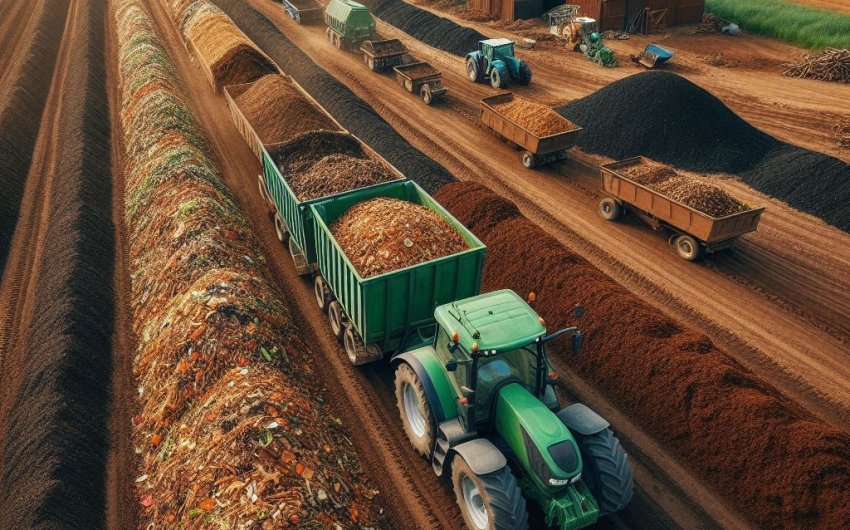
For anyone managing a large-scale garden or a farm, the volume of organic waste generated, from crop residues and animal manures to landscaping debris, can be immense. Simply discarding these valuable materials is a missed opportunity, both environmentally and economically. Establishing an efficient compost system is not just an eco-friendly practice; it's a strategic agricultural tool that dramatically enhances soil health, reduces waste, and boosts overall productivity. If you've been wondering how can I set up a compost system for a large-scale garden or farm, you're on the path to transforming your organic "waste" into a powerful, sustainable resource. This comprehensive guide will explore the planning, methods, and management strategies essential for successful large-scale composting.
Why is a Large-Scale Compost System Essential for Farms and Big Gardens?
For substantial agricultural operations, composting isn't just a green initiative; it's a core component of sustainable and productive farming.
What are the Key Benefits of Composting on a Large Scale?
The advantages of a robust compost system extend far beyond simple waste diversion.
- Soil Health Transformation: This is the primary driver. Compost is a living, nutrient-rich soil amendment. When applied to large areas, it:
- Improves Soil Structure: Makes heavy clay soils more workable and improves drainage; increases the water-holding capacity of sandy soils.
- Enhances Nutrient Availability: Provides a slow-release source of a wide range of macro and micronutrients, reducing reliance on synthetic fertilizers.
- Boosts Microbial Activity: Introduces and feeds beneficial microorganisms, which are crucial for nutrient cycling, disease suppression, and overall soil vitality.
- Buffers Soil pH: Helps stabilize soil pH, making nutrients more accessible to plants.
- Waste Management & Diversion: Large-scale operations generate massive amounts of organic "waste." Composting efficiently manages:
- Crop Residues: Stalks, leaves, spent plants.
- Animal Manures: From livestock operations.
- Food Processing Waste: If applicable (e.g., fruit/vegetable scraps).
- Landscaping Debris: Leaves, grass clippings, branches from property maintenance.
- By composting, these materials are diverted from landfills, reducing tipping fees and extending landfill lifespans.
- Environmental Impact Reduction:
- Methane Emission Reduction: Diverting organic waste from anaerobic landfill conditions prevents the release of highly potent methane gas (CH₄), a significant greenhouse gas. Composting promotes aerobic decomposition, which primarily releases less harmful carbon dioxide.
- Reduced Fertilizer Runoff: Less reliance on synthetic fertilizers means reduced nutrient runoff into waterways, mitigating eutrophication and water pollution.
- Carbon Sequestration: Applying compost to soil adds stable organic carbon, helping to sequester carbon from the atmosphere.
- Economic Advantages:
- Reduced Input Costs: Less money spent on synthetic fertilizers, pesticides (due to healthier plants), and landfill tipping fees.
- Increased Crop Yields & Quality: Healthier soil leads to stronger, more productive plants and higher quality produce.
- Potential Revenue Stream: In some cases, excess compost can be sold to other growers or gardeners.
- Improved Water Efficiency: Soil amended with compost holds water better, potentially reducing irrigation needs.
- Pest and Disease Suppression: Healthy, biologically active soil (fostered by compost) can naturally suppress certain soil-borne pests and diseases, reducing the need for chemical treatments.
- Resilience to Climate Extremes: Soil with high organic matter content (from compost) is more resilient to drought and heavy rainfall events.
What Challenges Do Large-Scale Systems Present?
While beneficial, large-scale composting has unique challenges compared to backyard composting.
- Volume Management: Handling huge quantities of incoming raw materials and outgoing finished compost.
- Space Requirements: Dedicated land for composting pads, windrows, and storage.
- Equipment Needs: Loaders, turners, screeners, and transportation vehicles.
- Labor: Managing the process requires dedicated personnel.
- Odor and Pest Control: Preventing nuisance odors and attraction of pests (flies, rodents) is critical, especially when dealing with manures and food waste.
- Regulatory Compliance: Depending on the scale and type of inputs, there may be local, state, or federal regulations regarding composting operations (e.g., permits, leachate management).
- Consistent Input Mix: Maintaining the optimal carbon-to-nitrogen ratio with fluctuating incoming materials.
How Do I Plan a Large-Scale Compost System?
Careful planning is the foundation of a successful and efficient large-scale compost system. It involves assessing resources, choosing a site, and understanding regulations.
1. Assess Your Feedstock (Inputs):
- Quantity: Estimate the volume of organic waste your farm or garden will generate annually. This determines the scale of your system.
- Types of Materials:
- High-Nitrogen (Greens): Animal manures (poultry, horse, cattle, hog), fresh grass clippings, green plant material, vegetable scraps, fruit waste, coffee grounds.
- High-Carbon (Browns): Wood chips, sawdust (from untreated wood), straw, dry leaves, shredded cardboard, newspaper, cornstalks, hay.
- Consistency: Are your feedstocks available year-round or seasonally? Do you have a consistent supply of both "greens" and "browns" to maintain the proper carbon-to-nitrogen (C:N) ratio? You might need to source additional materials (e.g., wood chips from an arborist, manure from a local stable) to balance your mix.
- Contaminants: Identify potential contaminants (plastics, metals, diseased plants, persistent weeds, chemicals) and plan for their exclusion.
2. Choose the Right Composting Method:
The chosen method will depend on your scale, available equipment, and desired speed of decomposition.
- Windrow Composting (Most Common for Farms):
- Description: Long, outdoor piles (windrows) of mixed organic materials.
- Process: Requires regular turning (with a front-end loader or specialized windrow turner) to aerate the pile and manage moisture. Can achieve thermophilic (hot) temperatures.
- Pros: Cost-effective for large volumes, good aeration, allows for efficient turning.
- Cons: Requires significant space, potential for runoff if not managed properly, can be susceptible to weather extremes.
- Aerated Static Pile (ASP) Composting:
- Description: Piles of mixed materials with perforated pipes embedded in the base through which air is blown (positive aeration) or drawn (negative aeration/vacuum).
- Process: Less turning required, decomposition occurs quickly and consistently due to forced aeration.
- Pros: Faster decomposition, more consistent temperatures, better odor control, less space needed than windrows for same volume.
- Cons: Higher initial capital cost (blowers, piping, controls), requires power source.
- In-Vessel Composting:
- Description: Materials are loaded into enclosed containers, drums, or silos where environmental conditions (temperature, moisture, aeration) are precisely controlled.
- Process: Highly controlled, rapid decomposition.
- Pros: Fastest decomposition, excellent odor and pest control, minimal space, ideal for sensitive feedstocks (e.g., food waste) or urban settings.
- Cons: Very high initial capital cost, requires technical expertise, generally used for industrial/commercial scale rather than typical farms.
- Vermicomposting (Large Scale):
- Description: Uses large populations of composting worms in beds or bins.
- Process: Worms consume organic waste and produce nutrient-rich castings.
- Pros: Produces high-value product (worm castings), can process some difficult materials (e.g., food waste) efficiently, no turning.
- Cons: Slower than hot composting, sensitive to temperature extremes, generally not suitable for very woody materials or large amounts of manure without pre-composting.
3. Site Selection for Your Composting Area:
Choosing the right location is critical for efficiency, environmental protection, and nuisance prevention.
- Accessibility: Easy access for equipment (trucks, loaders, spreaders) to deliver raw materials and remove finished compost.
- Drainage: The site should be well-drained to prevent waterlogging of piles and minimize leachate runoff. Consider a slight slope.
- Proximity: Not too far from source of materials, but also not too close to residences or sensitive areas to avoid odor complaints.
- Water Source: Easy access to water for moisture management (wetting piles).
- Buffer Zones: Maintain adequate distance from waterways, wells, and property lines.
- Surface: A compacted gravel pad or concrete pad is ideal for heavy equipment and managing leachate, especially for commercial-scale operations. For smaller farm operations, a well-drained, slightly sloped packed earth pad can suffice.
4. Understand Regulations and Permits:
- Local and State Regulations: Research any local (county, municipal) and state environmental regulations regarding composting. These vary widely based on the scale of operation, type of feedstocks (e.g., animal mortality, food waste often have stricter rules), and proximity to waterways. You might need permits.
- Odor and Leachate Management: Plan how you will manage potential odors (e.g., proper C:N ratio, frequent turning, covering fresh inputs) and prevent leachate from contaminating ground or surface water.
How Do I Build and Manage a Large-Scale Compost Pile?
Once the planning is complete, the practical steps of building and maintaining your compost system begin.
1. Constructing the Pile (Windrow Method):
- Layering (Optional but Recommended): While a fully mixed approach is common with heavy equipment, layering "greens" and "browns" can help initiate the process if you're building manually or with smaller equipment. Aim for alternating layers.
- Initial Mix: The most critical step is to achieve the correct Carbon-to-Nitrogen (C:N) ratio, ideally between 25:1 and 30:1.
- Calculation: This takes some practice and estimation. Manures are generally high nitrogen (e.g., 5-10:1), wood chips high carbon (e.g., 200-500:1). You'll need to blend them to get into the optimal range. Online C:N calculators can help with specific materials.
- Practical Approach: For beginners, a good starting point is roughly 2-3 parts "brown" material (by volume) to 1 part "green" material (by volume). Adjust based on how hot the pile gets and any odors.
- Moisture Content: Add water as you build the pile. The ideal moisture content is like a wrung-out sponge (40-60% moisture). Test by squeezing a handful – a few drops of water should come out. Too dry, decomposition slows; too wet, it goes anaerobic.
- Pile Size: For thermophilic composting (hot composting), the pile needs to be large enough to generate and retain heat.
- Minimum Size: Generally, at least 3 feet high x 3 feet wide x 3 feet long (1 cubic yard).
- Optimal Windrow Size: For efficiency with a front-end loader, windrows are often built 5-8 feet high and 10-15 feet wide, with lengths hundreds of feet long. These dimensions allow for good heat retention without becoming anaerobic.
2. Monitoring the Composting Process:
Regular monitoring is essential for successful, rapid decomposition and quality compost.
- Temperature: This is your most important indicator.
- Hot Composting: Use a long-stemmed compost thermometer (at least 24 inches) to monitor the internal temperature.
- Target Range: Aim for temperatures between 130°F and 160°F (54°C and 71°C). This range indicates active microbial decomposition, kills most weed seeds, and pathogens.
- What to do: If the temperature is too low, the pile needs more nitrogen, moisture, or turning. If too high (above 160°F), it's burning off valuable nitrogen – turn it to cool it down.
- Moisture: Check moisture regularly, especially during dry periods. Re-wet the pile as needed.
- Odor: A healthy compost pile should smell earthy, like forest soil.
- Ammonia/Rotten Eggs: Too much nitrogen or too little oxygen. Turn the pile immediately and add more "browns."
- Sour/Vinegar: Often too wet. Turn the pile and add more "browns."
- Visual Cues: Look for steam rising from the pile (good heat), breakdown of materials, and reduction in pile size.
3. Turning the Pile:
Turning is crucial for aeration and mixing in windrow composting.
- Frequency:
- Initial Phase (Thermophilic): Turn the pile more frequently during the initial hot phase (every few days to once a week) to maintain aerobic conditions and consistent temperatures.
- Curing Phase: Less frequent turning (every 2-4 weeks) during the curing phase.
- Equipment:
- Small to Medium Scale: A front-end loader on a tractor or a sturdy skid steer is typically used.
- Large Scale/Commercial: Specialized windrow turners (tractor-mounted or self-propelled) are highly efficient for very large volumes.
- Purpose: Turning re-introduces oxygen, mixes materials, ensures even decomposition, and helps regulate temperature.
4. Curing and Finishing:
- Curing Phase: After the active heating phase (where temperatures consistently drop and don't reheat after turning), the compost enters a curing phase. The pile should be left undisturbed for several weeks to months to allow beneficial microbes to stabilize the material further. Temperatures will gradually cool to ambient.
- Finished Compost: Finished compost will be dark brown or black, crumbly, and have an earthy smell. You should no longer be able to identify the original ingredients.
- Screening (Optional): For a finer product (e.g., for potting mixes or topdressing lawns), you can screen the finished compost using a mesh screen or a mechanical trommel screen. The coarser material can be returned to a new pile. A manual compost sifter can be used for smaller batches.
What Equipment and Infrastructure Do I Need for Large-Scale Composting?
Efficient large-scale composting requires specific tools and infrastructure to manage the volume and process effectively.
1. Essential Equipment:
- Front-End Loader / Skid Steer: Absolutely vital for turning windrows, moving raw materials, and loading finished compost. This is often the most significant investment.
- Compost Thermometer: A long-stemmed (24-36 inch) stainless steel thermometer for accurate temperature monitoring within the pile.
- Water Source: A reliable water source and hose/sprinkler system for moisture management.
- Shredder / Chipper (Optional but Useful): To break down larger woody materials (branches, cornstalks) into smaller pieces, which speeds up decomposition. A wood chipper shredder can be a valuable investment.
- Windrow Turner (for very large operations): Dedicated machines designed to efficiently turn and mix large windrows.
- Screening Equipment (Optional): Manual or mechanical screens to refine finished compost.
2. Site Infrastructure:
- Composting Pad: A dedicated, level area for your compost piles or windrows.
- Material: Can range from compacted earth (for smaller farm scale) to gravel, concrete, or asphalt pads (for larger commercial scale to manage heavy equipment traffic and leachate).
- Slope: A slight slope (1-2%) helps drain excess water away from piles.
- Leachate Management:
- Runoff Diversion: Grade the pad to direct any runoff or leachate to a collection system (e.g., a holding pond or lined basin).
- Berms/Swales: Create earthen berms or swales around the composting area to prevent stormwater runoff from entering the composting zone and to contain any leachate.
- Storage Areas: Designated areas for:
- Incoming raw "greens" and "browns."
- Actively composting piles.
- Curing compost.
- Finished compost.
- Fencing/Security: Depending on local regulations and the presence of wildlife, fencing may be necessary to secure the composting area and prevent scavenging.
- Signage: Clearly label areas and provide safety warnings.
How Do I Safely and Sustainably Manage a Large-Scale Compost System?
Safety, environmental protection, and long-term sustainability are paramount for any large-scale compost system.
1. Safety Best Practices:
- Equipment Safety: Always operate heavy machinery safely, following manufacturer guidelines and ensuring operators are trained and certified. Maintain equipment regularly.
- Personal Protective Equipment (PPE): Workers should wear appropriate PPE, including gloves, safety glasses, dust masks (especially when turning dusty piles), and sturdy footwear.
- Compost Heat: Be aware that active compost piles generate significant heat. Avoid direct contact, especially with very hot piles, and be cautious about spontaneous combustion in very large, unturned piles (though rare).
- Pathogen Awareness: While thermophilic composting kills most pathogens, exercise caution when handling raw manures. Wash hands thoroughly.
- Air Quality: Dust and bioaerosols can be generated during turning. Ensure good ventilation and consider respirators if working in enclosed spaces or with high dust levels.
2. Environmental Best Practices:
- Odor Control:
- Proper C:N Ratio: The best defense against odor is a balanced C:N ratio.
- Aeration: Frequent turning provides oxygen and prevents anaerobic conditions.
- Covering: Immediately cover fresh, smelly "greens" (like food waste or fresh manure) with a layer of "browns."
- Site Location: Locate the composting area downwind from residences.
- Leachate Management: Implement and maintain robust leachate collection and management systems to prevent water contamination.
- Runoff Prevention: Design the site to prevent stormwater runoff from flowing through the active composting area and carrying contaminants.
- No Contaminants: Strictly adhere to protocols for excluding non-compostable materials (plastics, metals, glass) and harmful substances (pesticides, treated wood) from the compost stream.
3. Sustainable Practices:
- Closed-Loop System: Strive for a closed-loop system where the compost produced is entirely utilized on the farm or garden, reducing the need for off-farm inputs and minimizing waste.
- Soil Health Integration: View the compost system as an integral part of your overall soil health and fertility management plan. Regular application of compost will build long-term soil resilience.
- Continuous Improvement: Monitor your composting process, analyze your finished compost (consider sending samples to a lab), and make adjustments to your methods to continuously improve efficiency and compost quality.
- Record Keeping: Keep detailed records of inputs, temperatures, turning schedules, and application rates. This data is invaluable for troubleshooting, optimizing, and demonstrating compliance.
Establishing a functional and efficient compost system for a large-scale garden or farm is a significant undertaking, but the environmental benefits, combined with the economic and agronomic advantages, make it an incredibly worthwhile investment. By meticulously planning your feedstock, selecting the appropriate method, building robust infrastructure, and adhering to sound management practices, you can transform your organic waste into a powerful resource, fostering healthier soils, more productive plants, and a truly sustainable agricultural operation.