
How Do I Care for a Lawn on a Slope or Hill?
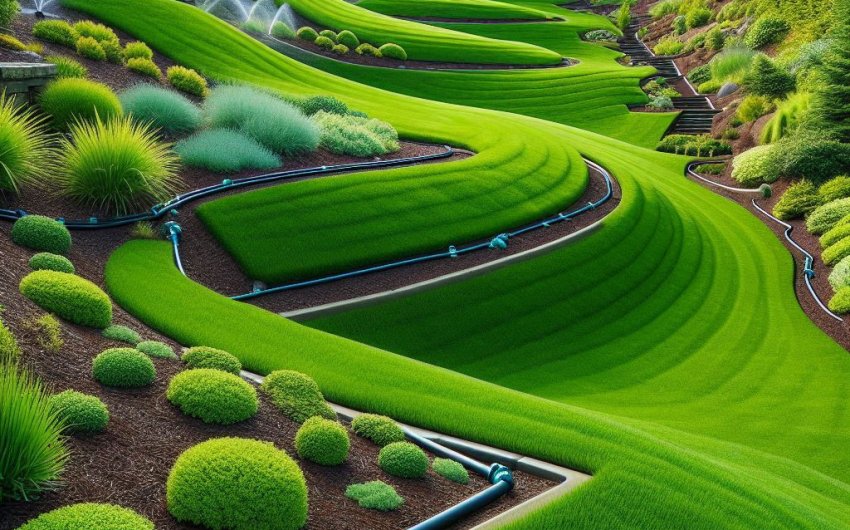
Learning how to care for a lawn on a slope or hill presents unique challenges compared to maintaining flat ground, but with the right strategies, you can achieve a healthy, stable, and attractive turf. Sloping terrains are prone to erosion, uneven water distribution, and present safety concerns during mowing. Understanding these specific difficulties and implementing tailored solutions for irrigation, mowing, and plant selection is key to transforming a difficult incline into a flourishing green space that enhances your landscape and prevents soil loss.
Why is Caring for a Lawn on a Slope More Challenging?
Maintaining a lawn on a slope or hill is inherently more difficult than caring for a flat lawn due to several critical factors that impact soil stability, water management, and even safety. These challenges require specific approaches to achieve a healthy turf.
1. Erosion Risk
- Water Runoff: When rain or irrigation water hits a slope, gravity pulls it downhill rapidly. This fast-moving water picks up loose soil particles, carrying them away. This phenomenon, known as erosion, can lead to significant soil loss over time, exposing plant roots and creating bare patches.
- Nutrient Loss: As topsoil erodes, it takes valuable nutrients and organic matter with it, leaving behind less fertile soil that struggles to support healthy grass.
- Sediment Runoff: Eroded soil can accumulate at the bottom of the slope, causing muddy areas, silting up drains, or impacting waterways.
2. Uneven Water Distribution
- Gravity's Pull: Water applied to a slope tends to run down the hill before it has a chance to soak deeply into the soil. This results in the top of the slope often being too dry and the bottom being oversaturated, leading to inconsistent grass growth.
- Poor Absorption: The rapid runoff means less water penetrates the soil, even during heavy rain, making the entire slope more susceptible to drought stress.
3. Mowing Challenges and Safety Concerns
- Difficult Maneuvering: Pushing a walk-behind mower uphill is physically demanding, and pulling it downhill can be hard to control. On steeper slopes, the mower can lose traction or even tip.
- Risk of Injury: Slipping, tripping, or losing control of a mower on an incline poses a significant safety hazard. Mower rollovers on steep slopes can cause serious injury or even death, especially with riding mowers.
- Uneven Cut: It's harder to achieve a consistent, even cut on a slope, often resulting in scalping (cutting too short) in some areas and missed spots in others.
4. Soil Compaction and Nutrient Issues
- Compaction: Foot traffic or heavy equipment on a slope can lead to more severe soil compaction, further exacerbating drainage and root growth problems.
- Nutrient Leaching: As water flows through the soil profile on a slope, it can leach nutrients away faster than on flat ground, potentially leading to nutrient deficiencies in the grass.
Addressing these inherent challenges requires a strategic and often multi-faceted approach to ensure your lawn on a slope remains healthy, stable, and manageable.
What Are the Safest Mowing Techniques for a Sloping Lawn?
Mowing a lawn on a slope or hill is one of the most dangerous gardening tasks. Prioritizing safety through proper technique and equipment is paramount to prevent accidents and injuries.
1. Assess the Slope's Steepness
Before you even start your mower, accurately assess the incline.
- Gentle Slopes: Less than 15-20 degrees (about a 1-foot rise over a 5-foot horizontal distance) can usually be handled with caution by walk-behind mowers.
- Moderate Slopes: 20-30 degrees are challenging and require extreme caution. Consider alternative groundcovers or specialized equipment.
- Steep Slopes: Greater than 30 degrees should never be mowed with a walk-behind or riding mower. These areas are too dangerous and should be left as natural areas, planted with groundcover, or maintained with a string trimmer from a stable position.
2. Choose the Right Equipment
- Walk-Behind Mowers (Push or Self-Propelled):
- Best for: Gentle to moderate slopes.
- Technique: Always mow across the slope, never up and down. If you slip, the mower will fall away from you. Ensure the mower has good traction. Consider a self-propelled mower with robust wheels, as it reduces the effort of pushing. A Honda HRN216VKA Smart Drive Mower offers excellent traction and variable speed.
- Riding Mowers/Zero-Turns:
- Highly Dangerous on Slopes: Riding mowers, especially zero-turns, are notorious for tipping on inclines. Their center of gravity makes them unstable on slopes.
- Technique (if absolutely necessary on very gentle slopes): Mow up and down the slope, not across it. If you were to tip, the mower would roll sideways, not over the operator. However, this is still risky.
- Recommendation: Avoid using riding mowers on any significant slope.
- String Trimmers (Weed Wackers):
- Best for: Very steep slopes where mowers are unsafe.
- Technique: Work from the top of the slope downwards, maintaining firm footing. Use a shoulder strap for balance and control.
- Limitations: Provides a less manicured look than a mower. A Husqvarna 128LD String Trimmer is a powerful option.
3. Mowing Techniques for Walk-Behind Mowers
- Mow Across the Slope: This is the golden rule for walk-behind mowers on inclines. Each pass should be parallel to the top and bottom of the hill. If you slip, the mower will fall away from you.
- Maintain Firm Footing: Wear sturdy, non-slip footwear. Keep your balance and avoid rushing.
- Overlap Your Passes: Ensure each pass slightly overlaps the previous one to avoid missed strips.
- Take Breaks: Mowing on a slope is more physically demanding. Take frequent breaks to rest and rehydrate.
- Consider Shorter Passes: For very long slopes, make shorter passes and then reposition yourself.
4. General Safety Precautions
- Clear Debris: Before mowing, remove any sticks, rocks, or other debris that could cause you to trip or the mower to become unbalanced.
- Check for Holes: Be aware of any dips, holes, or sudden changes in elevation.
- Never Mow Wet Grass: Wet grass is slippery and significantly increases the risk of falls and loss of traction.
- Shut Off Engine: Always turn off the engine and remove the spark plug wire before making any adjustments or clearing clogs.
- No Kids or Pets: Keep children and pets away from the mowing area.
- Personal Protective Equipment (PPE): Wear long pants, sturdy closed-toe shoes with good grip, and eye protection. Ear protection is also recommended.
By strictly adhering to these safety guidelines and choosing the appropriate equipment, you can significantly reduce the risks associated with mowing a lawn on a slope, allowing you to maintain a neat appearance while protecting yourself.
How Can I Water a Sloping Lawn Efficiently to Prevent Erosion?
Efficiently watering a lawn on a slope or hill is critical to ensure proper hydration without causing excessive runoff and erosion. Gravity makes this challenging, but several techniques can help.
1. Water Slowly and Deeply
- Low Pressure: The most important principle is to apply water at a very low flow rate. High pressure water will simply run off before it can penetrate.
- Multiple Cycles (Cycle and Soak): Instead of watering for one long period, break your watering into several shorter cycles.
- Water for 5-10 minutes.
- Wait 30-60 minutes (or longer) to allow the water to soak in.
- Repeat the watering cycle 2-3 more times until the desired depth of moisture is achieved.
- Benefits: This "cycle and soak" method significantly reduces runoff, allowing the soil to absorb water more effectively.
- Deep Penetration: The goal is to get water down to the root zone (4-6 inches deep for established grass). Use a rain gauge or simply dig a small hole to check moisture depth.
2. Choose the Right Irrigation System
- Soaker Hoses: These are excellent for slopes. They slowly weep water directly onto the soil, minimizing runoff and delivering water efficiently to the root zone. Lay them in parallel lines across the slope, following the contour. Gilmour Flat Soaker Hose can be effective.
- Drip Irrigation: Similar to soaker hoses, drip irrigation systems deliver water precisely through emitters. Ideal for garden beds on slopes, but can be adapted for lawns using specialized drip line for turf.
- Low-Flow Sprinklers (Rotary Nozzles): If using sprinklers, choose models with low-precipitation-rate rotary nozzles or stream rotors. These apply water more slowly and evenly than traditional spray heads, allowing for better absorption.
- Avoid Oscillating or High-Pressure Sprinklers: These throw water too quickly and widely, leading to excessive runoff on slopes.
3. Consider Terracing or Contouring
For very steep slopes, or areas where erosion is a persistent problem, more structural solutions may be necessary.
- Terracing: Building retaining walls to create flat, step-like sections on the slope. Each terrace can then be watered individually without runoff. This is a significant landscaping project but highly effective for stability and manageability.
- Contour Berms/Swales: Creating small, crescent-shaped berms (raised mounds of soil) or swales (shallow depressions) that run perpendicular to the slope's gradient. These slow down water flow, allowing it to collect and infiltrate the soil.
4. Strategic Timing
- Early Morning Watering: Always water in the early morning (before 10 AM). This minimizes evaporation in the heat of the day and allows grass blades to dry before nightfall, reducing the risk of fungal diseases.
- Observe Your Lawn: Don't just water on a fixed schedule. Water when the grass shows signs of thirst (e.g., foot impressions remain after walking on it, grass blades turn a dull blue-green).
5. Improve Soil Structure
- Organic Matter: Incorporate organic matter (compost) into the soil. As mentioned previously, this dramatically improves the soil's ability to absorb and retain water, reducing runoff.
- Core Aeration: Regularly aerate your lawn on a slope. This creates holes that allow water to penetrate deeper into compacted soil rather than running off the surface. A manual core aerator is good for small patches.
By combining these targeted watering techniques with improvements in soil structure, you can effectively hydrate your lawn on a slope while significantly reducing wasteful runoff and the risk of erosion.
How Can I Prevent Erosion and Soil Loss on a Sloping Lawn?
Erosion is a primary concern for any lawn on a slope or hill. Proactive measures are essential to stabilize the soil, maintain its integrity, and prevent valuable topsoil from washing away.
1. Establish a Dense, Healthy Turf
- Deep Roots: Healthy grass with a deep, extensive root system is your best defense against erosion. The roots bind the soil particles together, holding them in place.
- Proper Fertilization: Fertilize your lawn on a slope appropriately to encourage dense growth. A soil test will guide your fertilizer choices. Use a slow-release fertilizer to avoid rapid growth and potential leaching. Scotts Turf Builder UltraFeed promotes strong roots.
- Overseeding: Regularly overseed thin or bare patches to fill them in with new grass, especially with grass types known for aggressive spreading (like Kentucky bluegrass or creeping fescues). Use a broadcast spreader for even distribution.
2. Strategic Mulching
- Temporary Solution for Bare Spots: For newly seeded areas or bare patches on a slope, a light layer of weed-free straw mulch can be highly effective. It protects the soil from direct impact of raindrops (which dislodge soil particles), conserves moisture, and prevents erosion while grass seeds germinate and establish.
- Erosion Control Blankets: For larger, more challenging areas that are being re-seeded, consider using biodegradable erosion control blankets or mats. These are made from straw, coir, or jute netting, laid over the seeded area, and secured with staples. They hold the seed and soil in place until the grass grows through. A straw erosion control blanket can be very effective.
3. Improve Soil Structure and Infiltration
- Organic Matter: Continuously amend the soil with compost or other organic materials. As discussed, organic matter improves soil aggregation, creating larger pores that allow water to infiltrate rather than run off.
- Core Aeration: Regular core aeration (especially for compacted areas) creates channels in the soil, improving water penetration and reducing surface runoff. The soil plugs left behind also contain beneficial microorganisms.
4. Diversion and Control of Runoff
- Swales and Berms: For significant slopes, strategically placed swales (shallow, wide channels) or berms (raised mounds) can be designed to intercept and slow down runoff water, directing it to a rain garden or other permeable areas where it can safely soak into the ground. These should run perpendicular to the slope.
- Terracing: As a more permanent solution, terracing with retaining walls creates flat sections on the slope. This completely halts runoff on that section and allows water to soak in effectively. It also creates usable flat gardening space.
5. Consider Alternative Groundcovers (When Grass Struggles)
- Alternative Plantings: For very steep or problematic sections of a lawn on a slope where grass continually struggles with erosion or establishment, consider planting drought-tolerant groundcovers or shrubs. These often have dense root systems that are excellent at holding soil in place.
- Examples: Creeping junipers, ornamental grasses, Vinca minor, Cotoneaster, some sedums, or native plants adapted to slopes. These require less maintenance (no mowing!) and provide superior erosion control.
- Rock Gardens/Hardscaping: In some cases, a rock garden or strategically placed boulders can help stabilize small sections of a slope, creating interesting landscape features.
By combining these methods, from maintaining a dense grass cover to implementing structural solutions like terracing, you can effectively prevent erosion and safeguard the soil of your lawn on a slope, ensuring its long-term health and stability.
When Should I Consider Alternatives to a Grass Lawn on a Slope?
While a grass lawn on a slope or hill can be maintained with effort, there are situations where it's more practical, safer, and ecologically beneficial to consider alternative groundcovers or landscaping solutions.
1. Very Steep Slopes
- Safety Concerns: If a slope is too steep to mow safely (generally greater than 20-30 degrees for walk-behind mowers, or any significant slope for riding mowers), a grass lawn is not advisable. The risk of injury from slipping, falling, or mower rollover is too high.
- Erosion Control Challenges: Extremely steep slopes are notoriously difficult to stabilize with just grass. Water runoff is severe, leading to constant erosion and bare patches, no matter how diligently you try to seed.
2. High-Maintenance Demands
- Constant Erosion Repair: If you find yourself constantly battling erosion, reseeding bare spots, and dealing with nutrient runoff, the amount of time and resources required to maintain a turf lawn on the slope might outweigh the benefits.
- Water Inefficiency: If you're struggling to get water to infiltrate the soil without excessive runoff, or if water restrictions are common in your area, maintaining a thirsty grass lawn on an incline might be unsustainable.
3. Shaded Slopes
- Poor Grass Growth: Grass struggles in deep shade (less than 4 hours of direct sun), often becoming thin, patchy, and susceptible to moss and disease. Mowing in these conditions will be even more difficult.
- Moss Problems: Shaded, damp slopes are prime habitats for moss, which can quickly take over and create a spongy, slippery surface.
4. Desire for Lower Maintenance
- Reduced Mowing: The biggest benefit of replacing a grass lawn on a slope is eliminating the need for hazardous and laborious mowing.
- Less Water/Fertilizer: Many alternative groundcovers are drought-tolerant once established and require less fertilizer than a traditional lawn.
What Are Good Alternatives for Sloping Areas?
- Drought-Tolerant Groundcovers:
- Creeping Junipers: Evergreen, low-growing, excellent for erosion control, and very drought-tolerant once established.
- Vinca minor (Periwinkle): Fast-spreading, evergreen, purple flowers, good for shade.
- Pachysandra: Dense, evergreen groundcover, ideal for shady slopes.
- Cotoneaster (Spreading varieties): Woody groundcovers with berries, good for sun or partial sun.
- Sedums: Many low-growing varieties are extremely drought-tolerant and work well in sunny, rocky slopes.
- Ornamental Grasses: Clumping or spreading ornamental grasses (e.g., fescue varieties, some switchgrasses) can provide excellent erosion control and visual interest without mowing.
- Shrubs and Small Trees: Strategic planting of drought-tolerant shrubs or small trees with extensive root systems can help stabilize very large or steep slopes, especially when planted in groups.
- Native Plants: Always consider native plants adapted to your specific climate and soil conditions. They are naturally resilient and require minimal care once established.
- Hardscaping/Terracing: For severe slopes, constructing retaining walls to create flat terraces or installing rock gardens can be a long-term solution that provides usable space and completely eliminates the grass challenge.
By thoughtfully considering these factors and exploring suitable alternatives, you can transform a challenging lawn on a slope into a beautiful, stable, and low-maintenance landscape feature that enhances your property while reducing your workload. Successfully caring for a lawn on a slope or hill demands a strategic approach that prioritizes safety, erosion control, and efficient water management. By employing proper mowing techniques, optimizing watering, enriching the soil, and knowing when to opt for alternative groundcovers, you can transform a challenging incline into a stable, healthy, and attractive part of your landscape for years to come.