
Lawn to Lush: Harnessing the Power of Grass Clippings in Compost!
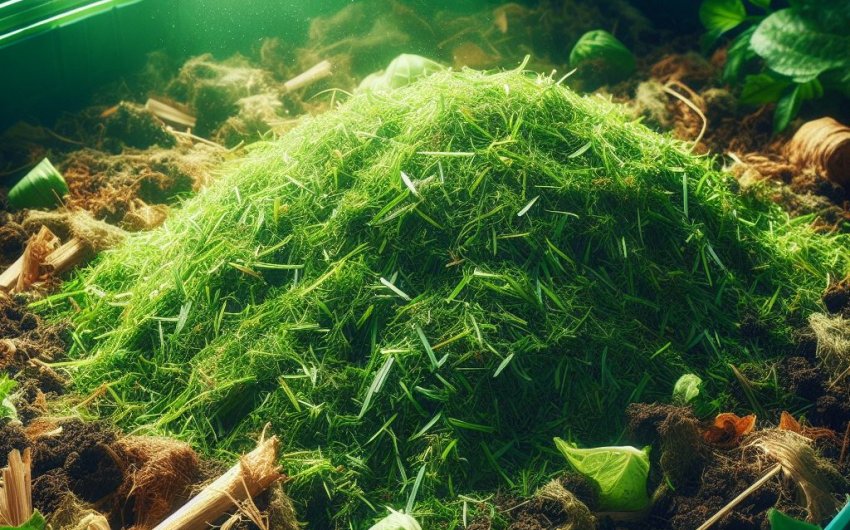
Every time you mow your lawn, you're faced with a decision: bag those grass clippings and send them to the curb, or find a better use for them? For many gardeners, those green, leafy remnants of a freshly cut lawn seem like just another chore, another pile of waste. But what if we told you that those very grass clippings are actually a powerhouse ingredient, a secret weapon for transforming your garden into a vibrant, thriving oasis?
It's true! Grass clippings are not just waste; they are a goldmine of nutrients and organic matter, perfectly suited for the miraculous process of composting. Composting turns ordinary kitchen scraps and yard waste into "black gold"—a rich, dark, crumbly soil amendment that breathes new life into your plants. And when it comes to creating fast, active, and nutrient-rich compost, grass clippings are absolutely essential.
In this comprehensive guide, we'll unveil the incredible potential of grass clippings in compost. We'll dive deep into why they are such a valuable component, how to use them correctly to avoid common composting pitfalls, and how they contribute to creating the lushest, healthiest soil imaginable. Get ready to turn your "lawn to lush" and see your garden truly thrive!
Why Are Grass Clippings a Composting Powerhouse?
To understand the magic of grass clippings in compost, it's helpful to refresh our knowledge of composting basics. Composting relies on creating the perfect balance of materials and conditions for microorganisms to break down organic matter into nutrient-rich humus.
What Role Do Grass Clippings Play in Composting?
Compost piles require a balance of two main types of materials: "greens" and "browns."
- Greens (Nitrogen-rich): These are fresh, moist materials that are high in nitrogen. They include kitchen scraps (fruit and vegetable peels, coffee grounds), fresh plant trimmings, and, crucially, fresh grass clippings. Nitrogen is vital for the growth and reproduction of the microbes that do the actual work of decomposition.
- Browns (Carbon-rich): These are dry, often woody materials like fallen leaves, straw, wood chips, and shredded newspaper. They provide carbon, which is the energy source for the microbes and helps give the compost pile its structure and bulk.
Fresh grass clippings are a quintessential "green" material. They are rich in nitrogen, decompose quickly, and generate heat, making them a driving force in a hot compost pile.
What are the Benefits of Adding Grass Clippings to Compost?
Incorporating grass clippings into your compost offers a myriad of advantages that speed up the process and enrich the final product:
- High in Nitrogen: This is their primary superpower. Grass clippings have a high nitrogen content (approximately 3-4% by weight), which is essential for fueling the rapid growth and activity of the decomposing microbes. They help kick-start and accelerate the composting process.
- Generate Heat: Because they are rich in nitrogen and break down quickly, grass clippings are fantastic for generating heat in a compost pile. A hot compost pile (reaching temperatures of 130-160°F / 54-71°C) speeds up decomposition, kills weed seeds, and destroys many plant pathogens.
- Excellent Moisture Content: Fresh grass clippings are moist, adding much-needed water to the compost pile. This moisture is vital for microbial activity.
- Fast Decomposition: Their relatively soft, leafy structure means grass clippings break down rapidly, contributing to quicker finished compost.
- Free and Abundant Resource: For anyone with a lawn, grass clippings are a readily available and completely free resource. Using them in your compost diverts significant organic waste from landfills, where they would otherwise contribute to methane emissions.
- Source of Micronutrients: Beyond nitrogen, grass clippings also contain essential micronutrients that contribute to the overall health of your garden soil when they break down.
- No Weed Seed Concerns (Usually): Most common lawn grasses don't produce a lot of viable seeds from typical mowing height. However, as we'll discuss, some precautions are still wise.
These benefits combine to make grass clippings an indispensable ingredient for any active composter aiming for fast, efficient, and nutrient-rich compost.
What About the "Grass Clippings Slime" Problem?
You might have heard that fresh grass clippings can turn into a slimy, smelly mess in the compost pile. This is a common problem, but it's easily avoided with proper technique.
- Lack of Air: The "slime" problem occurs when large amounts of fresh grass clippings are added in thick layers without enough aeration. They are dense and wet, so they compact easily. This creates anaerobic conditions (lack of oxygen).
- Foul Odors: When decomposition happens without oxygen, it's done by different microbes that produce unpleasant, rotten-egg-like smells (sulfur compounds) or ammonia-like odors.
- Solution: Balance and Aerate: The key to avoiding slime is to balance your grass clippings with plenty of "brown" materials (like dried leaves, straw, shredded newspaper, or wood chips) and to ensure good air circulation. We'll cover exactly how to do this.
So, while the problem is real, it's a sign of improper composting technique, not an inherent flaw of the grass clippings themselves.
How Do I Use Grass Clippings in My Compost Pile?
Getting started with grass clippings is straightforward, but success lies in understanding the art of balancing "greens" and "browns."
How Should I Prepare Grass Clippings for Composting?
Proper preparation ensures your grass clippings contribute positively to your compost without turning into a slimy mess.
- Fresh vs. Dry:
- Fresh Grass Clippings: These are "greens," high in nitrogen and moisture. They are great for heating up the pile.
- Dried Grass Clippings: If you leave grass clippings to dry out on the lawn before collecting them, they become more "brown" (carbon-rich) in character. These can be stored and used as a carbon source, similar to dried leaves. A mix of both can be beneficial.
- Avoid Herbicides/Pesticides: Do NOT compost grass clippings from lawns that have been treated with herbicides or pesticides in the last few weeks (or longer, depending on the chemical and its persistence). These chemicals can harm the beneficial microorganisms in your compost pile and could potentially transfer to your garden when you use the finished compost. Wait several weeks (check product labels for persistence) or ideally, avoid using chemicals on your lawn altogether if you plan to compost.
- Remove Excess Weeds (with caution): If your lawn has a lot of actively seeding weeds (e.g., dandelions gone to seed), it's best to avoid adding those particular clippings to your compost pile unless you are running a very hot pile that consistently reaches temperatures high enough to kill weed seeds (over 130°F / 54°C). For most backyard composters, it's safer to avoid adding large amounts of weed seeds that might survive and sprout in your garden.
What is the Right Carbon-to-Nitrogen Ratio with Grass Clippings?
The ideal carbon-to-nitrogen (C:N) ratio for composting is roughly 25-30 parts carbon to 1 part nitrogen by weight.
- Grass Clippings are High Nitrogen: Fresh grass clippings typically have a C:N ratio of around 15-20:1, making them very nitrogen-rich ("green").
- Balancing Act: This means you need to mix them with plenty of "brown" (carbon-rich) materials to achieve the ideal ratio.
- General Rule of Thumb: Aim for a 50/50 mix of greens and browns by volume when you're adding them to the pile. If you're adding a large bag of fresh grass clippings, you'll need an equally large (or even larger) volume of dry leaves, shredded newspaper, straw, or wood chips to balance it.
- No Exact Science: Don't stress too much about exact measurements. Composting is forgiving. As you compost more, you'll develop a feel for the right balance by observing how your pile performs (smell, temperature, speed of decomposition).
How Should I Layer Grass Clippings in My Compost Pile?
Layering is the key to incorporating grass clippings successfully without creating a slimy, smelly mess.
- Start with Browns: Begin your compost pile with a loose, coarse layer of "brown" materials (like wood chips or small twigs) at the bottom for good drainage and aeration.
- Thin Layers: Never add a thick, dense layer of fresh grass clippings by themselves. Instead, add them in thin layers (no more than 2-4 inches / 5-10 cm thick).
- Alternate Layers: The golden rule:
- Add a thin layer of fresh grass clippings ("greens").
- Immediately cover this with a significantly thicker layer of "brown" materials (e.g., dry leaves, shredded newspaper, straw, or wood chips). Aim for about twice the volume of browns to greens for each layer.
- Repeat, alternating thin layers of greens and thick layers of browns.
- Mix As You Go: As you add layers, try to fork or mix the materials together a bit. This helps distribute the nitrogen and carbon, prevents clumping, and introduces air.
- Maintain Moisture: Grass clippings add moisture, but the pile should still be consistently moist, like a wrung-out sponge. If it feels too dry, add some water as you layer.
- Turn Regularly: Frequent turning of your compost pile (every week or two) is crucial when using grass clippings. This mixes the materials, introduces oxygen, and helps the pile heat up.
By following these layering and mixing techniques, you harness the power of grass clippings for rapid decomposition without the undesirable side effects.
What Are Some Common Challenges and Tips for Composting Grass Clippings?
While grass clippings are fantastic, they can sometimes present specific challenges. Knowing how to address them ensures smooth composting.
My Compost Pile Smells Like Ammonia or Rotting – What's Wrong?
An ammonia smell or a generally rotten odor is the most common sign of too much nitrogen ("greens") and not enough air. This means your grass clippings are breaking down anaerobically.
- Solution: Add More Browns: Immediately add a generous amount of dry "brown" materials. Shredded newspaper, dry leaves, straw, or wood chips are excellent for this.
- Solution: Turn the Pile: After adding browns, thoroughly turn the pile to mix everything in and introduce as much oxygen as possible. This will stop the anaerobic process and the bad smells.
- Prevention: Going forward, always ensure you balance your fresh grass clippings with plenty of dry browns and mix them in well.
My Compost Pile is Cold and Not Breaking Down – How Can I Speed It Up?
A cold or slow pile often means there's not enough microbial activity.
- Lack of Nitrogen: If your pile is cold and mostly dry browns, you likely need more "greens."
- Solution: Add fresh grass clippings, kitchen scraps, or a nitrogen-rich organic fertilizer (like blood meal). Mix it in well.
- Too Dry: Microbes need moisture.
- Solution: Water the pile until it's consistently damp, like a wrung-out sponge.
- Not Enough Air: Compaction can lead to a cold, slow pile.
- Solution: Turn the pile more frequently.
- Too Small: A compost pile needs a certain mass to generate and retain heat.
- Solution: Build the pile larger (at least 3x3x3 feet / 1x1x1 meter is ideal for hot composting).
What If I Have Too Many Grass Clippings at Once?
Sometimes, you might have a huge volume of grass clippings after a mow.
- Mix with Browns: The best approach is to have a ready supply of "brown" materials (dried leaves saved from fall, a pile of wood chips, shredded cardboard/newspaper) to immediately mix with large quantities of fresh grass clippings.
- Dry Them Out: If you don't have enough browns, spread out a portion of the grass clippings in a thin layer on a tarp or unused part of your lawn to dry out in the sun. Once dry, they become more like "browns" and can be stored for later use or added to the pile more easily.
- Mulch Directly on Lawn: Better yet, if you mow regularly and only remove a small amount of grass, simply leave the clippings on the lawn. This is called "grasscycling." They break down quickly, returning nutrients and organic matter directly to the soil, naturally fertilizing your lawn. This is the simplest way to use them! You might consider a mulching mower blade to finely chop them.
Can I Use Grass Clippings as a Mulch Directly in the Garden?
Yes, absolutely! This is another excellent way to use grass clippings if you don't compost all of them.
- Weed Suppression: A layer of grass clippings (1-2 inches / 2.5-5 cm thick) can help suppress weeds in garden beds.
- Moisture Retention: They help conserve soil moisture by reducing evaporation.
- Nutrient Release: As they break down, they slowly release nitrogen and other nutrients back into the soil, feeding your plants.
- Application: Apply in thin layers. Thick layers can become slimy and inhibit water and air penetration, similar to the compost pile problem. If you have a lot, apply a thin layer, let it dry, then add another thin layer.
- Avoid Treated Grass: Do not use grass clippings from chemically treated lawns as mulch directly in your garden beds.
By understanding the power of grass clippings and implementing these simple strategies, you're not just reducing waste; you're actively creating a vibrant, nutrient-rich soil ecosystem that will make your garden truly flourish. Turn those mundane lawn chores into a source of pure garden gold and watch your "lawn to lush" transformation!