
Mature Trees and Pruning: What You Need to Know
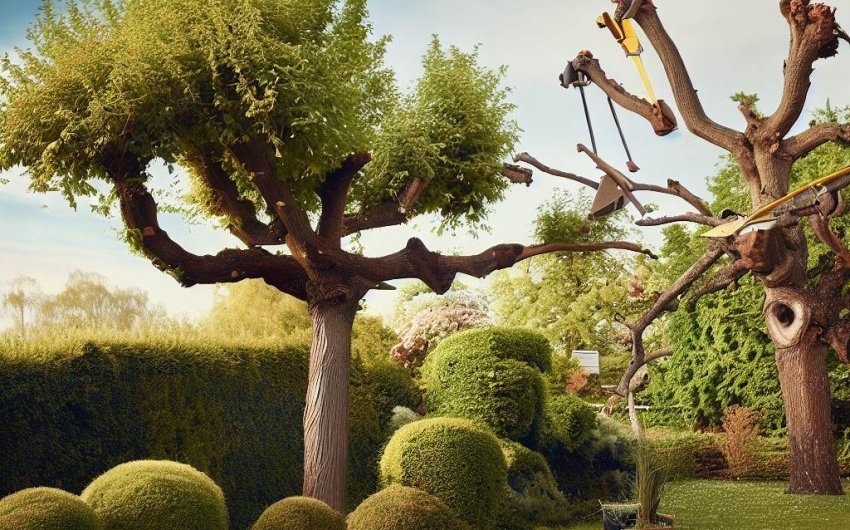
Pruning mature trees requires a different approach than younger trees, focusing primarily on safety, structural integrity, and long-term health, rather than shaping. It's crucial to understand proper timing, cutting techniques, and when to call a professional arborist to ensure the tree's well-being and avoid irreversible damage.
Why is pruning mature trees different from young trees?
Pruning mature trees differs significantly from pruning young trees because their goals and biological responses are distinct. Young trees are pruned primarily for structural training – establishing a strong framework, correcting defects, and promoting desirable growth habits for future maturity. Mature trees, however, have already largely established their structure. Pruning them focuses on maintenance, safety, and addressing age-related issues, requiring more nuanced understanding and often professional expertise.
What are the main objectives of pruning mature trees?
- Safety: Removing dead, diseased, damaged, or hazardous branches that could fall and cause injury or property damage. This is often the top priority for mature tree pruning.
- Health: Removing diseased or insect-infested branches to prevent spread, thinning the canopy to improve air circulation and light penetration, and removing rubbing branches.
- Structural integrity: Correcting structural defects that might lead to failure, reducing the weight on overextended limbs, or addressing included bark.
- Clearance: Providing clearance from buildings, utility lines, pathways, or other structures.
- Aesthetics: Enhancing the tree's natural form and appearance, though this is secondary to safety and health.
When is the best time to prune mature trees?
The timing of pruning mature trees can significantly impact their health and growth. While some light pruning can be done at any time, major pruning should typically be performed during specific seasons.
What is the ideal season for most mature tree pruning?
For most mature trees, the ideal season for major pruning is late winter or early spring, when the tree is dormant.
- Visibility: The absence of leaves allows for better visibility of the tree's structure, making it easier to identify dead, diseased, or crossing branches.
- Reduced pest and disease transmission: Many pests and diseases are dormant themselves, so fresh wounds are less likely to attract them.
- Vigorous spring growth: Dormant pruning encourages a burst of new growth in spring, helping the tree quickly compartmentalize (seal off) pruning wounds.
Are there exceptions for specific tree types?
Yes, there are exceptions:
- Spring-flowering trees: Prune these after they finish flowering in spring (e.g., dogwood, magnolia). Pruning before flowering would remove flower buds.
- Summer-flowering trees: Prune these in late winter or early spring (e.g., crape myrtle). They bloom on new wood.
- Trees that "bleed" sap: Maples, birches, and walnuts are examples. While sap bleed is unsightly, it's generally harmless. However, if you wish to avoid it, prune these trees in mid-summer or late fall.
- Diseased trees: Diseased branches (e.g., oak wilt, Dutch elm disease) should be removed immediately upon detection, regardless of season, to prevent disease spread. Tools should be sterilized between cuts.
What essential tools do you need for pruning mature trees?
Using the right tools, kept sharp and clean, is crucial for making clean cuts that heal well and for ensuring your safety. For mature trees, this often involves larger, more specialized equipment.
What hand tools are essential for smaller branches?
- Hand pruners (secateurs): For branches up to 3/4 inch thick. Choose bypass pruners for clean cuts. Bypass hand pruners are essential.
- Loppers: For branches up to 1.5-2 inches thick. Their long handles provide leverage. Long-handled loppers are a must-have.
- Pruning saw: For branches thicker than loppers can handle. Various types exist, including curved blade saws and folding saws.
What specialized tools are needed for larger tree work?
- Pole pruner/saw: For reaching higher branches from the ground. Can be manual or powered.
- Chainsaw: For very large branches or tree removal. Requires significant training, safety gear, and expertise.
- Safety gear: Helmets, safety glasses, gloves, steel-toed boots, and hearing protection are absolutely critical, especially when using power tools or working off the ground.
Always keep tools sharp and clean. Dull tools make jagged cuts that can damage the tree, and dirty tools can spread diseases. Sterilize blades with rubbing alcohol or a bleach solution between cuts, especially if working on diseased wood.
What are the proper techniques for making pruning cuts?
Making correct pruning cuts is fundamental to tree health. Improper cuts can lead to decay, encourage disease, or stimulate weak growth. The goal is to make a clean cut that promotes rapid wound closure (compartmentalization).
What is the "three-cut method" for large branches?
The three-cut method is essential when removing large, heavy branches to prevent bark tearing (bark stripping) from the weight of the falling limb.
- First cut (undercut): Make an undercut about 6-12 inches out from the branch collar (the swollen area where the branch meets the trunk or a larger limb). Cut about one-third to halfway through the branch from the underside. This prevents the bark from tearing down the trunk when the branch falls.
- Second cut (top cut): Make a top cut about 1-2 inches further out from the first cut (away from the trunk). Cut completely through the branch from the top down. This removes the bulk of the branch, allowing it to fall cleanly.
- Third cut (final cut): Make the final cut just outside the branch collar. The branch collar contains specialized cells that aid in wound closure. Never cut flush with the trunk or leave a stub. The angle of this cut should be approximately perpendicular to the bark ridge, leaving the collar intact.
What is a "branch collar," and why is it important?
The branch collar is the slightly swollen ring of tissue at the base of a branch where it connects to the trunk or a larger limb. It contains specialized cells that are crucial for the tree's natural defense mechanism, known as compartmentalization of decay in trees (CODIT). Making a pruning cut just outside the branch collar ensures that the tree can effectively seal off the wound, preventing decay from entering the main trunk. Cutting inside the collar or leaving a long stub impedes this natural healing process.
Should you use pruning sealants or wound dressings?
No, for almost all pruning cuts, you should NOT use pruning sealants or wound dressings. Research has shown that these products typically do more harm than good. They can:
- Trap moisture: Create a dark, moist environment that encourages fungal and bacterial growth.
- Hinder healing: Interfere with the tree's natural compartmentalization process.
- Offer no protection: Do not effectively prevent decay or insect entry.
The best "sealant" is a clean, proper cut made in the right location.
What types of pruning are appropriate for mature trees?
Pruning mature trees involves several techniques, each with a specific purpose related to health, safety, or structural improvement.
What is "deadwooding"?
Deadwooding is the removal of dead, dying, or decaying branches. This is perhaps the most common and beneficial type of pruning for mature trees.
- Benefits: Reduces the risk of falling branches, removes potential entry points for pests and diseases, and improves the tree's aesthetic appeal.
- Timing: Can be done at any time of year.
What is "thinning" a tree canopy?
Thinning involves selectively removing branches to reduce the density of the tree's crown.
- Benefits: Improves air circulation within the canopy (reducing disease risk), increases light penetration to interior branches, and reduces weight on heavy limbs.
- Technique: Remove entire branches back to the trunk or a larger lateral branch. Avoid "lion-tailing" (removing too many interior branches, leaving only tufts at the ends of long limbs), which weakens the tree.
What is "raising" a tree canopy?
Raising (or "crown raising") involves removing lower branches to provide clearance for pedestrians, vehicles, buildings, or views.
- Benefits: Improves safety and access below the tree.
- Technique: Remove branches from the bottom of the crown. Ensure at least two-thirds of the tree's height remains covered in foliage to avoid stressing the tree.
What is "reduction" pruning?
Reduction (or "crown reduction") pruning involves reducing the overall height or spread of a tree, typically by cutting back larger branches to smaller lateral branches.
- Benefits: Used to reduce the size of a tree that has outgrown its space or to reduce the risk of branches touching structures.
- Technique: Always make reduction cuts to a lateral branch that is at least one-third the diameter of the branch being removed. This helps the lateral branch take over as the dominant leader. Avoid topping, which is very harmful.
What pruning practices should you absolutely avoid for mature trees?
Some pruning practices are highly detrimental to mature trees and can lead to severe damage, decline, or even death. These should be avoided at all costs.
Why is "topping" a tree harmful?
Topping (also known as heading, hat-racking, or dehorning) is the indiscriminate cutting of tree branches to stubs or to a predetermined, often arbitrary, height or spread. This is one of the most destructive pruning practices.
- Weak growth: Topping stimulates a rapid flush of weak, upright shoots (watersprouts) from dormant buds below the cuts. These shoots are weakly attached and prone to breaking.
- Decay and disease: The large, open wounds created by topping rarely compartmentalize effectively, leaving the tree highly vulnerable to decay, pests, and disease.
- Starvation: Removing a large portion of the canopy reduces the tree's ability to photosynthesize, essentially starving it.
- Ugly appearance: Creates an unnatural, disfigured tree.
What is "lion-tailing" and why is it bad?
Lion-tailing occurs when excessive interior branches and foliage are removed from a limb, leaving only a tuft of leaves at the end.
- Weakened branches: This practice shifts all the weight to the ends of the limbs, making them prone to snapping.
- Sunburn: Exposes bark to direct sunlight, leading to sunscald.
- Reduced health: Limits the tree's overall photosynthetic capacity.
When should you hire a professional arborist for mature tree pruning?
For many aspects of mature tree pruning, especially anything beyond small, easily accessible branches, hiring a certified arborist is highly recommended. Their expertise ensures the work is done safely and correctly, protecting both your tree and your property.
What situations require a professional arborist?
- Large trees: Any pruning that requires a ladder, climbing, or specialized equipment.
- Branches near utility lines: Extremely dangerous; contact your utility company first.
- Branches near buildings or structures: To prevent property damage.
- Removal of large branches: Especially those requiring the three-cut method.
- Trees showing signs of disease or pest infestation: Arborists can diagnose and recommend appropriate treatment.
- Storm damage: Safe removal of broken or hazardous limbs.
- Structural concerns: If you suspect a tree has structural defects like included bark or weak crotches.
- Any uncertainty: If you're unsure about the type of cut, the amount of pruning, or the overall health of the tree.
What qualifications should a professional arborist have?
When hiring an arborist, look for:
- ISA Certification: Certified Arborists by the International Society of Arboriculture (ISA) have demonstrated knowledge and experience in tree care.
- Insurance: Ensure they have liability insurance and worker's compensation.
- References: Ask for references and check their reviews.
- Clear contract: Get a written estimate detailing the work to be done.
- Knowledge of best practices: A good arborist will advocate for proper pruning techniques and avoid harmful practices like topping.
Pruning mature trees is a complex yet vital aspect of their long-term care, shifting from initial training to ongoing maintenance for safety and health. Understanding when to prune, how to make correct cuts, avoiding harmful practices like topping, and knowing when to call a certified arborist are all critical pieces of knowledge for anyone responsible for these magnificent, long-lived giants.