
Creative Ways to Maximize Your Mini Farm's Yield
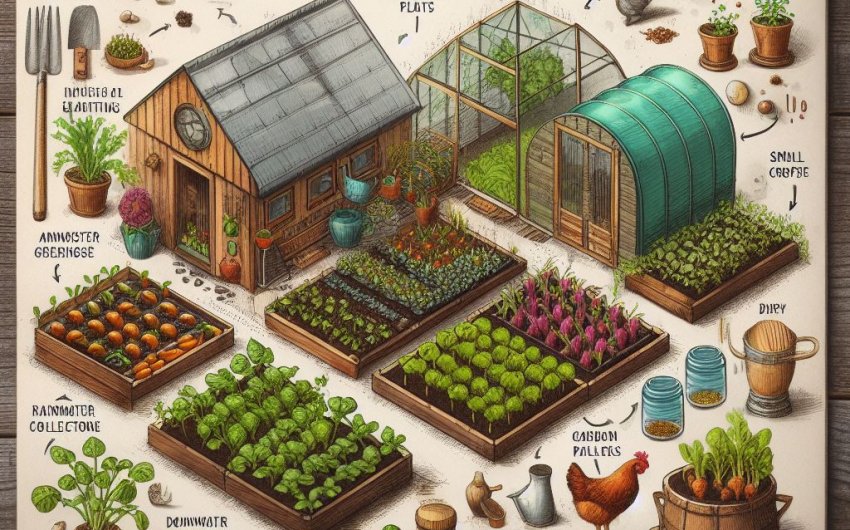
To maximize your mini farm's yield, implement creative strategies such as vertical gardening, intensive planting techniques like square foot gardening, strategic succession planting, and companion planting. These methods optimize limited space, extend harvest seasons, and foster a healthier, more productive growing environment, allowing you to get the most from every square foot.
Why is maximizing yield crucial for a mini farm?
Maximizing yield is absolutely crucial for a mini farm because, by definition, a mini farm operates within limited space constraints. Whether it's a backyard plot, a series of raised beds, or a collection of containers, every square foot must produce as much as possible to justify the effort and provide a substantial harvest. Optimizing yield means feeding more people from less land, increasing self-sufficiency, and making the most of your gardening resources.
What are the main challenges of limited space in mini farming?
- Production limits: Less area naturally means a lower overall potential harvest.
- Intense nutrient demands: Plants in close proximity quickly deplete soil nutrients.
- Pest and disease pressure: Dense plantings can sometimes increase susceptibility if not managed well.
- Access and maintenance: Working in tight spaces can be difficult.
- Seasonality: Limited space might feel even more restrictive outside of peak growing season.
What are the benefits of maximizing yield in a mini farm?
- Increased harvests: Get more food from your available space.
- Greater self-sufficiency: Grow more of your own food, reducing grocery bills.
- Efficient resource use: Make the most of your soil, water, and time.
- Continuous fresh produce: Strategic planting allows for harvests throughout the season.
- Enhanced biodiversity: Supports a healthier ecosystem, especially with companion planting.
- Greater satisfaction: The joy of a productive, thriving mini farm.
How does vertical gardening dramatically increase mini farm yield?
Vertical gardening is one of the most transformative strategies for maximizing yield in a mini farm, as it utilizes unused overhead space to grow plants upwards. This effectively expands your growing area without needing more ground space, allowing for significantly more produce per square foot.
What types of vertical gardening systems are effective?
- Stackable planters: Modular pots that stack on top of each other, ideal for strawberries, herbs, or small leafy greens. You can find stackable vertical garden planters online.
- Wall-mounted planters: Pockets, shelves, or panels that attach to walls, perfect for herbs, succulents, or shallow-rooted vegetables.
- Pallet gardens: Repurposed wooden pallets stood upright, with plants growing in the gaps between slats.
- Trellises and arbors: Support vining plants (cucumbers, beans, peas, tomatoes) to grow upwards instead of sprawling across the ground.
- DIY vertical structures: Anything from repurposed rain gutters to old shelving units.
What plants are best suited for vertical growing?
- Vining vegetables: Cucumbers, pole beans, peas, indeterminate tomatoes, small squash varieties.
- Trailing fruits: Strawberries (especially alpine varieties).
- Leafy greens: Lettuce, spinach, Swiss chard.
- Herbs: Mint, basil, thyme, rosemary (trailing varieties).
- Root vegetables (shallow): Some radishes or short carrots in deeper wall pockets.
What intensive planting techniques maximize horizontal space?
Beyond verticality, several intensive planting techniques allow you to fit more plants into a given horizontal space, significantly boosting the yield of your mini farm by optimizing every inch of soil.
What is Square Foot Gardening (SFG) and how does it work?
Square Foot Gardening (SFG) is a method of intensive planting where a raised bed is divided into square-foot sections, and each section is planted with a specific number of plants (more densely than traditional rows) based on plant size.
- Benefits: Maximizes yield in small spaces, reduces weeding, efficient water use, easy to manage.
- Method:
- Build a raised bed.
- Divide the bed into a grid of 1x1 foot squares using string or wood slats.
- Plant each square according to the SFG spacing guide (e.g., 1 tomato per square, 9 spinach per square, 16 radishes per square).
- Fill with a loose, rich growing mix (e.g., Mel's Mix: 1/3 compost, 1/3 peat moss/coco coir, 1/3 vermiculite).
What is companion planting and how does it improve yield?
Companion planting involves placing specific plant species near each other to mutual benefit, improving growth, deterring pests, or attracting beneficial insects. This natural synergy can lead to higher yields and healthier plants.
- Pest deterrence: Marigolds repel nematodes, basil deters flies from tomatoes, nasturtiums act as trap crops.
- Beneficial insect attraction: Dill, cilantro, and cosmos attract predatory insects like ladybugs and lacewings that feed on pests.
- Nutrient cycling: Legumes (beans, peas) fix nitrogen in the soil, benefiting nearby nitrogen-hungry plants like corn or squash.
- Growth enhancement: Certain combinations are believed to simply promote better growth (e.g., "Three Sisters" - corn, beans, squash).
What is succession planting for continuous harvests?
Succession planting is a strategy to ensure a continuous harvest of crops by planting smaller batches of the same crop (or different crops) every few weeks, rather than planting everything at once.
- Benefits: Extends the harvest season, prevents gluts and waste, ensures fresh produce over a longer period.
- Methods:
- Staggered planting: Plant a new batch of lettuce every 2-3 weeks.
- Relay planting: As one crop finishes, immediately plant a new crop in the same space.
- Cut-and-come-again: Harvest outer leaves of greens (lettuce, spinach) to allow the plant to continue producing from the center.
How does optimizing soil health boost mini farm productivity?
Healthy soil is the bedrock of a productive mini farm. In limited spaces, where plants draw heavily on nutrients, maintaining and enriching your soil is paramount for maximizing yield.
Why is rich, well-draining soil essential?
- Nutrient availability: Plants can only absorb nutrients if the soil is rich in organic matter and beneficial microbes.
- Root growth: Loose, well-draining soil allows roots to spread easily, access water, and anchor the plant.
- Water management: Proper soil structure helps retain moisture without becoming waterlogged.
- Aeration: Roots need oxygen. Well-structured soil provides this.
How do you enrich and maintain soil in a mini farm?
- Compost: Incorporate ample amounts of organic compost into your garden beds and pots annually. Compost is the ultimate soil builder.
- Cover crops (for beds): During off-seasons, plant cover crops (like clover or oats) to protect soil, add organic matter, and fix nitrogen.
- Mulch: Apply a 2-4 inch layer of organic mulch (straw, shredded leaves, wood chips) around plants. This conserves moisture, suppresses weeds, and slowly adds organic matter.
- Fertilize organically: Supplement with organic fertilizers (e.g., worm castings, fish emulsion, balanced granular organic fertilizers) based on specific plant needs and soil tests.
- Crop rotation: Rotate different plant families to prevent nutrient depletion and break disease cycles.
What creative planting solutions maximize mini farm space?
Beyond traditional beds, innovative planting solutions can transform even the smallest nooks and crannies into productive growing areas, further increasing your mini farm's overall yield.
How do container gardening techniques maximize yield?
Container gardening is inherently a form of mini farming, allowing you to grow a wide variety of crops in pots on patios, balconies, or even indoors.
- Size matters: Choose appropriately sized containers for each plant. Large containers are great for a single large plant, or for multiple smaller plants (e.g., "salad bowls" with mixed greens). You can find large fabric grow bags that promote root health.
- Variety selection: Look for "dwarf," "bush," or "patio" varieties of vegetables specifically bred for container growing.
- Succession planting in containers: Replace spent plants with new ones throughout the season.
- Interplanting: Plant fast-growing, shallow-rooted crops (radishes) in between slower-growing, deeper-rooted crops (tomatoes) in the same large pot.
What are upside-down planters for unique vertical growing?
Upside-down planters allow plants to grow downwards, saving space and making harvesting easy. They are often used for tomatoes, peppers, or strawberries.
- Benefits: Saves ground space, can reduce soil-borne diseases, keeps fruit off the ground.
- Considerations: Requires more frequent watering, and the weight of the plant needs sturdy support.
How do hanging baskets and window boxes add to yield?
Hanging baskets and window boxes are excellent for adding productive greenery to vertical spaces around your home.
- Best for: Trailing herbs (mint, thyme), strawberries, cherry tomatoes (trailing varieties), lettuce, petunias (for edible flowers).
- Placement: Hang near sunny windows or along railings.
- Maintenance: Tend to dry out quickly, so regular watering is crucial.
How do you select high-yielding crops for a mini farm?
Choosing the right crops is as important as the planting method. Prioritize varieties that produce a lot in a small footprint or offer multiple harvests.
What vegetables offer high yield in limited space?
- Leafy Greens: Lettuce, spinach, arugula, Swiss chard, kale. These are "cut-and-come-again" crops, providing multiple harvests.
- Bush Beans/Pole Beans: Bush varieties are compact; pole beans grow vertically on trellises, maximizing vertical space.
- Radishes: Fast-growing, quick turnaround for succession planting.
- Carrots (short varieties): 'Paris Market', 'Danvers Half Long' are good for containers.
- Cherry Tomatoes (dwarf/bush varieties): Produce many small fruits over a long season.
- Peppers (bush varieties): Productive in containers.
- Zucchini/Summer Squash (bush varieties): Choose compact, bush types that don't sprawl.
- Herbs: Most herbs are productive in small pots or vertical planters.
What fruits can be grown for high yield in a mini farm?
- Strawberries (everbearing/alpine): Excellent in vertical planters, hanging baskets, or containers. Everbearing varieties produce fruit over a longer season.
- Blueberries (dwarf varieties): Can be grown in large pots. Need acidic soil.
- Fig trees (dwarf varieties): Can be very productive in large containers and brought indoors in winter for colder climates.
- Lemons/Limes (dwarf varieties): Produce fruit in large pots and can be overwintered indoors.
What advanced techniques further boost mini farm output?
For experienced mini farmers looking to push their yield even further, a few advanced techniques can create highly productive micro-environments.
What is "keyhole gardening" for maximizing nutrients and water?
Keyhole gardening is a raised bed design that features a central compost basket or cylinder. This allows you to add kitchen scraps and other organic matter directly to the center, which constantly feeds the surrounding soil with nutrients and moisture as it decomposes.
- Benefits: Self-fertilizing, water-efficient, reduces waste, excellent for nutrient-hungry crops.
- Structure: Often circular or hexagonal, with a cut-out "keyhole" section for easy access to the central compost.
How does controlled environment gardening increase yield?
For maximum year-round yield, especially in challenging climates, controlled environment gardening can be implemented on a mini-farm scale.
- Cold frames/Cloches: Extend the growing season in spring and fall, allowing earlier planting and later harvests of cool-season crops. A mini cold frame kit is perfect for small beds.
- Mini greenhouses/Hoop houses: Provide a warmer, more controlled environment for starting seeds earlier, growing heat-loving plants longer, or even year-round cultivation of certain crops. You can find small portable greenhouses for backyards.
- Hydroponics/Aeroponics (small scale): Growing plants without soil, using nutrient-rich water. Can yield very fast growth and high output in a compact indoor space.
Maximizing your mini farm's yield is a rewarding endeavor that transforms limited space into a bountiful source of fresh produce. By strategically implementing vertical gardening solutions, intensive planting techniques like square foot gardening, clever succession planting, and companion planting, alongside a dedicated focus on soil health and high-yielding crop selection, you can cultivate an incredibly productive and thriving tiny oasis that consistently delivers delicious harvests.