
The Beginner's Guide to Starting a Mini Farm in Your Backyard
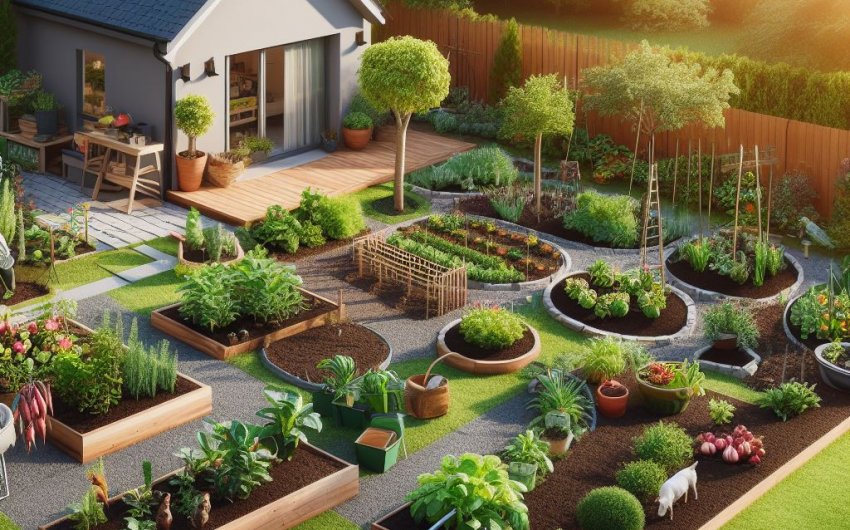
To start a mini farm in your backyard, begin by assessing your space, planning your layout, building healthy soil, and selecting appropriate crops or small livestock suitable for limited areas. This beginner's guide emphasizes starting small, focusing on efficient use of space, and gradually expanding as you gain experience.
Why start a mini farm in your backyard?
Starting a mini farm in your backyard is a growing trend that offers immense rewards, transforming a simple garden into a productive powerhouse. It's about maximizing the yield from a smaller space, fostering self-sufficiency, and reconnecting with the food you eat and the natural world around you. This approach makes fresh, homegrown produce and even small-scale animal products accessible to almost anyone.
What are the main benefits of having a backyard mini farm?
- Fresh, healthy food: Access to fresh, organic produce and animal products (eggs, honey) directly from your yard.
- Self-sufficiency: Reduces reliance on grocery stores and food supply chains.
- Cost savings: Significantly lowers your grocery bill over time.
- Environmental benefits: Reduces food miles, promotes biodiversity, and encourages sustainable practices.
- Educational for families: Teaches children about where food comes from, plant and animal life cycles, and responsibility.
- Stress relief and well-being: Gardening and connecting with nature are proven stress reducers.
- Community connection: Opportunities to share produce with neighbors or engage in local food swaps.
What can you realistically grow or raise on a mini farm?
On a backyard mini farm, you can realistically produce a surprising variety of items:
- Vegetables: Most common garden vegetables, especially compact or vining varieties.
- Fruits: Berries, dwarf fruit trees, grapes.
- Herbs: A wide range of culinary and medicinal herbs.
- Cut flowers: For bouquets and pollinator attraction.
- Eggs: With a small flock of chickens or ducks.
- Honey: With a beehive (check local regulations).
- Worm castings: Through vermicomposting.
What is the first step: assessing your backyard space?
Before you dig your first hole, a thorough assessment of your backyard space is crucial. Understanding its characteristics will inform all your subsequent decisions, from layout to crop selection.
How do you evaluate sunlight in your backyard?
Sunlight is the most critical factor for most food crops.
- Observe throughout the day: Spend a full day (or several days) observing how the sun moves across your yard in spring/summer.
- Map sunny and shady spots: Identify areas that receive:
- Full sun: 6-8+ hours of direct sunlight (ideal for most vegetables).
- Partial sun: 4-6 hours of direct sun.
- Partial shade: 2-4 hours of direct sun or dappled light.
- Full shade: Less than 2 hours of direct sun.
- Consider seasonal changes: Sun paths change with seasons. Trees lose leaves in winter.
How do you analyze your existing soil?
Your existing soil is your most valuable asset. A soil test is non-negotiable.
- Get a soil test: Contact your local cooperative extension office. They provide detailed reports on soil pH, nutrient levels, and recommendations for amendments. A home soil test kit can also give a basic idea.
- Observe soil texture: Is it sandy, loamy, or heavy clay? This affects drainage and water retention.
- Check drainage: Dig a small test hole, fill it with water, and observe how quickly it drains. Slow drainage indicates a need for improvement.
What other site factors should you consider?
- Water access: Proximity to a water source (hose bib, rain barrel) for easy irrigation.
- Wind exposure: Strong winds can damage plants. Consider windbreaks.
- Slope: Sloped areas can impact erosion and water runoff.
- Existing vegetation: Trees, shrubs, or weeds that might need to be removed or managed.
- Proximity to utilities: Avoid planting over buried lines.
- Local regulations: Check HOA rules, city ordinances for raised beds, chicken coops, etc.
How do you plan the layout and design of your mini farm?
Effective planning and design are crucial for maximizing the yield and efficiency of a backyard mini farm. A well-thought-out layout makes gardening easier and more productive.
What are popular mini farm layout options?
- Raised Beds: Excellent for mini farms. They offer:
- Better drainage: Easier to control soil quality.
- Reduced back strain: Higher working height.
- Defined space: Prevents weeds from invading from pathways. You can find raised garden bed kits for easy assembly.
- In-Ground Beds: More traditional, less expensive initially, but require more soil prep and weeding.
- Container Gardens: For very small spaces (patios, balconies). Highly flexible and portable.
- Vertical Gardens: Maximize yield by growing upwards (trellises, wall planters, stackable planters).
How do you draw out your mini farm plan?
- Measure and sketch: Draw a scale map of your backyard, including existing features (house, trees, patio, fences).
- Mark sun patterns: Indicate full sun, partial sun, and shade areas.
- Design beds: Sketch out placement and size of raised beds, in-ground beds, or container zones.
- Plan pathways: Ensure easy access to all planting areas for watering, weeding, and harvesting. Pathways should be wide enough (at least 18-24 inches).
- Consider water access: Mark hose bibs or planned irrigation lines.
- Future growth: Plan for expansion or crop rotation.
How do you build healthy soil for your mini farm?
Healthy, living soil is the cornerstone of organic mini farming. It nourishes your plants, supports beneficial organisms, and reduces the need for synthetic inputs.
What are the steps for improving your soil?
- Start with a soil test: This is your blueprint. It tells you what your soil needs.
- Add organic matter: This is the single most important step.
- Compost: Incorporate a generous layer (4-6 inches) of finished organic compost into the top 6-12 inches of soil or fill your raised beds with a high-quality blend.
- Well-rotted manure: Excellent for fertility.
- Leaves: Shredded leaves.
- Adjust pH (if needed): Based on your soil test, add lime to raise pH (make it less acidic) or elemental sulfur to lower pH (make it more acidic).
- Improve drainage: For heavy clay soils, amendments like coarse sand, gypsum, or even more compost can help.
- No-dig gardening: Consider a no-dig approach where you layer organic materials directly on top of the soil, letting nature do the work.
Why is composting essential for a mini farm?
Composting turns your kitchen scraps and yard waste into nutrient-rich "black gold" for your garden. It provides a continuous, free source of organic matter and nutrients. Consider starting a backyard compost bin.
What are the best crops for a beginner's mini farm?
Starting small and choosing reliable, productive crops that are well-suited to your climate and space will build confidence and ensure an enjoyable first season.
What vegetables are ideal for beginners?
- Leafy Greens: Lettuce, spinach, arugula, Swiss chard, kale. Many are "cut-and-come-again" for continuous harvest.
- Radishes: Very fast-growing, quick gratification.
- Bush Beans: Compact, productive, and easy to grow.
- Zucchini/Summer Squash (bush varieties): Extremely productive; choose bush types to avoid sprawl.
- Cherry Tomatoes (dwarf/bush varieties): High yield of smaller fruits in a compact form.
- Peppers: Productive in pots or beds.
- Herbs: Basil, mint, oregano, thyme, rosemary.
What fruits are good for a mini farm?
- Strawberries: Excellent in containers, hanging baskets, or vertical planters. Choose "everbearing" varieties.
- Bush Blueberries (dwarf varieties): Grow well in large pots (need acidic soil).
- Raspberries/Blackberries (thornless, primocane varieties): Can be trellised for easier management.
What other easy options can you grow?
- Microgreens: Super fast and easy to grow indoors year-round.
- Edible Flowers: Nasturtiums, calendula, pansies add beauty and flavor.
How do you efficiently manage water and nutrients in a mini farm?
Efficient water and nutrient management are critical for a productive mini farm, especially due to limited soil volume. Every drop of water and speck of nutrient counts.
What are effective watering strategies?
- Deep, infrequent watering: Encourages deep root growth, making plants more resilient. Water thoroughly when the top few inches of soil are dry.
- Early morning watering: Reduces evaporation and allows foliage to dry before nightfall, preventing disease.
- Drip irrigation or soaker hoses: Highly efficient, delivering water directly to the root zone, minimizing waste and keeping foliage dry. A drip irrigation kit for raised beds is perfect.
- Mulching: Apply a 2-4 inch layer of organic mulch around plants (straw, shredded leaves, wood chips). This conserves moisture, suppresses weeds, and regulates soil temperature. A soil moisture meter can help monitor soil dampness.
How do you nourish your plants organically?
- Compost is king: Continually add compost as a soil amendment and topdressing.
- Organic fertilizers: Supplement with balanced organic vegetable fertilizers (granular or liquid) during the growing season, based on plant needs.
- Compost tea: Apply as a soil drench or foliar spray for a microbial boost.
- Nitrogen-fixing plants: Grow legumes (beans, peas) to naturally add nitrogen to the soil.
How do you manage weeds, pests, and diseases organically?
In a mini farm, vigilance and prevention are your best tools for managing weeds, pests, and diseases without resorting to harsh chemicals. A healthy ecosystem is a resilient one.
What are organic weed control strategies?
- Mulching: A thick layer of mulch is the best defense against weeds.
- Hand-pulling: For any weeds that emerge, pull them when young, especially after rain, when the soil is soft.
- Close spacing/intensive planting: Denser planting shades the soil and leaves less room for weeds.
- Avoid disturbing soil: Minimize tilling to avoid bringing dormant weed seeds to the surface.
What are organic pest control strategies?
- Healthy plants: Vigorous plants are more resistant to pests.
- Beneficial insects: Plant pollinator-friendly flowers to attract natural predators (ladybugs, lacewings).
- Hand-picking: Remove larger pests (tomato hornworms, slugs) manually.
- Row covers: Use floating row covers to protect young plants from flying insects.
- Organic sprays: For outbreaks, use insecticidal soap or neem oil.
- Crop rotation: Helps break pest cycles.
How do you prevent and treat plant diseases organically?
- Resistant varieties: Choose disease-resistant plant varieties.
- Good air circulation: Space plants properly (even with intensive planting) and prune lower leaves to improve airflow.
- Water correctly: Water at the base of plants, keeping foliage dry.
- Sanitation: Remove and destroy any diseased plant material immediately. Clean tools after use.
- Compost tea: Can help boost plant immunity.
The beginner's guide to starting a mini farm in your backyard emphasizes a holistic approach, beginning with thorough site assessment and meticulous planning. By focusing on building rich, living soil, selecting productive and climate-appropriate crops, and diligently managing water, nutrients, weeds, and pests through organic methods, you can successfully cultivate a thriving, high-yielding mini farm that provides fresh, healthy food and immense personal satisfaction.