
How Do I Propagate Rosemary and Other Herbs from Cuttings?
Growing your own herbs is a rewarding and cost-effective way to enjoy fresh, flavorful plants year-round. One of the easiest and most popular methods of multiplying your herb garden is through herb propagation from cuttings. Many herbs, including rosemary, thyme, oregano, basil, and mint, can be propagated from cuttings with minimal effort. This method allows you to produce exact clones of your favorite herbs and ensures you always have a fresh supply of aromatic herbs on hand for cooking, teas, and even natural remedies.
In this guide, we will explore how to propagate rosemary and other popular herbs from cuttings, step-by-step. We’ll cover the types of cuttings to take, the tools and techniques needed, and how to care for your cuttings as they grow into healthy, mature plants.
1. Understanding Herb Propagation from Cuttings
Herb propagation from cuttings involves taking a section of a healthy herb plant and encouraging it to grow roots in soil or water. This process can be much quicker than starting herbs from seeds and is especially useful for perennial herbs that tend to take longer to establish from seed.
Types of Herb Cuttings:
There are three types of cuttings commonly used for propagating herbs:
- Softwood Cuttings: These are taken from the fresh, green, flexible growth of the plant. Softwood cuttings are ideal for herbs like rosemary, mint, and basil.
- Semi-Hardwood Cuttings: Taken from partially matured stems, semi-hardwood cuttings are slightly more rigid than softwood cuttings and are often used for propagating herbs like thyme and sage.
- Hardwood Cuttings: These are taken from the mature, woody stems of plants. While less common for herbs, some hardy herbs like lavender may be propagated from hardwood cuttings.
Tools for Propagating Herbs:
Before you begin, gather the following tools:
- Pruning shears or sharp scissors
- Rooting hormone (optional but recommended for faster root development)
- Small pots or containers with drainage holes
- Seed-starting mix or well-draining potting soil
- Plastic bags or a propagation dome for humidity retention
2. How to Propagate Rosemary from Cuttings
Rosemary (Rosmarinus officinalis) is a woody perennial herb that thrives in sunny conditions and well-drained soil. It's perfect for flavoring meats, soups, and sauces, and also adds a delightful fragrance to your garden. One of the easiest ways to expand your rosemary collection is by taking cuttings and encouraging them to root.
Step-by-Step Guide for Propagating Rosemary:
a) Select the Right Cutting:
Choose a healthy, non-flowering stem from your rosemary plant that is about 4 to 6 inches long. The cutting should be taken from a branch that is soft and flexible but not too young or tender. Use sharp pruning shears to make a clean cut just below a node (the point where leaves attach to the stem).
b) Prepare the Cutting:
Strip the leaves from the lower half of the cutting, leaving the top section with a few leaves intact. Removing these leaves will allow the plant to focus its energy on root production rather than leaf maintenance.
c) Apply Rooting Hormone:
Dip the cut end of the rosemary cutting into rooting hormone powder. This step is optional but highly recommended, as it encourages faster and more robust root growth. Tap off any excess powder before planting.
d) Plant the Cutting:
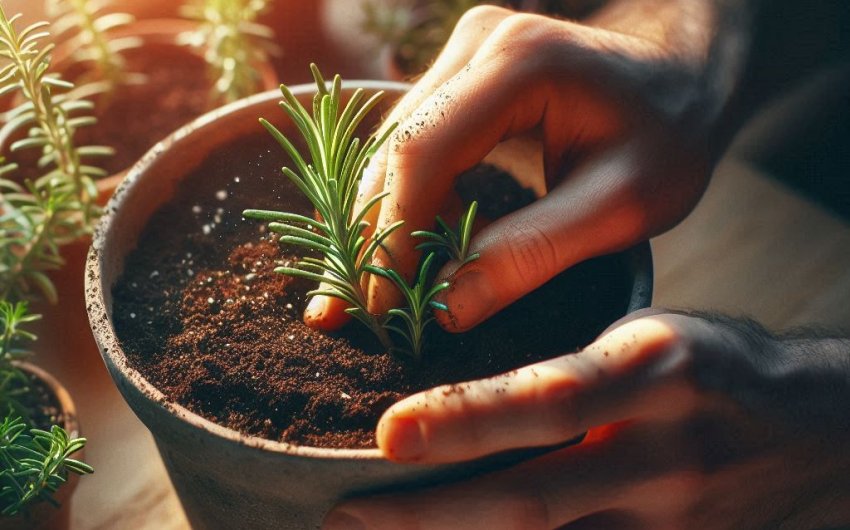
Fill a small pot with a well-draining seed-starting mix or a light, sandy potting soil. Make a small hole in the soil and gently insert the rosemary cutting, ensuring that the lower portion (where you removed the leaves) is buried.
e) Create a Humid Environment:
Cover the cutting and pot with a plastic bag or place it in a propagation dome to maintain humidity. Place the pot in a warm, sunny location but out of direct sunlight.
f) Care for the Cutting:
Check the cutting daily to ensure the soil stays moist but not waterlogged. In 4 to 6 weeks, the cutting should develop roots. Once rooted, transplant the rosemary into a larger pot or directly into the garden.
3. How to Propagate Mint from Cuttings
Mint (Mentha spp.) is an aromatic, fast-growing herb that can quickly take over your garden if left unchecked. Propagating mint from cuttings is an easy way to grow new plants, whether you want to expand your collection or give mint plants to friends.
Step-by-Step Guide for Propagating Mint:
a) Select the Right Cutting:
Choose a healthy stem from a mature mint plant, ideally one that is not flowering. Use pruning shears to cut a 4- to 6-inch stem just below a node.
b) Prepare the Cutting:
Remove the lower leaves from the cutting, leaving the top leaves intact. This will allow the cutting to focus its energy on growing roots rather than sustaining leaves.
c) Root in Water:
Place the mint cutting in a glass of water, ensuring that the lower section is submerged. Place the glass in a sunny spot, such as a windowsill. Mint roots easily in water, so you'll likely see root development within a week or two.
d) Transplant to Soil:
Once the roots are about 1 to 2 inches long, transplant the mint cutting into a small pot filled with well-draining potting mix. Water the soil lightly and place the pot in a sunny location.
Mint grows vigorously, so you'll soon have a new plant ready to enjoy in your favorite recipes or teas.
4. How to Propagate Thyme from Cuttings
Thyme (Thymus vulgaris) is a low-growing, perennial herb that offers a rich, earthy flavor to meats, soups, and sauces. Propagating thyme from cuttings is straightforward, and the new plants can be grown in containers or directly in the garden.
Step-by-Step Guide for Propagating Thyme:
a) Select the Right Cutting:
Cut a 4- to 5-inch piece from a healthy, non-flowering thyme stem. Use sharp pruning shears to make a clean cut below a leaf node.
b) Prepare the Cutting:
Remove the leaves from the lower half of the stem to expose the nodes. This helps the cutting direct its energy towards growing roots.
c) Apply Rooting Hormone:
Dip the base of the thyme cutting into rooting hormone to encourage faster root growth.
d) Plant the Cutting:
Plant the thyme cutting in a small pot filled with a well-draining seed-starting mix. Press the soil down gently to secure the cutting.
e) Care for the Cutting:
Cover the cutting with a plastic bag to retain humidity and place it in a warm location with indirect light. Keep the soil moist but not soggy. After a few weeks, the cutting should develop roots, at which point you can transplant it into a larger pot or garden bed.
5. How to Propagate Basil from Cuttings
Basil (Ocimum basilicum) is an essential herb in many cuisines, and its ability to grow quickly from cuttings makes it a favorite for herb gardeners. Whether you're growing basil for pesto or seasoning, propagating from cuttings allows you to enjoy an endless supply of fresh basil.
Step-by-Step Guide for Propagating Basil:
a) Select the Right Cutting:
Choose a healthy basil stem that is 4 to 6 inches long, ideally one that hasn't flowered. Use sharp scissors or pruning shears to cut just below a node.
b) Prepare the Cutting:
Remove the leaves from the bottom half of the stem, leaving the top leaves intact. This will allow the cutting to focus on root development.
c) Root in Water:
Place the basil cutting in a glass of water and set it in a sunny spot, such as a windowsill. Change the water every few days to prevent stagnation. Basil roots easily in water, and you should see root development within a week.
d) Transplant to Soil:
Once the roots are about 1 inch long, transplant the basil cutting into a small pot filled with well-draining potting soil. Water the plant regularly and place it in a sunny spot.
Basil is a fast grower, and with regular pruning, you can encourage bushier growth and a continuous supply of fresh leaves.
6. How to Propagate Oregano from Cuttings
Oregano (Origanum vulgare) is a perennial herb with a strong, peppery flavor that's commonly used in Italian and Mediterranean dishes. Propagating oregano from cuttings is a quick and effective way to multiply your plants.
Step-by-Step Guide for Propagating Oregano:
a) Select the Right Cutting:
Choose a 4- to 6-inch stem from a healthy oregano plant. Use sharp pruning shears to cut just below a node.
b) Prepare the Cutting:
Remove the leaves from the lower part of the stem, leaving the top leaves intact.
c) Apply Rooting Hormone:
Dip the base of the cutting into rooting hormone to encourage root development.
d) Plant the Cutting:
Place the cutting in a small pot filled with seed-starting mix. Press the soil gently to secure the cutting.
e) Care for the Cutting:
Cover the cutting with a plastic bag to maintain humidity and place it in a warm, well-lit area. Keep the soil moist but not soggy, and within a few weeks, the cutting should root. Once rooted, transplant it into a larger container or garden bed.
By following these steps, you can easily propagate oregano and other herbs from cuttings to enjoy a lush, aromatic herb garden.