
Retaining Wall Ideas for Easy Landscaping
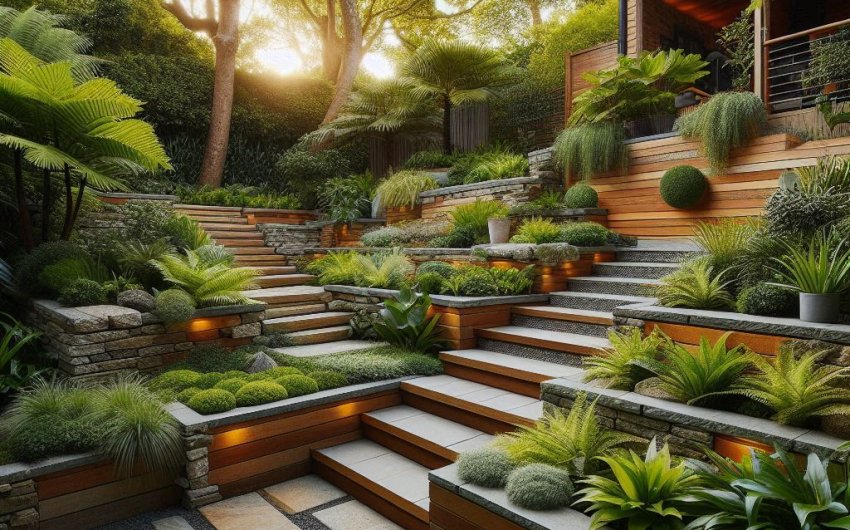
Does your yard have a slope that's hard to mow or plant? Are you dreaming of clearly defined garden beds or a flat patio area on uneven ground? If so, retaining walls might be the landscaping solution you're looking for! A retaining wall is essentially a structure designed to hold back soil, creating a level area on a slope or separating different elevations in your landscape. They're not just functional; they can be incredibly beautiful, adding structure, texture, and visual interest to your yard.
You might think retaining walls are complex and expensive, but there are many retaining wall ideas for easy landscaping that are perfect for DIY enthusiasts and those on a budget. This guide will explore the benefits of these versatile structures, delve into different materials and designs, and provide tips for building simpler walls yourself. Get ready to transform challenging slopes into beautiful, usable garden spaces!
Why Are Retaining Walls So Useful in Landscaping?
Beyond just holding back dirt, retaining walls offer numerous practical and aesthetic benefits for your yard.
Do Retaining Walls Prevent Erosion?
Absolutely! This is the primary function of a retaining wall. If your yard has a significant slope, rain can quickly wash away topsoil, nutrients, and even plants. This process, called erosion, can damage your landscape and make it difficult for anything to grow. A retaining wall creates stable, level terraces that prevent soil from washing downhill, keeping your garden intact and healthy.
Can They Create More Usable Space?
Yes! Sloped yards can be challenging to use. A retaining wall allows you to transform an unusable incline into flat, functional areas. You can create:
- Terraced Garden Beds: Turn steep slopes into tiered planting areas, making them easier to plant and maintain.
- Level Patios: Build a flat surface for outdoor seating, dining, or play on uneven ground.
- Defined Zones: Clearly separate different areas of your yard, like a lawn area from a flower bed.
Do Retaining Walls Add Beauty and Structure?
Definitely! Retaining walls aren't just practical; they are significant hardscaping elements that add architectural interest to your landscape. They can define spaces, create visual layers, and add texture and color. A well-designed retaining wall can elevate the overall aesthetic of your yard, making it look more polished and professionally designed.
Can They Help with Drainage?
Properly designed retaining walls incorporate drainage features that manage water flow in your yard. This helps prevent water from pooling against your house foundation or saturating your garden beds, directing it away effectively. This is crucial for both plant health and protecting your home.
Types of Retaining Walls for Easy Landscaping (DIY-Friendly)
While some retaining walls require professional engineering for stability (especially tall ones), many retaining wall ideas are perfectly suitable for DIY projects, especially for lower walls.
1. Segmental Retaining Wall Blocks (Easy & Versatile)
These are pre-made, interlocking concrete blocks designed specifically for retaining walls.
- Pros: Very DIY-friendly for walls up to 2-3 feet tall (check manufacturer guidelines for taller walls). No mortar required, as they interlock. Come in various colors, textures, and styles. Look very professional. You can find interlocking retaining wall blocks.
- Cons: Can be heavy to transport and lift. More expensive per block than some other materials, but cheaper than professional installation.
- Best for: Straight or gently curved walls, terraced gardens, raised garden beds.
2. Timber Retaining Walls (Rustic & Natural)
Often made from pressure-treated lumber, railroad ties (check for creosote-free if using near food plants), or large landscaping timbers.
- Pros: Relatively cheap and easy to work with for DIY projects. Creates a rustic, natural look. Can be built quickly. Landscape timbers are widely available.
- Cons: Wood will eventually rot, even if pressure-treated, so it's not as permanent as stone or concrete. Can warp or crack over time.
- Best for: Straight walls, raised garden beds, casual borders.
3. Dry-Stacked Stone Walls (Natural & Charming)
These walls use natural stones stacked without mortar.
- Pros: Incredibly natural and beautiful look. Environmentally friendly (if using local stone). Very DIY-friendly for low walls (1-2 feet). Allows for natural drainage.
- Cons: Requires careful selection and fitting of stones (like a puzzle). Can be unstable if built too high or without a proper base. Heavy lifting.
- Best for: Cottage gardens, natural landscapes, informal garden bed borders. Can use local river rocks or fieldstone.
4. Gabion Walls (Modern & Industrial)
Gabion walls are wire cages filled with rocks or other natural materials.
- Pros: Very modern, industrial aesthetic. Extremely strong and durable once filled. Good drainage. Can use inexpensive local rocks as fill. Gabion baskets are available in kits.
- Cons: Can be more industrial than some prefer. Filling can be labor-intensive.
- Best for: Contemporary landscapes, large-scale projects, or combining with other materials.
Essential Components and Tools for DIY Retaining Walls
Building a sturdy retaining wall requires some basic components and tools.
Key Components:
- Foundation/Base: Crucial for stability. Typically compacted crushed gravel or road base.
- Wall Material: Your chosen blocks, timbers, or stones.
- Backfill: Clean gravel or crushed stone directly behind the wall for drainage.
- Geotextile Fabric: Placed behind the gravel backfill to prevent soil from clogging the drainage. You can find landscape fabric for drainage.
- Drainage Pipe (Optional but Recommended): A perforated drain pipe placed at the base of the gravel backfill, leading water away from the wall.
Essential Tools:
- Shovel or Spade: For excavation.
- Wheelbarrow: For moving materials (gravel, soil, blocks).
- Tape Measure: For accurate measurements.
- String Line and Stakes: For marking out straight lines. You can get garden string and stakes.
- Spirit Level (long): Essential for ensuring each course (layer) of your wall is level. A 4-foot level is recommended.
- Rubber Mallet: To gently tap blocks/timbers into place.
- Hand Tamper or Plate Compactor (rentable): For compacting the base and backfill. A hand tamper works for smaller projects.
- Gloves and Safety Glasses: Always protect yourself.
Step-by-Step Basics for a DIY Segmental Block Retaining Wall (Under 2-3 ft)
This is one of the most popular and DIY-friendly retaining wall ideas.
Step 1: Plan and Mark Your Wall
- Determine Height and Length: Decide how high and long your wall needs to be. For DIY, keep it under 2-3 feet (check manufacturer limits for your specific blocks).
- Layout: Use the string line and stakes to mark the exact line where the front face of your wall will be. For curves, use a garden hose to lay out the shape.
- Dig a Trench: Excavate a trench that is wider than your blocks (usually about 12-18 inches) and deep enough to bury at least the first course (layer) of blocks, plus 4-6 inches for your gravel base. This ensures stability.
- Level the Trench: Ensure the bottom of the trench is perfectly level. Use your spirit level and rake/trowel.
Step 2: Create a Solid Base
- Add Gravel: Fill the bottom of the trench with 4-6 inches of crushed gravel or road base.
- Compact Thoroughly: Use your hand tamper or plate compactor to compact the gravel until it's very firm and level. This is the most crucial step for a stable wall!
- Level Again: Use your spirit level to double-check that your compacted base is perfectly level (or at a very slight slope away from the slope you're retaining, for drainage).
Step 3: Lay the First Course (The Foundation Row)
- Placement: Begin laying your first row of retaining wall blocks directly on the compacted gravel base. Start at an end or corner.
- Level and Snug: Tap each block with a rubber mallet to embed it firmly and ensure it's perfectly level from front to back, side to side, and with its neighbors. Use your spirit level frequently.
- Burying: The first course should be completely or mostly buried for stability.
- Interlocking: For blocks with a lip or pin, ensure they are correctly aligned for interlocking with the next course.
Step 4: Backfill and Drainage (After Each Course)
- Add Drainage Material: Behind the first course of blocks, fill the trench with 12 inches of clean, coarse gravel (your drainage backfill).
- Optional: Drainage Pipe: If using a perforated drain pipe, lay it at the bottom of this gravel backfill, right behind the wall, ensuring it slopes gently to direct water away.
- Compact: Lightly compact the gravel backfill.
- Geotextile Fabric: If using, place a layer of geotextile fabric against the soil side of the gravel to prevent soil from mixing in and clogging the drainage.
Step 5: Lay Subsequent Courses
- Stacking: Stack the next course of blocks on top of the first. For most interlocking blocks, you'll "stagger" the joints (like bricks in a wall) for strength, ensuring the upper block straddles the joint of the two blocks below it.
- Recess (Optional but Good): For added stability, you can slightly "recess" each subsequent course (move it back about 1/2 inch from the course below). This creates a slight backward lean (batter) which helps the wall resist the pressure of the soil.
- Level Each Course: Check each block and each entire course with your spirit level as you go. Make adjustments by tapping or adding/removing sand under the blocks.
- Continue Backfilling: After every 1-2 courses, add more gravel backfill behind the wall and compact it lightly. Make sure your geotextile fabric is extending upwards behind the gravel as you build.
Step 6: Finish the Top and Backfill Soil
- Capstones (Optional): Many retaining wall systems have matching capstones that can be glued to the top course with landscape adhesive for a finished look.
- Topsoil: Fill in behind the gravel backfill with topsoil, gently sloping it away from the wall to encourage surface water drainage. Plant your desired flowers, shrubs, or groundcover.
Stylish Retaining Wall Ideas for Landscaping
Beyond the basic construction, here's how to make your retaining wall truly pop in your garden.
1. Tiered Retaining Walls (Multi-Level Gardens)
- Design: Build multiple, shorter retaining walls up a slope, creating beautiful, accessible planting terraces.
- Benefits: Easier to build (lower walls are less complex), creates distinct planting zones, maximizes usable space on steep slopes. Visually stunning.
- Styling Tip: Plant each tier with different plant types, or create a cascading effect with trailing plants spilling over the edges.
2. Built-in Seating or Planters
- Design: Incorporate a wider section of your retaining wall to form a sturdy built-in bench. Or, create a wider top course to act as a planter box.
- Benefits: Adds functionality and integrates seating seamlessly into your landscape.
- Styling Tip: Add comfortable outdoor cushions to built-in benches.
3. Integrated Lighting
- Design: Embed low-voltage retaining wall lights or solar step lights directly into the wall during construction, or along the top edge.
- Benefits: Enhances safety, especially on multi-tiered walls, and creates a beautiful ambiance at night.
- Styling Tip: Use warm-toned lights to highlight the texture of the wall material and surrounding plants.
4. Combinations of Materials
- Design: Don't limit yourself to one material. Combine a stone retaining wall with a wooden fence on top, or integrate a gabion wall with timber accents.
- Benefits: Adds visual complexity and allows for unique stylistic statements.
- Styling Tip: Ensure the materials complement each other in color and texture.
5. Edible Retaining Walls / Herb Walls
- Design: Use your retaining wall (especially a raised garden bed style) to create a dedicated space for herbs or vegetables.
- Benefits: Makes gardening more accessible, provides fresh produce, and adds beauty.
- Styling Tip: Plant a variety of herbs with different textures and colors, or choose cascading edible plants to spill over the edge.
Important Considerations for All Retaining Walls
Even for DIY projects, some fundamental principles are critical for success and longevity.
1. Drainage is Non-Negotiable
- Hydrostatic Pressure: Water buildup behind a retaining wall creates enormous pressure (hydrostatic pressure) that can cause the wall to bow, crack, or fail.
- Proper Drainage: Always include a drainage layer of clean gravel behind the wall and, for taller walls, a perforated drain pipe at the base of the gravel layer. The drain pipe should direct water away from the wall and structures.
- Geotextile Fabric: This fabric prevents soil from washing into and clogging your gravel drainage layer.
2. Wall Height and Engineering
- DIY Limits: For DIY retaining walls, it's generally recommended to keep them under 2-3 feet in height. Taller walls (over 3-4 feet, depending on local codes and soil conditions) often require professional engineering and special permits due to the immense pressure they hold back.
- Burying the First Course: Always bury at least 1/6th to 1/3rd of the total wall height below grade for stability.
3. Batter (Slight Lean)
- Stability: Most retaining walls should have a slight backward lean (or "batter") into the slope they are retaining. This helps the wall resist the forces of gravity and soil pressure. Segmental blocks often have a built-in lip that automatically creates this batter.
4. Soil Compaction
- Solid Base: Always compact your foundation trench and the gravel backfill thoroughly. This prevents future settling and wall instability.
- No Organic Material: Do not use topsoil or organic material (like compost) in your wall's base or drainage backfill, as it will decompose and settle, undermining the wall.
By carefully planning, selecting the right materials, and focusing on proper construction techniques, you can successfully implement these retaining wall ideas for easy landscaping and create stunning, functional, and long-lasting features in your yard. Enjoy turning those slopes into beautiful garden spaces!