
How to Landscape Using Bold Boulders?
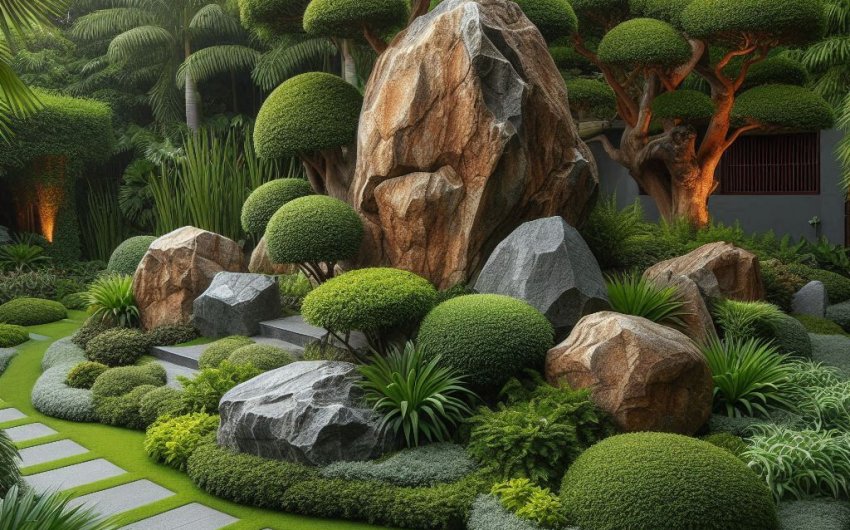
When you envision a truly impactful and natural-looking landscape, chances are boulders come to mind. These magnificent natural stones are more than just large rocks; they are the sculptural elements of the earth, capable of transforming a flat, uninspired yard into a dynamic, textured, and even dramatic outdoor space. Learning how to landscape using bold boulders can elevate your garden design from merely pretty to truly awe-inspiring.
Boulders offer permanence, a connection to nature, and an immediate sense of maturity to any landscape. They can define spaces, manage slopes, create striking focal points, or act as natural seating. While moving them might require some muscle (or heavy equipment!), the design principles are surprisingly straightforward. This guide will walk you through the art and science of incorporating bold boulders into your landscape, from selection and placement to integration with plants and other features. Get ready to add some serious natural impact to your yard!
Why Integrate Bold Boulders into Your Landscape?
Adding boulders goes beyond simple decoration; it’s about creating impactful, functional, and aesthetically pleasing outdoor environments.
Do Boulders Add a Sense of Permanence and Maturity?
Absolutely! Unlike plants that grow and change, or artificial elements that can degrade, boulders are permanent. They look like they've always been there, lending an immediate sense of history, stability, and maturity to your landscape. This inherent permanence makes your garden feel established and grounded, even if it's newly designed. They are literally foundations of your landscape design.
Can Boulders Create Natural Focal Points?
Yes, a well-placed bold boulder instantly becomes a striking focal point. Its size, texture, and unique shape draw the eye, giving your garden a natural anchor. Instead of relying solely on plants, which change seasonally, a boulder provides year-round interest and structure, especially in winter when deciduous plants are dormant. It’s a natural sculpture that commands attention.
Do Boulders Provide Texture and Contrast?
Definitely. The natural surfaces of boulders offer incredible texture – rough, smooth, craggy, layered. This texture contrasts beautifully with the soft foliage of plants, creating visual excitement and depth in your garden beds. The varied colors and natural patterns of different types of stone also add subtle yet powerful visual interest that enhances the overall aesthetic.
Can Boulders Help with Drainage and Slopes?
Yes, boulders are incredibly functional in challenging landscapes.
- Erosion Control: Strategically placed boulders can help stabilize slopes, preventing soil erosion and channeling rainwater effectively.
- Natural Retaining Walls: Larger boulders can be dry-stacked (without mortar) to create informal, natural-looking retaining walls for low slopes or to define raised garden beds.
- Drainage Channels: Arranging boulders can help create natural swales or dry creek beds that manage water runoff.
Are Boulders Low Maintenance?
Compared to many other landscape elements, boulders are remarkably low maintenance. Once they are properly placed and settled, they don't require watering, pruning, or fertilizing. A quick rinse with a hose might be all they need to stay clean. They are a durable, long-term solution that adds impact without adding to your chore list.
Choosing the Right Boulders for Your Landscape
Selecting the right boulders is crucial for achieving a natural and harmonious look.
1. Match Your Region's Natural Stone
- Harmony: The best way to make boulders look natural in your landscape is to choose stones that are native to your region or that resemble them. This creates a cohesive look that blends seamlessly with the surrounding environment.
- Local Sourcing: Visit local quarries or landscape supply yards to see what types of stone are common in your area. This also often means cheaper prices due to less transportation.
2. Consider Size, Shape, and Texture
- Size Matters:
- Larger is Better: For a truly "bold" impact, don't go too small. A single large boulder often looks more natural and impressive than several small ones. As a rule of thumb, use a boulder that looks like about 1/3 of it is buried.
- Scale: Ensure the size of the boulder is proportionate to your garden space and other landscape features. A massive boulder in a tiny garden might overwhelm it.
- Shape:
- Natural Irregularity: Most boulders are naturally irregular, which is what gives them their charm. Look for interesting contours, subtle curves, or flat sides for stability.
- Avoid Uniformity: A mix of shapes within an arrangement looks more natural.
- Texture:
- Rough/Craggy: Adds dramatic contrast, great for rugged or naturalistic designs.
- Smooth/Rounded: Suggests water erosion, ideal for Zen gardens, dry creek beds, or modern designs.
- Layered/Stratified: Can create a sense of geological history.
3. Color and Veining
- Subtle Blending: Choose boulders whose colors (grays, browns, reds, blacks) complement your home's exterior and existing hardscaping.
- Natural Variations: Appreciate the natural veins, mineral deposits, or moss/lichen growth on the boulder; these add character.
4. Sourcing Boulders
- Local Landscape Supply Yards: The best place to find a good selection. You can usually pick individual stones.
- Quarries: May offer bulk pricing for very large projects.
- Your Own Property: If you have large rocks on your property, lucky you!
- Safety Note: Moving large boulders requires heavy equipment (skid steer, forklift, or specialized dollies/hoists) and expertise. Do not attempt to lift heavy rocks by hand; serious injury can occur.
How to Landscape Using Bold Boulders: Placement Strategies
Strategic placement is key to making your boulders look like they've been there forever, not just dropped into your yard.
1. The "Bury Most of It" Rule
- Natural Look: This is perhaps the most important tip. A boulder looks most natural when about one-third to one-half of its mass is buried in the ground. This gives it a sense of being deeply rooted and integrated into the landscape, as if it emerged naturally from the earth.
- Stability: Burying a portion of the boulder also greatly increases its stability, preventing it from rolling or shifting.
2. Create Natural Groupings
- Odd Numbers: Boulders often look best when arranged in odd-numbered groups (3, 5, 7). This creates a more dynamic and natural composition than even numbers.
- Vary Size: Within a grouping, use boulders of different sizes – a large dominant one, and smaller supporting ones.
- Visual Flow: Arrange them so they appear to be part of a natural outcrop, not just randomly placed. Think about how they would naturally fall or sit together.
3. Use Boulders as Focal Points
- Strategic Placement: Place a single, striking bold boulder at the end of a pathway, in a prominent garden bed, or near a water feature to draw the eye.
- Background: Consider the background against which the boulder will be viewed (e.g., against a backdrop of dark evergreens, it will stand out more).
4. Integrate Boulders into Slopes and Retaining Walls
- Slope Stabilization: Place boulders at intervals along a slope to help slow down water runoff and hold soil in place.
- Dry-Stack Walls: For low slopes, larger, flatter boulders can be stacked without mortar to create beautiful, informal retaining walls. Ensure a solid base and proper drainage behind them.
- Terracing: Use boulders to define the edges of terraced garden beds on a hillside.
5. Consider Functionality
- Natural Seating: Large, flat-topped boulders can serve as informal seating spots in your garden.
- Steps: Arranged in a staggered pattern, they can form rustic steps on a gentle incline.
- Defining Spaces: Use boulders to subtly define different zones in your yard, like separating a lawn area from a garden bed.
Integrating Boulders with Plants and Other Features
Boulders are rarely used in isolation; their true beauty emerges when combined with other landscape elements.
1. Soften Edges with Plants
- Planting Around Boulders: Plant low-growing, cascading, or creeping plants around the base and between boulders to soften their hard edges and integrate them into the landscape.
- Groundcovers: Creeping thyme, sedum, vinca, or moss can spread over portions of the boulder, creating a living texture.
- Perennials: Choose tough, drought-tolerant perennials that thrive in rocky conditions, such as coneflowers, lavender, salvia, or various ornamental grasses.
- Small Shrubs: Dwarf conifers or spreading juniper varieties can provide year-round greenery and anchor the boulders.
2. Create Rock Gardens
- Alpine or Succulent Gardens: Boulders are perfect for creating rock gardens filled with drought-tolerant plants like succulents, cacti, or alpine varieties that thrive in rocky, well-drained soil.
- Zen Gardens: Combine large boulders with raked gravel or sand for a contemplative, minimalist aesthetic.
3. Enhance Water Features
- Waterfalls and Ponds: Boulders are essential for creating natural-looking waterfalls, cascades, and lining the edges of ponds.
- Dry Creek Beds: Arrange boulders and smaller river rocks to form a dry creek bed that acts as a drainage solution and a striking visual feature, especially during rain.
4. Lighting for Evening Drama
- Uplighting: Place landscape uplights at the base of boulders to cast dramatic shadows and highlight their texture at night.
- Spotlighting: Use small spotlights to draw attention to particularly interesting boulders.
Practical Tips for Working with Bold Boulders
Moving and placing large rocks is not a job to take lightly. Safety and proper technique are paramount.
1. Safety First!
- Heavy Lifting: Never attempt to lift or move large boulders by yourself. Even a medium-sized boulder can weigh hundreds of pounds.
- Use Equipment: For anything larger than you can comfortably roll, rent a hand truck for rocks, a pallet jack, or hire a professional with a skid steer or small excavator.
- Professional Help: For very large boulders or complex placements, it's highly recommended to hire a landscaping professional.
- Gloves and Footwear: Always wear sturdy work gloves and steel-toed boots when handling rocks.
2. Prepare the Site
- Excavation: Dig out the area where the boulder will sit, ensuring it's deep enough to bury at least one-third of the stone.
- Level Base: For stability, especially for larger boulders or those used in a wall, create a compactable base of crushed gravel under the boulder.
3. Consider Drainage
- Around Boulders: Ensure water can drain freely around the boulders and doesn't get trapped, which could lead to pooling or soil saturation.
- Gravel Base: The gravel base you place beneath the boulder (and within a retaining wall) also serves a drainage function.
4. Trial and Error (with smaller rocks)
- Practice Placement: Before committing to a final spot for a large boulder, try arranging smaller rocks of similar shapes and sizes in the desired area. This helps you visualize the arrangement and fine-tune your design.
5. Maintenance
- Minimal: Once placed, boulders require very little maintenance.
- Cleaning: Occasionally hose them off to remove dirt or debris.
- Moss/Lichen: If moss or lichen grows on them, consider whether you like the natural, aged look (most people do!) or if you prefer to remove it with a stiff brush and water.
By understanding the inherent beauty and functional advantages of bold boulders, and by approaching their integration with thoughtful design and safety in mind, you can truly transform your landscape into a masterpiece of natural artistry. Get ready to create a garden that stands the test of time!