
Perennial Perfection: Top 10 Plants for an Authentic English Cottage Garden
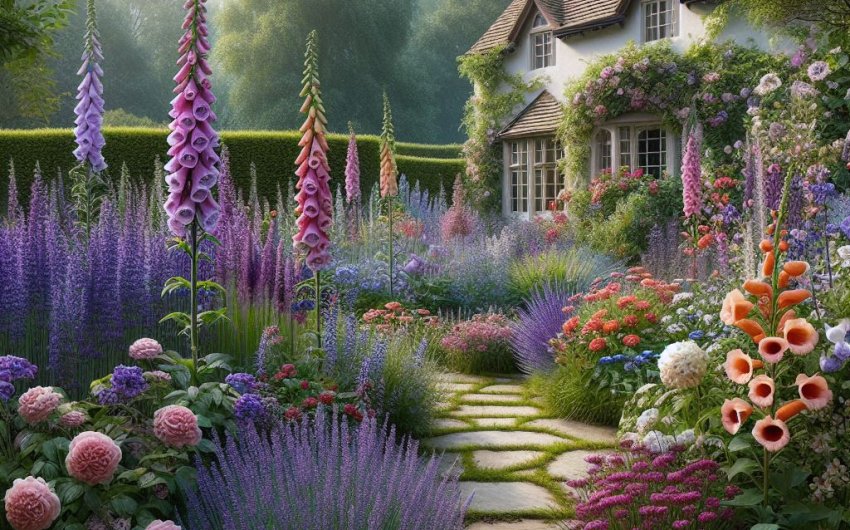
For achieving perennial perfection in an authentic English cottage garden, focus on incorporating top 10 plants that embody its signature informal charm, abundant blooms, and rich historical character. These foundational perennials provide long-lasting beauty, fragrance, and structure, returning year after year with minimal effort.
What Defines an Authentic English Cottage Garden?
Before selecting the top 10 plants for an authentic English cottage garden, it's essential to understand its defining characteristics. This beloved garden style is more about a feeling than rigid rules, embracing abundance, informality, and a blend of beauty and utility.
What are the Core Design Principles of a Cottage Garden?
The core design principles of a cottage garden are its unique blend of informality, exuberance, and practicality, setting it apart from more structured garden styles. These elements work together to create its signature romantic charm.
- Informality and Abundance: The hallmark is a relaxed, overflowing feel where plants spill over pathways, mingle freely, and fill every available space. It's a contrast to rigid lines and manicured lawns.
- Layered Plantings: Dense, multi-layered plantings are key, with plants of varying heights, textures, and forms growing closely together to create a tapestry of color and foliage.
- Mix of Flowers, Herbs, and Edibles: Traditionally, cottage gardens were functional as well as beautiful. They integrate ornamental flowers with culinary and medicinal herbs (rosemary, thyme, sage) and even small edibles (strawberries, beans).
- Romantic Aesthetic: Evokes a sense of nostalgia, charm, and seemingly effortless beauty, often featuring soft color palettes, fragrant blooms, and rambling vines.
- Fencing and Gates: A charming picket fence, low stone wall, or weathered wooden gate often frames the garden, enhancing its welcoming, enclosed feel.
- Winding Paths: Informal, meandering paths (brick, gravel, stepping stones) guide visitors through the dense plantings, inviting exploration.
- Hardscaping Elements: Rustic benches, antique pots, bird baths, and small arbors add to the garden's character and provide anchors within the floral profusion.
- Continuous Bloom: Aims for a long season of interest, with a succession of flowers from spring to fall.
These principles combine to define the inviting, vibrant, and abundant style that is the essence of an authentic English cottage garden.
How Do Perennials Contribute to the Enduring Charm?
Perennials make an invaluable contribution to the enduring charm of an English cottage garden because they return reliably year after year, forming the stable, long-lasting backbone of the design. Their consistent presence fosters a sense of permanence and effortless abundance.
- Reliable Return: Unlike annuals that need replanting every year, perennials come back on their own, growing larger and more robust each season. This builds the garden's structure and density over time.
- Sense of Established Garden: Mature perennials give the garden a "lived-in" and established feel, as if it has been lovingly tended for generations, which is a hallmark of cottage garden charm.
- Less Annual Work: Once established, perennials require less annual planting effort compared to a garden filled predominantly with annuals.
- Continuous Bloom (with succession): By choosing perennials with staggered bloom times, you can ensure continuous floral interest throughout the growing season.
- Structure and Form: Many perennials grow into substantial clumps, providing structural integrity to the informal plantings and supporting other, perhaps floppier, plants.
- Habitat for Wildlife: Established perennials provide consistent food and shelter for pollinators and other beneficial insects year after year.
Perennials are the key to achieving perennial perfection and the long-lasting, natural beauty that defines an authentic English cottage garden.
What Makes a Plant "Authentic" for a Cottage Garden?
A plant is considered "authentic" for a cottage garden if it aligns with the historical traditions and aesthetic principles of this garden style. This typically means varieties that are old-fashioned, naturally robust, often fragrant, and fit the informal, abundant look.
- Historical Precedent: Many authentic plants are traditional varieties that would have actually been found in humble English cottage gardens for centuries (e.g., hollyhocks, delphiniums, classic roses, lavender).
- Informal Growth Habit: Plants that grow in loose clumps, have a slightly "wild" or naturalistic form, or readily self-seed (without being invasive) fit the aesthetic. Avoid overly stiff, uniform, or highly hybridized modern varieties that look out of place.
- Soft Color Palette: Often features soft pastels, blues, pinks, purples, and whites, though vibrant pops of color are also welcome.
- Fragrance: Many authentic cottage garden plants are chosen for their delightful scents, contributing to the sensory experience (e.g., roses, lavender, sweet peas).
- Mix of Textures and Forms: A variety of plant shapes (spires, globes, daisies, feathery) and leaf textures contributes to the characteristic tapestry effect.
- Utility (Optional but Ideal): Traditional cottage gardens often included herbs and small edibles alongside flowers, so plants that serve a dual purpose are very authentic.
- Pollinator Friendly: Many traditional cottage garden plants are excellent for attracting bees and butterflies.
By selecting these authentic plants, you ensure your garden embodies the true spirit and charm of an English cottage garden.
What Are the Top 10 Perennials for an Authentic English Cottage Garden?
To achieve perennial perfection in your authentic English cottage garden, integrating these top 10 plants will provide a foundation of beauty, fragrance, and texture, ensuring a vibrant display year after year. This curated list prioritizes classic charm and robust growth.
1. Roses (Shrub & Climbers): The Undisputed Queen
Roses, particularly shrub and climbing varieties, are the undisputed queen and a quintessential plant for an authentic English cottage garden, embodying its romance, fragrance, and abundant bloom. No cottage garden is complete without them.
- Why it's a Top Pick:
- Iconic Symbol: The most iconic flower of the cottage garden.
- Fragrance: Many old garden roses and David Austin English Roses offer intoxicating scents.
- Abundant Bloom: Shrub roses like David Austins are known for their repeat flowering. Climbers ramble beautifully over structures.
- Forms: Choose varieties with lush, cupped, or informal blooms.
- Versatility: Can be grown as shrubs, trained on arbors, pergolas, or fences.
- Authentic Varieties:
- David Austin English Roses: 'Gertrude Jekyll', 'Munstead Wood', 'Heritage', 'Graham Thomas'.
- Old Garden Roses: Bourbons ('Zephirine Drouhin' - thornless climber), Hybrid Musks ('Felicia').
- Rambling Roses: For wilder, informal look.
- Care Tip: Plant in full sun, rich soil. Prune annually. Use rose food for optimal blooms. Provide support for climbers.
Roses are fundamental for creating the romantic heart of an authentic English cottage garden.
2. Delphinium: Majestic Vertical Spires
Delphinium provides majestic vertical spires of vibrant blue, purple, pink, or white, making it a dramatic and essential plant for creating height and structure in an authentic English cottage garden. They command attention with their elegance.
- Why it's a Top Pick:
- Vertical Impact: Adds dramatic height and a strong vertical element to the background or middle of beds.
- Classic Color: Iconic true blues are highly prized.
- Elegant Form: Towering flower spikes with delicate florets.
- Pollinator Attractor: Beloved by bees.
- Authentic Varieties: 'Pacific Giant' series, 'New Millennium' series.
- Care Tip: Needs full sun, rich, well-drained soil. Often requires staking or support due to tall stature. Can be short-lived; deadhead for potential rebloom.
Delphiniums are crucial for adding vertical grandeur and a touch of formality within the informal setting.
3. Hollyhock: Old-Fashioned Charm and Height
Hollyhock (Alcea rosea) is an old-fashioned charmer that brings impressive height and rustic appeal, making it an indispensable plant for an authentic English cottage garden. Its stately spires of cup-shaped flowers evoke a sense of nostalgia.
- Why it's a Top Pick:
- Architectural Height: Can grow 5-8 feet tall, perfect for the back of borders or against fences/walls.
- Traditional Look: A classic cottage garden staple.
- Diverse Colors: Available in a wide range of colors from white, pink, red, yellow, to nearly black.
- Self-Seeder: Readily self-seeds, contributing to the informal, abundant feel.
- Authentic Varieties: 'Chater's Double', 'Nigra' (black), 'Single Mixed'.
- Care Tip: Often grown as a biennial (flowers in its second year). Needs full sun and good air circulation to prevent rust disease. Plant hollyhock seeds in late summer for blooms next year.
Hollyhocks add a charming, vertical backdrop, a true symbol of the cottage garden.
4. Lavender: Fragrance and Pollinator Magnet
Lavender (Lavandula angustifolia) is a fragrant and highly attractive pollinator magnet, making it an essential plant for an authentic English cottage garden that appeals to both sight and scent. Its silvery foliage and purple spikes are iconic.
- Why it's a Top Pick:
- Exquisite Fragrance: Known for its calming, sweet aroma.
- Pollinator Attractor: A favorite of bees and butterflies.
- Beautiful Foliage: Silvery-grey, evergreen foliage provides year-round interest.
- Versatile: Can be used as low hedging, in drifts, or as a specimen plant.
- Culinary & Medicinal: Edible flowers and leaves for culinary uses, teas, and aromatherapy.
- Authentic Varieties: 'Hidcote', 'Munstead'.
- Care Tip: Needs full sun and excellent drainage. Prune after flowering to maintain shape.
Lavender provides a sensory delight and a beautiful, informal border element.
5. Foxglove: Charming Spikes and Woodland Feel
Foxglove (Digitalis purpurea) offers charming spikes of bell-shaped flowers, adding a touch of woodland feel and vertical grace to an authentic English cottage garden. It's a classic, often self-seeding biennial.
- Why it's a Top Pick:
- Delicate Beauty: Elegant, tubular flowers in shades of purple, pink, white, and yellow.
- Vertical Accent: Tall flower spikes are perfect for adding height and texture.
- Self-Seeder: Readily self-seeds, contributing to the informal, natural aesthetic.
- Shade Tolerant: Can tolerate partial shade, which is useful in a densely planted cottage garden.
- Authentic Varieties: 'Excelsior' hybrids, 'Dalmatian' series.
- Care Tip: Often grown as a biennial (flowers in its second year). Let it self-seed freely for continuous generations. Note: All parts of foxglove are poisonous if ingested.
Foxglove brings a touch of wild elegance and vertical interest, essential for the cottage garden.
6. Peony: Lush and Luxurious Blooms
Peony (Paeonia lactiflora) is revered for its lush and luxurious blooms, making it a must-have plant for an authentic English cottage garden that desires extravagant beauty and a delightful fragrance in late spring/early summer.
- Why it's a Top Pick:
- Spectacular Flowers: Large, often fragrant, multi-petaled blooms in white, pink, and red.
- Long-Lived: Can live for decades, even generations, becoming a garden heirloom.
- Early Summer Star: Provides a dramatic burst of color when many other flowers are just starting.
- Cut Flower: Excellent for bouquets with a good vase life.
- Authentic Varieties: 'Sarah Bernhardt', 'Duchesse de Nemours', 'Karl Rosenfield'.
- Care Tip: Needs full sun, well-drained soil. Plant in fall. Often requires peony cages or stakes to support heavy blooms. Avoid planting too deeply.
Peonies bring a timeless, opulent beauty to the cottage garden.
7. Echinacea (Coneflower): Hardy and Pollinator-Friendly
Echinacea (Coneflower) is a hardy and wonderfully pollinator-friendly plant, making it an essential addition to an authentic English cottage garden that seeks a robust, long-lasting bloom and ecological benefits.
- Why it's a Top Pick:
- Reliable Bloomer: Flowers continuously from mid-summer into fall.
- Pollinator Magnet: Attracts bees, butterflies, and other beneficial insects.
- Sturdy, Daisy-Like Blooms: Distinctive cone-shaped centers with ray petals.
- Disease Resistant: Generally tough and low-maintenance.
- Native Appeal: Many varieties are native to North America, blending well with a naturalistic aesthetic.
- Authentic Varieties: Echinacea purpurea (purple coneflower) and its cultivars like 'Magnus', 'White Swan'.
- Care Tip: Needs full sun, well-drained soil. Deadhead spent blooms for more flowers.
Echinacea provides continuous, cheerful color and supports a vibrant garden ecosystem.
8. Phlox (Garden Phlox): Fragrant Clouds of Color
Phlox, particularly tall Garden Phlox (Phlox paniculata), creates fragrant clouds of color, making it a classic and indispensable plant for an authentic English cottage garden that desires lush, mid-to-late summer bloom.
- Why it's a Top Pick:
- Masses of Color: Produces large, dense clusters of flowers.
- Wonderful Fragrance: Many varieties offer a sweet, heady scent.
- Long Bloom Time: Blooms from mid-summer into early fall.
- Adds Volume: Fills in the middle of borders with abundant foliage and flowers.
- Attracts Butterflies: A favorite nectar source for butterflies.
- Authentic Varieties: 'David' (white), 'Laura' (purple), 'Nicky' (magenta).
- Care Tip: Needs full sun to partial shade, consistent moisture. Good air circulation is crucial to prevent powdery mildew. Consider "the Chelsea Chop" (pruning back some stems in late spring) for staggered bloom and bushier plants.
Garden Phlox is essential for its lush beauty and inviting fragrance in the heart of summer.
9. Lady's Mantle: Delicate Foliage and Chartreuse Blooms
Lady's Mantle (Alchemilla mollis) is cherished for its delicate foliage and airy chartreuse blooms, making it an elegant and versatile plant for an authentic English cottage garden, providing beautiful texture and a softening effect.
- Why it's a Top Pick:
- Unique Foliage: Round, scallop-edged leaves beautifully collect dew drops.
- Soft Color: Frothy, lime-green flowers provide a subtle contrast.
- Excellent Filler: Softens transitions and fills gaps beautifully.
- Edging Plant: Perfect for lining paths or the front of borders.
- Shade Tolerant: Thrives in partial shade, making it adaptable.
- Authentic Varieties: Alchemilla mollis (the common species).
- Care Tip: Easy to grow. Keep consistently moist. Cut back spent flower stems to encourage new foliage.
Lady's Mantle provides graceful texture and a gentle backdrop, enhancing the charm of any English cottage garden.
10. Campanula (Bellflower): Blue Hues and Varied Forms
Campanula (Bellflower) offers delightful blue hues and varied forms, making it a charming and versatile plant for an authentic English cottage garden that seeks true blue flowers and a range of textures.
- Why it's a Top Pick:
- True Blue Flowers: Provides much-sought-after blue and purple shades.
- Diverse Forms: Available as tall spikes (e.g., C. persicifolia - Peach-leaved Bellflower), spreading groundcovers (C. carpatica - Carpathian Bellflower), or delicate clusters.
- Long Bloom Time: Many varieties offer extended flowering periods.
- Classic Charm: The bell shape is quintessential cottage garden.
- Authentic Varieties: Campanula persicifolia, Campanula carpatica, Campanula lactiflora.
- Care Tip: Needs full sun to partial shade, well-drained soil. Deadhead to encourage more blooms.
Campanula is essential for its charming bell-shaped blooms and the coveted blue tones it brings to the cottage garden palette.
How Do You Plan and Care for Perennials in a Cottage Garden?
To truly achieve perennial perfection in your authentic English cottage garden, planning and caring for your perennials requires specific strategies that promote long-term health, abundant blooms, and the characteristic informal aesthetic.
How Do You Plan for Layered Planting and Continuous Bloom?
Planning for layered planting and continuous bloom is essential for perennials in a cottage garden, ensuring a dynamic, overflowing display that provides interest throughout the entire growing season. This strategic approach creates depth and avoids visual gaps.
- Layering Heights: Design your beds with multiple vertical layers, ensuring interest from the front to the back:
- Front/Edge (Low Growers): Lady's Mantle, creeping thyme, dianthus, smaller Campanula varieties.
- Middle Ground (Mid-Height): Shrub roses, peonies, Echinacea, Phlox, Lavender, taller Campanula.
- Back/Tall (Tall Growers): Delphinium, Hollyhocks, climbing roses on structures.
- Staggered Bloom Times: Select perennials that bloom at different times, ensuring that as one finishes, another is just beginning.
- Early Season: Peonies, Bleeding Hearts, early Hellebores.
- Mid-Season: Roses, Delphiniums, Foxgloves, some Phlox.
- Late Season: Echinacea, Rudbeckia, late Phlox, Asters, Sedum.
- Embrace Intermingling: Allow plants to grow closely and even gently intertwine. This contributes to the natural, informal look.
- Foliage Focus: Don't forget plants with interesting foliage that provide appeal even when not in bloom (e.g., Lady's Mantle, Lavender, Heuchera).
- Color Transitions: Plan your color palette to flow smoothly, or create intentional pops of complementary colors for visual excitement.
Layered planting with a diverse bloom schedule creates the lush, ever-changing tableau that defines an authentic English cottage garden.
What are Key Maintenance Practices for Perennial Perfection?
Key maintenance practices are crucial for perennial perfection in an English cottage garden, ensuring long-term health, abundant blooms, and managing the characteristic informal abundance without it becoming overgrown.
- Weed Management:
- Mulching: Apply a thick layer of organic mulch (shredded leaves, compost) around plants. This suppresses weeds, conserves moisture, and adds organic matter.
- Hand-Weeding: Regularly remove any weeds that penetrate the mulch, especially when they are young.
- Watering:
- Consistent Moisture: Perennials, especially when establishing, need consistent moisture. Water deeply and regularly during dry spells.
- Drip Irrigation: A drip irrigation system for perennial beds is efficient and keeps foliage dry.
- Use a soil moisture meter to water only when needed.
- Fertilization:
- Compost is Key: Rely primarily on annual top-dressings of organic compost to slowly feed your perennials and build soil fertility.
- Minimal Synthetic: If supplemental feeding is needed, use a balanced organic granular fertilizer in spring. Avoid excessive nitrogen, which can lead to floppy growth.
- Pruning and Deadheading:
- Deadheading: Remove spent blooms regularly to encourage more flowering and prevent self-seeding (unless desired).
- "The Chelsea Chop": For some taller perennials (e.g., Phlox, Echinacea), prune back about a third of their height in late May/early June (around Chelsea Flower Show time) to delay bloom, encourage bushier plants, and create a longer blooming period.
- Cut Back: Cut back most perennials in late fall or early spring, depending on species.
- Dividing: Divide clumps of perennials every 3-5 years (or when they become too dense or less floriferous) to rejuvenate them and create new plants.
Consistent care ensures your perennials thrive and return beautifully year after year.
How Do You Manage Pests and Diseases Naturally?
Managing pests and diseases naturally is crucial for an authentic English cottage garden, supporting its healthy ecosystem and ensuring the well-being of pollinators and other beneficial insects. Organic methods are preferred for perennial perfection.
- Prevention (Foremost):
- Healthy Soil: The best defense. Compost-rich soil grows strong, resistant plants.
- Right Plant, Right Place: Choose disease-resistant varieties suited to your conditions.
- Good Air Circulation: Space plants appropriately (even in dense plantings, don't severely overcrowd) and prune to open up canopies, especially for plants prone to powdery mildew (e.g., Phlox).
- Watering: Water at the base in the morning. Avoid overhead watering.
- Sanitation: Promptly remove and discard (do not compost diseased material) any diseased foliage or spent blooms. Keep the garden clean.
- Biological Controls:
- Attract Beneficial Insects: Plant a diverse array of flowers that provide nectar and pollen for ladybugs, lacewings, parasitic wasps, and hoverflies, which prey on garden pests.
- Encourage Wildlife: Provide water sources and shelter (e.g., brush piles) to attract birds, frogs, and toads that eat insects and slugs.
- Physical/Mechanical Controls:
- Hand-Picking: Inspect plants regularly and hand-pick larger pests (e.g., slugs, snails, caterpillars).
- Strong Water Spray: For aphids or spider mites, a strong blast of water from a hose can dislodge them.
- Barriers: Copper tape around beds can deter slugs.
- Organic Sprays (Targeted, Last Resort):
- Insecticidal Soap: Effective against soft-bodied pests. Use organic insecticidal soap.
- Neem Oil: Acts as an insecticide, repellent, and fungicide. Use neem oil spray for plants in the evening to protect pollinators.
- Baking Soda Spray: For powdery mildew.
- Organic Fungicides: Copper- or sulfur-based options for specific diseases.
By embracing these natural, proactive strategies, your authentic English cottage garden remains a thriving and beautiful haven for perennial perfection.