
Utensil Upsurge: How Biodegradable Kitchen Tools Nurture Compost!
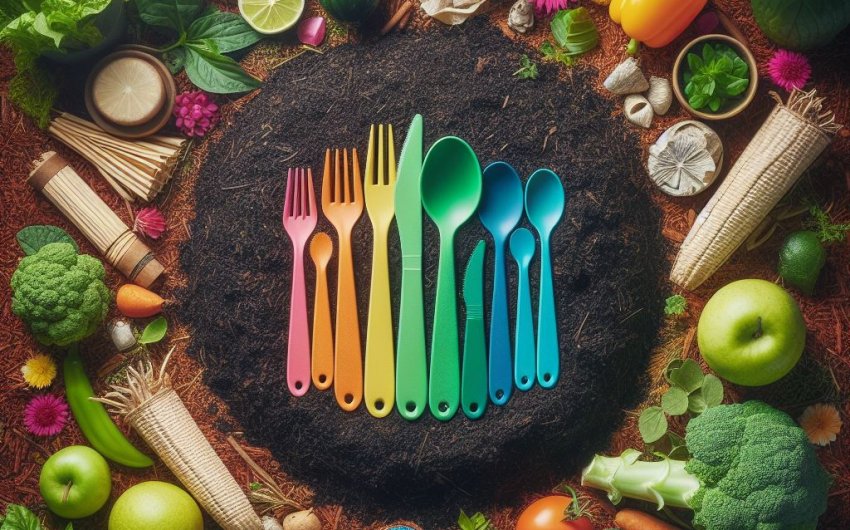
Exploring the world of biodegradable kitchen tools reveals a powerful partnership with the composting process, transforming how we approach waste and resource management in our homes. These innovative utensils aren't just about reducing landfill burden; they actively contribute to creating nutrient-rich compost, feeding our gardens, and fostering a healthier planet. This guide delves into the fascinating connection between sustainable kitchenware and the dynamic world beneath our compost bins.
Why Should I Choose Biodegradable Kitchen Tools?
Opting for biodegradable kitchen tools is a conscious decision with far-reaching positive impacts. It's about moving away from single-use plastics and embracing materials that return to the earth, rather than polluting it for centuries.
What's Wrong with Traditional Plastic Utensils?
Understanding the problems with conventional plastics helps us appreciate the benefits of biodegradable alternatives.
How Do Plastics Harm Our Environment?
Long decomposition time: Traditional plastics, often made from fossil fuels, can take hundreds to thousands of years to decompose in landfills. They simply break down into smaller and smaller pieces called microplastics, but they never truly disappear. This means every plastic fork ever made could still exist somewhere on Earth today.
Pollution (land, water, air): The journey of plastic is often one of widespread pollution. On land, discarded plastics litter landscapes, harm wildlife, and degrade soil quality. In water, especially our oceans, plastic waste forms massive gyres, endangers marine life that ingests or gets entangled in it, and can introduce toxins into the food chain. When plastics are incinerated, they release harmful greenhouse gases and toxic chemicals into the air, contributing to air pollution and climate change.
Harm to wildlife: Animals often mistake plastic pieces for food, leading to internal injuries, blockages, and starvation. Birds get entangled in plastic bags, and marine animals like turtles and whales ingest plastic debris, with devastating consequences. The sharp edges of broken plastic can also cause external injuries.
AdvertisementReliance on fossil fuels: The production of conventional plastics heavily relies on fossil fuels like oil and natural gas. This extraction process has its own environmental costs, including habitat destruction and greenhouse gas emissions, which contribute to global warming. By reducing our plastic consumption, we decrease the demand for these finite resources.
What Are Microplastics and Why Are They a Concern?
Tiny plastic particles: Microplastics are tiny plastic pieces, usually less than 5 millimeters in size. They come from the breakdown of larger plastic items (secondary microplastics) or are manufactured small for products like microbeads in cosmetics (primary microplastics). Because they are so small, they can easily enter our ecosystems.
Presence in food chains and human bodies: Microplastics are now found almost everywhere: in the deepest oceans, the highest mountains, and even in the air we breathe. They have been detected in various organisms, from plankton to fish, and consequently in the food chain that leads to humans. Recent studies have even found microplastics in human organs, blood, and placenta.
Potential health impacts: The long-term health impacts of microplastics on humans and animals are still being studied, but concerns exist. They can absorb and carry harmful chemicals, and their presence in tissues could lead to inflammation, cell damage, and other adverse effects. By choosing biodegradable alternatives, we reduce the input of new plastics into the environment, thereby lessening the future burden of microplastics.
What Makes a Kitchen Tool "Biodegradable"?
Understanding the term biodegradable is crucial for making truly sustainable choices. It's not just a marketing buzzword.
How Do Biodegradable Materials Break Down?
Biological processes (microorganisms): At its core, a biodegradable material is one that can be broken down by biological processes, specifically by microorganisms like bacteria, fungi, and algae. These tiny organisms consume the material, converting it into natural substances such as water, carbon dioxide, biomass, and inorganic compounds. This is a fundamental difference from plastics, which resist microbial action.
Natural components (plants, cellulose, starch): Many biodegradable kitchen tools are made from natural components derived from plants. Common examples include:
- PLA (Polylactic Acid): This is a bioplastic made from fermented plant starch, often corn starch or sugarcane. While PLA is biodegradable, it typically requires industrial composting facilities to break down efficiently due to the higher temperatures and specific microbial populations needed.
- Bamboo: A rapidly renewable resource, bamboo utensils are very popular. They are naturally strong and, when untreated or treated with natural oils, are highly biodegradable in home compost systems. You can find many types of bamboo utensils.
- Wood: Similar to bamboo, wooden utensils are natural and break down effectively.
- Palm leaf: Disposable plates and utensils pressed from fallen palm leaves are gaining popularity. They are sturdy and fully compostable.
- Bagasse: This is the fibrous residue left after sugarcane stalks are crushed to extract juice. It's often used for making disposable plates, bowls, and cutlery that are highly compostable. Consider using bagasse plates for your next party.
Differences from "Compostable": While often used interchangeably, there's a subtle but important difference between "biodegradable" and "compostable."
- Biodegradable means a material will break down into natural elements, but it doesn't specify how quickly or under what conditions. It could take years in a landfill.
- Compostable means a material will break down into natural elements within a specific timeframe (usually 90-180 days) under composting conditions (either home or industrial compost). Compostable products usually leave no toxic residue. Look for certifications like ASTM D6400 (for industrial composting) or BPI (Biodegradable Products Institute) on packaging to ensure it truly meets composting standards. For home composting, materials like untreated wood, bamboo, and palm leaf are excellent choices.
What Are the Environmental Benefits of Biodegradable Tools?
Reduced landfill waste: The most direct benefit is significantly reducing the amount of waste sent to landfills. Instead of sitting for centuries, these materials return to the earth.
Lower carbon footprint: Many biodegradable materials are made from renewable resources, meaning their production generally has a lower carbon footprint compared to fossil fuel-based plastics. They often require less energy to produce and don't contribute to the extraction and burning of finite resources.
No toxic residue: As they break down, truly biodegradable and compostable products leave no toxic residue behind. They turn into humus, a stable organic material that enriches soil, unlike plastics that can leach chemicals as they degrade.
Support for the circular economy: By using and then composting biodegradable tools, we participate in a circular economy. Resources are not extracted, used once, and discarded (linear economy). Instead, they are used, broken down, and their components are returned to the soil to nourish new growth, completing a sustainable cycle. This creates a more closed-loop system where waste becomes a resource.
How Do Biodegradable Tools Nurture My Compost?
The beauty of biodegradable kitchen tools truly shines when they become a valuable addition to your compost pile. They contribute essential components that help transform organic waste into rich, life-giving soil amendment.
What Components Do They Add to Compost?
Compost relies on a balanced mix of "greens" (nitrogen-rich materials) and "browns" (carbon-rich materials). Biodegradable tools primarily contribute to the "browns."
What Is the Role of Carbon in Composting?
"Brown" materials: Carbon-rich materials are often referred to as "browns" in composting terminology because they typically appear brown and dry. Examples include dried leaves, straw, wood chips, and, importantly, biodegradable utensils made from plant fibers.
Energy source for microorganisms: Carbon provides the primary energy source for the microorganisms that do the work of decomposition in your compost pile. They break down complex carbon compounds to fuel their growth and activity. Without enough carbon, the composting process slows down or stops.
Balancing nitrogen: Carbon also helps to balance nitrogen (from "green" materials like food scraps). A good carbon-to-nitrogen (C:N) ratio (ideally around 25-30:1) is essential for efficient composting. Too much nitrogen can lead to a smelly, slimy compost pile, while too much carbon can slow down decomposition. Biodegradable utensils help achieve this balance.
What Other Nutrients Do They Offer?
While primarily carbon sources, some biodegradable materials can also provide trace elements.
Trace minerals from plant sources: Since most biodegradable utensils are made from natural plant materials like bamboo, wood, or palm leaves, they contain trace amounts of various minerals that the original plant absorbed from the soil. As these utensils break down, these minerals are released back into the compost, becoming available to plants when the compost is used in the garden. This contributes to the overall nutrient richness of your homemade compost.
Enhancing compost structure: The fibrous nature of materials like bamboo and wood helps to enhance the structure of your compost pile. They create air pockets, which are vital for the aerobic decomposition process. Good aeration prevents the pile from becoming compacted and smelly, promoting efficient breakdown by oxygen-loving microbes.
How Does Their Breakdown Benefit the Composting Process?
The way biodegradable tools break down directly enhances the efficiency and quality of your compost.
How Do They Speed Up Decomposition?
Providing aeration: As mentioned, the physical structure of materials like bamboo skewers or wooden stirrers helps to create aeration within the compost pile. This allows air to circulate, which is essential for the aerobic bacteria and fungi that perform the fastest and most efficient decomposition. Without enough air, the pile can become anaerobic, leading to slower decomposition and unpleasant odors.
Habitat for microorganisms: The surfaces and internal structures of these materials provide a habitat for microorganisms. As they break down, they create more surface area for microbes to colonize and consume. This fosters a thriving microbial community within your compost, which is the engine of decomposition.
Balancing moisture levels: Brown materials like biodegradable utensils help to balance moisture levels in the compost pile. They absorb excess moisture from wet "greens" (like fruit and vegetable scraps), preventing the pile from becoming waterlogged. A balanced moisture level (like a wrung-out sponge) is crucial for optimal microbial activity.
What Are the Final Products of Their Breakdown?
Humus formation: The ultimate goal of composting is the creation of humus. When biodegradable utensils break down completely, they contribute to the formation of this dark, stable, organic material. Humus is not just decayed organic matter; it's a complex, stable substance that improves soil structure, water retention, and nutrient availability.
Nutrient cycling: As the utensils decompose, the nutrients they contain are released in a form that plants can easily absorb. This process of nutrient cycling means that the resources are continually reused, rather than being lost to landfills. It completes a natural loop: plants grow using soil nutrients, they are harvested and turned into tools, the tools are composted, and their nutrients return to the soil to feed new plants.
What Biodegradable Kitchen Tools Can I Compost at Home?
While many items are marketed as "biodegradable," it's crucial to know what truly composts well in a home setting.
Which Materials Are Ideal for Home Composting?
Untreated wood and bamboo: These are excellent choices for home composting. Think of wooden coffee stirrers, bamboo skewers, untreated wooden popsicle sticks, or bamboo cutlery. They are natural materials that break down reliably in a backyard compost pile, usually within a few months to a year, depending on their size and compost conditions. Breaking them into smaller pieces speeds up the process. A large pack of bamboo cutlery can be a great investment for parties.
Palm leaf products: Disposable plates and bowls made from fallen palm leaves are another fantastic option for home composting. They are sturdy, natural, and decompose well. Many people use palm leaf plates for outdoor gatherings.
Bagasse (sugarcane fiber) items: Items made from bagasse (sugarcane fiber) are generally suitable for home composting. They break down quite readily. This includes many disposable plates, bowls, and some cutlery.
Which Materials Require Industrial Composting?
PLA (Polylactic Acid) bioplastics: While PLA is a bioplastic made from plants and is "biodegradable," it typically requires the higher temperatures and specific microbial conditions found in industrial composting facilities to break down efficiently. It often won't break down fully in a typical backyard compost pile, where temperatures are lower and less controlled. If you put PLA in your home compost, it might just sit there for a very long time, essentially acting like plastic. Always check if your local composting service accepts PLA before tossing it in. A product described as PLA cups will most likely need special facilities.
"Biodegradable" plastics without specific compostable certifications: Be wary of generic "biodegradable" labels on plastic-like items. Unless they explicitly state they are "compostable" and have certifications like BPI or ASTM D6400, they are unlikely to break down effectively in any compost environment and may just fragment into microplastics. When in doubt, it's safer to avoid composting them.
How Do I Add Biodegradable Tools to My Compost Pile?
Integrating these tools into your composting routine is straightforward with a few simple steps.
What Is the Preparation for Composting?
Break into smaller pieces: The smaller the pieces, the faster they will decompose. Break or cut wooden or bamboo utensils into smaller bits. Snap palm leaf plates into pieces. This increases the surface area for microorganisms to work on.
Burying in the pile: Don't just lay them on top. Bury biodegradable tools within the active part of your compost pile. This exposes them to the highest temperatures and the most active microbial communities, speeding up their breakdown.
Balancing "browns" with "greens": Remember to maintain a good balance between "brown" (carbon-rich) materials and "green" (nitrogen-rich) materials. If you add a lot of wood or bamboo tools, make sure to add some food scraps, grass clippings, or other green materials to balance the carbon. A ratio of roughly 2-3 parts brown to 1 part green by volume is a good starting point.
What Are the Ongoing Maintenance Tips?
Turning the compost pile: Regularly turning your compost pile helps to aerate it and mix the materials, which speeds up decomposition. It also ensures that all parts of the biodegradable utensils get exposed to the active composting environment. A good compost aerator can make this task easier.
Maintaining moisture levels: Ensure your compost pile has the right moisture level – it should feel like a wrung-out sponge. If it's too dry, decomposition will slow down. If it's too wet, it can become anaerobic and smelly. The brown materials from utensils can help absorb excess moisture.
Patience is key: While biodegradable tools break down much faster than plastics, they still take time. Depending on the material, size, and your compost conditions, it can take anywhere from a few months to over a year for larger pieces to fully decompose. Be patient and keep monitoring your compost pile.
Embracing biodegradable kitchen tools is a simple yet impactful step towards a more sustainable lifestyle. By understanding their composition and how they integrate seamlessly into the composting process, we not only reduce waste but actively participate in nourishing our soil, closing the loop on our consumption, and fostering a healthier ecosystem for generations to come.