
What causes red leaves on tomato plants?
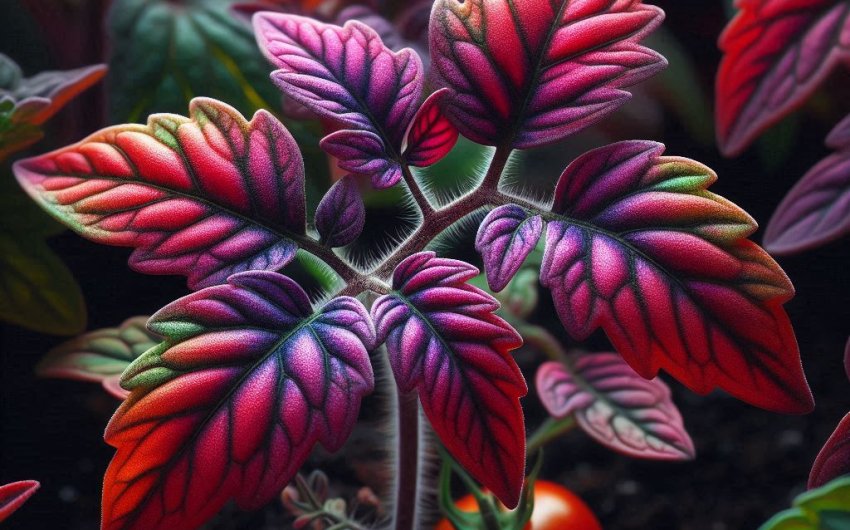
Red leaves on tomato plants are a common sight that often signals a problem, though not always a serious one. The most frequent cause is a phosphorus deficiency, especially in young plants. When tomato plants can't get enough phosphorus, they produce a pigment called anthocyanin, which gives the leaves their purplish-red hue. This deficiency is often triggered by cold soil temperatures, which make phosphorus harder for the roots to absorb.
Other factors, like extreme temperature stress, nutrient imbalances (even from over-fertilizing), or certain diseases, can also contribute to reddish discoloration. To diagnose the issue, consider recent weather conditions, how you're watering and fertilizing, and the age and overall health of your plant. Addressing the underlying cause quickly can help your tomato plants get back to producing juicy fruit.
What is phosphorus deficiency and how does it cause red leaves?
Phosphorus deficiency is the leading cause of red leaves on tomato plants, especially in young seedlings or plants transplanted into the garden. Phosphorus (P) is one of the three macronutrients plants need in large amounts (the N-P-K on fertilizer labels). It plays many vital roles, particularly in energy transfer, root development, and flower and fruit formation.
Here's how a lack of phosphorus causes leaves to turn red or purple:
- Anthocyanin Production: When a tomato plant is deficient in phosphorus, it struggles to perform its normal metabolic processes. As a protective mechanism, and sometimes as a byproduct of altered metabolism, the plant starts producing a pigment called anthocyanin. Anthocyanin is a red, blue, or purple pigment that is also responsible for the colors in blueberries, red cabbage, and autumn leaves. It can act like a "sunscreen" for the plant, protecting it from too much light intensity when it's under stress.
- Chlorophyll Masking: As anthocyanin builds up, it masks the green color of chlorophyll. The leaves don't necessarily lose their chlorophyll, but the intense red or purple pigment overpowers the green, making the leaves appear reddish or purplish, especially on the undersides and along the veins.
- Energy Transfer Problems: Phosphorus is crucial for ATP (adenosine triphosphate) production, which is the main energy currency of plant cells. Without enough phosphorus, the plant can't efficiently transfer energy, leading to stunted growth and other stress responses, including anthocyanin production.
- Root Development Issues: Phosphorus is vital for healthy root growth. A deficiency often leads to poor root development, which further compounds the problem because a weak root system struggles to absorb any available nutrients, including phosphorus itself.
Symptoms of Phosphorus Deficiency:
- Location: The reddish or purplish discoloration typically appears on the undersides of the older, lower leaves first. It can also be seen on stems and leaf veins.
- Overall Growth: Plants often appear stunted and do not grow as vigorously as healthy plants.
- Timing: This is most common in young tomato plants (seedlings or recently transplanted plants) when the soil is cool.
To address phosphorus deficiency, you can apply a balanced fertilizer with a good amount of phosphorus, such as Jobe's Organics Vegetable & Tomato Fertilizer or a liquid feed like FoxFarm Bush Doctor Microbe Brew. Often, as the soil warms up, the plant's ability to absorb phosphorus improves, and the symptoms will disappear on new growth.
How does cold soil temperature cause red leaves on tomato plants?
Cold soil temperature is a very common and often overlooked cause of red leaves on tomato plants, especially in the spring. While the air temperature might be warm enough for tomatoes, if the soil is still chilly, it directly impacts the plant's ability to absorb vital nutrients, particularly phosphorus.
Here's how cold soil temperature leads to red leaves:
Reduced Phosphorus Uptake:
- Immobilization: Phosphorus in the soil becomes much less soluble and available to plants when soil temperatures are low (below 55-60°F or 13-16°C). It can essentially get "tied up" in the soil chemistry.
- Reduced Root Activity: Plant roots, including those of tomatoes, are less active and efficient at absorbing nutrients when the soil is cold. Their metabolic processes slow down. Even if phosphorus is technically present in the soil, the roots struggle to take it up.
- Direct Link to Anthocyanin: This leads to a functional phosphorus deficiency within the plant, which, as discussed, triggers the production of anthocyanin, the reddish-purple pigment in the leaves.
Overall Slowed Growth:
- Cold soil also slows down the overall growth and development of tomato plants. They are warm-season crops that prefer warm soil to thrive.
Typical Scenario: You might plant your tomato seedlings outside when daytime air temperatures are pleasant, perhaps in the 60s or 70s (°F). However, if it's early in the season, the soil from cool nights might still be too cold. The new plants will then start showing purplish leaves, a classic sign that they are struggling to get enough phosphorus from the chilly soil.
Solutions for Cold Soil:
- Wait to Plant: The simplest solution is to wait until your soil has consistently warmed up to at least 60°F (16°C) before transplanting tomato seedlings. You can measure soil temperature with a soil thermometer like the REOTEMP Garden & Compost Thermometer.
- Warm the Soil:
- Black Plastic Mulch: Laying down black plastic sheeting over your garden beds a few weeks before planting can significantly warm the soil.
- Raised Beds: Raised beds tend to warm up faster in the spring than in-ground beds.
- Liquid Phosphorus Boost: While waiting for the soil to warm, you can apply a quick boost of phosphorus in a readily available liquid form, such as a starter fertilizer high in P. This can temporarily alleviate symptoms.
- Insulation/Protection: For potted tomatoes or individual plants, cloches or row covers can offer some warmth and protection, particularly overnight.
Once the soil warms up, new growth should be green, and the reddish tint on the older leaves will usually fade as the plant recovers.
What is the role of nitrogen and potassium in red leaves on tomato plants?
While phosphorus deficiency is the primary cause of widespread red or purple leaves on tomato plants, imbalances or deficiencies in other macronutrients like nitrogen (N) and potassium (K) can also contribute to leaf discoloration, including reddish hues, or exacerbate existing problems.
Here's the role of nitrogen and potassium:
Nitrogen (N):
- Function: Nitrogen is essential for vigorous vegetative growth and the production of chlorophyll (the green pigment).
- Deficiency Symptoms: A nitrogen deficiency primarily causes uniform yellowing of older leaves, starting at the tips and moving inward. The plant will appear stunted and pale green overall. While not typically a direct cause of red leaves, a very severe, prolonged nitrogen deficiency can lead to generalized plant stress. A weak, stressed plant is more susceptible to other issues that might result in reddish tints or might make phosphorus deficiency symptoms more pronounced.
- Excess Symptoms: Too much nitrogen can lead to lush, dark green foliage but poor fruit production. In some cases, a severe imbalance with too much N and not enough P or K could indirectly contribute to the plant's inability to utilize other nutrients effectively, creating a "relative" deficiency.
Potassium (K):
- Function: Potassium is crucial for overall plant health, regulating water movement, nutrient transport, enzyme activation, and disease resistance. It plays a significant role in fruit development.
- Deficiency Symptoms: A potassium deficiency typically manifests as yellowing or browning of the leaf margins (edges) of older leaves, which can then become crispy. This is often called "leaf scorch." In some cases, this marginal browning can be accompanied by a purplish or reddish tint, especially on the undersides of leaves or in the interveinal areas, as the plant struggles with overall health and nutrient transport. The plant might also be prone to wilting and poor fruit development.
- Excess Symptoms: High levels of potassium usually don't cause toxicity directly but can interfere with the uptake of other essential nutrients like magnesium and calcium, leading to secondary deficiencies that might cause their own discoloration.
Interactions and Overall Health: The reddish color most commonly seen on tomato leaves is a classic sign of phosphorus deficiency. However, it's important to remember that all nutrients interact. A plant that is generally unhealthy due to a deficiency in nitrogen (leading to overall weakness) or potassium (leading to impaired water/nutrient transport) might be more susceptible to showing the phosphorus deficiency symptoms.
To prevent and treat these issues, it's best to use a balanced fertilizer specifically formulated for tomatoes or vegetables, such as Tomato-tone Organic Plant Food, which provides all necessary macro and micronutrients. A soil test is always the most accurate way to pinpoint specific nutrient imbalances in your garden.
Can over-fertilizing cause red leaves on tomato plants?
Yes, paradoxically, over-fertilizing can cause red leaves on tomato plants, even though red leaves are often associated with nutrient deficiency. This typically happens due to two main reasons: fertilizer burn and nutrient lockout/imbalance.
Here's how over-fertilizing leads to red leaves:
Fertilizer Burn (Salt Damage):
- Mechanism: Fertilizers are essentially salts. When you apply too much, or apply it to dry soil, the high concentration of salts in the soil can actually draw water out of the plant's roots through osmosis. This effectively dehydrates the plant, even if there's plenty of moisture in the soil. This is known as physiological drought.
- Symptoms: Leaf scorch (browning and crisping of leaf tips and margins), wilting, and overall plant stress. In some cases, the stress and damage to root function can indirectly trigger the plant to produce anthocyanin, leading to reddish-purple discoloration, especially on older leaves or at the edges, similar to potassium deficiency. Root tips might also be stunted or appear burned.
- Effect: The plant struggles to absorb any nutrients, leading to a general nutrient deficiency in the plant, even with an abundance of nutrients in the soil.
Nutrient Lockout/Imbalance:
- Mechanism: Applying excessive amounts of one nutrient can interfere with the plant's ability to absorb other essential nutrients. For example, very high levels of potassium can "lock out" or compete with the uptake of magnesium and calcium. Very high levels of phosphorus can interfere with the uptake of micronutrients like iron, zinc, and manganese.
- Result: This interference creates a secondary deficiency of another nutrient, which then displays its characteristic symptoms. If, for instance, an over-application of nitrogen or potassium leads to a functional phosphorus deficiency within the plant, then the characteristic red/purple leaves (from anthocyanin production) will appear.
- Example: Too much nitrogen can cause lush green growth, but if other nutrients become relatively deficient, the plant becomes unbalanced and stressed.
How to Prevent Over-fertilizing:
- Always Follow Instructions: Read fertilizer labels carefully and never exceed the recommended dosage. When in doubt, use less rather than more.
- Water Before Fertilizing: Always water your tomato plants thoroughly before applying granular or liquid fertilizers. This dilutes the salts and helps prevent root burn.
- Fertilize on Moist Soil: Avoid applying fertilizer to dry soil, as this concentrates the salts.
- Consider Slow-Release or Organic Fertilizers: These products release nutrients more gradually, reducing the risk of sudden salt buildup. Jobe's Organics Vegetable & Tomato Fertilizer Spikes are a good example.
- Leach Excess Salts: If you suspect over-fertilizing, deeply water the soil with plain water (allowing it to drain freely) to help flush out excess salts.
Observing leaf symptoms alongside your fertilization practices can help distinguish over-fertilizing from true nutrient deficiencies. If you've been heavy-handed with fertilizer and see red leaves, it's likely a form of stress or nutrient lockout.
Does excessive sunlight cause red leaves on tomato plants?
While excessive sunlight (or more accurately, very intense UV radiation) can cause stress in tomato plants, it's not a primary or direct cause of widespread red leaves like phosphorus deficiency or cold soil. However, it can contribute to a reddish or purplish tint in specific circumstances, primarily as a stress response or a natural protective mechanism.
Here's how intense sunlight might relate to red leaves:
Anthocyanin as Sunscreen:
- As mentioned, anthocyanin is a pigment that gives leaves their red/purple color. Plants can produce anthocyanin in response to various stressors, including intense light (especially UV light).
- Anthocyanin acts somewhat like a "sunscreen" for the plant, protecting chlorophyll from photo-oxidative damage caused by too much intense light.
- If a tomato plant, particularly a young one, is suddenly exposed to very strong, direct sun without proper acclimatization (hardening off), it might produce anthocyanin as a protective measure. This might appear as a reddish blush on the most exposed parts of the leaves or stems.
Sunscald (Not True Red Leaves):
- More commonly, too much direct, intense sun, especially when combined with heat or lack of water, leads to sunscald.
- Sunscald manifests as bleached, pale yellow, or white patches on leaves that eventually turn papery brown and crispy. This is actual tissue damage, not a pigment change.
- It affects the most exposed parts of the plant and typically doesn't result in a widespread reddish discoloration of entire leaves.
Stress Exacerbation:
- If a tomato plant is already stressed by another factor (like marginal phosphorus deficiency from slightly cool soil, or minor root damage), placing it in excessively harsh, direct sun can exacerbate that existing stress, potentially making any underlying reddish tint more pronounced.
Typical Scenario: You might see a slight reddish blush on the stems and some leaves of newly transplanted tomatoes that go from a sheltered nursery environment to full sun. This is often temporary and resolves as the plant acclimates and its root system fully engages.
Prevention/Mitigation:
- Harden Off Seedlings: Always gradually acclimate (harden off) tomato seedlings to outdoor conditions, including sunlight, before transplanting them permanently. Start with a few hours of filtered light, gradually increasing exposure to direct sun over a week or two.
- Provide Partial Shade in Extremes: In regions with extremely intense summer sun or during heatwaves, providing a temporary shade cloth like a Coolaroo Shade Cloth during the hottest part of the day can prevent overall stress and sunscald.
In summary, while intense sun can cause some reddish tint as a protective mechanism, it's generally not the primary cause of widespread, vivid red or purple leaves on tomato plants. Phosphorus deficiency and cold soil are far more common culprits.
Can specific pests or diseases cause red leaves on tomato plants?
Yes, while less common than nutrient deficiencies or environmental stress, certain pests or diseases can cause red leaves on tomato plants, often as part of a broader set of symptoms indicating plant distress. These usually present differently than a classic phosphorus deficiency.
Here are some examples:
Pests:
Spider Mites:
- These tiny pests (almost invisible to the naked eye) feed by sucking sap from plant cells, usually on the undersides of leaves.
- Symptoms: Early signs are often tiny yellow or white stippling (dots) on the upper leaf surface. If severe, leaves can turn bronze, yellow, or even a reddish-brown as chlorophyll is damaged and the plant becomes highly stressed. You might also see fine webbing on the undersides of leaves. This reddish-bronzing is distinct from the purplish red of phosphorus deficiency.
- Treatment: Use horticultural oil, insecticidal soap, or predatory mites. A product like Garden Safe Neem Oil Extract Concentrate can be effective.
Aphids or Whiteflies (Severe Infestations):
- While their primary damage is usually curling, yellowing, and sticky honeydew, very heavy infestations can severely stress the plant.
- Symptoms: Prolonged feeding can lead to nutrient deficiencies and overall decline. In extreme cases, the stress and physiological changes within the plant might lead to some reddish or purplish discoloration, especially on older leaves, as the plant attempts to wall off damage or produce stress pigments. This is typically accompanied by visible insects, distorted leaves, and stickiness.
Diseases:
Verticillium Wilt / Fusarium Wilt:
- These are soil-borne fungal diseases that enter the plant through the roots and block the vascular system, preventing water and nutrients from reaching the leaves.
- Symptoms: Initial symptoms often include yellowing of lower leaves, wilting (sometimes only on one side of a plant or branch), and stunting. As the disease progresses, the yellowed leaves can turn brown, crispy, and eventually die. In some cases, severe stress and changes in nutrient uptake due to the blocked vascular system can lead to purplish or reddish discoloration of some leaves, especially at the margins, before they turn brown and shrivel. The internal stem might show discoloration when cut.
- Treatment: There is no cure once infected. Prevention through resistant varieties and crop rotation is key. Affected plants should be removed and destroyed (not composted).
Tomato Spotted Wilt Virus (TSWV):
- This viral disease, spread by thrips, can cause a wide range of symptoms.
- Symptoms: While often causing bronzing, purplish spots, or concentric rings on leaves and fruit, some strains or severe infections can lead to a general purplish or reddish discoloration, especially on young leaves. Other symptoms include stunting, distorted leaves, and dark streaks on stems.
- Treatment: No cure. Remove and destroy infected plants immediately to prevent spread. Manage thrips.
Tobacco Mosaic Virus (TMV):
- While mainly causing mosaic patterns of light and dark green on leaves, severe stress from this virus can potentially lead to some discoloration, including reddish hues, in certain plant varieties.
Distinguishing Features: When pests or diseases cause red leaves, it's usually not the uniform purplish-red of phosphorus deficiency. Instead, it's often accompanied by:
- Visible pests or webbing.
- Distorted leaf shape, spots, or patterns.
- Wilting that doesn't resolve with watering.
- Stunted growth or decline of the entire plant.
- Internal stem discoloration.
If you suspect pests or diseases, a thorough inspection of your plant (top and bottom of leaves, stems) is crucial. Compare your symptoms to reliable diagnostic resources or consult your local agricultural extension office for accurate identification and treatment advice.
What is the connection between watering habits and red leaves?
The connection between watering habits and red leaves on tomato plants is primarily indirect, working through how watering affects nutrient availability and plant stress, which can then lead to symptoms like reddish discoloration (especially due to phosphorus deficiency).
Here's how watering habits play a role:
Underwatering (Drought Stress):
- Reduced Nutrient Uptake: If tomato plants are consistently underwatered, their root systems are stressed and become less efficient at absorbing water and essential nutrients from the soil.
- Mimicking Deficiency: Even if phosphorus is present in the soil, the plant cannot take it up efficiently. This creates a functional phosphorus deficiency, leading to the characteristic reddish-purple leaves (due to anthocyanin production), especially on older foliage.
- Overall Stress: Severe drought stress can also cause general plant decline, wilting, and make the plant more susceptible to other issues that might show as discolored leaves.
- Symptoms: Dry, crispy leaves (often starting at edges), wilting, stunted growth, and then potentially the reddish hue. The soil will be consistently dry.
Overwatering (Root Stress/Rot):
- Oxygen Deprivation: Tomato plant roots need oxygen to respire and function properly. If the soil is constantly waterlogged due to overwatering or poor drainage, oxygen is driven out of the soil.
- Root Damage/Rot: Prolonged lack of oxygen can suffocate roots and create an ideal environment for harmful fungi and bacteria to cause root rot. Rotted roots are mushy and black/brown and cannot absorb water or nutrients effectively.
- Nutrient Lockout/Deficiency: Like underwatering, this means the plant can't access phosphorus or other nutrients, even if they are present in the soil. This leads to symptoms of various nutrient deficiencies, including the reddish-purple leaves of phosphorus deficiency.
- Symptoms: Yellowing of lower leaves, wilting even when the soil is wet, stunted growth, and then potentially reddish tints. The soil will feel constantly soggy, and you might notice a foul odor from the soil.
Proper Watering to Prevent Red Leaves:
- Consistent Moisture: Tomato plants thrive with consistent moisture. They don't like to completely dry out between waterings, nor do they like soggy feet.
- Deep Watering: Water deeply and thoroughly, aiming to moisten the soil to a depth of at least 6-8 inches. This encourages deep root growth, making the plant more resilient.
- Check Soil Moisture: Don't water on a strict schedule. Instead, check the soil moisture before watering again. Stick your finger 2-3 inches deep; if it feels dry, it's time to water. A soil moisture meter like the XLUX T10 Soil Moisture Meter can be very helpful.
- Good Drainage: Ensure your soil or potting mix has good drainage. Amend heavy clay soils with organic matter to improve drainage. If growing in pots, always use pots with drainage holes.
- Mulch: Apply a 2-4 inch layer of organic mulch around the base of the plants. This helps retain consistent soil moisture and moderate soil temperature, reducing stress.
By practicing proper watering techniques, you create a stable environment that allows your tomato plants to efficiently absorb nutrients, reducing stress and preventing the development of red leaves related to nutrient deficiencies or root problems.
How does soil pH affect nutrient availability and red leaves?
Soil pH plays a critical role in the availability of nutrients to tomato plants, and this directly impacts whether they develop red leaves. pH measures how acidic or alkaline the soil is (on a scale of 0 to 14). Tomato plants generally prefer a slightly acidic to neutral soil pH, ideally between 6.0 and 6.8.
Here's why soil pH affects nutrient availability and can lead to red leaves:
Phosphorus Availability (Main Link to Red Leaves):
- Low pH (Very Acidic): In very acidic soils (below 5.5), phosphorus can become "fixed" or strongly bound to aluminum and iron, making it unavailable for plant uptake.
- High pH (Alkaline): In alkaline soils (above 7.0), phosphorus can become tied up with calcium, making it similarly unavailable.
- The Sweet Spot: Phosphorus is most available to tomato roots within the optimal pH range of 6.0-6.8. When the pH is outside this range, even if there's plenty of phosphorus in the soil, the plant can't access it, leading to a functional phosphorus deficiency and the characteristic red/purple leaves (anthocyanin production).
Micronutrient Availability:
- High pH (Alkaline): In alkaline soils, essential micronutrients like iron, manganese, and zinc can become unavailable to plants. Deficiencies in these can lead to yellowing of new leaves with green veins (interveinal chlorosis), stunting, and overall plant weakness. While not typically causing red leaves, a micronutrient deficiency weakens the plant, making it more susceptible to other stressors or even making phosphorus deficiency more pronounced.
- Low pH (Acidic): In very acidic soils, some micronutrients can become too soluble and potentially toxic, while others might become unavailable.
Overall Plant Health:
- When the soil pH is out of the ideal range, the plant is constantly under stress trying to absorb nutrients. This general stress can manifest in various ways, including poor growth, susceptibility to diseases, and sometimes, the development of stress-related pigments like anthocyanin.
Symptoms of pH-Induced Issues:
- The most direct symptom related to red leaves is the classic purplish-red discoloration on older, lower leaves due to phosphorus deficiency, even if you've applied phosphorus-containing fertilizers. This should immediately make you suspect a soil pH problem.
- Other nutrient deficiency symptoms might also be present, depending on which nutrients are locked out.
How to Address Soil pH:
- Test Your Soil: The very first step is to get a soil test. This will give you an accurate reading of your soil's pH and also tell you about existing nutrient levels. You can use a home soil test kit like a Rapitest Soil Test Kit or send a sample to your local agricultural extension office.
- Adjust pH:
- To Raise pH (if too acidic): Add garden lime (calcium carbonate or dolomitic lime) according to soil test recommendations.
- To Lower pH (if too alkaline): Add elemental sulfur, peat moss, or other acidic organic matter.
- Gradual Process: Adjusting soil pH takes time, often several months, and it's best done gradually. Re-test periodically.
- In Pots: For potted tomatoes, ensure you're using a high-quality potting mix that is slightly acidic and drains well. Avoid using garden soil in pots.
By maintaining the correct soil pH, you ensure that the nutrients you apply (or that are naturally present) are actually available for your tomato plants to absorb, preventing red leaves caused by nutrient lockout.
How long does it take for red leaves to disappear after treatment?
The time it takes for red leaves to disappear on tomato plants after treatment depends on the underlying cause, the severity of the problem, and how quickly you addressed it. It's important to have realistic expectations; the already reddened leaves typically won't turn green again, but you should see healthy green new growth.
Here’s a breakdown of recovery times based on common causes:
Phosphorus Deficiency (due to Cold Soil):
- Existing Leaves: The reddish color on the already affected older leaves will usually not revert back to green. The anthocyanin pigment has been produced, and the plant has essentially repurposed resources from these leaves.
- New Growth: The most important indicator of recovery will be the new leaves emerging at the top of the plant and along the stems. These new leaves should be a healthy, vibrant green within 1-2 weeks after the soil temperature warms up (or after you've applied a phosphorus boost). As the plant grows, these new green leaves will eventually overshadow the old reddish ones.
- Overall Recovery: The plant should resume vigorous growth and look much healthier overall within a few weeks to a month.
Phosphorus Deficiency (due to True Soil Deficiency/pH):
- Existing Leaves: Similar to the cold soil scenario, the already reddened leaves likely won't turn fully green again.
- New Growth: You should see new, healthy green leaves within 2-4 weeks after applying an appropriate phosphorus fertilizer (like Bone Meal or a liquid phosphorus boost) or correcting the soil pH.
- Longer Term: If it was a pH issue, it might take longer for the soil pH to adjust and for optimal nutrient availability to be restored, so patience is key.
Nutrient Imbalances (e.g., from Over-fertilizing):
- Existing Leaves: Affected leaves might not fully recover.
- New Growth: After you've leached the soil and restored balance, new growth should appear healthy and green within 2-4 weeks. The plant's overall vigor should improve.
- Severity Dependent: If root damage from fertilizer burn was severe, recovery will take longer, and some plant parts might not recover at all.
Environmental Stress (e.g., Extreme Sun/Wind):
- Existing Leaves: If the red tint was due to general stress or "sunscreen" anthocyanin, the existing leaves might gradually fade to a more normal green, or they might remain slightly discolored until they are naturally shed.
- New Growth: New growth should be completely healthy and green once the stress factor is removed. This can be noticeable within 1-2 weeks.
Pests or Diseases:
- Depends on Treatment: If it was a pest issue, applying an effective treatment can show improvement in new growth within days to weeks. However, leaves severely damaged by pests might not recover.
- Disease: For viral or incurable fungal diseases, the red leaves might persist or worsen, as there is no true "recovery" in the same sense. The goal is to manage symptoms or remove the plant.
Key Takeaway: Don't expect old, discolored leaves to miraculously turn green. Instead, monitor the new growth closely. If the new leaves are coming in green and healthy, your treatment is working, and the plant is on its way to recovery. Continue to provide optimal care to support its ongoing health.