
Why are my geraniums getting leggy?
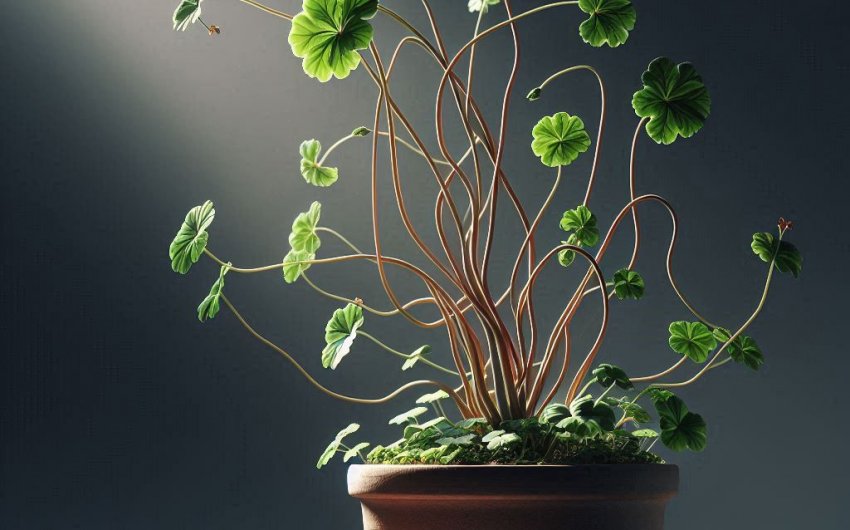
When your geraniums are getting leggy, it means their stems are becoming long, stretched out, and often sparse, rather than growing into a compact, bushy plant. The primary reason for this lanky growth is almost always insufficient light. Geraniums are sun-loving plants, and when they don't receive enough sunlight, they "reach" and stretch their stems in an attempt to find more light, leading to that characteristic leggy appearance.
However, a lack of regular pruning is another major contributor. Geraniums naturally want to grow taller, and without consistent pinching or cutting back, they won't develop side branches. Over-fertilizing, especially with too much nitrogen, can also promote lush stem growth at the expense of flowers and compactness. Addressing these factors will help your geraniums become full and beautiful again.
What is "leggy growth" in geraniums?
Leggy growth in geraniums refers to a specific type of plant development where the stems become excessively long, thin, and stretched out, with large gaps between the leaves (meaning fewer leaves along the stem). Instead of a compact, bushy, and full plant, a leggy geranium looks sparse, lanky, and often weak. The term "leggy" aptly describes stems that seem to have "long legs" or are reaching for something.
Here are the key characteristics of leggy growth:
- Elongated Stems: The most noticeable sign is stems that are much longer than they should be for the plant's size.
- Long Internodes: This refers to the long distances between the nodes (the points on the stem where leaves or branches emerge). In a healthy, compact geranium, the nodes are close together, resulting in dense foliage. In a leggy plant, these spaces are stretched out.
- Sparse Foliage: Because the internodes are long, the leaves are widely spaced, giving the plant a bare or thin appearance, especially towards the base of the stems.
- Small, Pale Leaves: Sometimes, the leaves on leggy stems might also be smaller than usual or paler in color, indicating a lack of energy or light.
- Reduced Blooms: Leggy geraniums often produce fewer flowers, as the plant is expending its energy on stretching for light rather than on flowering.
- Weak Stems: The elongated stems might also be weaker and unable to support themselves well, causing the plant to flop over.
Leggy growth is almost always a sign that the geranium is not receiving its ideal growing conditions, and it's a common problem for gardeners. Understanding what causes it is the first step to fixing it and encouraging a more desirable, bushy form.
How does insufficient light cause leggy geraniums?
Insufficient light is the number one cause of leggy geraniums. Geraniums (referring primarily to Pelargoniums, the common garden geraniums) are sun-loving plants. They are native to regions with abundant sunshine and need a lot of light to grow compactly and flower profusely.
Here's how a lack of light leads to leggy growth:
- Phototropism: Plants exhibit a natural behavior called phototropism, which means they grow and bend towards a light source. When light is limited, the plant "stretches" its stems as if desperately reaching out to find more light.
- Hormonal Response (Auxins): This stretching is regulated by plant hormones called auxins. In low light conditions, auxins accumulate on the shaded side of the stem, encouraging cell elongation on that side. This makes the stem grow longer and bend towards the light.
- Elongated Internodes: The primary effect of this stretching is the elongation of internodes (the spaces between the leaf nodes on the stem). Instead of short, compact internodes that result in a dense, leafy plant, the internodes become long and drawn out.
- Sparse Foliage: With longer internodes, the leaves are spaced much further apart, making the plant look thin and bare, especially at the base. The plant prioritizes stem growth over leaf production to maximize its light-seeking efforts.
- Reduced Chlorophyll: Plants in low light may also produce less chlorophyll, leading to paler green leaves, as they don't have enough light to photosynthesize efficiently.
- Weak Stems: The rapid, forced growth in low light often results in thinner, weaker stems that are less able to support themselves, causing the plant to flop or sprawl.
- Fewer Flowers: The plant expends most of its energy trying to grow taller to find light, rather than producing buds and flowers, resulting in diminished bloom.
Typical Scenario:
- Geraniums grown indoors near a window that doesn't provide enough direct light.
- Outdoor geraniums planted in a shady spot (e.g., under a dense tree canopy or on the north side of a building).
- Plants that were once in full sun but then got overshadowed by larger plants as the season progressed.
To fix this, providing more light is crucial. Geraniums need at least 6 hours of direct sunlight per day, and ideally even more, to maintain a bushy form and bloom well. If growing indoors, move them to a brighter window (south-facing is often best in the Northern Hemisphere) or use a supplemental grow light like a GE Grow Light Bulb for Seeds and Greens.
How does a lack of pruning lead to leggy geraniums?
A lack of regular pruning is another significant reason why geraniums get leggy, even if they are receiving adequate light. Geraniums naturally have a growth habit that pushes vertical growth, and without intervention, they will simply continue to grow taller and more sparsely.
Here's how neglecting pruning contributes to leggy growth:
- Apical Dominance: Plants have a natural phenomenon called apical dominance. This means that the main stem (the apical bud at the very tip of the stem) produces hormones (auxins) that suppress the growth of side shoots or lateral buds lower down on the stem. The plant prioritizes growing upwards.
- No Encouragement for Bushiness: When you don't prune or "pinch back" the growing tips of your geraniums, you allow this apical dominance to continue unchecked. The plant keeps putting energy into extending its main stem, rather than developing a fuller, bushier form.
- Stems Grow Longer, Not Wider: As the main stem grows longer, the leaves remain spaced out by the internodes, creating the lanky appearance. Without a cut, the plant has no signal to activate the dormant buds located in the leaf axils (where the leaf meets the stem) to form new side branches.
- Sparse Lower Foliage: Over time, the lower leaves on these unpruned, leggy stems may naturally yellow and drop due to age or reduced light, leaving even more bare stem at the base.
- Fewer Flowers: Since flowers typically form on new growth or lateral branches, a plant that is constantly extending a single stem will have fewer points of flowering, leading to a less impressive bloom display.
The Solution: Pinching and Pruning:
- Pinching: For young geraniums, simply "pinch" off the soft growing tip of each stem, just above a set of leaves or a node. This removes the apical bud and breaks apical dominance, encouraging two new side shoots to emerge from the nodes below the pinch.
- Pruning: For older, very leggy geraniums, more drastic pruning might be needed. Cut back stems by about one-third to one-half their length, again cutting just above a node where you want new growth to emerge. This forces the plant to send out new shoots from dormant buds lower down, creating a much bushier plant.
- Timing: Perform pinching and pruning throughout the growing season, especially in spring and early summer, to encourage continuous branching and flowering. Avoid heavy pruning in late fall, as new growth might be susceptible to cold damage.
Regular pruning is essentially telling your geranium, "Don't just grow tall, grow full!" It redirects the plant's energy from vertical stretching to horizontal branching, which is key to a compact and floriferous plant.
How does over-fertilizing affect geranium growth and legginess?
Over-fertilizing can definitely contribute to leggy growth in geraniums, particularly if the fertilizer is high in nitrogen (N). While fertilizer is essential for healthy plant growth, too much of a good thing, or the wrong kind, can throw the plant's balance off.
Here's how over-fertilizing leads to legginess:
Excess Nitrogen Promotes Leaf and Stem Growth:
- Nitrogen is the nutrient primarily responsible for lush, green, leafy growth and stem development.
- When geraniums receive an excessive amount of nitrogen, they are signaled to put all their energy into producing more foliage and elongating stems, often at the expense of flower production.
- The plant literally "bolts" or grows very rapidly upwards, trying to produce as much green material as possible. This rapid vertical growth often results in long internodes (stretched out stems) and a less dense, more open structure, mimicking the appearance of a plant searching for light.
Reduced Flowering:
- Phosphorus (P) and potassium (K) are the nutrients more closely associated with flowering and overall plant vigor.
- If your fertilizer is heavily skewed towards nitrogen (e.g., a "lawn fertilizer" or a general-purpose fertilizer with a very high first number in the N-P-K ratio like 30-10-10), the plant gets an abundance of N but might become deficient in other crucial nutrients needed for bud and flower formation.
- This leads to a big, green, leggy plant with few or no blooms.
Root Burn and Overall Stress:
- Over-fertilizing can also lead to fertilizer burn, where the high concentration of salts in the soil draws water out of the roots, effectively dehydrating and damaging them.
- Stressed roots cannot efficiently absorb water and nutrients, which can cause overall plant decline, including poor, leggy growth.
How to Prevent Over-fertilizing and Associated Legginess:
- Use a Balanced or Bloom-Boosting Fertilizer: For geraniums, opt for a balanced fertilizer (like a 10-10-10) or a fertilizer with a slightly higher phosphorus content (the middle number in N-P-K) once blooming starts, to encourage flowers over excessive foliage. An example is Schultz Rose & Flower Plant Food.
- Follow Directions Carefully: Always read and follow the fertilizer label instructions for dosage and frequency. When in doubt, use a weaker solution or fertilize less often. "Weakly, weekly" (diluted solution, applied frequently) is a good rule for many plants.
- Avoid Fertilizing Dry Soil: Always water your geranium thoroughly before applying fertilizer to prevent root burn.
- Reduce Frequency/Strength During Dormancy: Geraniums need less fertilizer in cooler months or when growth slows down.
- Flush Soil: If you suspect salt buildup from over-fertilizing, water the plant deeply with plain water, allowing it to drain thoroughly to flush out excess salts.
By providing balanced nutrition without overdoing it, you encourage your geraniums to produce stocky stems and abundant flowers, rather than long, leggy growth.
How do warm indoor temperatures contribute to leggy geraniums in winter?
Warm indoor temperatures during winter, combined with typically lower light levels, are a major reason why geraniums get leggy when brought indoors for the cold season. It's a classic case of the plant being "fooled" into thinking it's still growing season, but without enough light to support healthy, compact growth.
Here's how warm indoor temperatures contribute to legginess in winter:
Stimulated Growth in Low Light:
- Geraniums, being perennials in their native warm climates, don't truly go dormant in the way deciduous plants do. When kept warm indoors (e.g., typical household temperatures of 68-75°F or 20-24°C), their metabolism stays active, and they continue to try to grow.
- However, indoor light levels, even near a bright window, are almost always significantly lower than outdoor direct sunlight. Winter daylight hours are also shorter, and the sun's intensity is weaker.
- The Problem: The plant is warm enough to grow, but not bright enough to grow compactly. It's essentially tricked into elongating stems in search of the intense light it needs for robust growth, resulting in severe legginess.
Exacerbated Phototropism:
- With light coming primarily from one direction (e.g., a window), the plant strongly exhibits phototropism, stretching aggressively towards that insufficient light source, making the stems even longer and lopsided.
Weak, Pale Growth:
- The combination of warmth and low light means the plant is expending energy on stretching rather than building strong, healthy tissue. New growth will often be weak, thin, and paler green, and the internodes will be greatly extended.
- Flowering will also be minimal or nonexistent, as the plant lacks the energy.
Solutions for Winter Legginess:
- Provide More Light: This is the most crucial step.
- Brightest Window: Place geraniums in the absolute brightest window you have, ideally a south-facing one in the Northern Hemisphere.
- Supplemental Grow Lights: For serious overwintering, a grow light is often essential to prevent extreme legginess. Use a full-spectrum LED grow light like an EZORKAS LED Grow Light for at least 12-14 hours a day.
- Consider Cooler Temperatures (Dormancy/Semi-Dormancy):
- If you don't have adequate light, the best way to prevent extreme legginess is to force the geranium into a state of semi-dormancy.
- Cooler Location: Move the plant to a cooler, but still bright, location (e.g., a cool basement, unheated spare room, or garage with a window) where temperatures are consistently between 45-55°F (7-13°C).
- Reduced Watering: In cooler temperatures, reduce watering significantly. Water just enough to keep the potting mix from completely drying out.
- No Fertilizer: Do not fertilize during this period.
- Prune Before Storage: Prune back leggy growth before bringing them inside for winter storage in a cool, semi-dormant state.
By understanding the interplay of warmth and light, you can either provide enough light to support active winter growth or intentionally slow down growth to prevent legginess.
Can transplant shock cause temporary legginess in geraniums?
While transplant shock primarily manifests as wilting, yellowing, or leaf drop, it's generally not a direct cause of "legginess" in the typical sense (elongated internodes and sparse growth). Legginess is a long-term growth habit response to environmental conditions, whereas transplant shock is an immediate stress response to root disturbance.
Here's why they are different and how they might indirectly relate:
What is Transplant Shock?
- When a plant is moved, its roots are inevitably disturbed or damaged. These roots are crucial for absorbing water and nutrients.
- The plant's ability to take up water is temporarily impaired, leading to dehydration symptoms even if the soil is moist.
- Symptoms are usually rapid: wilting, drooping leaves (that may or may not perk up with watering), yellowing, and leaf drop. The plant looks generally unhealthy and stressed.
How it Relates (Indirectly) to Legginess:
- Stunted Growth, Not Elongated: A plant experiencing transplant shock is putting all its energy into recovering and repairing its root system. It's unlikely to be actively growing new stretched-out stems during this period. In fact, new growth might be stunted.
- Pre-existing Legginess: If a geranium was already leggy before transplanting (due to low light or lack of pruning), transplant shock might make it look even worse temporarily, as it sheds some of its already sparse leaves. However, the act of transplanting itself doesn't cause the stems to stretch.
- Recovery and New Growth: Once the geranium recovers from transplant shock (which might take a few weeks), if it's then placed in sub-optimal light conditions, it will then start to exhibit new leggy growth as it tries to find more light. The shock itself doesn't create leggy stems, but improper post-transplant conditions can lead to it.
Preventing Transplant Shock (and subsequent new legginess):
- Proper Timing: Transplant geraniums when temperatures are moderate (spring or early fall), avoiding extreme heat or cold.
- Careful Handling: Be gentle with the root ball to minimize damage.
- Immediate Watering: Water thoroughly immediately after transplanting to settle the soil around the roots.
- Consistent Moisture: For the first few weeks, ensure consistent, but not soggy, soil moisture.
- Adequate Light (Post-Shock): Once the plant has recovered from the initial shock, ensure it receives at least 6 hours of direct sunlight per day to encourage compact, healthy new growth.
- Pruning (if leggy prior): If the plant was already leggy, you might prune it back slightly before or after transplanting (once it shows signs of recovery) to encourage bushiness.
So, while transplant shock itself won't make a geranium leggy, failing to provide optimal growing conditions (especially light) after recovery from transplant shock can lead to new leggy growth.
Does pot size influence legginess in geraniums?
Pot size can indirectly influence legginess in geraniums, primarily by affecting soil moisture, nutrient availability, and overall plant health, which can then interact with the primary causes of legginess (light and pruning).
Here's how pot size relates:
Pot Too Small (Root Bound):
- Nutrient and Water Stress: If a geranium is severely root-bound in a pot that is too small, its roots become so dense they struggle to absorb enough water and nutrients, even if you are watering and fertilizing regularly.
- Stunted Growth/Stress: This chronic stress can lead to overall poor plant vigor, including reduced lushness and potentially an inability to sustain compact growth. While it might not directly cause elongated internodes like low light, a perpetually stressed plant often won't put out the robust, leafy growth that counteracts a leggy appearance. It might produce fewer leaves or shed older ones prematurely.
- Less Energy for Branching: A stressed, root-bound plant has less energy to produce side branches, making it appear sparser over time.
Pot Too Large:
- Overwatering Risk: A pot that is excessively large for the plant holds a disproportionately large volume of soil. This soil will take much longer to dry out, significantly increasing the risk of overwatering and root rot.
- Root Rot and Nutrient Uptake: If roots are rotting, they cannot absorb water and nutrients, leading to a stressed plant that struggles to grow well. Again, while not directly causing elongation, a plant suffering from root rot will exhibit poor growth, potentially including weak, sparse stems that might appear leggy due to overall decline.
- Nutrient Leaching: In a very large pot with too much soil for the current root system, some nutrients might leach away before the plant can use them, potentially leading to deficiencies.
Ideal Pot Size:
- Choose a pot that is only slightly larger than the current root ball of your geranium. For repotting, go up by only about 1-2 inches in diameter.
- The goal is to provide enough room for healthy root growth without holding excessive moisture.
- Ensure the pot has drainage holes to prevent waterlogging.
How to Prevent Legginess Related to Pot Size:
- Repot as Needed: Repot your geranium into a slightly larger pot when it becomes root-bound (roots are circling the inside of the pot or emerging from drainage holes, water runs straight through). This provides fresh soil and room for roots to expand.
- Use Well-Draining Potting Mix: Always use a high-quality, well-draining potting mix, as this is more critical than pot size in preventing overwatering issues. Consider a mix like FoxFarm Ocean Forest Potting Soil for good drainage.
- Pruning: Continue regular pinching and pruning, regardless of pot size, to encourage bushiness.
While pot size isn't the primary driver of legginess (which is usually light-related), an improperly sized pot can create secondary stresses that contribute to a geranium looking unhealthy and sparse, which can be part of a leggy appearance.
What is the difference between pinching and pruning for leggy geraniums?
Both pinching and pruning are essential techniques to manage leggy growth in geraniums and encourage a bushier, more compact plant with more flowers. While they both involve removing plant material, they differ in severity, timing, and the type of growth they target.
Here's the difference:
Pinching (Light Pruning / Maintenance Pruning):
- What it is: Pinching involves removing only the soft, growing tip of a stem, typically using your thumb and forefinger (hence "pinching") or a small, sharp pair of snips. You're usually removing about (1/2) to 1 inch of growth.
- Purpose: To remove the apical bud (the very tip of the stem) which produces hormones that suppress side shoot growth (apical dominance). By removing it, you force the plant to develop two new side branches from the leaf nodes just below the pinch point.
- Effect: Encourages bushiness and more branching, leading to more flower buds. It helps maintain a compact shape.
- When to do it:
- Start early with young plants to encourage branching from the beginning.
- Continue throughout the growing season (spring and summer) to maintain shape and encourage continuous blooms.
- Do it regularly, every few weeks, as stems start to elongate.
- Ideal for: Preventing legginess before it becomes severe, maintaining desired shape, and promoting continuous flowering.
Pruning (Hard Pruning / Corrective Pruning):
- What it is: Pruning involves cutting back a stem more drastically, removing a larger section of the stem, often (1/3) to (1/2) or even more of its length. This is typically done with sharp bypass pruners, such as Fiskars Bypass Pruner. You'll cut back to a set of leaves or a node that is lower down on the stem, where you want new, bushier growth to emerge.
- Purpose: To correct a plant that has already become very leggy, overgrown, or sparse. It rejuvenates the plant by forcing strong new growth from dormant buds lower on the stem, essentially giving it a "fresh start" for bushier development.
- Effect: Creates a much more compact and dense plant, encourages a flush of new, vigorous growth, and leads to a more abundant bloom display later.
- When to do it:
- Annually (Spring): A good time for a heavier prune is in early spring when the plant is just beginning its active growth cycle. This gives it the whole season to recover and produce new flowers.
- Late Summer/Early Fall (for overwintering): If you're bringing geraniums indoors for winter, a heavier prune in late summer or early fall (several weeks before the first frost) helps reduce the plant's size for indoor conditions and prepares it for potentially lower light, making it less prone to extreme legginess indoors.
- Ideal for: Rescuing severely leggy or overgrown plants, shaping the plant for winter storage, and promoting a major flush of new growth.
In essence:
- Pinching is preventative and for ongoing maintenance, keeping the plant compact.
- Pruning is corrective and for rejuvenation, fixing an already leggy or overgrown plant.
Both methods work by interrupting the plant's natural vertical growth habit and forcing it to branch out horizontally, leading to a much more desirable, full, and floriferous geranium.