
Best Flowers for Summer Butterfly Gardens
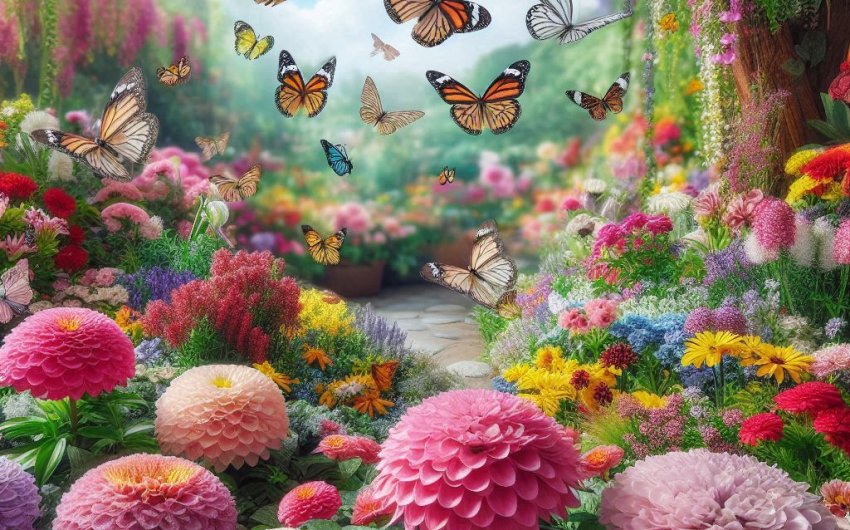
The best flowers for summer butterfly gardens are those rich in nectar, offering a continuous bloom from late spring through fall, and providing both adult butterfly food sources and larval host plants. Prioritize native species for your region whenever possible to support local butterfly populations effectively.
Why Create a Butterfly Garden?
Creating a butterfly garden is more than just planting pretty flowers; it's an intentional effort to support and attract these beautiful and important pollinators. A well-designed summer butterfly garden provides essential resources for butterflies throughout their life cycle, contributing to local ecosystems and bringing vibrant life to your outdoor space.
Here's why you should consider making your garden a haven for butterflies:
- Pollination Powerhouses: Butterflies, along with bees and other insects, are vital pollinators. They transfer pollen from one flower to another as they feed, which is necessary for many plants to produce fruits and seeds. Supporting butterflies directly contributes to the health of your garden and the wider environment.
- Biodiversity Boost: A garden rich in butterfly-attracting plants encourages a diverse range of species, not just butterflies, but also beneficial insects and birds that feed on them. This creates a healthier, more balanced ecosystem in your own backyard.
- Educational Opportunity: For families, a butterfly garden offers a fantastic hands-on learning experience. Witnessing the metamorphosis from egg to caterpillar to chrysalis to adult butterfly is truly awe-inspiring and teaches valuable lessons about nature's cycles.
- Natural Beauty and Serenity: Watching butterflies flit from flower to flower adds an undeniable sense of magic and tranquility to any garden. Their delicate beauty and graceful movements are captivating, turning your outdoor space into a living piece of art.
- Conservation Efforts: Butterfly populations are facing threats from habitat loss, pesticide use, and climate change. By planting nectar-rich flowers and host plants, you provide crucial refuge and food, playing a direct role in butterfly conservation. Even a small garden can make a big difference.
- Low Maintenance: Many butterfly-attracting plants are native species, which tend to be more resilient, require less water once established, and are naturally adapted to local conditions, leading to a low-maintenance garden.
- Sense of Accomplishment: Seeing your garden teeming with butterflies is incredibly rewarding. It’s a tangible sign that your efforts are making a positive impact.
What Do Butterflies Need in a Garden?
To truly attract and sustain butterflies in your summer butterfly garden, you need to understand their basic needs. It's not just about pretty flowers; it's about providing a complete habitat.
Butterflies require four key elements:
Nectar Sources (Adult Food):
Advertisement- Adult butterflies primarily feed on nectar, a sugary liquid produced by flowers, which provides them with energy.
- Key Characteristics of Nectar Flowers:
- Flat, clustered florets: Many small flowers grouped together (like on a butterfly bush or zinnia) provide many landing spots and easy access to nectar without requiring the butterfly to move much.
- Short flower tubes: Butterflies have long proboscises (tongues) to reach nectar, but excessively deep tubes might be inaccessible.
- Bright colors: Butterflies are attracted to vibrant hues, especially purple, pink, red, orange, yellow, and white.
- Landing pads: Flowers with broad petals or clusters offer a stable place for butterflies to rest while feeding.
- Long blooming period: A continuous supply of nectar from spring through fall is crucial, so choose plants that bloom at different times.
- Single-petal flowers: While double-petaled varieties can be beautiful, their extra petals often hide or block access to nectar, making them less useful for butterflies. Stick to single-petal or open varieties.
Host Plants (Caterpillar Food):
- This is often overlooked but is absolutely vital. Adult butterflies lay their eggs exclusively on specific "host plants." When the eggs hatch, the caterpillars feed on the leaves of these plants. Without host plants, there are no caterpillars, and thus no new butterflies.
- Examples: Monarch caterpillars eat only milkweed. Black Swallowtail caterpillars feed on dill, parsley, fennel, and rue.
- Embrace Chewed Leaves: Be prepared for some plants to look "chewed." This is a sign of success! The caterpillars are feasting, which is exactly what you want.
Water Source:
- Butterflies don't drink water directly in the same way humans do. Instead, they "puddle." They extract minerals and moisture from damp soil, muddy patches, or even dew-covered leaves.
- Create a Puddling Station: Place a shallow dish or tray with sand or small pebbles and keep it consistently moist. Butterflies will land on the damp surface and draw up minerals. A butterfly puddling station butterfly puddling station kit can be a great addition.
Shelter and Sunlight:
- Sunny Location: Butterflies are cold-blooded and need sunlight to warm their bodies before they can fly. A butterfly garden should ideally receive at least 6-8 hours of full sun per day.
- Shelter from Wind: Strong winds can make it difficult for butterflies to fly and feed. Plant trees, shrubs, or tall perennials to create windbreaks.
- Resting Spots: Flat stones or large leaves can provide warm spots for butterflies to bask in the sun and rest.
Avoiding Harmful Practices:
- No Pesticides! This is the most crucial rule. Insecticides, even organic ones, kill caterpillars and butterflies. Avoid using them anywhere near your butterfly garden. Embrace a little insect activity as a sign of a healthy ecosystem.
- Native Plants: Whenever possible, choose native plants for your region. They are best adapted to your local climate and soil, require less maintenance, and are often the specific host plants that local butterflies need.
By providing all these elements, you're not just attracting butterflies for a quick visit; you're creating a true sanctuary where they can thrive and complete their entire life cycle.
What Are the Best Annual Flowers for Summer Butterfly Gardens?
Annual flowers are fantastic for summer butterfly gardens because they provide a continuous burst of color and nectar from late spring until the first frost. They are easy to grow from seed or starts and offer immense flexibility in design.
Here are some of the best annual flowers for attracting butterflies:
1. Zinnia (Zinnia elegans)
Zinnias are a top choice for their vibrant colors and easy care.
- Features: Come in almost every color except blue, with single, semi-double, and double flower forms. The single-petal varieties are best for butterflies, providing open access to nectar.
- Bloom Time: Early summer to first frost. Deadheading (removing spent blooms) encourages more flowers.
- Sunlight: Full sun (at least 6 hours).
- Size: Varies greatly from dwarf (6 inches) to tall (3 feet+).
- Why they're great: Long blooming period, a wide range of colors and sizes, excellent cut flowers, attracts many butterfly species.
- Recommended Varieties: 'Profusion Series' Zinnia Profusion Seeds (disease resistant, compact), 'Benary's Giant' Benary's Giant Zinnia Seeds (tall, large blooms for impact).
2. Lantana (Lantana camara)
A vigorous, heat-loving annual (perennial in warm climates) that butterflies adore.
- Features: Clusters of small, tubular flowers, often changing color as they mature (e.g., yellow to orange to red). Can be bushy or trailing.
- Bloom Time: Late spring to first frost.
- Sunlight: Full sun.
- Size: 1-3 feet tall and wide.
- Why they're great: Extremely drought-tolerant once established, continuous blooming, vibrant colors, attractive to many butterfly species, including Swallowtails and Monarchs.
- Recommended Varieties: 'Bandana Series' Lantana Bandana Plants (compact, good for containers), 'Luscious Series' Lantana Luscious Plants (vibrant colors). Note: Some varieties produce berries that are toxic if ingested by pets or children.
3. Cosmos (Cosmos bipinnatus)
Graceful, airy flowers that attract a variety of pollinators.
- Features: Daisy-like flowers with delicate petals, available in pink, purple, white, orange, and yellow. Feather-like foliage.
- Bloom Time: Early summer to first frost.
- Sunlight: Full sun.
- Size: 1-6 feet tall, depending on variety.
- Why they're great: Easy to grow from seed, creates a natural meadow-like feel, excellent cut flowers, attracts butterflies and bees.
- Recommended Varieties: 'Sensation Mix' Cosmos Sensation Mix Seeds (classic tall varieties), 'Cosmic Yellow' Cosmos Cosmic Yellow Seeds (dwarf, bright yellow).
4. Marigolds (Tagetes spp.)
While some gardeners find their scent strong, certain marigold varieties are good for butterflies.
- Features: Bright yellow, orange, and red flowers. French marigolds (T. patula) are typically smaller, while African marigolds (T. erecta) are larger.
- Bloom Time: Late spring to first frost.
- Sunlight: Full sun.
- Size: 6 inches to 3 feet, depending on variety.
- Why they're great: Very easy to grow, long blooming, generally pest-resistant (though some varieties may deter beneficials if the scent is too strong). Choose single-petal or open varieties like 'Irish Lace' for best butterfly access.
- Recommended Varieties: 'Lemon Gem' Lemon Gem Marigold Seeds or 'Signet' marigolds (smaller flowers, less pungent scent, better for butterflies).
5. Annual Verbena (Verbena bonariensis or Verbena rigida)
Tall, airy plants that create a see-through effect and attract many pollinators.
- Features: Clusters of tiny purple flowers on tall, wiry stems. Verbena bonariensis is known for its tall, airy habit.
- Bloom Time: Early summer to first frost.
- Sunlight: Full sun.
- Size: Verbena bonariensis can reach 4-6 feet; Verbena rigida is more compact, 1-3 feet.
- Why they're great: Attracts butterflies (especially Swallowtails) and hummingbirds, excellent for adding vertical interest without blocking views, drought-tolerant once established.
- Recommended Varieties: 'Verbena bonariensis' Verbena bonariensis Seeds, 'Homestead Purple' Homestead Purple Verbena Plants (a perennial in warmer zones, but often grown as an annual).
6. Sweet Alyssum (Lobularia maritima)
A low-growing, spreading annual perfect for edging or filling in gaps.
- Features: Tiny, fragrant flowers in white, purple, or pink, forming a dense carpet.
- Bloom Time: Late spring to first frost (can take a break in extreme heat, but often bounces back).
- Sunlight: Full sun to partial shade.
- Size: 4-10 inches tall, spreading.
- Why they're great: Fills empty spaces, attracts small butterflies and beneficial insects, beautiful fragrance.
- Recommended Varieties: 'Snow Princess' Sweet Alyssum Snow Princess Seeds.
7. Pentas (Pentas lanceolata) - Egyptian Starcluster
A true butterfly magnet in warmer climates.
- Features: Star-shaped flowers in clusters, available in shades of pink, purple, red, and white.
- Bloom Time: Early summer to first frost (perennial in zones 10-11).
- Sunlight: Full sun.
- Size: 1-3 feet tall.
- Why they're great: Highly attractive to butterflies and hummingbirds, blooms profusely, relatively low maintenance.
- Recommended Varieties: 'Butterfly Series' Pentas Butterfly Series Plants (bred for better branching and more flowers).
What Are the Best Perennial Flowers for Summer Butterfly Gardens?
Perennial flowers form the backbone of a successful summer butterfly garden. They return year after year, establishing strong root systems and often providing larger, more consistent blooms once mature. Choosing native perennials for your region is often the best strategy for long-term success and supporting local butterfly populations.
Here are some of the best perennial flowers for attracting butterflies:
1. Coneflower (Echinacea purpurea)
A classic prairie flower that's a true butterfly magnet.
- Features: Daisy-like flowers with a prominent cone-shaped center, typically purple but also available in pink, white, yellow, and orange. Long-lasting blooms.
- Bloom Time: Mid-summer to early fall.
- Sunlight: Full sun to partial shade.
- Size: 2-4 feet tall.
- Why they're great: Drought-tolerant once established, attracts a wide range of butterflies and bees, excellent for cut flowers, native to much of North America.
- Recommended Varieties: 'Magnus' Echinacea Purpurea Magnus Seeds (classic large purple), 'PowWow Wild Berry' Echinacea PowWow Wild Berry Plants (vibrant pink).
2. Butterfly Weed (Asclepias tuberosa)
Absolutely essential for Monarch butterflies as a larval host plant.
- Features: Bright orange or yellow flat-topped flower clusters. Unlike common milkweed, it doesn't spread aggressively via rhizomes.
- Bloom Time: Early summer to mid-summer.
- Sunlight: Full sun.
- Size: 1-3 feet tall.
- Why they're great: Critical host plant for Monarch butterfly caterpillars, high nectar source for adult butterflies, drought-tolerant, relatively compact.
- Recommended Varieties: 'Butterfly Weed' Asclepias Tuberosa Seeds. Planting multiple milkweed species can extend the Monarch breeding season.
3. Blazing Star / Liatris (Liatris spicata)
Tall, spiky flowers that bloom from the top down.
- Features: Dense spikes of purple (sometimes white) flowers that are irresistible to butterflies.
- Bloom Time: Mid-summer to late summer.
- Sunlight: Full sun.
- Size: 2-5 feet tall.
- Why they're great: Excellent vertical element, attracts many butterfly species (especially Monarchs, Swallowtails, and Painted Ladies), drought-tolerant, great for cutting.
- Recommended Varieties: 'Kobold' Liatris Spicata Kobold Bulbs (more compact), 'Blazing Star' Liatris Spicata Bulbs.
4. Bee Balm / Monarda (Monarda didyma)
A member of the mint family, known for its unique flowers and aromatic foliage.
- Features: Shaggy, whimsical flowers in shades of red, pink, purple, and white. Aromatic leaves.
- Bloom Time: Mid-summer.
- Sunlight: Full sun to partial shade.
- Size: 2-4 feet tall.
- Why they're great: Highly attractive to butterflies, bees, and hummingbirds; provides a unique texture to the garden; native plant. Can spread, so give it room or divide regularly.
- Recommended Varieties: 'Jacob Cline' Monarda Jacob Cline Plants (resistant to powdery mildew).
5. Phlox (Phlox paniculata) - Garden Phlox
A reliable classic for cottage gardens, offering large flower clusters.
- Features: Large, fragrant clusters of flowers in pink, purple, white, and red.
- Bloom Time: Mid-summer to early fall.
- Sunlight: Full sun to partial shade.
- Size: 2-4 feet tall.
- Why they're great: Showy blooms, strong fragrance, attracts butterflies (especially Swallowtails), good for background planting. Choose mildew-resistant varieties.
- Recommended Varieties: 'David' Phlox Paniculata David Plants (white, mildew resistant), 'Laura' Phlox Paniculata Laura Plants (purple with white eye).
6. Goldenrod (Solidago spp.)
Often blamed for allergies (it's ragweed!), but actually a highly valuable late-season nectar source.
- Features: Clusters of tiny yellow flowers on upright stems. Many native species exist.
- Bloom Time: Late summer to fall.
- Sunlight: Full sun.
- Size: 2-6 feet tall, depending on species.
- Why they're great: Provides crucial nectar late in the season when other sources are scarce, supporting migrating butterflies (like Monarchs). Choose clump-forming native varieties to avoid aggressive spreading.
- Recommended Varieties: 'Fireworks' (Solidago rugosa 'Fireworks') Solidago Fireworks Plants (compact, cascading blooms).
7. Sedum 'Autumn Joy' (Hylotelephium spectabile 'Autumn Joy')
A succulent perennial that provides late-season interest and nectar.
- Features: Flat-topped flower heads that start green, turn pink, then deepen to rusty red in fall. Fleshy leaves.
- Bloom Time: Late summer to fall.
- Sunlight: Full sun.
- Size: 1-2 feet tall.
- Why they're great: Extremely drought-tolerant, low maintenance, excellent late-season nectar source for migrating butterflies, attractive even when not in bloom.
- Recommended Varieties: 'Autumn Joy' Sedum Autumn Joy Plants.
8. Salvia (Salvia spp.) - Sage
Many perennial salvias offer vibrant color and are irresistible to pollinators.
- Features: Spikes of tubular flowers, primarily in shades of blue, purple, pink, and red. Aromatic foliage.
- Bloom Time: Varies by species, many bloom late spring to early fall.
- Sunlight: Full sun.
- Size: 1-4 feet tall, depending on variety.
- Why they're great: Long bloom period, drought-tolerant, attracts butterflies and hummingbirds.
- Recommended Varieties: 'May Night' (Salvia 'Mainacht') Salvia May Night Plants (deep indigo), 'Caradonna' (Salvia nemorosa 'Caradonna') Salvia Caradonna Plants (dark purple stems).
What Are Important Host Plants for Summer Butterflies?
Including host plants is arguably the most critical aspect of creating a truly thriving summer butterfly garden. Without these specific plants, butterflies cannot complete their life cycle, and your garden will only be a temporary stop rather than a breeding ground. Remember, a healthy butterfly garden embraces some leaf munching!
Here are some essential host plants and the butterflies they support:
1. Milkweed (Asclepias spp.)
- Butterflies Hosted: Monarch Butterfly (Danaus plexippus) - This is the only plant Monarch caterpillars can eat.
- Description: A diverse genus with many species, including Common Milkweed (Asclepias syriaca), Swamp Milkweed (Asclepias incarnata), and Butterfly Weed (Asclepias tuberosa). Flowers vary from pink to purple to bright orange.
- Why it's important: The incredible decline in Monarch populations makes planting milkweed a crucial conservation effort. Different species are suitable for different growing conditions (e.g., Common Milkweed for dry areas, Swamp Milkweed for moist areas).
- Where to find: Look for native milkweed seeds native milkweed seeds for monarchs or plants from reputable nurseries. Avoid tropical milkweed (Asclepias curassavica) in areas where it doesn't die back in winter, as it can disrupt Monarch migration patterns.
2. Dill, Parsley, Fennel, & Rue (Family Apiaceae / Rutaceae)
- Butterflies Hosted: Black Swallowtail Butterfly (Papilio polyxenes)
- Description: Common culinary herbs that are also fantastic for attracting Black Swallowtails.
- Why it's important: Easy to grow, readily available. Plant extra for yourself, because caterpillars will definitely munch!
- Where to find: You can purchase dill seeds dill seeds for planting, parsley seeds parsley seeds for garden, fennel seeds fennel seeds organic, or small plants at garden centers.
3. Violets (Viola spp.)
- Butterflies Hosted: Fritillary Butterflies (e.g., Great Spangled Fritillary, Variegated Fritillary)
- Description: Low-growing, often spreading plants with small, delicate flowers in shades of purple, blue, yellow, and white.
- Why it's important: Provides groundcover and a food source for Fritillary caterpillars. Many are native and naturalize easily.
- Where to find: Often found as established clumps, or you can get violet seeds violet flower seeds.
4. Passionflower (Passiflora incarnata) - Maypop
- Butterflies Hosted: Gulf Fritillary Butterfly, Zebra Longwing Butterfly (in warmer climates)
- Description: A beautiful, vigorous vine with intricate, unique flowers. 'Maypop' is a native perennial in many parts of the US.
- Why it's important: Provides stunning flowers for adult nectar and leaves for larval feeding. Adds vertical interest to the garden.
- Where to find: Maypop passionflower plants maypop passionflower plants can be purchased, or grow from seed.
5. Spicebush (Lindera benzoin)
- Butterflies Hosted: Spicebush Swallowtail Butterfly (Papilio troilus)
- Description: A native deciduous shrub, often growing in woodland understories. Produces small yellow flowers in early spring and bright red berries in fall.
- Why it's important: Essential host for Spicebush Swallowtails. Provides shelter and early season interest.
- Where to find: Look for spicebush shrubs spicebush shrub live plant at native plant nurseries.
6. Pawpaw (Asimina triloba)
- Butterflies Hosted: Zebra Swallowtail Butterfly (Eurytides marcellus)
- Description: A small native tree that produces edible, tropical-tasting fruit.
- Why it's important: The sole host plant for the beautiful Zebra Swallowtail. Adds unique fruit to the garden.
- Where to find: Pawpaw trees pawpaw tree live plant can be purchased from specialty nurseries. They often require cross-pollination, so plant at least two.
7. Snapdragon (Antirrhinum majus)
- Butterflies Hosted: Common Buckeye Butterfly (Junonia coenia)
- Description: Popular annual with tall flower spikes in a wide range of colors.
- Why it's important: Easy to grow, provides nectar and serves as a host plant for Common Buckeye caterpillars.
- Where to find: Snapdragon seeds snapdragon seeds for planting or young plants are widely available.
8. Clover (Trifolium spp.) and Alfalfa (Medicago sativa)
- Butterflies Hosted: Clouded Sulphur Butterfly, Orange Sulphur Butterfly
- Description: Common legumes often used as cover crops or lawn alternatives.
- Why it's important: Provides nectar for many butterflies and is a host for Sulphurs. Can be incorporated into lawns or garden paths.
- Where to find: Clover seeds clover seeds for garden are easily found.
Key Tip for Host Plants: When planting host plants, understand that they will be eaten! Don't be alarmed by chewed leaves; it's a sign of success. If you want a pristine garden, consider planting host plants in a less visible area, or plant extra so you have enough for both caterpillars and aesthetics.
How Do You Design and Maintain a Butterfly Garden?
Designing and maintaining a summer butterfly garden is an enjoyable process that yields beautiful results and supports local wildlife. By following a few key principles, you can create a thriving habitat that attracts and sustains a variety of butterflies.
Garden Design Principles:
Site Selection:
- Sunlight: Choose a spot that receives at least 6-8 hours of full sun daily. Butterflies are cold-blooded and need sun to warm up.
- Shelter: Protect your garden from strong winds, which can make it hard for butterflies to fly and feed. Plant taller shrubs or place your garden near a fence or building to provide shelter.
- Visibility: Place the garden where you can easily observe and enjoy the butterflies!
Planting in Groups (Massing):
- Plant flowers in large groups or "drifts" of the same species, rather than scattering individual plants. This creates a larger, more visible target for butterflies flying overhead, making it easier for them to spot their preferred nectar sources.
- Think about color blocks. Butterflies are attracted to large swaths of color.
Provide Continuous Bloom:
- Aim for a succession of blooms from early spring through late fall. This ensures a consistent nectar supply throughout the entire butterfly season.
- Combine early-blooming perennials (e.g., Salvia 'May Night'), mid-summer powerhouses (e.g., Echinacea, Liatris), and late-season providers (e.g., Sedum 'Autumn Joy', Goldenrod). Incorporate annuals like Zinnias and Lantana for season-long color.
Include Both Nectar and Host Plants:
- As discussed, you need both! Integrate host plants seamlessly into your garden design. Don't hide the milkweed; celebrate its role in the ecosystem.
- Consider where caterpillars might be inconspicuous if you prefer (e.g., planting dill and parsley slightly to the side of a main flower bed).
Vary Flower Shapes and Heights:
- Butterflies of different sizes and proboscis lengths are attracted to different flower shapes. Include a mix of flat-topped clusters (Sedum, Goldenrod), tubular flowers (Pentas, Salvia), and single daisy-like blooms (Zinnia, Coneflower).
- Vary plant heights to create visual interest and different landing opportunities. Taller plants at the back, shorter ones at the front.
Add Puddling Stations and Basking Rocks:
- Place shallow dishes or trays filled with sand or pebbles and keep them moist for butterflies to extract minerals.
- Include a few flat, dark-colored stones in sunny spots for butterflies to bask and warm themselves.
Maintenance Tips for a Thriving Butterfly Garden:
No Pesticides - Ever!
- This is non-negotiable for a butterfly garden. Even organic or "natural" pesticides can harm butterflies and their caterpillars. Embrace a healthy ecosystem where insects coexist.
- Learn to identify beneficial insects that can help control pests naturally.
Watering:
- Water newly planted flowers regularly until established.
- Once established, many butterfly-attracting plants (especially natives) are drought-tolerant, but deep, infrequent watering during dry spells is beneficial. Avoid overhead watering late in the day to prevent fungal issues.
- Keep your puddling station consistently moist.
Deadheading (Optional for some):
- Removing spent blooms (deadheading) on annuals and some perennials (like Zinnias, Cosmos, Salvia) encourages more flowers and extends the bloom season.
- For plants like Liatris or Sedum, leaving spent flowers provides winter interest and seeds for birds.
Weeding:
- Keep weeds in check, as they compete with your desirable plants for water and nutrients. Mulch can help suppress weeds.
Mulching:
- Apply a 2-3 inch layer of organic mulch natural garden mulch (like shredded bark, straw, or compost) around your plants.
- Benefits: Retains soil moisture, suppresses weeds, regulates soil temperature, and adds nutrients as it breaks down.
Fertilizing (Generally Minimal):
- Many native butterfly plants thrive in average to poor soil and don't require much, if any, supplemental fertilizer. Over-fertilizing can lead to lush foliage but fewer flowers.
- If your soil is poor, incorporating compost at planting time is usually sufficient.
Fall Cleanup:
- Resist the urge to "tidy up" too much in the fall. Leaving some hollow stems and leaf litter provides overwintering sites for beneficial insects and even some butterfly chrysalises.
- Consider leaving spent seed heads (e.g., coneflowers, sedum) for birds to feed on throughout winter. You can do a more thorough cleanup in early spring.
By focusing on these design and maintenance strategies, your summer butterfly garden will not only be beautiful but will also be a vital haven for these incredible pollinators for years to come.