
Best Plants for Creating a Privacy Hedge
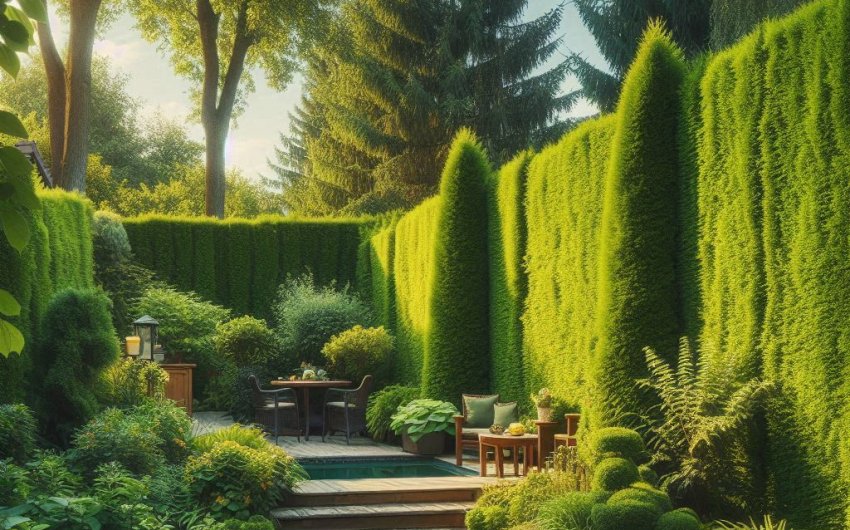
Creating a privacy hedge is an excellent way to enhance your outdoor living space, offering a natural barrier against prying eyes, noise, and even strong winds. Unlike fences, hedges provide a living, breathing green screen that adds beauty and can even support local wildlife. Choosing the best plants for creating a privacy hedge involves considering factors like growth rate, mature size, climate suitability, and desired level of maintenance.
What Are the Key Considerations When Choosing Plants for a Privacy Hedge?
Before diving into specific plant recommendations, understanding the important factors will help you select the most suitable plants for a privacy hedge that meets your needs.
How Tall and Wide Do You Need Your Hedge to Be?
The mature size of the plant is critical. A plant that grows too large might require constant pruning, while one that stays too small won't provide adequate screening.
- Height: Measure the height of the area you want to screen. Do you need a hedge to block a second-story window, or just provide ground-level privacy for a patio? Consider mature height, not just current size.
- Width: How much space do you have? Some plants can grow very wide, consuming valuable garden space. Factor in the mature width to ensure your hedge doesn't become overgrown or encroach on pathways.
- Growth Rate: Fast-growing plants offer quicker privacy but might require more frequent pruning. Slow-growing plants need patience but often demand less upkeep long-term.
What Is Your Climate Zone (USDA Hardiness Zone)?
Plant hardiness zones are crucial. Planting a species outside its suitable zone means it likely won't survive harsh winters or hot summers.
- Determine Your Zone: Look up your USDA Hardiness Zone online by entering your zip code. This tells you the average minimum winter temperature in your area.
- Match Plants to Zone: Select plants that are hardy in your zone or a zone colder to ensure they can withstand your winter conditions.
How Much Sunlight Does the Area Receive?
Light is a primary factor for plant health and growth.
- Full Sun: At least 6 hours of direct sunlight per day. Many popular hedge plants prefer full sun.
- Partial Sun/Shade: 3-6 hours of sun, often with protection from intense afternoon sun.
- Full Shade: Less than 3 hours of direct sun. Limited options for dense hedges in full shade.
Observe your planting area throughout the day and across seasons to accurately assess sun exposure.
What Kind of Soil Do You Have?
Soil quality directly impacts plant growth.
- Drainage: Most hedge plants prefer well-draining soil. Standing water can lead to root rot.
- Texture: Is your soil sandy, clay, or loamy? Different plants tolerate different soil textures.
- pH: The acidity or alkalinity of your soil (pH) affects nutrient availability. A soil test kit can provide this information.
- Improving Soil: Even if your soil isn't perfect, amending it with Organic Compost can significantly improve its structure, drainage, and fertility, making it suitable for a wider range of plants.
What Level of Maintenance Are You Willing to Commit?
Hedges require varying degrees of care.
- Pruning: Do you want a formal, perfectly sculpted hedge (requiring frequent pruning) or a more natural, informal screen (less frequent pruning)?
- Watering: Are the plants drought-tolerant once established, or will they need regular irrigation, especially in dry periods?
- Pest and Disease Resistance: Some plants are naturally more resistant to common garden pests and diseases, reducing the need for interventions.
Do You Need Evergreen or Deciduous Privacy?
This is a fundamental choice for privacy hedges.
- Evergreen Plants: Retain their leaves year-round, providing continuous privacy, even in winter.
- Deciduous Plants: Lose their leaves in fall, meaning privacy is compromised during the dormant season. However, they often offer seasonal interest with flowers, berries, or fall color.
For year-round screening, evergreen plants for a privacy hedge are typically preferred.
What Are the Best Evergreen Plants for a Privacy Hedge?
Evergreen plants are ideal for year-round screening, offering continuous privacy and a consistent green backdrop.
Thuja Green Giant Arborvitae (Thuja plicata 'Green Giant')
This is a hugely popular choice for fast-growing privacy.
- Key Features:
- Growth Rate: Very fast, often 3-5 feet (0.9-1.5 meters) per year.
- Mature Size: Can reach 30-60 feet (9-18 meters) tall and 10-20 feet (3-6 meters) wide if not pruned.
- Hardiness Zone: USDA Zones 5-9.
- Sunlight: Full sun to partial shade.
- Foliage: Dense, soft, deep green foliage that retains its color in winter.
- Deer Resistance: Generally deer resistant.
- Maintenance: Low maintenance once established. Prune once a year to maintain desired size and shape.
- Pros: Rapid growth, dense screen, good winter color, relatively pest-free.
- Cons: Can get very large quickly, requiring regular trimming for smaller spaces. Can be susceptible to bagworms in some areas.
- Planting Tip: Space Thuja Green Giant Trees 5-6 feet (1.5-1.8 meters) apart for a dense hedge.
Leyland Cypress (Cupressocyparis leylandii)
Another very fast-growing option, especially in milder climates.
- Key Features:
- Growth Rate: Very fast, 2-4 feet (0.6-1.2 meters) per year.
- Mature Size: Can reach 50-70 feet (15-21 meters) tall and 15-25 feet (4.5-7.5 meters) wide.
- Hardiness Zone: USDA Zones 6-10.
- Sunlight: Full sun.
- Foliage: Fine-textured, feathery, deep green foliage.
- Maintenance: Requires regular pruning to maintain shape and density. Can become leggy and less dense with age if not pruned.
- Pros: Extremely fast growth for quick privacy, tolerant of various soils.
- Cons: Prone to various diseases (e.g., canker, root rot) if not well-maintained or in poorly drained soil. Can outgrow its space quickly.
- Planting Tip: Space Leyland Cypress Trees 6-8 feet (1.8-2.4 meters) apart.
Japanese Holly (Ilex crenata 'Dark Green' or 'Steeds')
A great alternative to boxwood with a similar appearance.
- Key Features:
- Growth Rate: Medium, 6-12 inches (15-30 cm) per year.
- Mature Size: Varies by cultivar, typically 4-10 feet (1.2-3 meters) tall and 3-6 feet (0.9-1.8 meters) wide.
- Hardiness Zone: USDA Zones 5-8.
- Sunlight: Full sun to partial shade.
- Foliage: Small, dark green, glossy leaves, similar to boxwood but more disease-resistant.
- Maintenance: Responds well to pruning for a formal look.
- Pros: Fine texture, good for formal hedges, generally disease and pest resistant, non-prickly.
- Cons: Slower growing than conifers, can struggle in heavy clay soils.
- Planting Tip: Space Japanese Holly Plants 2-4 feet (0.6-1.2 meters) apart for a dense hedge.
Boxwood (Buxus sempervirens or Buxus microphylla)
Classic choice for formal, shorter hedges.
- Key Features:
- Growth Rate: Slow to medium, 4-8 inches (10-20 cm) per year.
- Mature Size: Varies by cultivar, typically 2-15 feet (0.6-4.5 meters) tall and wide.
- Hardiness Zone: USDA Zones 4-9 (depending on species/cultivar).
- Sunlight: Full sun to partial shade.
- Foliage: Dense, small, evergreen leaves.
- Maintenance: Requires regular pruning for a formal shape.
- Pros: Excellent for formal hedges, fine texture, long-lived.
- Cons: Slow growing, susceptible to boxwood blight and boxwood leafminer in some regions. Can have an odor.
- Planting Tip: For a tight hedge, space Boxwood Shrubs about 1-3 feet (0.3-0.9 meters) apart depending on mature size of cultivar.
Skip Laurel (Prunus laurocerasus 'Schipkaensis')
A versatile and robust evergreen.
- Key Features:
- Growth Rate: Medium to fast, 1-2 feet (0.3-0.6 meters) per year.
- Mature Size: 10-18 feet (3-5.5 meters) tall and 5-7 feet (1.5-2.1 meters) wide.
- Hardiness Zone: USDA Zones 5-9.
- Sunlight: Full sun to full shade (performs best in partial sun).
- Foliage: Glossy, dark green, elongated leaves.
- Maintenance: Responds well to pruning. Can produce small white flowers in spring followed by dark berries (mildly toxic if ingested).
- Pros: Very adaptable to light conditions, attractive foliage, good heat tolerance.
- Cons: Berries can be messy, can get very wide if not pruned.
- Planting Tip: Space Skip Laurel Shrubs 3-5 feet (0.9-1.5 meters) apart.
What Are the Best Flowering and Deciduous Plants for a Privacy Hedge?
While deciduous plants lose their leaves in winter, many offer spectacular seasonal interest with flowers, berries, or vibrant fall foliage. They can still create a great visual screen during the growing season.
Forsythia (Forsythia x intermedia)
Known for its dazzling spring display.
- Key Features:
- Growth Rate: Fast, 1-2 feet (0.3-0.6 meters) per year.
- Mature Size: 8-10 feet (2.4-3 meters) tall and wide.
- Hardiness Zone: USDA Zones 4-8.
- Sunlight: Full sun.
- Foliage: Deciduous, bright green leaves.
- Flowers: Abundant bright yellow flowers in early spring before leaves emerge.
- Maintenance: Best pruned immediately after flowering. Can become leggy if not pruned annually.
- Pros: Show-stopping spring color, provides good seasonal privacy, easy to grow.
- Cons: No privacy in winter, can look a bit "bare" after flowering until leaves fill out.
- Planting Tip: Space Forsythia Shrubs 3-4 feet (0.9-1.2 meters) apart for a dense flowering hedge.
Lilac (Syringa vulgaris)
Fragrant and beautiful, a classic spring bloomer.
- Key Features:
- Growth Rate: Medium, 1-2 feet (0.3-0.6 meters) per year.
- Mature Size: 8-15 feet (2.4-4.5 meters) tall and 6-12 feet (1.8-3.6 meters) wide.
- Hardiness Zone: USDA Zones 3-7.
- Sunlight: Full sun.
- Foliage: Deciduous, heart-shaped green leaves.
- Flowers: Highly fragrant purple, white, or pink flower clusters in spring.
- Maintenance: Prune after flowering to encourage next year's blooms. Can be susceptible to powdery mildew in humid conditions.
- Pros: Incredible fragrance, beautiful blooms, cold hardy.
- Cons: No winter privacy, can get leggy with age, attracts pollinators (can be a pro or con depending on preference).
- Planting Tip: Space Common Lilac Shrubs 4-6 feet (1.2-1.8 meters) apart.
Hydrangea (Hydrangea paniculata 'Limelight' or 'Quick Fire')
Offers large, long-lasting blooms.
- Key Features:
- Growth Rate: Medium to fast, 1-2 feet (0.3-0.6 meters) per year.
- Mature Size: Varies by cultivar, typically 6-10 feet (1.8-3 meters) tall and wide.
- Hardiness Zone: USDA Zones 3-8.
- Sunlight: Full sun to partial shade (more sun for more blooms).
- Foliage: Deciduous, large green leaves.
- Flowers: Large, conical flower clusters, often starting white/lime green and aging to pink/red. Bloom in summer.
- Maintenance: Prune in late winter/early spring.
- Pros: Spectacular long-lasting blooms, adaptable to various light conditions, relatively low maintenance.
- Cons: No winter privacy.
- Planting Tip: Space Panicle Hydrangea Shrubs 3-5 feet (0.9-1.5 meters) apart.
Privet (Ligustrum spp.)
Often used for formal hedges due to its dense growth. While many privet varieties are evergreen, some are semi-evergreen or deciduous. Check the specific variety.
- Key Features:
- Growth Rate: Very fast, 2-3 feet (0.6-0.9 meters) per year.
- Mature Size: 10-15 feet (3-4.5 meters) tall and 6-8 feet (1.8-2.4 meters) wide (some varieties larger or smaller).
- Hardiness Zone: USDA Zones 4-8 (varies by species).
- Sunlight: Full sun to partial shade.
- Foliage: Dense green leaves, semi-evergreen in colder zones, evergreen in warmer zones.
- Maintenance: Requires frequent pruning (2-3 times a year) for a formal hedge. Can become invasive in some regions.
- Pros: Extremely fast growing, very dense screen, adaptable.
- Cons: Can be invasive, needs frequent pruning, no winter privacy in colder climates.
- Planting Tip: Space Privet Shrubs 2-4 feet (0.6-1.2 meters) apart. Check local regulations regarding invasive species before planting.
How to Plant and Care for a New Privacy Hedge?
Proper planting and initial care are critical for the success of your new privacy hedge.
Site Preparation: Giving Your Hedge the Best Start
- Clear the Area: Remove all weeds, grass, and debris from the planting site.
- Soil Test: Perform a soil test to determine pH and nutrient levels. Amend the soil based on the results.
- Amend the Soil: Dig a trench that is at least twice as wide as the root ball of your plants and slightly shallower than their depth. Incorporate generous amounts of Organic Compost or other well-rotted organic matter into the excavated soil. This improves drainage and fertility.
- Layout: Place your plants in the trench at the recommended spacing. Step back to ensure the spacing is even and the line is straight.
Planting the Hedge: Step-by-Step
- Dig Individual Holes: If not using a trench, dig individual holes slightly wider than the root ball and just as deep.
- Remove from Container: Gently remove each plant from its nursery container. If roots are circling, gently tease them apart or make a few vertical cuts down the root ball.
- Position: Place the plant in the hole so that the top of the root ball is level with or slightly above the surrounding soil, especially in clay soil.
- Backfill: Backfill with the amended soil, gently firming it around the roots to remove air pockets. Do not bury the stem too deeply.
- Water Thoroughly: Water immediately after planting until the soil is saturated. This helps settle the soil around the roots.
- Mulch: Apply a 2-3 inch (5-7.5 cm) layer of Organic Mulch (like wood chips or shredded bark) over the root zone, keeping it a few inches away from the plant stems. This helps conserve moisture, suppress weeds, and regulate soil temperature.
Initial Care: The First Few Years Are Crucial
- Watering: This is the most important aspect of initial care.
- Frequency: Water deeply and regularly during the first growing season, especially during dry spells. Check the soil moisture frequently – it should feel consistently moist, not soggy.
- Method: A Soaker Hose can be very efficient for delivering water directly to the root zone.
- Reduce Gradually: In the second year, you can gradually reduce watering frequency as the plants become established.
- Fertilizing: Wait to fertilize until the second growing season. Use a balanced slow-release granular fertilizer or an organic fertilizer based on your soil test results.
- Weed Control: Keep the area around your hedge free of weeds, as they compete for water and nutrients. Mulching helps immensely.
- Pruning (Formative Pruning):
- First Year: For most hedge plants, prune sparingly in the first year, mainly removing dead, damaged, or crossing branches. The goal is to encourage root establishment.
- Second Year Onward: Begin formative pruning to shape the hedge.
- Taper: Always prune hedges so they are slightly wider at the bottom than at the top. This allows sunlight to reach the lower branches, preventing them from becoming bare.
- Frequency: Fast-growing hedges might need 2-3 prunings per year, while slower-growing ones might only need one.
By providing diligent care, particularly during the establishment phase, your plants for a privacy hedge will quickly grow into a dense, beautiful, and effective screen.