
How to Build a Bee Hotel to Support Garden Pollinators?
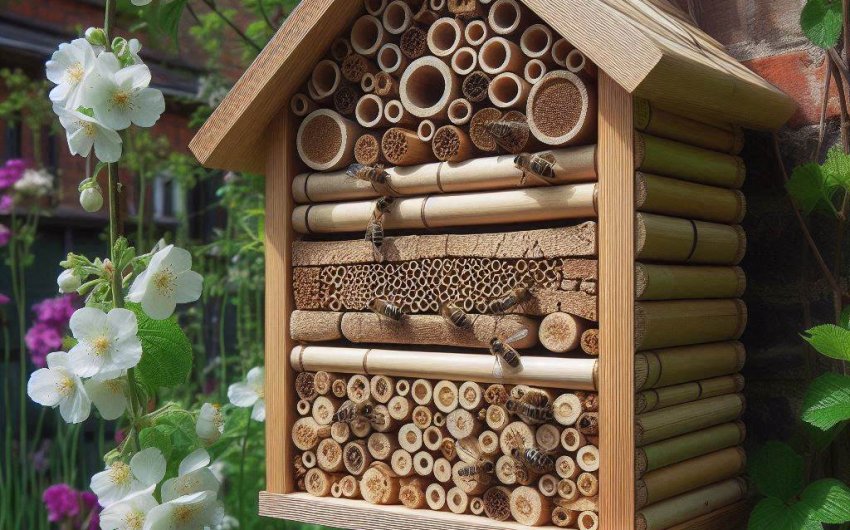
To build a bee hotel to support garden pollinators, start by gathering materials such as untreated wood, bamboo canes, hollow plant stems, or cardboard tubes, and a sturdy frame or container. Create various tunnel sizes ranging from 2 mm to 10 mm in diameter to attract a diverse range of native bees.
Why Should I Build a Bee Hotel for My Garden?
Building a bee hotel offers numerous benefits for your garden and the wider ecosystem. It provides essential nesting sites for solitary bees, which are highly efficient pollinators but do not live in hives like honey bees. Many native bee species are facing habitat loss due to urbanization and changes in agricultural practices. By creating a safe and suitable nesting place, you directly contribute to their survival and proliferation.
These solitary bees include mason bees and leafcutter bees, which are non-aggressive and rarely sting, making them safe additions to any garden, even those with children or pets. They are incredibly effective at pollinating flowers, fruits, and vegetables, often outperforming honey bees on a per-bee basis. This leads to increased yields in your garden and promotes biodiversity. A well-placed bee hotel also allows you a unique opportunity to observe these fascinating insects up close, fostering a deeper appreciation for nature. In essence, a bee hotel is a simple yet powerful way to support vital garden pollinators and enhance your garden's health and productivity.
What Materials Do I Need to Build a Bee Hotel?
Building a bee hotel requires a variety of natural materials that mimic the nesting tunnels solitary bees seek out in nature. The key is to provide a range of tunnel sizes and materials to attract different species. All materials should be untreated to avoid chemicals that could harm the bees.
Essential Materials for the Structure
Outer Frame/Container: This will house all your nesting materials.
- Untreated Wood: A sturdy piece of untreated lumber, a wooden box, or a section of a log. Untreated cedar or pine is ideal.
- Plastic Bottle (Large): A clean, dry, large plastic bottle (e.g., 2-liter soda bottle) can serve as a waterproof shell. You'll cut off the bottom and pack it with materials.
- Terracotta Pot: A large terracotta pot laid on its side can also work.
Backing: You need a solid back to your bee hotel to protect the nesting tunnels from predators and the elements.
Advertisement- Untreated Wood Plank: A piece of untreated plywood or solid wood.
- Hardboard: Untreated hardboard or composite wood.
Roof/Overhang: Essential for keeping rain out of the nesting tunnels.
- Untreated Wood: A larger piece of untreated lumber extending beyond the front.
- Slate or Shingle: Can be attached to a wooden roof.
- Metal Flashing: Can provide a durable, waterproof roof.
Nesting Tunnel Materials
This is where the bees will lay their eggs. Variety is key!
- Bamboo Canes: Cut these into various lengths (6-8 inches or 15-20 cm) and ensure they are clean and have a hollow center with one end naturally closed off. The diameters should range from 2 mm to 10 mm. Look for bamboo garden stakes and cut them.
- Hollow Plant Stems: Many garden plants have hollow stems that can be used. Examples include:
- Elderberry
- Raspberry canes
- Sunflower stalks
- Fennel
- Knotweed
- Teasel Cut these to similar lengths as bamboo, ensuring they are dry and clean.
- Drilled Wood Blocks: Solid blocks of untreated wood (e.g., pine, cedar, oak) with holes drilled into them.
- Wood Type: Use a durable, rot-resistant wood.
- Hole Sizes: Drill holes of varying diameters (2 mm to 10 mm) and depths (4-6 inches or 10-15 cm). Ensure the holes are smooth inside, as rough edges can damage bee wings. A wood drill bit set with various sizes is useful.
- Cardboard or Paper Tubes: Specifically designed for bee hotels or repurposed.
- Bee Tubes: Purchase mason bee nesting tubes which are made of paper and are specifically sized. These are often removable and replaceable, aiding in cleaning.
- Recycled Cardboard Tubes: Repurpose toilet paper or paper towel rolls, then stuff them with paper straws or rolled-up paper.
Fasteners and Adhesives
- Wood Screws or Nails: For assembling the outer frame.
- Wood Glue: For additional stability.
- Non-toxic Adhesive/Caulk: To secure materials inside if needed, though a snug fit is usually better.
Tools You'll Need
- Saw: For cutting wood and bamboo (hand saw or miter saw).
- Drill: With various drill bit sizes for wood blocks.
- Measuring Tape or Ruler: For accurate cuts.
- Pencil: For marking.
- Sandpaper: To smooth rough edges on drilled holes and cut wood.
- Pruning Shears/Scissors: For cutting plant stems or cardboard tubes.
- Safety Glasses and Gloves: Always wear appropriate personal protective equipment.
Gathering these materials will set you up for success in building a bee hotel that truly supports your garden pollinators. Remember that the goal is to provide a safe, dry, and appealing home.
What Are the Best Dimensions for Bee Hotel Tunnels?
The dimensions of bee hotel tunnels are critically important for attracting a diverse range of solitary bee species. Different bees prefer different tunnel diameters, and providing a variety ensures your bee hotel caters to more types of pollinators. The length of the tunnels is also crucial for successful bee reproduction.
Tunnel Diameter
- Small Tunnels (2 mm - 4 mm): These attract smaller solitary bees, such as some species of small mason bees or leafcutter bees. Many tiny native bees can use these.
- Medium Tunnels (5 mm - 7 mm): This range is ideal for many common mason bee species (like the orchard mason bee, Osmia lignaria) and some medium-sized leafcutter bees. This is often the most popular size range.
- Large Tunnels (8 mm - 10 mm): These accommodate larger solitary bees. While fewer species use this size, including them increases biodiversity.
Recommendation: Aim for a mix, with the majority of tunnels in the 5 mm to 7 mm range. For instance, if you're drilling holes in a wood block, drill 60% of holes in the 5-7 mm range, 20% in the 2-4 mm range, and 20% in the 8-10 mm range.
Tunnel Depth/Length
The depth of the tunnels is just as important as the diameter. Bees need sufficient depth to lay multiple eggs, as they typically lay female eggs deeper in the tunnel and male eggs closer to the entrance.
- Ideal Depth: Tunnels should be at least 4 inches (10 cm) deep, but ideally 6 inches (15 cm) to 8 inches (20 cm) deep.
- Solid Back: Ensure the tunnels have a solid, closed back. Bees will not nest in tunnels that are open at both ends, as they need a secure, protected space for their offspring.
Ensuring Quality Tunnels
- Smooth Interiors: When drilling holes in wood, use sharp drill bits to create smooth interiors. Rough or splintered edges can damage the delicate wings of bees. You can gently sand the inside of drilled holes or cut bamboo canes to ensure they are smooth.
- Cleanliness: All materials should be clean and dry before assembly. Avoid any residues that could be harmful.
- Material Choice: As mentioned in the materials section, bamboo canes, hollow plant stems, drilled wood blocks, and paper/cardboard tubes are excellent choices. Each material offers a slightly different texture and feel that might appeal to various bee species.
By paying close attention to these dimensions and quality considerations, you'll be able to build a bee hotel that is highly attractive and beneficial for garden pollinators.
Step-by-Step Guide: How to Build a Simple Bee Hotel
Building a bee hotel doesn't have to be complicated. Here's a step-by-step guide for a basic yet effective design that will attract solitary bees to your garden.
Step 1: Prepare the Outer Structure (Frame)
- Choose Your Frame: Decide on your outer structure. A simple untreated wooden box, a piece of lumber with a solid back, or even a large, clean, plastic bottle with the bottom cut off can work. For a wooden box, measure and cut four pieces of untreated wood for the sides and one larger piece for the back panel.
- Assemble the Frame (if using wood): Securely fasten the side pieces to the back panel using wood screws or nails and wood glue. Ensure it's sturdy and square. The depth of your frame should accommodate your nesting tunnels (e.g., 6-8 inches deep).
- Add a Roof: Cut a piece of untreated wood for the roof that is wider and longer than the frame. This overhang is crucial for protecting the nesting materials from rain. Attach it to the top of your frame with screws, ensuring it slopes slightly forward to shed water. Alternatively, if using a plastic bottle or terracotta pot, the natural shape might offer some protection, but an added roof is always better.
Step 2: Prepare the Nesting Materials
- Gather Materials: Collect a variety of materials: bamboo canes, hollow plant stems (e.g., elderberry, sunflower), and untreated wood blocks for drilling. Consider purchasing mason bee nesting tubes for easy cleaning later.
- Cut to Length: Cut all bamboo canes and hollow plant stems to fit snugly within the depth of your chosen frame (e.g., 6-8 inches or 15-20 cm). Ensure one end of each hollow tube is naturally closed off by a node. If not, you’ll need to seal one end with mud or a piece of wood.
- Drill Wood Blocks: If using wood blocks, drill holes of varying diameters (2 mm, 5 mm, 8 mm) to a depth of 4-6 inches (10-15 cm). Use a sharp drill bit and clear out any sawdust. Smooth the edges of the holes with sandpaper to prevent wing damage. Remember to leave space between holes (at least 3/4 inch) to prevent splitting.
- Cleanliness: Ensure all nesting materials are clean and dry before assembly.
Step 3: Arrange and Secure Nesting Tunnels
- Pack Tightly: Begin to arrange your prepared nesting materials inside the outer frame. The goal is to pack them tightly so they don't shift or fall out. Mix different materials and tunnel sizes together.
- Solid Back: Ensure that all nesting tunnels are butted up against the solid back of your frame. Bees will not use tunnels that are open at both ends.
- Orientation: The open ends of the tubes should face outwards.
- No Gaps: Fill any large gaps with smaller tubes or tightly packed natural materials (like straw, but avoid using too much, as it can attract unwanted pests). A snug fit helps keep predators like birds out.
- Optional: Internal Divisions: For larger bee hotels, you might consider adding internal wooden dividers to separate different types of nesting materials or create individual compartments.
Step 4: Prepare for Mounting
- Add Hanging Hardware: If your bee hotel is designed to hang, attach sturdy hanging hardware (e.g., a strong wire, picture hanging hooks) to the back or top of the frame. Ensure it can support the full weight of the hotel, especially after it's been occupied by bees.
- Consider a Post: Alternatively, you might design your bee hotel to be mounted directly onto a sturdy post or wall.
Step 5: Placement and Maintenance
- Choose a Location: Select a sunny location, ideally facing south or southeast, where the bee hotel will receive morning sun. This warms up the hotel quickly, which bees prefer. Ensure it's sheltered from strong winds and heavy rain.
- Mount Securely: Mount the bee hotel securely at a height of 3-6 feet (about 1-2 meters) off the ground to protect it from ground predators and dampness. Ensure it is firmly fixed and won't swing in the wind.
- Annual Cleaning (if using removable tubes): If you've used paper tubes or removable bamboo, you can gently clean or replace them annually in late autumn/early winter to prevent the buildup of parasites. For drilled wood blocks, these are usually permanent.
By following these steps, you will successfully build a bee hotel that provides a welcoming and safe home for garden pollinators, enriching the biodiversity and productivity of your outdoor space.
Where is the Best Location to Place My Bee Hotel?
The location of your bee hotel is almost as important as its construction. Proper placement ensures that solitary bees find and utilize it, maximizing its benefit to your garden pollinators.
Sunlight Exposure
- Morning Sun: The ideal spot for a bee hotel is one that receives plenty of morning sun, ideally facing south or southeast. Bees are cold-blooded and need the warmth of the sun to become active in the morning. This early warmth allows them to start foraging for pollen and nectar sooner.
- Avoid Full Shade: Do not place the bee hotel in full shade, as it will remain too cool for the bees to be active and thrive.
Shelter from Rain and Wind
- Sheltered Spot: While bees need sun, they also need protection from harsh weather. Place the bee hotel where it is sheltered from strong winds, especially from the prevailing wind direction in your area.
- Overhang: The roof or overhang of your bee hotel is crucial here. Ensure it extends far enough to keep rain from entering the nesting tunnels. If placing it under an eave or a porch roof, ensure it still gets direct sun.
Height Off the Ground
- Ideal Height: Mount the bee hotel at a height of 3 to 6 feet (about 1 to 2 meters) off the ground. This height protects it from ground-dwelling predators like ants, mice, and slugs, and also keeps it away from excessive moisture from the ground.
- Stable Mount: Ensure the bee hotel is mounted securely to a post, wall, or sturdy fence. It should not swing freely in the wind, as constant movement can dislodge bee larvae or make bees reluctant to nest there.
Proximity to Food Sources
- Flowering Plants: Place your bee hotel within reasonable proximity to a variety of flowering plants that bloom throughout the growing season. Bees need a consistent supply of nectar and pollen. Aim for diverse native plants, as these are often the best food sources for native bees. Consider adding wildflower seed mixes for pollinators to your garden.
- Mud Source: Many solitary bees (like mason bees) use mud to seal their nesting cells. Having a source of moist, clayey soil or a muddy patch nearby will encourage them to nest in your bee hotel. You can create a small muddy patch if you don't have one naturally.
Avoid Pest-Prone Areas
- Ants: Avoid placing the bee hotel directly on or very close to areas with high ant activity, as ants can become predators.
- Pesticides: Absolutely ensure the area around your bee hotel is free from pesticide use. Pesticides are lethal to bees and will defeat the purpose of building a bee habitat.
By carefully considering these factors for placement, your bee hotel will be optimally positioned to attract and support a thriving community of garden pollinators.
How Do I Maintain My Bee Hotel for Long-Term Pollinator Health?
Maintaining your bee hotel is crucial for ensuring its long-term effectiveness and the health of the solitary bee populations it supports. Neglecting maintenance can lead to parasite buildup and disease, which can harm more bees than it helps.
Annual Cleaning (If Possible)
The most important maintenance task is annual cleaning, but this depends on the design of your bee hotel.
- Removable Tubes/Trays: If your bee hotel uses paper tubes, removable bamboo canes, or stackable wooden trays (designs often sold as mason bee houses), you should clean or replace them annually.
- When to Clean: In late autumn or early winter (November to February in many temperate climates), after the adult bees have emerged and flown away, and before the new generation starts to emerge in spring.
- Process: Carefully remove the occupied tubes or trays. You might see cocoons inside. Store them in a cool, dry, protected place (like an unheated shed or garage) over winter to protect developing larvae from extreme temperatures and predators. In late winter/early spring, gently open or unroll the tubes. Remove any cocoons (they will look like small brown or grey casings). You can clean out the tubes with a small brush and a mild bleach solution (1 part bleach to 9 parts water), then rinse thoroughly and dry completely, or replace them with fresh tubes. For drilled wood blocks, some people use a stiff wire brush to clean them out, but this is less effective at removing all parasites.
- Permanent Drilled Blocks/Bamboo: For bee hotels made solely of permanently drilled wood blocks or bamboo that cannot be easily removed, cleaning is difficult. This type of hotel can accumulate parasites over time. You might consider replacing the entire bee hotel every 3-5 years if this is your design to prevent disease buildup.
Protection from Pests and Predators
- Birds: Some birds, like woodpeckers, can peck at the cocoons. If you notice this, you can place a wire mesh screen (with holes large enough for bees to enter and exit) in front of the bee hotel in winter, removing it in early spring.
- Ants: Ensure your bee hotel is not directly on or near an ant trail. You can apply a non-toxic barrier around the mounting post if ants are a persistent problem.
- Parasites: The main reason for cleaning is to remove parasitic mites and wasps that can lay eggs within the bee cells, feeding on the bee larvae. Cleaning helps break their life cycle.
Structural Integrity Checks
- Annual Inspection: At least once a year, preferably in late autumn, inspect the structural integrity of your bee hotel.
- Roof: Check if the roof is still secure and effectively shedding water. Repair or replace if damaged.
- Wood: Look for any signs of rot, mold, or severe weathering on the wooden frame. Untreated wood will weather naturally, but deep rot needs addressing.
- Mounting: Ensure the mounting is still secure and the bee hotel is not wobbly.
- Loose Tunnels: If any nesting tunnels have come loose, re-secure them.
Replenish Nesting Materials (If Applicable)
- If you've removed and discarded used paper tubes or highly damaged bamboo, replenish your bee hotel with fresh, clean nesting materials before spring when bees become active again.
Avoid Pesticides Near the Hotel
- This is not maintenance of the hotel itself, but crucial for bee health. Ensure no pesticides, herbicides, or insecticides are used in the vicinity of your bee hotel or on flowering plants that bees might visit. Use organic pest control methods in your garden if needed.
By dedicating a small amount of time to these maintenance tasks, you can ensure your bee hotel remains a safe, healthy, and inviting habitat for garden pollinators for many years to come, truly making a difference for these vital insects.
What Are the Different Types of Bees Attracted to Bee Hotels?
Bee hotels are specifically designed to attract solitary bees, which make up the vast majority of the world's bee species. Unlike honey bees or bumble bees, which live in social colonies, solitary bees live alone, with each female building her own nest and laying her own eggs. They are non-aggressive and do not defend a hive, making them excellent, gentle garden pollinators.
Here are the primary types of solitary bees you can expect to attract to your bee hotel:
1. Mason Bees (Genus Osmia)
- Characteristics: These bees are typically dark-colored, often metallic blue or green, and slightly smaller than honey bees. They get their name from their habit of using mud or other earthy materials to build walls between their egg cells and to seal the entrance of their nesting tunnels.
- Tunnel Preference: Mason bees prefer tunnels with diameters in the 5 mm to 8 mm range.
- Nesting Habits: Females lay eggs in a linear series within the tunnel, separated by mud walls. Each cell contains an egg and a provision of pollen and nectar for the developing larva.
- Pollination Power: Mason bees are incredibly efficient pollinators, especially for fruit trees and early spring blossoms. They are "messy" pollinators, carrying pollen all over their bodies, which makes them highly effective at transferring pollen between flowers.
- Common Species: Orchard mason bee (Osmia lignaria), blue orchard bee.
2. Leafcutter Bees (Genus Megachile)
- Characteristics: These bees are typically dark-bodied, sometimes with pale bands, and range in size. They are easily identified by their habit of cutting precise, circular or oval pieces of leaves (or sometimes flower petals) to line and seal their nesting cells. You might see perfectly cut holes in the leaves of roses or other plants, which is usually a sign of these harmless bees at work.
- Tunnel Preference: Leafcutter bees often prefer slightly smaller tunnels, typically in the 4 mm to 7 mm range.
- Nesting Habits: Similar to mason bees, they lay eggs in a linear series within the tunnel, but they use the leaf pieces to create individual cells and to cap the tunnel entrance.
- Pollination Power: Leafcutter bees are excellent pollinators of a wide variety of plants, including many garden vegetables, legumes, and wildflowers. They are particularly active in mid-to-late summer.
- Common Species: Alfalfa leafcutter bee (Megachile rotundata), various garden leafcutter bees.
3. Small Carpenter Bees (Genus Ceratina)
- Characteristics: These are small, dark, often shiny bees, typically less than 1/2 inch long. They might resemble a fly at first glance. Unlike their larger relatives (large carpenter bees, which bore into solid wood), small carpenter bees nest in the pithy stems of plants.
- Tunnel Preference: They prefer very small diameter tunnels, often less than 4 mm, and can also use hollow stems that are slightly softer.
- Nesting Habits: They bore into the soft, pithy centers of broken or cut plant stems (like elderberry, sumac, or raspberry canes) and create a series of cells.
- Pollination Power: They contribute to the pollination of various small flowers.
Other Occasional Visitors
While mason bees and leafcutter bees are the most common residents, your bee hotel might occasionally attract other beneficial insects that utilize hollow spaces, such as:
- Potter Wasps: These solitary wasps build small, pot-shaped nests of mud. Some species may use existing tunnels.
- Certain Spider Species: Some spiders may use the tubes for shelter.
By providing a variety of tunnel sizes and types within your bee hotel, you increase the chances of attracting a wider diversity of these amazing and essential solitary bees, significantly boosting the pollination efforts in your garden. Building a bee hotel is a rewarding way to observe and support these often-overlooked champions of our ecosystem.