
How Do I Choose the Right Soil for My Flower Garden?
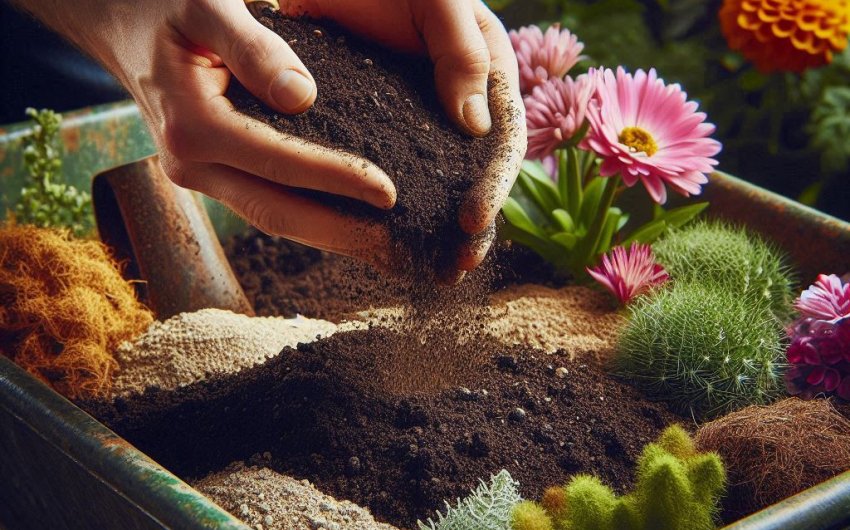
For many aspiring gardeners, the focus often leaps directly to the vibrant array of flowers they dream of planting, envisioning bursts of color and delightful fragrances. However, beneath every stunning bloom lies an often-overlooked hero: the soil. The quality of your garden soil is arguably the single most critical factor in determining the health, vigor, and overall success of your flower garden. It's the foundation, the nutrient pantry, and the hydration system all in one. Without the right soil, even the most carefully chosen plants will struggle to thrive.
The good news is that understanding your soil and how to improve it isn't nearly as complicated as it might seem. It starts with a bit of observation and a few simple tests. This guide will walk you through the essential steps to answer the crucial question: How do I choose the right soil for my flower garden? Get ready to dig deeper and unlock the secret to truly spectacular blooms by mastering the art of soil selection and improvement.
Why Is Soil So Important for Flower Health?
Before diving into how to choose the right soil, it's essential to understand why soil is so important for flower health. It's more than just something plants grow in; it's a complex, living ecosystem that directly influences every aspect of a flower's life, from its roots to its petals. Thinking of soil as the plant's literal foundation and nutrient source helps explain its critical role.
What Role Does Soil Play in Plant Growth and Bloom Production?
Soil plays multiple vital roles in plant growth and bloom production:
Anchorage and Support: The most basic role of soil is to physically anchor the plant, holding its roots firmly in place so it can stand upright against wind and rain. A stable base allows the plant to focus its energy on growing upwards and outwards, rather than constantly fighting for stability.
Nutrient Supply: Soil acts as the plant's pantry. It stores essential nutrients (like nitrogen, phosphorus, and potassium, as well as micronutrients) that flowers need to grow stems, leaves, and, most importantly, produce abundant and vibrant blooms. Organic matter in the soil slowly breaks down, releasing these nutrients over time, creating a steady food source. Without adequate nutrients, flowers will be weak, stunted, and produce fewer or duller blooms.
AdvertisementWater Retention and Drainage: Good soil acts like a sponge, holding onto water so that plant roots can absorb it as needed. However, it also allows excess water to drain away, preventing roots from sitting in soggy, oxygen-deprived conditions. Too much water leads to root rot, which effectively suffocates and kills the roots, preventing them from absorbing any water or nutrients. Too little water, and the plant simply dehydrates. The ideal soil strikes a perfect balance.
Oxygen Supply to Roots: Just like humans, plant roots need oxygen to "breathe" and perform their metabolic functions, including nutrient and water uptake. Healthy soil has a good balance of solid particles, water, and air pockets. Compacted soil or waterlogged soil has very few air pockets, starving the roots of oxygen.
Habitat for Beneficial Microorganisms: Healthy soil is alive! It's home to billions of beneficial bacteria, fungi, worms, and other microorganisms. These tiny workers perform crucial tasks: they break down organic matter, convert nutrients into forms plants can use, improve soil structure, and even help fight off plant diseases. This vibrant soil food web is essential for a thriving garden.
In essence, optimal soil provides the physical stability, the perfect moisture-oxygen balance, and the continuous nutrient supply necessary for a flower to grow strong roots, lush foliage, and eventually, produce abundant, healthy, and beautiful blooms. Neglect the soil, and your flowers will always struggle, no matter how much water or fertilizer you add.
How Do You Test Your Existing Garden Soil?
Before you can choose or improve your soil, you need to understand what you're working with. How do you test your existing garden soil? is the first practical question for any gardener serious about their flower beds. Simple tests can reveal valuable information about your soil's composition and health.
What Are Simple DIY Tests and Professional Options?
There are several ways to test your soil, ranging from simple DIY methods you can do at home to more precise professional laboratory analyses.
Simple DIY Tests (Quick & Informative):
The Squeeze/Ribbon Test (For Soil Texture): This tells you the proportion of sand, silt, and clay in your soil.
- How-to: Grab a handful of slightly damp soil (not soaking wet, not bone dry). Squeeze it firmly in your fist.
- If it falls apart when you open your hand: It's mostly sandy (good drainage, but low nutrient retention).
- If it holds its shape but crumbles easily when poked: It's likely loamy (the ideal balance of sand, silt, and clay, good for most flowers).
- If it holds its shape and you can roll it into a long, smooth ribbon between your thumb and forefinger (the longer the ribbon, the more clay): It's clayey (poor drainage, high nutrient retention, can become compacted).
- Why it matters: Texture influences drainage, water retention, and nutrient holding capacity.
- How-to: Grab a handful of slightly damp soil (not soaking wet, not bone dry). Squeeze it firmly in your fist.
The Jar Test (For Soil Composition Layers): A visual way to see your soil's components.
- How-to: Fill a clear jar (like a quart-sized mason jar) about one-third full with soil from your garden. Fill the rest of the jar with water, leaving about an inch of air at the top. Add a teaspoon of dish soap (helps break up soil clumps). Shake vigorously for a minute or two until all soil is suspended. Let it settle for 24 hours.
- What you'll see:
- Bottom layer: Sand (heaviest, settles first).
- Middle layer: Silt.
- Top layer: Clay (lightest, often stays suspended the longest, water may still be cloudy).
- Floating on top: Organic matter.
- Why it matters: The proportions of these layers give you a good visual estimate of your soil's texture, similar to the squeeze test.
The Drainage Test (For Water Permeability):
- How-to: Dig a hole in your garden bed about 1 foot deep and 1 foot wide. Fill it with water and let it drain completely. Once drained, fill it again with water.
- What it tells you:
- If the water drains in 1-4 hours: Good drainage.
- If it takes more than 4-6 hours: Poor drainage (likely heavy clay or compacted soil).
- If it drains in less than 30 minutes: Very fast drainage (likely very sandy soil, may not retain enough water).
- Why it matters: Directly shows if your soil will cause waterlogging (leading to root rot) or dry out too quickly.
Professional Options (For Precision):
Soil Test Kit (Home Use): These kits provide a good estimate of pH and sometimes N-P-K levels.
- How-to: Follow kit instructions carefully. Usually involves mixing soil with water and adding a test capsule, then comparing color changes to a chart.
- Tool Tip: A Luster Leaf Rapitest Soil Test Kit (found on Amazon) is a popular choice for quick home readings.
University Extension or Commercial Lab Testing: This is the most accurate and comprehensive option.
- How-to: Contact your local university agricultural extension office. They provide instructions on how to collect soil samples (usually multiple samples from different areas of your garden) and where to send them. You'll typically get a detailed report on pH, macro and micronutrient levels, and recommendations for amendments.
- Why it matters: Provides precise data to accurately diagnose nutrient deficiencies or excesses and determine exact amendment needs. Highly recommended if you're serious about long-term soil health or have persistent problems.
By performing these tests, you'll gain a valuable understanding of your existing garden soil, which is the essential first step in improving it for your flowering plants.
What Are the Key Characteristics of Ideal Garden Soil?
Once you know your current soil's characteristics, you can work towards achieving the key characteristics of ideal garden soil. While perfection is rare, understanding what makes soil optimal for flower growth will guide your improvement efforts. This ideal state is often referred to as "loamy" or "friable" soil.
What Makes Soil "Good" for Flowers?
What makes soil "good" for flowers comes down to a perfect balance of its physical, chemical, and biological properties:
Good Drainage: This is paramount. Ideal soil allows excess water to drain away quickly after rain or watering, preventing roots from sitting in soggy, oxygen-deprived conditions that lead to root rot. If you performed the drainage test (digging a hole and filling it with water), ideal soil drains within 1-4 hours. This means it has a good pore structure.
Adequate Water Retention: While good drainage is critical, ideal soil also needs to hold enough moisture to keep plant roots hydrated between watering sessions. It's like a well-drained sponge: it holds water but doesn't stay waterlogged. This balance is largely determined by soil texture.
Optimal Soil Texture (Loam): The best soil for most flowers is loam. Loamy soil is a balanced mix of sand, silt, and clay particles (roughly 40% sand, 40% silt, 20% clay), along with a good amount of organic matter.
- Sand: Provides good drainage and aeration.
- Silt: Helps with water retention and nutrient availability.
- Clay: Holds onto water and nutrients (high cation exchange capacity), but too much leads to compaction and poor drainage.
- Loamy soil feels crumbly in your hand, not too gritty, not too sticky. It holds its shape when squeezed but breaks apart easily.
Rich in Organic Matter: This is the "magic ingredient" for almost any soil. Organic matter includes decomposed plant and animal material (like compost, well-rotted manure, peat moss).
- Benefits: It improves soil structure (making clay soil more workable and sandy soil more water-retentive), provides a slow-release source of nutrients, and feeds beneficial microorganisms. It also improves aeration.
- Look for: A dark, rich color and a pleasant, earthy smell.
Appropriate pH Level: Soil pH measures its acidity or alkalinity (on a scale of 0 to 14, with 7 being neutral). Most flowers prefer a slightly acidic to neutral pH, generally between 6.0 and 7.0.
- Why it matters: pH affects nutrient availability. If the pH is too high or too low, even if nutrients are present in the soil, plants may not be able to absorb them.
- How to test: Use a home soil test kit or a professional lab test.
Good Aeration: This refers to the amount of air space within the soil.
- Why it matters: Roots need oxygen to breathe. Good aeration allows oxygen to reach the roots and carbon dioxide (a waste product) to escape.
- How to achieve: A crumbly texture (from good organic matter) and proper drainage create ample air pockets.
In summary, ideal garden soil for flowers is a living, breathing, well-balanced medium that drains well, retains moisture, supplies nutrients, and supports a healthy microbial community. Achieving this often means adding plenty of compost and organic amendments.
How Do You Improve Your Existing Garden Soil?
Knowing the ideal characteristics, the next practical step is how do you improve your existing garden soil? This is where you actively amend your soil to bring it closer to that perfect state, ensuring your flower garden has the best possible foundation for abundant blooms. Soil improvement is an ongoing process, but the initial efforts yield significant results.
What Are the Best Organic Amendments and Techniques?
The best techniques for improving soil largely revolve around adding organic amendments and using cultural practices that enhance soil health.
Add Organic Matter (The Golden Rule): This is by far the single most important thing you can do to improve any type of soil.
- What to use: Compost (homemade or store-bought, like Compost and Soil Amendment), well-rotted manure, shredded leaves, mushroom compost, or finely chipped bark.
- How it helps:
- For Clay Soil: Organic matter acts like tiny sponges, creating air pockets, improving drainage, and making the heavy clay more crumbly and workable.
- For Sandy Soil: Organic matter acts like a binder, helping the sand particles cling together to retain more water and nutrients.
- How-to: Incorporate a 2-4 inch layer of organic matter into the top 6-12 inches of your garden bed using a shovel or garden fork. Do this in fall or early spring. For ongoing improvement, top-dress beds annually with a 1-2 inch layer of compost.
Adjust Soil pH (Based on Soil Test Results):
- Why important: If your soil pH is too high or too low, nutrients can become unavailable to plants, leading to deficiencies even if they are present in the soil.
- How-to:
- To Raise pH (make less acidic): Add limestone (calcium carbonate or dolomitic limestone). The amount depends on your current pH and desired change; follow soil test recommendations carefully.
- To Lower pH (make more acidic): Add elemental sulfur or use acidic organic amendments like peat moss or pine bark fines.
- Tip: Make pH adjustments gradually, ideally over several months or seasons, as drastic changes can harm plants. Re-test pH periodically.
Improve Drainage (for Heavy Clay):
- Beyond organic matter: While organic matter is primary, for very heavy clay, you might also consider:
- Raised Beds: Building raised garden beds with new, imported well-draining soil is an excellent solution for poor drainage.
- Incorporating Grit: While less effective than organic matter, adding coarse sand or fine gravel (horticultural grade, not play sand) can slightly improve drainage in clay, but only if used in large quantities and mixed thoroughly. Organic matter is generally preferred.
- Beyond organic matter: While organic matter is primary, for very heavy clay, you might also consider:
Address Compaction:
- Why important: Compacted soil lacks air pockets, suffocating roots and hindering water penetration.
- How-to:
- Avoid Walking on Beds: Design your garden with clear pathways to avoid stepping directly on planting areas.
- Broadforking/Aerating: For established beds, a broadfork can be used to gently loosen compacted soil without completely inverting layers.
- Regular Organic Matter Addition: Continual addition of organic matter helps build and maintain a crumbly, aerated soil structure.
Fertilize Mindfully:
- Why important: Once soil structure and pH are good, occasional fertilization provides specific nutrient boosts for heavy feeders or to replenish nutrients over time.
- How-to: Use a balanced granular or liquid fertilizer during the growing season as needed, based on plant performance and soil test results. Organic options like bone meal (for phosphorus) or blood meal (for nitrogen) can be beneficial.
By systematically applying these organic amendments and techniques, you'll transform your garden soil into a rich, healthy, and highly productive medium, creating the perfect environment for your flower garden to flourish.
What Are Common Soil Problems and How to Fix Them?
Even with general improvement strategies, specific issues can arise. Knowing what are common soil problems and how to fix them allows you to accurately diagnose specific challenges in your flower garden and apply targeted solutions. Addressing these issues can make the difference between struggling plants and truly thriving blooms.
How Do You Troubleshoot Specific Soil Issues?
Troubleshooting specific soil issues involves understanding the symptoms, identifying the cause, and applying an appropriate remedy.
Problem: Heavy Clay Soil (Poor Drainage, Hard to Work)
- Symptoms: Soil feels sticky and clumpy when wet, forms a hard crust when dry, water pools on the surface after rain, plants suffer from root rot or appear waterlogged, difficult to dig into.
- Cause: High percentage of small clay particles, leading to poor pore space for air and water.
- Fix:
- Primary: Incorporate generous amounts of organic matter (compost, well-rotted manure, shredded leaves) into the top 6-12 inches of soil annually. This helps aggregate clay particles, creating a more crumbly, aerated structure.
- Alternative: Build raised garden beds and fill them with a custom blend of good topsoil and compost. This provides instant good drainage.
- Avoid: Adding sand alone, unless it's a very coarse sand and mixed in very large quantities (which is difficult), can often make the problem worse by creating concrete-like conditions.
Problem: Sandy Soil (Drains Too Quickly, Low Nutrients)
- Symptoms: Soil feels gritty, falls apart easily, water drains almost immediately after watering, plants wilt quickly in hot weather, nutrient deficiencies are common, plants need frequent watering.
- Cause: High percentage of large sand particles, leading to large pore spaces that don't retain water or nutrients well.
- Fix:
- Primary: Ameliorate with abundant organic matter (compost, peat moss, coir). Organic matter acts like a sponge, holding water and nutrients in the large pore spaces of sandy soil.
- Ongoing: Regularly top-dress with compost to continually build up the soil's organic content and improve its water and nutrient retention capacity.
Problem: Compacted Soil (Hard, Dense, Poor Growth)
- Symptoms: Plants are stunted, water runs off instead of soaking in, soil is very hard to dig, roots struggle to penetrate. Often seen in high-traffic areas.
- Cause: Foot traffic, heavy machinery, or lack of organic matter breaking down soil structure over time.
- Fix:
- Avoid Compaction: Design pathways to keep foot traffic off planting areas.
- Aerate: Use a garden fork or a broadfork to gently loosen the soil without completely turning it over.
- Incorporate Organic Matter: As mentioned, organic matter helps create a crumbly, aerated structure over time.
- Mulch: A consistent layer of mulch protects the soil surface from compacting rain and helps earthworms (natural aerators) thrive.
Problem: Incorrect pH (Nutrient Lock-Out)
- Symptoms: Yellowing leaves (chlorosis), stunted growth, despite apparent presence of nutrients in the soil. The specific deficiency symptoms depend on whether the soil is too acidic or too alkaline.
- Cause: Soil pH is outside the ideal range for the specific plants, preventing them from absorbing available nutrients.
- Fix:
- Test pH: Use a reliable soil test kit or professional lab test to get an accurate reading.
- Adjust pH:
- Too acidic (low pH): Add garden lime (calcium carbonate or dolomitic lime) to raise pH.
- Too alkaline (high pH): Add elemental sulfur or use acidic organic amendments like peat moss or pine bark fines to lower pH.
- Tip: Make adjustments gradually, following product instructions carefully, as drastic changes can harm plants.
By learning to recognize these common soil problems and applying the appropriate solutions, you can effectively troubleshoot issues in your flower garden, ensuring your plants receive the optimal conditions they need for spectacular growth and blooms.