
Climbing Cucumber Creativity: Build Your Own DIY Cucumber Trellis!
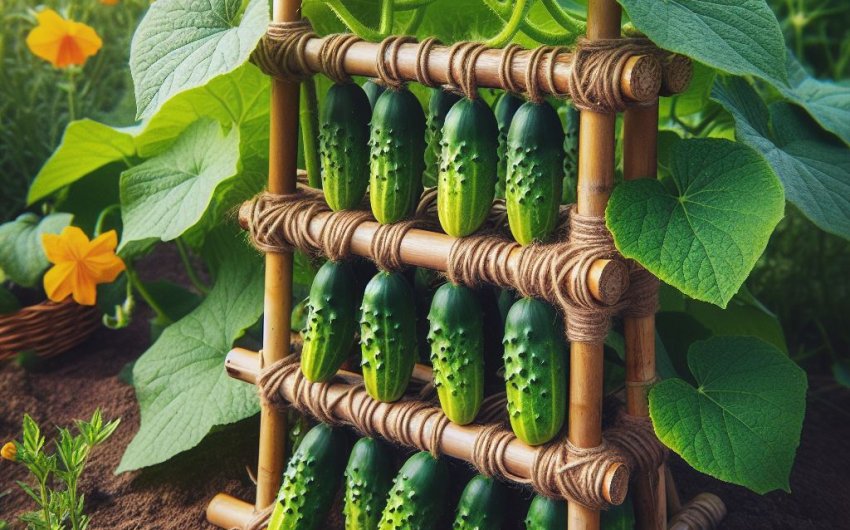
Building your own DIY cucumber trellis is a fantastic way to harness climbing cucumber creativity in your garden, transforming unruly vines into productive vertical displays. This hands-on project not only saves valuable garden space but also leads to healthier plants and cleaner, straighter cucumbers. Crafting a custom trellis allows you to tailor the support to your specific garden design and the needs of your vining cucumber varieties.
Why is Trellising Cucumbers a Smart Gardening Strategy?
Trellising cucumbers might seem like an extra step, but it's a smart gardening strategy that offers a multitude of benefits, transforming messy, sprawling vines into tidy, highly productive plants. Embracing vertical growth for your cucumbers enhances plant health, improves yield, and makes gardening a more enjoyable and efficient experience. It’s a key aspect of climbing cucumber creativity.
What Are the Key Benefits of Trellising Cucumbers?
Redirecting cucumber vines upwards instead of letting them sprawl on the ground offers tangible advantages for both the plants and the gardener, making it a highly recommended practice.
- Maximizes Garden Space: This is perhaps the most significant benefit, especially for small gardens or raised beds. By growing cucumbers vertically on a trellis, you can produce a substantial harvest from a much smaller footprint, freeing up valuable ground space for other crops. This allows for intensive gardening and more diverse planting.
- Healthier Plants:
- Improved Air Circulation: Lifting vines off the ground allows for better air movement around the foliage. This significantly reduces the risk of common fungal diseases like powdery mildew, downy mildew, and other blights that thrive in damp, stagnant conditions on the ground.
- Reduced Pest Issues: Keeping leaves and fruits off the soil helps deter ground-dwelling pests (like slugs and some insects) from reaching the plant and reduces the likelihood of soil-borne diseases splashing onto the foliage during watering or rain.
- Less Rot: Fruits lying on wet soil are prone to rot. Trellising keeps them clean and dry.
- Better Quality and Appearance of Cucumbers:
- Cleaner Fruit: Cucumbers grown on a trellis are kept off the soil, resulting in cleaner, blemish-free fruits that don't need extensive washing before consumption.
- Straighter Cucumbers: Fruits that hang freely from a vine tend to grow straighter and more uniformly shaped than those that curl and twist on the ground. This makes them more appealing and easier to slice.
- Improved Flavor: Some gardeners claim that trellised cucumbers have a crisper texture and better flavor, possibly due to more consistent growing conditions.
- Easier Harvesting:
- No more searching through a dense, thorny tangle of leaves on the ground! Trellising allows fruits to hang visibly, making them much easier to spot and pick.
- This also reduces the chance of missing ripe cucumbers, which can quickly become overripe or turn yellow.
- Enhanced Sunlight Exposure: Spreading out the vines on a trellis ensures that more leaves receive optimal sunlight, leading to more efficient photosynthesis and, consequently, a more productive plant with more fruits.
- Aesthetic Appeal: A well-built DIY cucumber trellis with lush green vines and dangling fruits creates a beautiful and attractive vertical feature in your garden, adding visual interest and structure. It transforms your garden into a more organized and elegant space.
Given these numerous advantages, trellising cucumbers is a gardening technique that pays off handsomely, allowing you to maximize your harvest while keeping your plants healthier and your garden tidier.
What Are the Best Types of Cucumbers for Trellising?
While most vining cucumber varieties will readily climb a trellis, certain types are particularly well-suited for vertical growth due to their vigor, fruit size, and disease resistance. Choosing the right cucumber for your DIY trellis ensures the best results for a bountiful and healthy harvest. The key is to look for terms like "vining," "slicing," or "pickling" varieties, and check their mature length.
What Cucumber Characteristics are Ideal for Trellising?
Selecting cucumbers with these traits will make your trellising experience more successful and productive. They are the epitome of climbing cucumber creativity.
- Vining Habit: This is the most important characteristic. Bush varieties are bred to be compact and generally don't need or benefit much from trellising. Look for "vining" or "indeterminate" varieties that naturally send out long tendrils and stems to climb.
- Fruit Size and Weight: Varieties that produce medium to large fruits are generally good for trellising, as they hang nicely without breaking the vine. Very small pickling cucumbers are also excellent, while extremely large, heavy varieties might benefit from some fruit support (like slings) if the vine isn't exceptionally strong.
- Disease Resistance: Trellising helps with air circulation, but choosing varieties with resistance to common cucumber diseases (e.g., powdery mildew, downy mildew, cucumber mosaic virus) provides an extra layer of protection, especially in humid conditions.
- Length of Vines: Some vining cucumbers can grow incredibly long (10-15 feet or more). Consider the height of your trellis and choose varieties whose vine length aligns with your support structure.
- Smoothness/Texture (Pickling vs. Slicing): Both pickling and slicing cucumbers do well on a trellis. Pickling types tend to be smaller and more prolific, while slicers offer larger fruit.
What Are Excellent Cucumber Varieties for a DIY Trellis?
These popular varieties are tried-and-true climbers that will reward your efforts with abundant, high-quality fruit when grown vertically.
- 'Marketmore 76': A classic, reliable slicing cucumber with dark green, 8-9 inch long fruits. It's vigorous, productive, and has good disease resistance.
- 'Burpee's Burpless': Produces long, slender, mild-flavored slicing cucumbers with thin skin. It's an excellent climber and generally good for digestion.
- 'Straight Eight': Another popular slicing variety, known for producing straight, smooth, 8-inch fruits. It's a strong viner and highly productive.
- 'Lemon Cucumber': A unique heirloom variety that produces round, yellow, lemon-shaped fruits. It's a vigorous viner with a mild, sweet flavor, and its fruits hang beautifully from a trellis.
- 'Armenian Cucumber' (also known as Snake Melon): While technically a melon, it's botanically a cucumber variety. It produces extremely long, slender, ridged fruits that are mild and easy to digest. It's a vigorous climber and needs good support for its long fruits.
- 'Boston Pickling': A popular choice for making pickles. It produces abundant, smaller, crunchy fruits that are perfect for harvesting frequently. It's a prolific viner.
- 'Diva': A parthenocarpic (seedless), thin-skinned, bitter-free slicing cucumber. It's a reliable viner with excellent disease resistance, perfect for consistent harvests.
- 'Suyo Long': An Asian heirloom with long, slender, ridged fruits. It's an excellent climber and performs well in warm climates.
When selecting seeds or young plants, always check the descriptions for "vining" or "pole" varieties, and consider any specific disease resistance relevant to your local climate. Pairing these robust climbers with a sturdy DIY cucumber trellis ensures a flourishing and productive vertical garden.
What Materials Can You Use to Build a DIY Cucumber Trellis?
Building a DIY cucumber trellis allows for incredible creativity and customization, and the good news is that you can use a wide variety of materials, often found around the house or at low cost. The most important characteristics for trellis materials are sturdiness, durability, and a texture that cucumber tendrils can easily grip. Choosing the right materials is the first step in harnessing climbing cucumber creativity.
Here are popular and effective materials for building a DIY cucumber trellis:
- Wood:
- Types: Untreated lumber (like pine, cedar, redwood) is common. Cedar and redwood are naturally rot-resistant. You can also use bamboo stakes or branches collected from your yard.
- Pros: Natural look, easy to work with, readily available.
- Cons: Untreated wood can rot over time. Needs to be sturdy enough for mature vines.
- Usage: Can be used to build sturdy A-frame trellises, single stakes, or ladder-style supports.
- Metal:
- Types: Concrete reinforcement wire (cattle panel, hog panel, re-mesh), rebar, metal conduit, galvanized wire, old bicycle rims (for circular trellises).
- Pros: Very durable, long-lasting (especially galvanized), strong, can be reused for many seasons. Can be bent into various shapes.
- Cons: Can be more expensive initially, heavier, sometimes harder to cut/manipulate. Can get hot in direct sun.
- Usage: Excellent for vertical panels, arch trellises, cages, or sturdy uprights. A cattle panel trellis is a popular, robust option.
- Netting or Mesh:
- Types: Nylon trellis netting, plastic garden netting, chicken wire (galvanized), wire mesh with larger openings.
- Pros: Lightweight, affordable, easy to install, cucumbers tend to grip easily.
- Cons: Can be flimsy if not properly supported, sometimes only lasts one or two seasons (especially plastic), cucumbers can become entangled.
- Usage: Best stretched between sturdy posts (wood or metal) for support. Look for netting with large enough squares (at least 2x2 inches) so you can easily reach through to harvest.
- Twine or Rope:
- Types: Natural jute twine, garden twine, polypropylene rope.
- Pros: Very inexpensive, easy to tie, natural look.
- Cons: Less durable than other materials (often single-season), can stretch or rot, may need frequent re-tying. Thinner twine can cut into stems.
- Usage: Can be strung between supports to create a grid or ladder for vines to climb, often used in greenhouse growing.
- PVC Pipe:
- Types: Schedule 40 PVC pipe.
- Pros: Lightweight, inexpensive, easy to cut and assemble with connectors, won't rot.
- Cons: Can look less natural, may become brittle in strong UV over many years, can become flimsy in very tall structures.
- Usage: Excellent for building A-frames, cages, or simple upright frames, often connected with PVC fittings.
- Recycled or Upcycled Items:
- Types: Old ladders, bed frames, tomato cages (modified), sturdy branches, even old patio umbrellas (frame only).
- Pros: Free or very low cost, eco-friendly, adds character.
- Cons: May require modification, might not be as durable, need to ensure stability and safety.
- Usage: Get creative! An old ladder can lean against a fence, or a metal frame can be re-purposed.
When selecting materials, always consider the mature weight of your cucumber vines (which can get heavy with fruit!), the duration you need the trellis to last, and how it will fit into your garden's aesthetic. A sturdy foundation is crucial regardless of the top material.
Step-by-Step Guide: Building an A-Frame Cucumber Trellis
An A-frame trellis is a classic, sturdy, and effective DIY cucumber trellis, perfect for supporting vigorous vining cucumbers while maximizing space. It's relatively easy to build and offers excellent access for harvesting and plant care. This design ensures your climbing cucumber creativity is well-supported.
Materials You'll Need:
- Wood:
- Four (4) pieces of 2x2 or 1x2 lumber, each 6-8 feet long (for the main A-frame legs). Cedar or pressure-treated wood is best for durability.
- One (1) piece of 1x2 or 2x2 lumber, about 3-4 feet long (for the top horizontal brace).
- Two (2) shorter pieces of 1x2 lumber, about 2 feet long each (for lower horizontal braces/stability).
- Trellis Material:
- Nylon garden netting (with 2x2 inch or larger squares) or galvanized chicken wire/wire mesh. Ensure it's wide enough to cover the "A" shape.
- Hardware:
- Outdoor wood screws (2-inch or 2.5-inch) or galvanized nails.
- Heavy-duty staples or zip ties for attaching netting.
- Optional: Hinges (if you want it foldable for storage).
- Tools:
- Saw (hand saw or power saw)
- Drill (if using screws)
- Tape measure
- Pencil
- Staple gun (for netting)
- Gloves
Instructions for Building Your A-Frame Trellis:
- Cut Your Wood Pieces:
- Cut your four (4) main leg pieces to the desired height (e.g., 6 feet for most gardens, up to 8 feet for very vigorous varieties).
- Cut the top horizontal brace (e.g., 3 feet long).
- Cut the two lower horizontal braces (e.g., 2 feet long).
- Assemble the First "A" Frame:
- Lay two of your main leg pieces on a flat surface, forming an "A" shape.
- Overlap the tops slightly. The angle at the bottom should be wide enough for stability (e.g., about 3-4 feet wide at the base).
- Place the top horizontal brace across the "A" frame, about 6-12 inches from the very top point of the "A." This brace will join the two legs.
- Screw or nail the top brace securely to both legs.
- Place one of the lower horizontal braces across the "A" frame, about 1-2 feet up from the bottom. This adds stability. Secure with screws or nails.
- Repeat this process to assemble your second "A" frame.
- Connect the Two "A" Frames:
- Stand both "A" frames upright, parallel to each other, at your desired distance apart (e.g., 3-4 feet). This distance will be the width of your trellis base.
- Use the remaining long horizontal brace to connect the very tops of the two "A" frames. This creates the ridge of your "tent" or "A" shape. Screw or nail it securely from both sides.
- Attach the Trellis Material:
- Unroll your netting or wire mesh.
- Starting at one end, attach the netting to the outside of one "A" frame.
- Use heavy-duty staples or zip ties to secure the netting along all the wooden edges of one side of the "A." Pull it taut but don't overstretch.
- Repeat this on the other side of the "A" frame, attaching the netting to the second wooden frame.
- Ensure the netting is securely attached to both sloping sides, providing a climbing surface.
- Place in the Garden:
- Carefully carry your completed A-frame trellis to your garden bed.
- Dig small trenches or holes for the bottom of the legs to sit in, burying them a few inches deep for extra stability.
- Ensure the trellis is level and stable. You may want to push the legs deeper into the soil if it feels wobbly.
Your DIY A-frame cucumber trellis is now ready for planting! Plant your cucumber seedlings at the base of each side of the trellis, and gently guide their tendrils to begin climbing. A well-built trellis can serve your climbing cucumber creativity for many seasons.
Step-by-Step Guide: Making a Simple Stake and Twine Trellis
A simple stake and twine trellis is a highly effective, cost-efficient, and easily adjustable DIY cucumber trellis, particularly good for smaller gardens or when you need quick, temporary support. This method harnesses climbing cucumber creativity by providing individual climbing paths that lead to abundant, clean fruit.
Materials You'll Need:
- Stakes:
- Sturdy wooden stakes (e.g., 1x1 or 2x2 lumber, bamboo poles, or thick branches) about 6-8 feet long. You'll need one stake per cucumber plant, plus potentially a few extra for stability.
- Twine:
- Strong garden twine, jute twine, or other natural, biodegradable twine. A roll of natural jute twine is perfect.
- Tools:
- Sledgehammer or rubber mallet (for driving stakes into the ground)
- Scissors or a utility knife (for cutting twine)
- Tape measure (optional, for even spacing)
- Gloves
Instructions for Building Your Stake and Twine Trellis:
- Prepare Your Planting Area:
- Ensure your garden bed is prepared with rich, well-draining soil.
- Plan the spacing of your cucumber plants (typically 18-36 inches apart, depending on variety). You will plant one cucumber at the base of each primary stake.
- Drive in the Main Stakes:
- For each cucumber plant, drive one sturdy stake into the ground directly behind where you will plant the cucumber, about 2-4 inches away from the intended planting spot.
- Drive the stakes deep enough to be very firm and stable – at least 12-18 inches (30-45 cm) into the soil. Use a sledgehammer or mallet for this.
- If you're planting a row, ensure the stakes are aligned.
- Create a Horizontal Support (Optional but Recommended):
- For added stability and to create a framework for the twine, run a horizontal piece of twine or a thin wooden dowel between the tops of your main stakes. This connects them and prevents them from leaning inwards. Tie it securely.
- You can also add a horizontal piece of twine or a thin stake about 2-3 feet off the ground for additional early support.
- Attach the Vertical Twine (for Climbing):
- For each cucumber plant, take a long piece of twine (at least 2 feet longer than your stake).
- Tie one end of the twine securely to the base of the cucumber plant (or just above the lowest leaves once it has grown a bit). Be gentle and leave a loose loop to allow for stem growth.
- Gently run the twine straight up the stake.
- Tie the other end of the twine securely to the top of the stake, or to your horizontal support twine.
- You can create a "net" effect by running multiple vertical strands of twine from the base to the top for each plant, or just one per plant and gently guide the vine.
- Alternatively, you can start with a horizontal piece of twine near the ground, tie individual vertical pieces from that to the main stake, and then tie a top horizontal piece of twine across the tops of the stakes for strength.
- Plant Your Cucumbers:
- Plant your cucumber seedlings at the base of each stake, ensuring they are positioned to reach the twine.
- Guide the Vines:
- As the cucumber vines grow, gently guide their tendrils around the twine. Cucumbers are natural climbers and will usually grab on once they make contact.
- You may need to do this every few days in the early stages, wrapping the vine loosely around the twine in a spiral.
This simple stake and twine system provides excellent vertical support, ensures good air circulation, and keeps your cucumbers clean and straight, effectively supporting your climbing cucumber creativity throughout the growing season.
Step-by-Step Guide: Repurposing a Metal Fence Panel Trellis
Repurposing a metal fence panel, such as a cattle panel, hog panel, or concrete reinforcement mesh, into a DIY cucumber trellis is a fantastic way to create a super sturdy, long-lasting, and highly effective vertical support for your vining cucumbers. This method is incredibly popular for its durability and ease of use, allowing for versatile climbing cucumber creativity year after year.
Materials You'll Need:
- Metal Fence Panel:
- One (1) cattle panel, hog panel, or concrete reinforcement mesh (often sold in 4x8 foot or 5x16 foot sections). Choose one with large enough openings (at least 4x4 inches for easy harvesting).
- Support Posts (Optional but Recommended for Large Panels):
- Two (2) metal T-posts or sturdy wooden posts (e.g., 4x4 lumber) about 6-8 feet long.
- Hardware:
- Heavy-duty zip ties or galvanized wire (for attaching panel to posts).
- U-shaped fence staples (if using wooden posts).
- Tools:
- Wire cutters (for shaping panels, if needed)
- Post driver or sledgehammer (for T-posts)
- Gloves (metal can be sharp)
- Safety glasses
Instructions for Building Your Metal Panel Trellis:
- Prepare Your Location:
- Choose a spot in your garden bed that receives full sun.
- Clear the area where the cucumbers will be planted along the base of the trellis.
- Install Support Posts (If Using):
- If using T-posts or wooden posts, drive them firmly into the ground at each end of where your metal panel will stand.
- Ensure they are driven deep enough to be sturdy (e.g., 18-24 inches) and are spaced slightly less than the width of your panel to allow for tension.
- Position the Metal Panel:
- Carefully bring your metal panel to the prepared site. These panels can be heavy and unwieldy, so a helper is useful.
- Decide if you want a straight vertical panel or a gently arched panel.
- For a Straight Vertical Trellis: Stand the panel upright, pushing the bottom edge a few inches into the soil for stability. If using support posts, position the panel against them.
- For an Arched Trellis: For a naturally arched design, you'll need a flexible panel (like a cattle panel) and two sturdy T-posts. Drive the T-posts into the ground about 6-8 feet apart (or less, depending on the panel length and desired arch height). Carefully bend the cattle panel into an arch and secure its ends to the T-posts.
- Secure the Panel:
- If using support posts: Use heavy-duty zip ties or galvanized wire to securely attach the metal panel to the T-posts or wooden posts at several points along its height. This prevents it from swaying or falling.
- If using a freestanding panel: Bury the bottom edge of the panel several inches deep (e.g., 6-12 inches) into the soil. You might also drive short rebar stakes on either side of the panel's base for added security. For longer panels, adding a support post in the middle can prevent bowing.
- Plant Your Cucumbers:
- Plant your vining cucumber seedlings at the base of the trellis. For a straight panel, plant them along one or both sides. For an arch, plant them along the base on both sides.
- Guide the Vines:
- As the cucumber vines grow, gently guide their tendrils to grip the metal squares of the panel. Cucumbers are natural climbers and will quickly wrap their tendrils around the rough metal, securing themselves.
- You may need to loosely tie some initial vines to the panel with soft garden ties until they get a good grip, but usually, they take to metal very easily.
This metal panel trellis offers exceptional durability and a robust climbing surface, making it an excellent choice for a long-lasting, low-maintenance DIY cucumber trellis that will support your climbing cucumber creativity for many growing seasons.
How to Plant and Train Cucumbers on Your DIY Trellis?
Successfully planting and training cucumbers on your DIY trellis is crucial for maximizing your harvest and ensuring your plants thrive vertically. It's a hands-on process that begins at planting and continues as the vines grow, gently guiding them towards their upward journey. This careful guidance ensures your climbing cucumber creativity blossoms into a productive display.
Step-by-Step Planting:
- Prepare the Soil:
- Ensure the soil at the base of your DIY cucumber trellis is rich in organic matter and well-draining. Cucumbers are heavy feeders and appreciate fertile soil.
- Amend the soil with compost or well-rotted manure before planting.
- Plant Cucumber Seeds or Seedlings:
- Timing: Plant seeds directly or transplant seedlings after all danger of frost has passed and the soil has warmed (typically late spring/early summer).
- Spacing: Plant cucumber seeds or seedlings about 6-12 inches (15-30 cm) apart along the base of your trellis. This allows for dense vertical growth without overcrowding at the ground level. For larger varieties, space slightly wider.
- Depth: Plant seeds 1 inch deep. Plant seedlings at the same depth they were in their nursery pots.
- Water Thoroughly:
- Immediately after planting, water the area around the cucumber plants deeply to settle the soil.
Step-by-Step Training:
- Early Guidance:
- Once your cucumber plants have developed a few true leaves and start to send out small vines (typically when they are 6-12 inches tall), it's time to begin training.
- Gently guide the youngest, most vigorous vine towards the base of the trellis.
- Loosely wrap the vine around the lowest part of the trellis material. Cucumbers have small tendrils that will eventually grasp onto the support.
- Regular Monitoring and Guidance:
- As the vines grow (which will be quickly!), check them every few days.
- Continue to gently guide any new leading vines onto the trellis, wrapping them loosely around the wires, netting, or twine.
- Encourage the tendrils to attach. They are quite adept at finding purchase once initiated.
- Tying-In (If Needed):
- For very long or heavy vines that aren't gripping well, or if a stem is getting away from the trellis, you can use soft garden ties (e.g., fabric strips, velcro plant ties, or old pantyhose) to loosely secure the vine to the trellis.
- Ensure the ties are loose enough to allow the stem to thicken without being girdled.
- Pruning for Productivity (Optional but Recommended):
- Remove Lower Leaves: As the vines grow upwards, remove any yellowing or diseased leaves at the very bottom of the plant. This improves air circulation and reduces the risk of soil-borne diseases.
- Side Shoot Management (for prolific vining): Some gardeners choose to prune side shoots (suckers) that develop in the leaf axils of the main vine. This can concentrate the plant's energy into the main vine and fruit production, though it's less critical for cucumbers than for tomatoes.
- Male Flower Removal (Controversial): Some sources suggest removing early male flowers (which typically appear before female flowers) to encourage female flower production, but this is often unnecessary and can reduce overall pollination.
- Pinch Back Growing Tips (Optional): Once the main vine reaches the top of your trellis or grows excessively long, you can pinch off its growing tip to encourage lateral branching and fruit production lower down.
- Harvest Regularly:
- Consistent harvesting encourages the plant to produce more flowers and fruits. Don't let cucumbers get too big and turn yellow on the vine.
By diligently planting and training your cucumbers on a DIY trellis, you will cultivate healthier plants that are easier to manage and produce an abundant harvest of clean, straight fruits, a true testament to climbing cucumber creativity.
How Do You Care for Trellised Cucumbers for Maximum Yield?
Caring for trellised cucumbers for maximum yield involves more than just providing support; it's a comprehensive approach that ensures your plants remain healthy, well-nourished, and continuously productive throughout the growing season. By paying attention to their specific needs, your DIY cucumber trellis will truly be a workhorse in your garden, a testament to climbing cucumber creativity.
Here’s how to care for trellised cucumbers for maximum yield:
- Consistent and Adequate Watering:
- Crucial for Fruit Quality: Cucumbers are about 95% water, so consistent moisture is paramount for juicy, non-bitter fruits and vigorous vine growth.
- Deep Watering: Water deeply and regularly, especially during flowering and fruiting. Aim for 1-2 inches of water per week, delivered directly to the root zone.
- Avoid Overhead Watering: Try to water the base of the plant to keep foliage dry, which reduces fungal disease risk. Drip irrigation or soaker hoses are ideal for trellised plants.
- Monitor Soil: Use your finger or a soil moisture meter to check soil moisture; water when the top 1-2 inches are dry. Inconsistent watering leads to bitter or misshapen fruit.
- Regular Fertilization:
- Heavy Feeders: Cucumbers are heavy feeders, especially when producing fruit.
- Nutrient Timing: Once the plants begin to flower and set fruit, fertilize every 2-3 weeks with a balanced liquid fertilizer or one slightly higher in phosphorus and potassium to promote flowering and fruiting. A vegetable plant fertilizer specifically designed for fruiting crops is ideal.
- Organic Options: Side-dress with compost or compost tea for a slow, steady nutrient release.
- Pollination (if not parthenocarpic):
- Open-Pollinated Varieties: Many cucumber varieties require pollination by bees or other insects to set fruit. Ensure your garden attracts pollinators (e.g., by planting companion flowers).
- Hand Pollination: If you see plenty of flowers but no fruit, or if you're growing in an enclosed space, you may need to hand pollinate. Use a small paintbrush or cotton swab to transfer pollen from male flowers (which have a stamen but no swelling behind the flower) to female flowers (which have a tiny fruit swelling behind the flower). Do this in the morning when flowers are open.
- Parthenocarpic Varieties: Some newer varieties are parthenocarpic, meaning they produce fruit without pollination, simplifying things for gardeners with few pollinators.
- Pest and Disease Monitoring:
- Regular Inspection: Even with good air circulation from trellising, cucumbers are susceptible to pests (aphids, cucumber beetles, squash bugs) and diseases (powdery mildew, downy mildew).
- Early Detection: Inspect plants regularly (especially leaf undersides) and treat any issues promptly with organic solutions like neem oil, insecticidal soap, or by hand-picking pests. A neem oil spray for vegetables can be beneficial.
- Cleanliness: Remove any yellowing, diseased, or dead leaves immediately to prevent disease spread.
- Consistent Harvesting:
- This is key to maximizing yield. Harvest cucumbers frequently (daily or every other day during peak season) when they reach their desired size.
- Allowing cucumbers to become overripe on the vine signals the plant to stop producing, as its goal is to produce seeds. Frequent harvesting keeps the plant in production mode. Use sharp garden snips to avoid damaging the vine.
- Mulching:
- Apply a 2-3 inch layer of organic mulch (straw, shredded leaves, wood chips) around the base of the trellised cucumbers.
- Mulch helps conserve soil moisture, suppresses weeds, and moderates soil temperature, all contributing to a healthier, more productive plant.
By integrating these careful practices, your DIY cucumber trellis will support not just climbing vines, but a thriving, fruit-laden display that ensures you enjoy a maximum yield of crisp, delicious cucumbers throughout the season, a true testament to climbing cucumber creativity.