
What are the different varieties of huckleberry plants available?
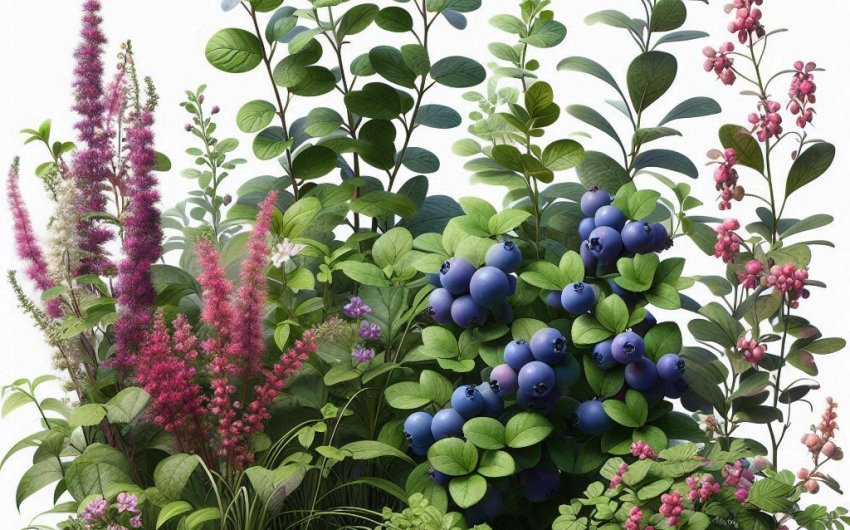
Huckleberry plants encompass several different species primarily belonging to the Vaccinium and Gaylussacia genera, each with distinct growing habits, fruit characteristics, and native regions. While often confused with blueberries, true huckleberries typically have 10 large, hard seeds inside, distinguishing them from blueberries' numerous tiny, soft seeds.
What Are True Huckleberries (Gaylussacia species)?
True huckleberries belong to the genus Gaylussacia, distinct from blueberries which are in the Vaccinium genus. These huckleberry plants are native to eastern North America and are characterized by their small, often dark, intensely flavored berries that contain ten large, gritty seeds. They are less commonly cultivated than blueberries due to their specific growing requirements and the challenges of commercial harvesting.
Black Huckleberry (Gaylussacia baccata)
The Black Huckleberry is arguably the most common and widespread true huckleberry in eastern North America. It's often found in dry, sandy, or rocky woodlands, clearings, and pine barrens.
- Growth Habit: This is a relatively low-growing deciduous shrub, typically reaching 1 to 3 feet tall, though it can occasionally grow taller. It forms dense thickets via underground rhizomes.
- Leaves: The oval leaves are alternate, somewhat leathery, and often turn beautiful shades of red and orange in the fall, adding ornamental value. They have resin dots on the underside, which are characteristic of Gaylussacia.
- Flowers: Small, bell-shaped, reddish-pink to greenish-yellow flowers appear in spring, usually in clusters.
- Fruit: The berries are round, glossy, and typically black or dark blue when ripe, though sometimes they can be reddish. They are small (about 1/4 inch in diameter) with a very intense, sweet-tart flavor. The distinguishing feature is the 10 relatively large, hard seeds inside, which give them a slightly gritty texture.
- Ripening Season: Usually ripens in mid to late summer (July to August), depending on the region.
- Uses: Excellent for fresh eating, pies, jams, jellies, and desserts. The intense flavor makes them highly prized.
- Growing Conditions: Prefers acidic, well-draining, sandy or rocky soils. Tolerates some shade but produces more fruit in full sun. It is difficult to transplant from the wild and challenging to cultivate commercially due to its slow growth and specific mycorrhizal fungi requirements.
Dangleberry Huckleberry (Gaylussacia frondosa)
The Dangleberry Huckleberry, also known as Blue Huckleberry or Swamp Huckleberry, is another significant species of true huckleberry found in eastern North America, particularly in wetlands, bogs, and moist woodlands.
- Growth Habit: This is a deciduous shrub that can grow taller than the Black Huckleberry, reaching up to 6 feet in height. Its branches are more slender and open, giving it a somewhat "dangly" appearance, hence the name.
- Leaves: Oval, alternate leaves that are generally bluish-green on the underside (glaucous) and also turn vibrant red in the fall.
- Flowers: Small, bell-shaped, greenish-yellow to pinkish flowers appear in loose clusters in spring.
- Fruit: The berries are typically a distinctive powdery light blue or purplish-blue with a waxy bloom. They are slightly larger than black huckleberries, often around 1/3 inch in diameter, and have a milder, sweeter flavor. Like all Gaylussacia berries, they contain the characteristic 10 large seeds.
- Ripening Season: Ripens from mid to late summer.
- Uses: Very good for fresh eating, baking, and making preserves. The sweeter flavor makes them a favorite for many.
- Growing Conditions: Prefers moist, acidic, well-draining soils, often found near swamps or wet woodlands. More tolerant of wet conditions than Black Huckleberry. Also difficult to cultivate but sometimes attempted in appropriate naturalistic settings.
Dwarf Huckleberry (Gaylussacia dumosa)
The Dwarf Huckleberry is a smaller, often overlooked true huckleberry species native to coastal plains and pine barrens of the eastern U.S.
- Growth Habit: A very low-growing, sometimes creeping, deciduous shrub, typically only 6 to 20 inches tall. It often forms small clumps.
- Leaves: Small, oval, leathery leaves that are evergreen or semi-evergreen in warmer climates. They often have bristles along the edges.
- Flowers: Small, white to pinkish bell-shaped flowers in loose clusters.
- Fruit: The berries are small, black and glossy when ripe, with the characteristic 10 large seeds. They are edible and have a good, albeit sometimes tart, flavor.
- Ripening Season: Ripens in late summer.
- Uses: Less commonly harvested for fruit due to its small size and sparse yield, but its low-growing habit makes it an attractive groundcover in native plant landscapes.
- Growing Conditions: Prefers very acidic, moist to well-draining sandy soils, typically in full sun to partial shade. Similar to other Gaylussacia species, it is challenging to establish in a typical garden setting.
What are the Western Huckleberries (Vaccinium species)?
In the western United States and Canada, the term "huckleberry" primarily refers to several species within the Vaccinium genus, which is the same genus as blueberries. These western huckleberry plants often grow in mountainous regions and coniferous forests. They are distinct from the Gaylussacia (true huckleberries) of the East, typically having numerous small, soft seeds, more akin to blueberries.
Cascade Huckleberry (Vaccinium deliciosum)
The Cascade Huckleberry is a highly prized species found in the mountains of the Pacific Northwest, known for its incredibly sweet and flavorful berries. It gets its species name "deliciosum" for a reason.
- Growth Habit: A low to medium-sized deciduous shrub, typically 1 to 3 feet tall, forming dense patches. It's often found in subalpine and alpine meadows, clearings, and open forests.
- Leaves: Oval leaves with fine teeth, often turning brilliant red in the fall.
- Flowers: Small, pink, bell-shaped flowers appear in spring.
- Fruit: Berries are round, about 1/4 to 1/2 inch in diameter, and typically powder-blue or purplish-blue with a waxy bloom. They are remarkably sweet and juicy, often considered the best-tasting of the western huckleberries. They contain small, soft seeds, much like blueberries.
- Ripening Season: Ripens from mid-summer to early fall, depending on elevation. Peak season often in August.
- Uses: Excellent for fresh eating, pies, muffins, jams, and sauces. Highly sought after by foragers.
- Growing Conditions: Requires cool summers, cold winters, very acidic (pH 4.0-5.5), well-draining, moist, organic-rich soils. Mimics its native high-elevation environment. Difficult to cultivate outside its natural range.
Evergreen Huckleberry (Vaccinium ovatum)
The Evergreen Huckleberry is a distinctive species found along the Pacific Coast of North America, from British Columbia to California. Its evergreen foliage makes it a popular ornamental in addition to its berries.
- Growth Habit: A medium to tall evergreen shrub, typically 3 to 10 feet tall, sometimes reaching 15 feet. It has dense, somewhat rigid branching. Often found in coniferous forests and coastal scrub.
- Leaves: Small, glossy, leathery, dark green oval leaves that persist through winter. New growth often has a reddish tint.
- Flowers: Small, bell-shaped, pinkish-white flowers appear in clusters in spring.
- Fruit: Berries are round, about 1/4 to 1/3 inch in diameter, starting red and maturing to glossy black when ripe. They have a moderately sweet-tart flavor, often a bit firmer than other huckleberries. Like other Vaccinium species, they have small, soft seeds.
- Ripening Season: Ripens from late summer through fall, often persisting on the plant for a while.
- Uses: Good for fresh eating, baking, jams, and sauces. Its ornamental qualities make it popular for landscaping.
- Growing Conditions: Prefers acidic, well-draining, moist soils, often found in partial to full shade, but can tolerate full sun along the coast. Easier to cultivate than many other huckleberries due to its adaptability to varying light conditions and its evergreen nature. Can be found at native plant nurseries.
Red Huckleberry (Vaccinium parvifolium)
The Red Huckleberry is a beautiful and distinct Vaccinium species found in moist, shady coniferous forests along the Pacific Coast and in the Rocky Mountains. It's notable for its bright red berries.
- Growth Habit: A delicate, graceful deciduous shrub, typically 3 to 12 feet tall, often growing as an epiphyte (on decaying logs or tree stumps) or in very moist soil. It has striking green, angular stems.
- Leaves: Small, oval leaves, bright green, and somewhat thin.
- Flowers: Small, urn-shaped, greenish-yellow to pinkish flowers appear singly or in small clusters in spring.
- Fruit: Berries are small, round, about 1/4 inch in diameter, and a distinctive, bright, glossy red when ripe. They have a tart flavor, often described as tangy or slightly bitter, but refreshing. They contain small, soft seeds.
- Ripening Season: Ripens in mid to late summer.
- Uses: Best for jams, jellies, and pies where their tartness is appreciated. Less commonly eaten fresh due to their acidity. An excellent source of pectin.
- Growing Conditions: Requires very moist, acidic, highly organic soils (often from decaying wood or leaf litter) and significant shade. Mimics its preference for decaying wood as a substrate. Difficult to cultivate in a typical garden setting unless very specific conditions can be met.
Thinleaf Huckleberry (Vaccinium membranaceum)
The Thinleaf Huckleberry, also known as Mountain Huckleberry, Big Huckleberry, or Square-stem Huckleberry, is perhaps the most widely recognized and harvested huckleberry in the Rocky Mountains and parts of the Pacific Northwest. It's known for its abundant and flavorful berries.
- Growth Habit: A medium to tall deciduous shrub, typically 3 to 6 feet tall, forming extensive thickets. It's found in open to dense coniferous forests, clearcuts, and alpine slopes. Its stems are often noticeably angled or "square" in cross-section.
- Leaves: Oblong to oval, thin leaves, often bright green.
- Flowers: Urn-shaped, pinkish to yellowish-green flowers appear in spring.
- Fruit: Berries are relatively large for a huckleberry, often 1/4 to 1/2 inch in diameter, and can vary in color from dark purplish-black to dark red when ripe. They are very sweet, juicy, and intensely flavored, with small, soft seeds.
- Ripening Season: Ripens from mid to late summer, peaking in August and September at higher elevations.
- Uses: Considered one of the best huckleberries for all uses: fresh eating, pies, jams, jellies, and desserts. The primary huckleberry commercially harvested in areas like Montana and Idaho.
- Growing Conditions: Requires acidic, well-draining, moist, highly organic soils. Often found in subalpine to alpine zones with cool summers and significant snowpack. Extremely challenging to cultivate outside its native habitat due to its specific environmental and soil requirements.
How Do Huckleberries Differ From Blueberries?
While often confused, huckleberries and blueberries are distinct, though related, members of the Ericaceae family. The primary differences lie in their genus, fruit characteristics, and ease of cultivation.
Key Differences:
| Feature | Huckleberry (True - Gaylussacia) | Huckleberry (Western - Vaccinium species) | Blueberry (Vaccinium species, cultivated) |
|---|---|---|---|
| Genus | Gaylussacia | Vaccinium | Vaccinium |
| Seeds | 10 large, hard, gritty seeds | Numerous small, soft, inconspicuous seeds | Numerous small, soft, inconspicuous seeds |
| Flavor | Often more intense, sweet-tart, or uniquely aromatic | Varies by species (e.g., V. deliciosum is very sweet, V. parvifolium tart) | Generally sweet and mildly tart, very adaptable |
| Fruit Color | Primarily black (G. baccata), or light blue (G. frondosa) | Blue, purplish-black, or bright red (V. parvifolium) | Usually blue with a waxy bloom, sometimes pink or red |
| Leaves | Often have resin dots on the underside (Gaylussacia characteristic) | Generally smooth or finely serrated (no resin dots) | Smooth or finely serrated |
| Ease of Cultivation | Extremely difficult; rarely successfully cultivated commercially | Very difficult; rarely cultivated, often requiring specific wild conditions | Relatively easy to cultivate with proper acidic soil and care |
| Native Range | Eastern North America | Western North America (mountains, Pacific coast) | North America (cultivated worldwide from wild species) |
| Commercial Availability | Very limited; almost exclusively wild-harvested | Limited, primarily wild-harvested in season | Widely available fresh, frozen, processed globally |
Why the Confusion?
The confusion arises because:
- Regional Naming: In the Western U.S., many Vaccinium species that are botanically blueberries are commonly called "huckleberries" due to historical usage and perhaps the higher seed count than typical cultivated blueberries.
- Similar Appearance: Many huckleberry and blueberry species produce small, round, blue or black berries that look superficially similar.
- Relatedness: They are indeed closely related, both belonging to the Ericaceae family, which also includes cranberries and lingonberries.
For home gardeners, if you are seeking a plant typically marketed as a "huckleberry" at a nursery, it is most likely a Vaccinium species (a type of blueberry) adapted to your region, as true Gaylussacia huckleberries are very challenging to grow outside their specific wild habitats.
Can I Grow Huckleberries in My Garden?
Growing huckleberries in a home garden can be a rewarding endeavor, but it largely depends on the specific variety of huckleberry you wish to cultivate and your local environmental conditions. True Gaylussacia huckleberries are notoriously difficult, while some Western Vaccinium huckleberries are slightly more accommodating but still challenging.
Challenges of Cultivating True Huckleberries (Gaylussacia)
- Extreme Acidity: They demand very acidic soil, often a pH below 5.0, which is difficult to maintain in most gardens.
- Specific Soil Structure: They prefer very lean, sandy, or rocky, well-draining soils with low organic matter.
- Mycorrhizal Associations: It's believed they have very specific relationships with mycorrhizal fungi in their native soil, which are hard to replicate.
- Slow Growth and Propagation: They grow very slowly from seed and are difficult to propagate from cuttings. Wild transplanting rarely succeeds.
Due to these challenges, true huckleberries are almost exclusively harvested from the wild and are not commercially cultivated for fruit.
Growing Western Huckleberries (Vaccinium species)
Some Western huckleberries, particularly the Evergreen Huckleberry (Vaccinium ovatum), are somewhat more adaptable for garden cultivation, especially within their native range. Others, like the Cascade and Thinleaf Huckleberries, remain very challenging.
General Requirements for Vaccinium Huckleberries (similar to blueberries):
- Acidic Soil: This is the most critical requirement. Aim for a soil pH of 4.0 to 5.5. Test your soil first.
- Amending Soil: If your soil isn't naturally acidic, you'll need to amend it.
- Add elemental sulfur to lower pH (apply several months before planting).
- Incorporate copious amounts of peat moss into the planting area.
- Use acid-loving plant fertilizer.
- Growing in raised beds or containers filled with an acidic mix is often the easiest way to control soil pH.
- Amending Soil: If your soil isn't naturally acidic, you'll need to amend it.
- Well-Draining, Organic-Rich Soil: Huckleberries need soil that drains freely but remains consistently moist. Incorporate plenty of compost, pine bark fines, or peat moss to improve structure and retain moisture.
- Moisture: Consistent moisture is vital, especially during flowering and fruiting. Do not let the soil dry out completely. However, avoid waterlogging.
- Light: Most Vaccinium huckleberries prefer full sun to partial shade. Full sun generally results in more fruit, but afternoon shade can be beneficial in hotter climates.
- Climate: They typically require cool summers and cold winters (with a chilling hour requirement, similar to blueberries) to fruit well. They may struggle in hot, humid climates.
- Pruning: Once established, prune annually to remove dead or weak branches, maintain shape, and encourage new growth for better fruiting.
Step-by-Step for Attempting Huckleberry Cultivation
- Soil Test: Absolutely essential. Determine your current soil pH.
- Choose the Right Variety: If attempting a Vaccinium huckleberry, choose one known to be more adaptable to cultivation, such as Vaccinium ovatum (Evergreen Huckleberry), or a commercially available hybrid often marketed as a "huckleberry."
- Prepare Planting Site: Dig a large hole and amend heavily with peat moss and other organic matter if necessary to lower pH and improve drainage. For very poor soil, consider a raised bed.
- Planting: Plant the huckleberry at the same depth it was in its nursery container.
- Mulch: Apply a thick layer (3-4 inches) of acidifying mulch such as pine needles, pine bark, or wood chips. This helps retain moisture, suppress weeds, and slowly acidify the soil.
- Watering: Water regularly to keep the soil consistently moist but never soggy.
- Fertilizing: Use a fertilizer specifically for acid-loving plants (e.g., azalea, rhododendron, blueberry fertilizer) and apply sparingly. Avoid fertilizers containing nitrates, which can be harmful to acid-loving plants.
- Patience: Huckleberries can be slow to establish and fruit.
While growing huckleberries can be challenging, particularly true Gaylussacia species, selecting the right Vaccinium variety and meticulously preparing your soil for its acidic and drainage requirements offers the best chance of success. For most home gardeners, cultivated blueberries offer a much easier and more reliable berry crop with similar flavor profiles, without the extreme fuss.