
What Are the Different Varieties of Papaya Plants Available?
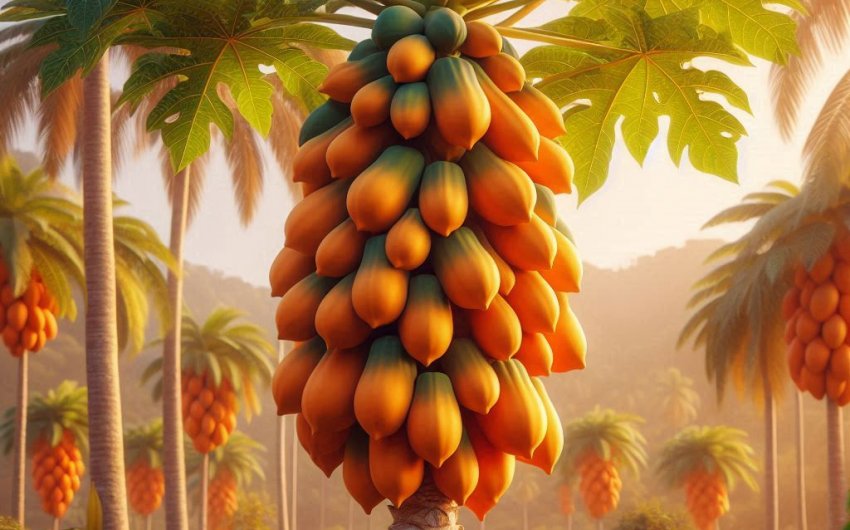
The different varieties of Papaya plants available primarily vary by fruit size, flesh color, sweetness, and whether they are dioecious, hermaphroditic, or gynodioecious in their flowering habit. Popular categories include large-fruited tropical types, smaller solo papayas, and specialized disease-resistant cultivars developed for specific growing regions. Understanding these distinctions helps growers select the best Papaya plant for their climate and taste preferences.
Why Do Papaya Varieties Matter?
Understanding the different varieties of Papaya plants available is crucial for anyone considering growing this tropical fruit, whether commercially or in a home garden. The choice of Papaya variety significantly impacts everything from fruit quality and yield to the ease of cultivation and resistance to common challenges.
1. Fruit Characteristics:
The most obvious reason Papaya varieties matter is the vast differences in the fruit itself.
- Size: Papayas can range from small, single-serving fruits (often called "solo" papayas) weighing less than a pound to massive fruits weighing 10-20 pounds or more. This impacts ease of storage, consumption, and marketability.
- Flesh Color: Flesh color varies from bright yellow to vibrant orange-red, often influencing sweetness and nutritional content (e.g., deeper orange indicates higher beta-carotene).
- Sweetness and Flavor: Some varieties are intensely sweet with a smooth, buttery texture, while others might be milder, less sweet, or have a slight muskiness. Flavor profiles can vary subtly.
- Skin Thickness: Impacts how well the fruit ships and stores.
- Seed Cavity Size: A smaller seed cavity means more edible flesh.
- Texture: Some are firmer, others more melting.
2. Flowering Habit and Pollination:
This is a critical, often overlooked, aspect of Papaya varieties that directly affects whether your plant will produce fruit, and if so, how reliably.
- Dioecious Varieties: These plants have separate male and female plants. You need both a male and a female plant in close proximity for pollination and fruit production. It's impossible to tell male from female until they flower, making it a gamble when growing from seed.
- Hermaphroditic Varieties: These plants have "perfect" flowers containing both male and female organs on the same plant. They are self-fertile, meaning a single plant can produce fruit. This is often the preferred type for home gardeners due to guaranteed fruit set from one plant.
- Gynodioecious Varieties: These produce both female and hermaphroditic flowers on the same plant. They are also reliably self-fertile. Knowing the flowering habit of your chosen Papaya variety prevents frustration and ensures you plant the right combination for fruit.
3. Disease Resistance:
Papayas are susceptible to several devastating diseases, particularly the Papaya Ringspot Virus (PRSV), which can wipe out entire crops.
- PRSV-Resistant Varieties: Research has developed specific Papaya varieties that are resistant to PRSV. If PRSV is prevalent in your region, choosing a resistant variety is essential for any chance of a successful harvest.
- Other Resistances: Some varieties may offer tolerance to other common fungal issues or pests.
4. Cold Tolerance:
While all Papayas are tropical, some varieties exhibit slightly better tolerance to cooler temperatures than others, though none are truly frost-hardy. This expanded tolerance can make a difference in marginal climates where light frosts occur.
5. Tree Size and Growth Habit:
- Height: Some varieties grow very tall, making harvesting difficult without specialized equipment. Dwarf or semi-dwarf varieties are often preferred for home gardens.
- Trunk Strength: Some varieties develop stronger, thicker trunks, making them more resilient to wind.
6. Commercial vs. Home Garden Suitability:
Some Papaya varieties are bred specifically for commercial production (uniform size, good shipping, disease resistance), while others are better suited for home gardens (focus on flavor, smaller size, ease of management).
By understanding the different varieties of Papaya plants available and their unique characteristics, growers can make informed decisions that align with their climate, space, and ultimate goals for enjoying this tropical delight. This knowledge is key to selecting the best Papaya plant for your needs.
What Are the Main Types of Papaya Based on Flowering Habit?
The flowering habit of a Papaya plant is one of its most fundamental characteristics and critically determines how you'll need to plant and manage them for successful fruit production. When exploring the different varieties of Papaya plants available, understanding these distinctions is paramount.
1. Dioecious Papaya Plants (Separate Male and Female Plants)
- Description: The word "dioecious" means "two houses." In this case, it means the male and female reproductive organs are on separate individual plants. A given seed will grow into either a male plant or a female plant.
- Male Plants: Produce only male flowers (often small, numerous, and borne on long, branched stalks). These flowers contain pollen but no ovaries (no fruit).
- Female Plants: Produce only female flowers (larger, usually solitary, and borne close to the trunk on very short stalks). These flowers contain an ovary (which develops into fruit if pollinated) but no pollen.
- Pollination Requirement: For a female dioecious Papaya plant to produce fruit, it must be pollinated by pollen from a nearby male Papaya plant. Wind and insects facilitate this pollination.
- Growing from Seed (Risk): If you plant seeds from a dioecious Papaya variety, you won't know the sex of the plant until it flowers (which can take 6-12 months). This presents a gamble. For reliable fruit production, you would typically plant multiple seeds (e.g., 3-5 plants) in the hope of getting at least one female and one male, then thin out excess males later. A ratio of approximately 1 male plant to 10-15 female plants is usually sufficient for pollination.
- Advantages (Commercial): Some commercial growers prefer dioecious varieties for certain market preferences or because male plants are smaller and don't take up as much space while providing essential pollen. However, the unpredictability from seed is a significant drawback for smaller growers.
- Disadvantages (Home Gardener): The uncertainty of sex is the biggest disadvantage. You could end up with all male plants and no fruit, or all female plants and no fruit (if no male is present).
2. Hermaphroditic Papaya Plants (Both Male and Female Parts on One Flower)
- Description: "Hermaphroditic" plants produce "perfect" flowers, meaning each flower contains both male (stamens with pollen) and female (pistil with ovary) reproductive organs.
- Pollination Requirement: These plants are self-fertile. A single hermaphroditic Papaya plant can produce fruit without the need for a separate male or female plant. They typically produce fruit that is oblong or pear-shaped.
- Growing from Seed (Reliability): This is the preferred type for most home gardeners and many commercial growers because they are highly reliable. If you plant seeds from a hermaphroditic Papaya, you can be fairly certain the resulting plant will produce fruit (though a small percentage may revert to purely male or female flowers under stress).
- Advantages (Home Gardener): Guaranteed fruit from a single plant, ideal for limited space. The fruit shape (often more elongated) is generally preferred in many markets.
- Disadvantages: None significant for a home gardener. Some older open-pollinated varieties might occasionally produce a purely male or female plant, but modern cultivars are quite stable.
3. Gynodioecious Papaya Plants (Female and Hermaphroditic Flowers on One Plant)
- Description: This term refers to populations where both female and hermaphroditic plants exist. However, in popular usage, it often refers to varieties where a single plant can produce both female and hermaphroditic flowers, ensuring self-fertility and fruit production from one plant. This is a common characteristic of many modern, cultivated Papaya varieties.
- Pollination Requirement: Self-fertile and highly reliable for fruit production. The fruit produced from female flowers is usually more rounded, while that from hermaphroditic flowers is oblong.
- Growing from Seed (Reliability): Similar to purely hermaphroditic plants in terms of reliability for fruit production from a single plant.
- Relationship: Many of the most popular and commercially viable Papaya varieties available today are either hermaphroditic or gynodioecious, as these traits simplify cultivation and ensure consistent yields.
When sourcing Papaya plants or seeds, always confirm the flowering habit. For the casual home gardener, choosing a hermaphroditic or gynodioecious Papaya variety is highly recommended to ensure you'll thrive in fruit production without needing multiple plants or guessing their sex.
What Are the Most Popular Commercial Papaya Varieties?
When exploring the different varieties of Papaya plants available, it's helpful to understand the commercial giants. These Papaya varieties are widely grown globally due to their reliable yields, fruit quality, and suitability for shipping. Many are also excellent choices for the home gardener, especially in tropical and subtropical regions.
1. 'Sunrise' Papaya (Also known as 'Solo Sunrise' or 'Strawberry Papaya')
- Origin: Hawaii.
- Flowering Habit: Hermaphroditic (self-fertile). This is a huge advantage for reliable fruit production.
- Fruit Characteristics:
- Size: Small to medium, typically 1-2 pounds, making them ideal single-serving fruits (hence "Solo").
- Shape: Pear-shaped.
- Flesh Color: Bright, salmon-orange-red.
- Flavor: Very sweet, juicy, and aromatic, often described as having a hint of strawberry.
- Skin: Thin skin.
- Growth Habit: Relatively compact tree size, making it suitable for smaller commercial plots and home gardens.
- Popularity: One of the most popular Papaya varieties in the world, especially for fresh consumption, due to its excellent flavor and convenient size. Papaya 'Sunrise' Seeds.
2. 'Sunset' Papaya
- Origin: Hawaii.
- Flowering Habit: Hermaphroditic (self-fertile).
- Fruit Characteristics:
- Size: Similar to 'Sunrise', small to medium.
- Shape: Pear-shaped.
- Flesh Color: Bright red-orange.
- Flavor: Very sweet with a slightly firmer flesh than 'Sunrise'. Good for slicing.
- Relationship to 'Sunrise': 'Sunset' is often grown alongside 'Sunrise' or as a slightly firmer alternative, offering similar excellent qualities.
3. 'Waimanalo' Papaya (Also known as 'Waimanalo Solo')
- Origin: Hawaii.
- Flowering Habit: Hermaphroditic (self-fertile).
- Fruit Characteristics:
- Size: Small to medium, similar to other Solo types.
- Shape: Rounder than 'Sunrise' or 'Sunset'.
- Flesh Color: Yellow-orange.
- Flavor: Sweet and flavorful, but often considered slightly less aromatic than 'Sunrise'.
- Growth Habit: Known for its sturdy, more compact growth, making it a good choice for windy areas.
4. 'Red Lady' Papaya (F1 Hybrid)
- Origin: Taiwan. A very popular and reliable F1 hybrid.
- Flowering Habit: Predominantly hermaphroditic, with a very high percentage of hermaphroditic plants from seed, ensuring excellent fruit set.
- Fruit Characteristics:
- Size: Medium to large, often 3-5 pounds.
- Shape: Oblong/elongated.
- Flesh Color: Deep red to orange-red.
- Flavor: Very sweet, good aroma, and firm flesh, making it excellent for slicing and shipping.
- Growth Habit: Strong, robust plants that produce fruit fairly low on the trunk, making it easier to harvest. Known for high yields.
- Popularity: Extremely popular in Southeast Asia and other tropical regions for its vigor, reliability, and shipping qualities. A top choice for commercial growers globally. Papaya 'Red Lady' Seeds.
5. 'Tainung No. 1' Papaya (F1 Hybrid)
- Origin: Taiwan. Another widely grown F1 hybrid.
- Flowering Habit: Predominantly hermaphroditic.
- Fruit Characteristics:
- Size: Large, often 5-8 pounds, sometimes even larger.
- Shape: Oblong to pear-shaped.
- Flesh Color: Orange-red.
- Flavor: Sweet and aromatic, with firm flesh.
- Growth Habit: Vigorous plants with high yields.
- Popularity: A major commercial variety, particularly valued for its large fruit size and shipping qualities.
6. 'Known You' Varieties (e.g., 'Known You 1', 'Known You 2')
- Origin: Taiwan. Known You Seed Company is a leading breeder of Papaya hybrids.
- Flowering Habit: Mostly hermaphroditic.
- Fruit Characteristics: Varies by specific hybrid, but generally prized for high yield, disease resistance (especially to PRSV in some cultivars), good fruit quality, and suitability for various climates. These are often the backbone of commercial plantations.
These commercial Papaya varieties are widely distributed and represent some of the best Papaya plants for reliable and abundant fruit production. While bred for large-scale operations, their excellent characteristics make them fantastic choices for the home gardener seeking consistent, high-quality fruit.
What Are Common Papaya Varieties for Home Gardeners?
While many commercial Papaya varieties also perform well in home gardens, some different varieties of Papaya plants available are particularly favored by home gardeners for their unique attributes, such as manageable size, specific flavor profiles, or regional adaptability.
1. 'Solo' Papayas (General Category)
- Description: This is a broad category encompassing various small, self-pollinating Papaya varieties originating from Hawaii, bred for single-serving convenience. 'Sunrise' and 'Sunset' (discussed under commercial varieties) fall into this category.
- Why Home Gardeners Love Them:
- Convenient Size: Easy to eat in one sitting, reducing waste.
- Self-Fertile: Most are hermaphroditic, meaning you only need one plant for fruit.
- Excellent Flavor: Generally very sweet and aromatic.
- Manageable Tree Size: Tends to be more compact than large-fruited varieties.
- Other Solo Types: Beyond 'Sunrise'/'Sunset', there are other 'Solo' varieties like 'Kapoho Solo' or 'Sunrise Solo'.
2. 'Waimanalo' Papaya
- Why Home Gardeners Love It: While also commercial, its more compact growth habit and sturdy nature make it good for slightly windier home garden locations. It’s a reliable producer of sweet, roundish, yellow-fleshed fruit.
- Flowering Habit: Hermaphroditic.
3. 'Maradol' Papaya
- Why Home Gardeners Love It: This is a large, classic Papaya variety if you want big fruit. It's often found in supermarkets.
- Flowering Habit: Can be dioecious (requiring male and female plants) or hermaphroditic depending on the specific strain/seed source, so confirm when purchasing seeds or plants.
- Fruit Characteristics:
- Size: Large, oblong fruit, often 3-5 pounds.
- Flesh Color: Deep red to orange-red.
- Flavor: Sweet with good texture, though some find it less intensely aromatic than Hawaiian Solo types.
- Growth Habit: Can grow into a large tree.
4. 'Mexican Red' or 'Mexican Yellow' Papaya
- Description: These are often open-pollinated (non-hybrid) varieties of Papaya common in Mexico and Central America. The specific strains vary widely.
- Flowering Habit: Can be dioecious or hermaphroditic. Often, if growing from seed, you'll need multiple plants to ensure pollination for dioecious types.
- Fruit Characteristics:
- Size: Generally very large, often 5-10 pounds or more.
- Flesh Color: 'Mexican Red' has reddish-orange flesh; 'Mexican Yellow' has yellow flesh.
- Flavor: Can be very sweet and juicy when ripe, but flavor can vary more than with bred hybrids.
- Why Home Gardeners Might Choose Them: For those who desire large quantities of fruit, or who appreciate the variability and resilience of open-pollinated landrace varieties.
5. 'Oak Leaf' Papaya (Carica quercifolia)
- Description: This is a lesser-known species of Papaya, not Carica papaya. It's a different plant entirely, but often of interest to home gardeners.
- Why Home Gardeners Might Choose It:
- More Cold Tolerant: Significantly more cold-tolerant than Carica papaya, surviving light frosts and even recovering from harder freezes in milder climates (down to Zone 8b or 9a with protection).
- Fruit: Smaller, round, yellow-orange fruits that are sweet but often less intensely flavored than true Papaya.
- Appearance: Leaves resemble oak leaves.
- Flowering Habit: Usually dioecious (separate male and female plants are needed).
6. Dwarf Varieties (General Category)
- Description: While not a single variety, many seed companies offer "dwarf" or "compact" Papaya seeds. These are often selectively bred hermaphroditic forms of standard Papaya.
- Why Home Gardeners Love Them: Ideal for small spaces, container gardening, or for those who want easier harvesting without ladders. They still produce full-sized fruit.
- Examples: Some 'Red Lady' strains or similar hybrids might be marketed as dwarf due to their lower fruiting height.
When selecting Papaya varieties for home gardens, prioritize hermaphroditic types for reliable fruit, consider dwarf options for small spaces, and always check the expected mature size and cold hardiness for your specific climate to ensure your Papaya plant can truly thrive.
What Are Disease-Resistant Papaya Varieties?
For many commercial growers and home gardeners in regions where Papaya cultivation is popular, disease resistance is not just a desirable trait but a necessity. The Papaya Ringspot Virus (PRSV) is particularly devastating, capable of wiping out entire plantations. Fortunately, the different varieties of Papaya plants available now include genetically engineered and selectively bred options that offer significant resistance.
1. Genetically Engineered (GE) PRSV-Resistant Varieties:
These varieties represent a major breakthrough in combating PRSV. They have been modified to contain a gene from the PRSV itself, making them resistant to the virus.
- 'Rainbow' Papaya:
- Origin: Developed at the University of Hawaii. The first GE PRSV-resistant Papaya commercially released in 1998.
- Flowering Habit: Hermaphroditic.
- Fruit Characteristics: Medium-sized fruit (around 1.5-2 pounds), with yellow-orange flesh. Sweet and juicy, good flavor. Similar to 'Kapoho Solo' but with resistance.
- Key Feature: Provides resistance to the Hawaiian strain of PRSV. Credited with saving the Hawaiian Papaya industry from collapse.
- Availability: Primarily grown in Hawaii. Due to GE status, availability and regulations vary by region globally. Papaya 'Rainbow' Seeds (check local regulations).
- 'SunUp' Papaya:
- Origin: Also developed by the University of Hawaii. A red-fleshed GE PRSV-resistant Papaya.
- Flowering Habit: Hermaphroditic.
- Key Feature: Used to breed 'Rainbow' (which is a cross between 'SunUp' and the non-GE 'Kapoho Solo'). Offers resistance to PRSV and bright red flesh.
- 'Kamiya' Papaya:
- Origin: Japan, developed with resistance to the specific PRSV strain found there.
- Key Feature: An example of how GE Papaya varieties are being developed for regional virus strains.
2. Selectively Bred / Non-GE PRSV-Tolerant Varieties:
While not genetically engineered, some conventional breeding efforts have focused on identifying and crossing Papaya varieties that exhibit a degree of tolerance or a lower susceptibility to PRSV or other diseases. These varieties might not be fully immune but can better withstand disease pressure.
- 'Red Lady' Papaya (F1 Hybrid):
- Why it's great: While primarily known for its high yield, consistent hermaphroditic nature, and good fruit quality, 'Red Lady' also shows good tolerance to Papaya Ringspot Virus. It's not immune, but it generally performs better than highly susceptible non-resistant varieties in PRSV-affected areas.
- Origin: Taiwan.
- Popularity: Its combined traits of yield, reliability, and disease tolerance make it a leading choice for commercial growers in many tropical regions. Papaya 'Red Lady' Seeds.
- 'Tainung No. 1' Papaya (F1 Hybrid):
- Why it's great: Similar to 'Red Lady', 'Tainung No. 1' is a very vigorous and high-yielding hybrid that often shows improved general robustness and some tolerance to common issues, including PRSV.
- Origin: Taiwan.
- Specific Landraces/Heirloom Types (with regional tolerance):
- In some regions, certain traditional or heirloom Papaya varieties that have been grown for generations might have developed localized tolerance to endemic diseases through natural selection. However, this is highly specific to the microclimate and can be less predictable than modern bred varieties.
Important Considerations for Disease Resistance:
- Regional PRSV Strains: PRSV has different strains. A variety resistant to one strain might be susceptible to another. Always research the specific strain prevalent in your area if PRSV is a major concern.
- "Resistance" vs. "Immunity": Most resistant varieties are not 100% immune. They are designed to withstand infection or show milder symptoms, allowing for a harvest, rather than outright preventing the virus.
- Integrated Disease Management: Even with resistant varieties, good cultural practices remain important:
- Vector Control: Manage aphids, which transmit PRSV.
- Sanitation: Remove infected plants immediately.
- Crop Rotation: Avoid planting Papaya in the same spot year after year.
When selecting Papaya varieties for your garden, especially if you're in a region known for PRSV, prioritizing disease-resistant or highly tolerant cultivars is key to a successful and thriving Papaya plant.
What Are Other Interesting Papaya Varieties and Related Plants?
Beyond the mainstream commercial and common home garden Papaya varieties, there are several other fascinating options and related plants that pique the interest of collectors or those in specific climates. Exploring these expands the understanding of the different varieties of Papaya plants available.
1. 'Solo Exotica' Papaya
- Description: Often referred to as a "Hawaiian" type, similar to 'Sunrise' and 'Sunset' in size and self-pollinating nature, but with its own distinct flavor and aroma profile. It's often highly aromatic and very sweet.
- Flowering Habit: Hermaphroditic.
- Why it's interesting: For those seeking a unique flavor experience within the solo papaya category. It often has a slightly more intense, tropical perfume.
2. 'Caribbean Red' Papaya
- Description: A large-fruited commercial variety, sometimes marketed alongside 'Maradol'. It's known for its robust growth and large, red-fleshed fruit.
- Flowering Habit: Often hermaphroditic.
- Why it's interesting: If you're looking for a very large, productive Papaya plant that produces substantial fruit. Good for those who want a classic, sweet, and firm red-fleshed papaya.
3. 'Mountain Papaya' (Vasconcellea pubescens, formerly Carica pubescens)
- Description: Not a true Carica papaya (the common Papaya), but a closely related species from higher altitudes in the Andes.
- Fruit Characteristics: Smaller, elongated, orange-yellow fruits, typically 3-6 inches long. The flavor is often described as tart and aromatic, more akin to passion fruit or kiwi than common papaya. It's often eaten cooked, in jams, or as a flavoring.
- Why it's interesting: Significantly more cold-tolerant than Carica papaya, surviving light frosts and capable of growing in subtropical climates where true papayas struggle (down to USDA Zone 9-10, sometimes 8b with protection). It's a perennial that can tolerate short periods of cold.
- Flowering Habit: Dioecious (requires male and female plants).
- Growth Habit: Can grow into a large shrub or small tree.
4. 'Babaco' Papaya (Vasconcellea × heilbornii)
- Description: A natural hybrid of two Vasconcellea species, also from the Andes.
- Fruit Characteristics: Distinctive five-sided, elongated fruit that looks like a star when sliced. It's seedless! The flavor is tart, effervescent, and citrusy, making it excellent for juices, smoothies, or salads. Not typically eaten raw like common papaya.
- Why it's interesting: Seedless fruit is a huge draw. Also more cold-tolerant than common Papaya (hardy to about Zone 8b-9).
- Flowering Habit: Gynodioecious (produces female and hermaphroditic flowers, so a single plant produces fruit).
- Growth Habit: A compact, small tree.
- Care Tip: Likes high humidity.
5. 'Long John' Papaya
- Description: An heirloom variety known for its incredibly elongated fruits, sometimes reaching up to 18-24 inches in length!
- Flowering Habit: Often dioecious, so requires both male and female plants.
- Why it's interesting: A novelty variety for the home gardener who wants to grow something truly unique and conversation-starting. Good flavor when fully ripe.
6. Small-Fruited Tropical Papaya Types (Regional Landraces)
- Description: In many tropical regions, there are local landrace varieties of Carica papaya that have adapted to specific microclimates and pest pressures. These often produce smaller, very sweet fruit ideal for local consumption.
- Why it's interesting: They offer genetic diversity and often robust resilience within their native environment. However, specific named varieties might not be widely available commercially.
When venturing beyond the standard commercial types, always research the specific characteristics, cold hardiness, and most importantly, the flowering habit of these unique Papaya varieties and related plants. This ensures you select the best Papaya plant that can truly thrive in your specific growing conditions and provide the unique fruit experience you desire.