
Beyond the Blooms: Exploring the Diversity of Outdoor Gardens Around the World
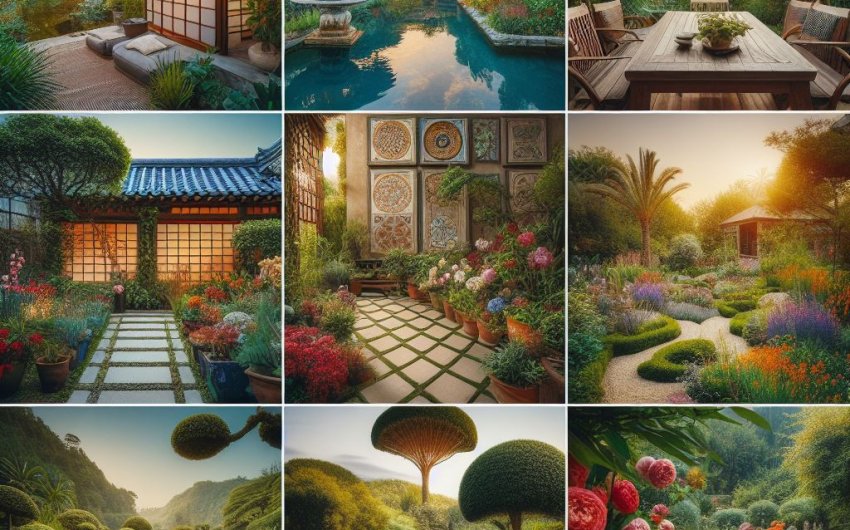
Do You Imagine a Garden as Just a Patch of Flowers?
When you think of a garden, what comes to mind? For many, it's a colorful array of flowers – maybe a rose bush, a bed of tulips, or a cheerful row of sunflowers. And while flowers are undoubtedly beautiful and a key part of many gardens, the world of outdoor gardens is so much richer and more diverse than just blooms. Across the globe, people have shaped nature in incredible ways, creating spaces that reflect their cultures, climates, and philosophies. Beyond just colorful blossoms, gardens can be about peace, history, food, art, or even vast, untouched landscapes. Let's take a journey to explore the stunning diversity of outdoor gardens around the world.
What Makes a Garden Unique?
A garden's uniqueness comes from a blend of natural factors and human choices. It's like a fingerprint, reflecting where it is and who created it.
Climate and Geography
- Plant Choices: The local climate (temperature, rainfall, sun exposure) dictates which plants can naturally thrive. A desert garden will look very different from a tropical rain forest garden.
- Water Availability: Access to water shapes everything from plant selection to design. Drought-tolerant gardens use plants that need less water, while lush tropical gardens rely on abundant rain.
- Topography: The natural shape of the land – flat, hilly, mountainous – influences how a garden is laid out, with terraces, steps, or water features responding to the terrain.
Culture and History
- Philosophies: Different cultures have unique ideas about humanity's relationship with nature. Some view gardens as a way to control and perfect nature, others as a space to mimic and celebrate its wildness.
- Symbolism: Plants, stones, and water features often carry deep symbolic meanings unique to a culture, which are thoughtfully incorporated into garden design.
- Traditions: Historical gardening practices, tools, and aesthetics are passed down through generations, shaping the appearance of gardens over centuries.
- Purpose: The original purpose of a garden – for meditation, food production, status, or entertainment – heavily influences its design.
Materials and Resources
- Local Materials: Gardens often use materials readily available in the local area, such as specific types of stone, wood, or gravel.
- Craftsmanship: The availability of skilled artisans can lead to intricate details in hardscaping, statues, and water features.
Personal Vision
- Designer's Intent: Ultimately, a garden is often an expression of an individual's or a community's vision. Whether it's a grand estate or a small backyard, it reflects choices about color, form, texture, and feeling.
By considering these factors, we can begin to appreciate that a garden is far more than just a collection of flowers; it's a living work of art shaped by its environment and its human creators. Understanding the diversity of garden types reveals a world of design.
The Serenity of Japanese Gardens: A Focus on Nature's Essence
Japanese gardens are perhaps one of the most distinctive and widely admired garden styles in the world. They are not primarily about colorful flowers but rather about creating a miniature, idealized landscape that evokes a sense of peace, harmony, and contemplation.
Key Elements and Philosophy
- Miniature Landscapes: Japanese gardens seek to capture the essence of a natural landscape (mountains, rivers, islands) in a small space.
- Symbolism: Every element has meaning.
- Rocks: Symbolize mountains, islands, or even deities. They are carefully chosen and placed for their shape, texture, and age.
- Water: Represents purification, tranquility, and the flow of life. This can be real water in ponds or streams, or symbolized by raked sand or gravel (dry gardens).
- Plants: Chosen for their form, texture, and subtle seasonal changes, rather than vibrant blooms. Evergreens (like pines, mosses, and azaleas) are crucial for year-round structure.
- Lanterns, Bridges, Tea Houses: Often included as functional or symbolic elements.
- Asymmetry: Designs are often asymmetrical, mimicking natural forms and avoiding rigid perfection.
- Borrowed Scenery (Shakkei): Integrating distant landscape elements (like a mountain or a neighbor's tree) into the garden's composition to make the space feel larger and more connected to its surroundings. An example of Japanese garden lanterns can add authenticity.
Types of Japanese Gardens
- Karesansui (Dry Landscape / Zen Garden): Perhaps the most famous. Features carefully raked sand or gravel to represent water, with rocks as mountains or islands. These are designed for quiet contemplation and meditation, often viewed from a single vantage point. No actual water is used.
- Tsukiyama (Hill and Pond Garden): Features miniature hills (representing mountains) and real ponds or streams. Often designed for strolling and enjoying different views as you walk through.
- Chaniwa (Tea Garden): Designed as a pathway leading to a tea house, emphasizing simplicity, naturalness, and a sense of calm anticipation before the tea ceremony.
- Kaiyushiki (Stroll Garden): Large, elaborate gardens designed to be explored by walking along paths that offer a sequence of changing views and surprises.
Japanese gardens remind us that the beauty of a garden can be found in simplicity, symbolism, and the careful arrangement of natural elements, transcending the need for an explosion of flowers. Their focus on natural harmony makes them unique in the world of garden aesthetics.
The Grandeur of European Formal Gardens: Order and Symmetry
In stark contrast to the subtle naturalism of Japanese gardens, European formal gardens, especially those from the Renaissance and Baroque periods, celebrate human control over nature. They are characterized by strict order, symmetry, and elaborate design.
Key Elements and Philosophy
- Symmetry and Geometry: Everything is laid out in perfect geometric patterns – straight lines, circles, squares, and intricate labyrinths. One side of the garden is often a mirror image of the other. This reflects an Enlightenment-era belief in human reason and order dominating nature.
- Axial Design: Often built around a central axis or viewpoint, leading the eye to a focal point (like a fountain, statue, or a grand building).
- Manicured Plantings: Plants are highly sculpted. Hedges are precisely trimmed into geometric shapes (topiary). Trees are often limbed up or shaped. There's a strong emphasis on architectural planting.
- Water Features: Elaborate fountains, canals, and reflecting pools are central features, often designed with jets and cascades to showcase control over water.
- Statues and Ornaments: Classical statues (often Greek or Roman figures), urns, and decorative benches are strategically placed to enhance the formal design and add artistry. For grand designs, consider classical garden statues.
Famous Examples
- Gardens of Versailles (France): The epitome of the French formal style. Designed by André Le Nôtre, they feature vast parterres (ornamental garden beds usually with low hedges in intricate patterns), grand fountains, canals, and perfectly manicured trees stretching to the horizon.
- Italian Renaissance Gardens (e.g., Villa d'Este, Tivoli): Often built on hillsides, they feature elaborate terracing, dramatic water features (fountains, grottoes), statues, and geometrically arranged beds, designed to be enjoyed from a high vantage point overlooking the landscape.
- Baroque Gardens (e.g., Schönbrunn Palace, Austria): Similar to French formal gardens but often with even greater theatricality and emotional intensity, featuring dramatic vistas and impressive water displays.
European formal gardens are about human artistry, power, and the triumph of order over wilderness. They offer a breathtaking display of precision, scale, and the architectural possibilities of plants and hardscaping.
The Wild Beauty of English Landscape Gardens: Nature Idealized
Following the strictness of formal gardens, the English Landscape Garden emerged as a revolutionary style in the 18th century. It sought to mimic and idealize nature itself, creating picturesque scenes rather than rigid geometric patterns.
Key Elements and Philosophy
- Naturalism: The aim was to create a landscape that looked natural, as if it had always been there, even though every detail was carefully planned. This was a rebellion against the formal, symmetrical styles.
- Undulating Terrain: Gentle rolling hills and valleys were created or emphasized.
- Serpentine Paths and Water: Winding paths and natural-looking, curving lakes and rivers replaced straight lines and formal canals.
- Clumps of Trees: Trees were planted in irregular, natural-looking clumps or as solitary specimens, rather than in rows.
- Ha-Ha (Hidden Fence): A clever landscape feature, a ditch with a wall on one side, that allowed uninterrupted views of the landscape beyond while still containing livestock.
- Follies: Ornamental buildings or structures (like mock Greek temples, Gothic ruins, or Chinese pagodas) were placed in the landscape to add interest, evoke emotions, or frame a view.
- Absence of Flowers: Initially, flowers were largely absent, as the focus was on the broader landscape, trees, water, and structures. Later iterations might include more naturalistic plantings. You can find many garden follies for unique garden additions.
Influence and Legacy
- Painters and Poets: This style was heavily influenced by landscape paintings and poetry of the time, striving to create living pictures.
- Capability Brown and Humphry Repton: Famous landscape architects who shaped this style, earning nicknames like "Capability" Brown for his ability to see the "capabilities" of a landscape.
- Global Influence: The English Landscape Garden had a huge influence worldwide, inspiring park design and eventually leading to more naturalistic approaches in modern gardening.
The English Landscape Garden is a testament to the idea that the most beautiful gardens can sometimes be those that look like they weren't designed at all, celebrating the romantic and idealized vision of nature.
The Colorful Tapestry of Cottage Gardens: Abundance and Charm
The cottage garden is a very different beast from formal or philosophical gardens. It's characterized by its informal, abundant, and often seemingly haphazard planting, bursting with flowers, herbs, and edible plants.
Key Elements and Philosophy
- Informality and Abundance: There's a joyful riot of plants packed closely together. The idea is to have every space filled with life, with flowers spilling over paths and walls.
- Mix of Plants: A blend of perennials, annuals, shrubs, herbs, and often vegetables grown together.
- Self-Sowing: Many cottage garden plants are allowed to self-sow (drop seeds that grow new plants spontaneously), adding to the natural, slightly wild feel.
- Classic Cottage Plants: Think roses (climbing and shrub), lavender, foxgloves, delphiniums, hollyhocks, daisies, poppies, and traditional herbs like rosemary and thyme.
- Quaint Structures: Often includes quaint elements like picket fences, arbors covered in climbing roses, old-fashioned benches, birdbaths, and perhaps a rustic shed.
- Fragrance: Scent is a key component, with many fragrant flowers and herbs. You can choose climbing roses for arbors for a traditional look.
History and Evolution
- Humble Beginnings: Cottage gardens originated in medieval England as practical spaces for peasants, combining food, medicinal plants, and a few flowers for beauty.
- Romantic Revival: They saw a romantic revival in the 19th and 20th centuries as a backlash against formal Victorian gardens, embracing a more natural, charming aesthetic.
- Personal Expression: Modern cottage gardens are highly personal, reflecting the gardener's favorite plants and a desire for an informal, charming, and abundant space.
Cottage gardens are about joyous abundance, a sense of lived-in comfort, and a celebration of the simple beauty of everyday plants. They are approachable, welcoming, and endlessly delightful.
The Arid Allure of Desert Gardens: Resilience and Texture
Desert gardens are perhaps the most unique in their reliance on very specific plant adaptations and their celebration of stark beauty. They are a powerful reminder that gardens can thrive with minimal water.
Key Elements and Philosophy
- Drought-Tolerant Plants: The absolute core of a desert garden. Features cacti, succulents (like agaves and yuccas), native grasses, and other drought-adapted shrubs and trees. These plants have evolved ingenious ways to store water and survive extreme heat.
- Rocks and Gravel: Prominent features. Large boulders, river rock, and various colors of gravel are used as mulch, pathways, and decorative elements. They define space, retain moisture, and highlight the plants.
- Minimal Water: Designed to require very little supplemental irrigation once established. Water conservation is paramount.
- Emphasis on Texture and Form: With fewer flowers, the beauty comes from the striking shapes, textures, and subtle colors of the plants themselves – the spiky forms of cacti, the architectural rosettes of agaves, the smooth lines of polished stones.
- Dry Stream Beds: Often included as a visual element, simulating water flow during rare rain events.
- Native Wildlife: Often designed to attract and support local desert wildlife, like lizards, birds, and insects. For design, consider succulents for arid gardens.
Where They Thrive
- Arid Climates: Found in regions with very low rainfall and high temperatures, such as the American Southwest (Arizona, California), parts of Mexico, Australia, and the Middle East.
Types of Desert Gardens
- Xeriscaping: A broader term for drought-tolerant landscaping that aims to reduce or eliminate the need for supplemental irrigation. Desert gardens are a specific type of xeriscape.
- Southwestern Style: Incorporates native plants with elements like adobe walls, terracotta pots, and perhaps a chiminea, reflecting the regional architecture and culture.
Desert gardens challenge traditional notions of lushness, demonstrating that stunning beauty and ecological responsibility can go hand-in-hand. They celebrate resilience, unique adaptations, and the powerful allure of the arid landscape.
The Abundant Green of Tropical Gardens: Lushness and Life
At the opposite end of the spectrum from desert gardens are tropical gardens, which revel in lushness, vibrant green foliage, and an explosion of exotic flowers. They evoke the feeling of a vibrant, humid rainforest.
Key Elements and Philosophy
- Lush Foliage: The overwhelming characteristic is dense, luxuriant foliage. Leaves are often large, glossy, and varied in shape and texture. This creates a feeling of abundance and being enveloped by nature.
- Vibrant, Exotic Flowers: Features bold, colorful flowers like hibiscus, bougainvillea, orchids, bird of paradise, ginger, and bromeliads.
- High Humidity: These gardens thrive in hot, humid climates with abundant rainfall. Water features (waterfalls, ponds, misting systems) are common to maintain high humidity.
- Layered Planting: Mimics a rainforest, with tall canopy trees, understory shrubs, epiphytes (plants that grow on other plants, like some orchids and bromeliads), and groundcovers creating a multi-layered effect.
- Water Features: Cascading waterfalls, ponds filled with koi or water lilies, and bubbling fountains are central, adding sound and moisture to the environment.
- Hardscaping: Often uses natural materials like wood, bamboo, and rough stone. Pathways might be winding and feel like a jungle trail.
- Fragrance: Many tropical flowers are intensely fragrant, adding another sensory layer. For lush additions, consider tropical plants for gardens.
Where They Thrive
- Tropical and Subtropical Climates: Regions with high temperatures year-round and significant rainfall, such as Southeast Asia, parts of South and Central America, Florida, and Hawaii.
Creating a Tropical Feel in Cooler Climates
- Container Gardening: In cooler climates, many tropical plants can be grown in large pots and brought indoors for winter.
- Strategic Planting: Create small, sheltered microclimates.
- Focus on Foliage: Emphasize the bold foliage of plants like cannas, elephant ears, and hardy bananas for a similar effect.
Tropical gardens are a celebration of exuberant life, bold colors, and the overwhelming beauty of lush green abundance. They are immersive, vibrant, and incredibly diverse, showcasing nature's palette in its most prolific form.