
DIY Sprinkler System: Watering Made Simple and Cost-Effective!
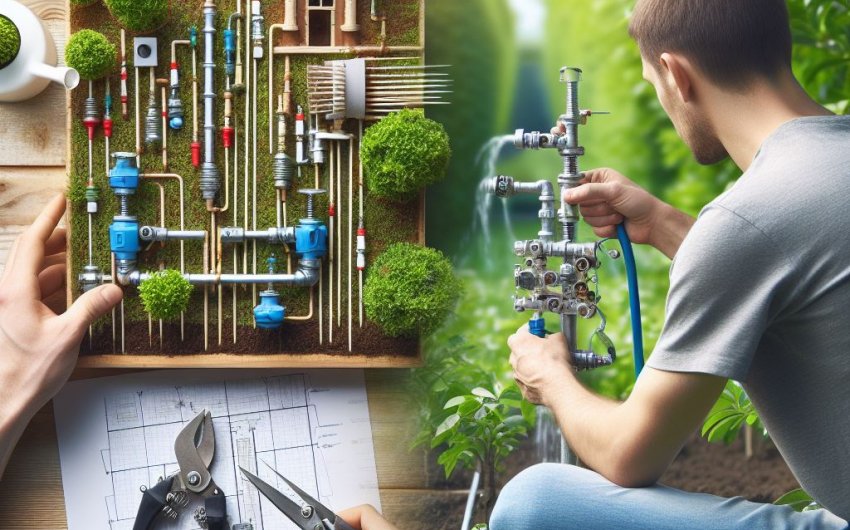
A lush, green lawn and vibrant garden are a source of pride for many homeowners. But keeping them well-watered can be a chore. Dragging hoses around, setting up sprinklers, and remembering to move them can take up a lot of your precious time. Plus, uneven watering can lead to dry spots or water waste. This is where a DIY sprinkler system comes in. Building your own system might sound like a big job, but it's totally achievable for most homeowners and can save you a lot of money compared to hiring professionals. It gives you control over how and when your plants get watered, leading to healthier growth and often, lower water bills in the long run. Let’s dive into how you can make watering your yard simple and cost-effective, turning a never-ending chore into an automated, efficient process.
Why Should I Build My Own Sprinkler System?
Building your own sprinkler system offers a lot of benefits beyond just having a green lawn. It’s about saving time, money, and water, all while gaining a new skill.
Cost Savings
One of the biggest reasons people choose to go the DIY route is to save money. Professional sprinkler system installation can be quite expensive, often ranging from a few thousand dollars to much more, depending on the size and complexity of your yard. When you do it yourself, you only pay for the materials and tools you need. This can cut the overall cost by more than half, making a sophisticated watering system much more affordable. You can also pick and choose components that fit your budget, perhaps starting small and expanding later.
Water Efficiency
A well-designed sprinkler system helps you use water smarter. Instead of haphazardly spraying water with a hose or a single oscillating sprinkler, a DIY system allows you to place sprinkler heads strategically to cover every part of your lawn and garden evenly. You can choose different types of heads for different areas – rotary sprinklers for wide lawns, spray heads for smaller areas, or drip irrigation for garden beds. This precise watering means less water is wasted on sidewalks or areas that don't need it. Plus, with the addition of a timer, you can set your system to water during the coolest parts of the day (early morning), reducing water loss due to evaporation.
Time Savings
Think about how much time you spend watering your yard each week. Lugging out hoses, untangling them, moving sprinklers every (20-30) minutes, and then putting everything away. It adds up! With a DIY sprinkler system, especially one with a timer smart sprinkler controller, your watering can be completely automated. Set it and forget it. You get to reclaim that time for other activities, whether it's enjoying your garden, spending time with family, or simply relaxing. This hands-off approach ensures your lawn gets the water it needs, even when you're away on vacation.
Healthier Lawn and Plants
Consistent and even watering is crucial for a healthy lawn and thriving plants. Hand watering often leads to over-watered spots and under-watered spots, causing stress to your grass and plants. A sprinkler system delivers water uniformly across the designated areas. This consistency encourages deeper root growth, making your lawn more resilient to drought and disease. Healthier grass also means it's better at outcompeting weeds, reducing your need for herbicides.
Increased Property Value
A well-maintained lawn and garden enhance your home's curb appeal, and an underground sprinkler system is a valuable upgrade. It's considered a desirable feature by potential homebuyers because it adds convenience and shows that the property has been well cared for. While it's not the primary reason to install one, it's a nice bonus to the investment of your time and materials.
Customization and Control
When you design your own system, you have complete control over its layout and components. You can tailor it exactly to the unique needs of your yard, placing heads where they're most effective and choosing components that fit your specific water pressure and flow. You can add zones for different areas, like a separate zone for the lawn and one for a flower bed, allowing you to provide varied watering amounts based on plant needs. This level of customization is hard to achieve with a generic professional installation without incurring extra costs.
What Do I Need to Plan Before Starting My DIY Sprinkler System?
Before you dig a single trench, good planning is critical. This is where you'll lay the groundwork for a successful and efficient system. Skipping this step can lead to wasted money, time, and a system that doesn't work as well as it should.
Measure Your Yard
Get a tape measure measuring tape and sketch your yard on a piece of graph paper. Draw in your house, driveway, walkways, garden beds, trees, and any other permanent features. This drawing doesn't need to be perfectly to scale yet, but aim for a rough representation. Note down the general dimensions of each area you want to water. This will be your base map.
Locate Your Water Source
Your sprinkler system will connect to your home's main water supply. Most DIY systems connect to an existing outdoor spigot (hose bib) or a dedicated line from your main water meter. You'll need to know where this connection point is on your map. Also, note the size of your existing pipe (usually (3/4) inch or (1) inch).
Test Your Water Pressure and Flow Rate
This is perhaps the most crucial step in planning. Your water pressure (measured in Pounds per Square Inch or PSI) and flow rate (measured in Gallons per Minute or GPM) determine how many sprinkler heads you can run at once and which types of heads will work best.
Water Pressure Test
To test pressure, you'll need a water pressure gauge water pressure gauge for hose. Attach it to an outdoor spigot that's closest to where your system will connect. Turn the spigot on all the way. The gauge will show your static water pressure. Good pressure for a sprinkler system is usually between (40-60) PSI. If it's too high (over (70-80) PSI), you might need a pressure reducer. If it's too low, you might be limited in how many heads you can run per zone.
Flow Rate Test
To test flow rate, you'll need a 5-gallon bucket and a stopwatch. Turn on the same spigot used for the pressure test to full blast. Time how long it takes to fill the 5-gallon bucket. The formula is: \( \left( \frac{5\ \text{gallons}}{\text{time in seconds}} \times 60\ \text{seconds/minute} \right) = \text{GPM} \). For example, if it takes 20 seconds to fill a 5-gallon bucket: \( \left( \frac{5}{20} \times 60 \right) = 15\ \text{GPM} \). This \(15\ \text{GPM}\) is the maximum amount of water your system can deliver at any one time. This number is critical for designing your zones.
Divide Your Yard into Zones
Based on your water pressure and flow rate, you'll need to divide your yard into watering zones. Each zone will be a separate circuit of sprinkler heads that operates independently. The total GPM required by all the sprinkler heads in a single zone cannot exceed your measured flow rate.
When dividing zones, consider:
- Plant type: Lawns, shrubs, and flower beds have different watering needs. Group similar plants together.
- Sun exposure: Areas in full sun will need more water than shady areas.
- Sprinkler type: Rotary heads (which spray in a circle) usually require more GPM than spray heads (which create a fixed fan shape). Drip irrigation uses very little GPM but runs for longer periods.
- Obstacles: Create zones that work around walkways, driveways, and other permanent features.
Draw your proposed zones on your map, trying to match the GPM of each zone to be less than your maximum GPM.
Choose Your Sprinkler Heads
Different areas of your yard will benefit from different types of sprinkler heads.
Pop-Up Spray Heads
These are good for small to medium-sized areas ((5) to (15) feet spray radius) and garden beds. They pop up when the system is on and retract when it's off. They deliver water quickly and are available with various spray patterns (full circle, half circle, quarter circle, strips). Pop-up spray heads pop-up spray heads are relatively inexpensive and simple to install.
Rotary Heads (Rotators/Rotary Nozzles)
For larger lawn areas ((15) to (30) feet spray radius), rotary heads rotary sprinkler heads are more efficient. They spray a stream of water that rotates slowly, delivering water more uniformly and at a slower rate, which allows water to soak in better and reduces runoff.
Drip Irrigation
For garden beds, shrubs, and trees, drip irrigation drip irrigation kit is highly water-efficient. It delivers water slowly and directly to the plant roots, minimizing evaporation and runoff. It's often installed as a separate zone due to its very low GPM requirements.
Map Out Sprinkler Head Placement
On your base map, draw in the precise location of each sprinkler head within its zone. The key here is head-to-head coverage. This means that each sprinkler head should spray far enough to reach the next sprinkler head in the zone. This ensures uniform watering. For example, if a spray head has a (10)-foot radius, place the next head no more than (10) feet away. Overlap is good; dry spots are bad. Mark the spray pattern of each head on your map.
Determine Pipe Routing
Once your zones and head placements are finalized, draw the pipe routes connecting the main water source to each zone valve, and then from each zone valve to its respective sprinkler heads. Try to lay out pipes in straight lines where possible to make trenching easier. Avoid routing pipes directly under large trees (roots can damage them) or under permanent structures. Mark the location of your main shut-off valve and backflow preventer.
Create a Materials List
Now that you have your detailed plan, you can create a comprehensive list of materials. This will include:
- Piping: Usually PVC pipe (rigid) or polyethylene tubing (flexible). Consider the diameter based on your system size and flow requirements (e.g., (1) inch main line, (3/4) inch or (1/2) inch lateral lines).
- Sprinkler heads: The types and quantities you mapped out.
- Valves: A main shut-off valve, a backflow preventer (often legally required to prevent contaminated water from flowing back into your drinking supply), and zone valves (solenoid valves controlled by your timer).
- Fittings: Tees, elbows, couplings, reducers, end caps for connecting pipes and heads.
- Risers: Vertical pipes that connect the lateral pipes to the sprinkler heads.
- Controller/Timer: A sprinkler timer outdoor sprinkler timer to automate watering schedules. Smart controllers can connect to Wi-Fi and adjust schedules based on local weather.
- Wire: Low-voltage wire to connect the controller to the zone valves.
- Trenching tools: A trenching shovel trenching shovel or even a manual trenching tool manual trenching tool (for small jobs) or a trencher rental for larger projects.
- PVC cement and primer (if using PVC).
- Thread sealant tape (Teflon tape).
- Tools: Pipe cutters, wrenches, screwdrivers.
Double-check your measurements and quantities to avoid extra trips to the hardware store.
What Are the Steps to Install My DIY Sprinkler System?
Once your planning is complete and you have all your materials, it’s time to get your hands dirty. Remember to work carefully and systematically.
1. Dig Your Trenches
This is often the most physically demanding part. Based on your pipe routing plan, mark the trench lines on your lawn with spray paint marking spray paint or flags. The general rule for depth is about (6) to (12) inches. In colder climates where pipes need to be below the frost line, trenches will need to be deeper (consult local codes). For most residential systems that are drained in winter, (6-8) inches is sufficient to protect pipes from lawn equipment.
You can use a trenching shovel for smaller projects or if you're up for a workout. For larger yards, consider renting a trencher. This machine will make quick work of digging, but be sure to get proper training on its use and wear appropriate safety gear.
Remember to call (811) (the national "Call Before You Dig" hotline) a few days before you start digging to have underground utilities (gas, electric, water, sewer, cable) marked. This is crucial for safety and avoiding costly damage.
Carefully place the removed sod or soil to the side of the trench so it's easy to put back later.
2. Install the Main Water Line Connection
Your system needs to connect to your home's water supply. This usually involves connecting to an outdoor spigot or tying into an existing cold water line.
Backflow Preventer
This is a critical safety device that prevents dirty water from your sprinkler system from flowing back into your home's drinking water supply. Many areas require a backflow preventer pressure vacuum breaker backflow preventer by law. There are different types (like pressure vacuum breakers or double check valves); check your local plumbing codes. Install this directly after your main water connection.
Main Shut-Off Valve
After the backflow preventer, install a main shut-off valve. This allows you to turn off the water to the entire sprinkler system without affecting the rest of your home's water supply. This is very useful for repairs or winterizing.
Connecting to the Main Line
From the shut-off valve, run your main water line (often (1) inch or (3/4) inch PVC pipe) along the route you planned to your valve manifold.
3. Install Zone Valves and Manifold
Each watering zone needs its own zone valve (also called a solenoid valve). These valves open and close electrically, controlled by your sprinkler timer.
Valve Box
Install these valves in a valve box sprinkler valve box at ground level. This protects the valves from damage and makes them easy to access for maintenance. Dig a larger hole where your valve box will sit.
Manifold Assembly
You'll create a "manifold" by connecting a series of tee fittings or a specialized manifold kit sprinkler manifold kit that connects your main supply line to each of the individual zone valves. Each valve will then have its own dedicated lateral line extending into its respective watering zone. Follow the manufacturer's instructions for assembling the valves.
4. Lay Lateral Lines
From each zone valve, run the lateral lines (usually (3/4) inch or (1/2) inch pipe) along the routes you mapped out to where your sprinkler heads will be. Cut the pipe to length using a PVC pipe cutter PVC pipe cutter. Use appropriate PVC fittings (elbows, tees, couplings) to navigate turns and connect sections of pipe.
PVC Pipe Connection
If using PVC, apply PVC primer PVC primer to both the pipe and fitting, then quickly apply PVC cement PVC cement and push the pieces together, twisting slightly to ensure a good bond. Hold firmly for about (30) seconds. Allow the cement to cure according to the manufacturer's directions before pressurizing the system.
5. Install Sprinkler Heads
At each marked location for a sprinkler head, cut into the lateral pipe.
Riser Installation
Install a tee fitting (if the pipe continues) or an elbow fitting (if it's the end of the line). From this fitting, attach a riser (a short piece of pipe or flexible swing pipe). The length of the riser will depend on the type of head and how high it needs to pop up. Flexible swing pipe is recommended for spray heads and rotors, as it allows for easy adjustment and is more resistant to breakage from lawn equipment or shifting soil. Attach a threaded fitting to the top of the riser.
Head Attachment
Wrap the threads of the sprinkler head with Teflon tape Teflon tape (thread sealant tape) to prevent leaks. Screw the sprinkler head onto the riser fitting. Adjust the head so it is perfectly vertical and flush with the ground level when retracted.
6. Wire the System
This part involves connecting your sprinkler timer (controller) to the zone valves. This is low-voltage wiring, so it's generally safe, but always follow manufacturer instructions.
Running the Wire
Run a multi-strand direct burial wire direct burial sprinkler wire from the location of your sprinkler timer (usually in a garage or shed) to your valve box. Each zone valve needs a separate wire, plus a common wire that connects to all valves. So, for a 3-zone system, you'd need a 4-strand wire (3 zone wires + 1 common wire).
Connecting to Valves
Inside the valve box, strip the insulation from the wires. Connect the common wire to the common terminal on each solenoid valve. Connect the individual zone wires to the specific zone terminals on their respective valves. Use waterproof wire connectors waterproof wire connectors to ensure reliable connections that can withstand underground moisture.
Connecting to the Controller
At the other end, connect the wires to the corresponding terminals on your sprinkler controller. There will be terminals for the common wire and for each zone. Also, connect the controller's power supply.
7. Install and Program the Controller/Timer
Mount your sprinkler controller in a convenient location, usually a garage, shed, or utility room, away from direct sunlight and extreme temperatures. Follow the manufacturer's instructions for programming. You'll set:
- The current time and date.
- Start times for each zone.
- Run duration for each zone (how long it waters).
- Watering days (e.g., every other day, specific days of the week).
- Any special features like seasonal adjustment or rain sensor integration.
Consider a smart sprinkler controller if you want advanced features like weather-based watering (it automatically adjusts schedules based on local rainfall and temperature) or control via a smartphone app. These can save even more water.
8. Test the System
Before backfilling your trenches, it’s crucial to test everything.
Flush the Lines
Before installing the sprinkler heads, temporarily open the end of each lateral line (or the farthest head in each zone) and turn on the water to flush out any dirt or debris that might have entered the pipes during installation. This prevents clogs in your new sprinkler heads.
Pressure Test and Check for Leaks
Turn on the main water supply to your sprinkler system slowly. With the system under pressure but not running, check all connections (valves, fittings, heads) for any signs of leaks. Tighten any leaking connections.
Zone by Zone Test
Go to your controller and manually run each zone, one by one.
- Check sprinkler head operation: Ensure all heads pop up correctly, rotate (if rotary), and spray their intended pattern.
- Adjust coverage: Adjust the spray patterns and throw distances of your heads as needed to ensure complete, head-to-head coverage and avoid watering sidewalks or driveways. You may need a small flathead screwdriver for this.
- Check for dry spots or over-watered areas: If you see any, you may need to adjust head placement or nozzle types.
- Look for leaks: While a zone is running, watch for any gushers or puddles along the pipe lines, which could indicate a leak.
Make all necessary adjustments before moving on.
9. Backfill Trenches and Clean Up
Once you're satisfied with the system's operation, it's time to carefully backfill the trenches. Gently place the sod back over the trenches, making sure it sits level with the surrounding lawn. Tamp it down lightly to remove air pockets. Water the newly filled trenches to help the soil settle. You'll likely have some excess soil you'll need to remove. Clean up your tools and materials.
10. Fine-Tune and Monitor
Even after installation, your work isn't quite done.
Adjust Watering Schedules
Monitor your lawn and plants closely for the first few weeks. If grass looks stressed, or plants are wilting, you may need to adjust run times or watering frequency. Overwatering can be just as damaging as under-watering.
Seasonal Adjustments
Remember to adjust your watering schedule seasonally. Your lawn needs less water in cooler months and more in hot, dry periods. Many controllers have a "seasonal adjust" feature that allows you to easily increase or decrease watering times by a percentage.
Winterization (if applicable)
If you live in an area with freezing winters, you'll need to winterize your system each fall to prevent pipes from freezing and bursting. This usually involves shutting off the main water supply to the system and draining all the water out of the pipes using a manual drain valve or by blowing out the lines with an air compressor (often a job best left to a professional for safety and effectiveness).
By following these steps, you can successfully install your own DIY sprinkler system, transforming your watering routine into an efficient, automated process that will keep your lawn and garden looking great with minimal effort.