
Blending Beauty and Bounty: Edible Landscaping Inspiration
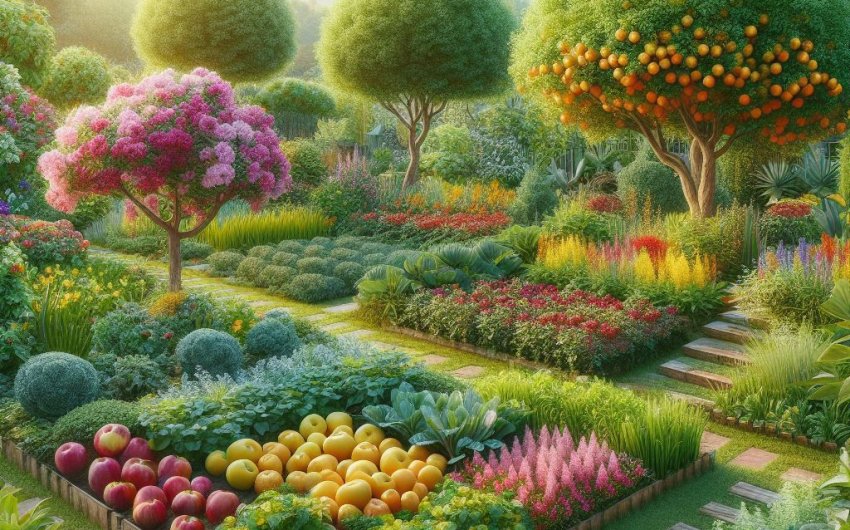
Edible landscaping seamlessly integrates food-producing plants into an aesthetically pleasing design, creating gardens that are both beautiful and bountiful. This approach allows you to harvest fresh produce while enhancing the visual appeal and ecological diversity of your outdoor space.
What is Edible Landscaping and Why Is It Gaining Popularity?
Edible landscaping is the intentional design of a landscape that incorporates food-producing plants alongside or in place of purely ornamental ones. It transforms traditional lawns and flowerbeds into productive, beautiful, and sustainable ecosystems.
The Blending of Beauty and Bounty
- Beyond the Vegetable Patch: Unlike a traditional vegetable garden often relegated to the backyard, edible landscaping brings edibles to the front yard, borders, and even patio containers.
- Aesthetic Appeal: The focus is not just on yield, but also on the visual beauty of the plants. Think vibrant Swiss chard with colorful stems, the elegant form of a dwarf fruit tree, or the delicate flowers of herbs.
- Multi-Functional Plants: Plants are chosen for their ornamental qualities (foliage, flowers, form) as well as their edible yield.
Reasons for Its Growing Popularity
- Sustainability:
- Reduced Food Miles: Growing your own food significantly cuts down on the energy and resources used for transportation, packaging, and refrigeration.
- Water Conservation: Often, edible landscapes integrate drought-tolerant edibles, reducing overall water consumption compared to thirsty lawns.
- Reduced Chemical Use: Encourages organic practices, avoiding synthetic pesticides and fertilizers.
- Food Security and Freshness:
- Access to Fresh Produce: Enjoy ultra-fresh, ripe fruits, vegetables, and herbs right from your yard.
- Knowing Your Food Source: You control what goes into your food, ensuring it's free from unwanted chemicals.
- Increased Self-Sufficiency: A step towards greater food independence.
- Economic Savings:
- Lower Grocery Bills: Growing your own produce reduces your reliance on grocery stores.
- Reduced Landscape Maintenance: A well-designed edible landscape can require less mowing and chemical inputs than a traditional lawn.
- Enhanced Biodiversity:
- Pollinator Attraction: Many edible plants have flowers that attract bees, butterflies, and other beneficial insects.
- Habitat Creation: Creates diverse habitats for local wildlife.
- Health and Well-being:
- Access to Healthy Food: Encourages consumption of fresh, nutritious produce.
- Physical Activity: Gardening is a great form of exercise.
- Mental Well-being: Connecting with nature and growing your own food is a proven stress reducer.
- Education: Teaches children and adults about where food comes from, plant life cycles, and ecological principles.
Table: Traditional Gardening vs. Edible Landscaping
| Feature | Traditional Vegetable Garden | Edible Landscaping |
|---|---|---|
| Primary Goal | Maximize food production, often utilitarian | Blend beauty & bounty, aesthetic + food |
| Location | Typically backyard, out of sight | Front yard, borders, visible areas |
| Plant Selection | Chosen solely for yield | Chosen for yield, beauty, form, color |
| Aesthetic | Functional, sometimes messy | Designed for visual appeal |
| Maintenance | Can be high effort, focused on rows | Integrated with landscape, varied tasks |
| Biodiversity | Less diverse if monoculture | High, attracts pollinators |
What Design Principles Guide Edible Landscaping?
Successful edible landscaping isn't just about throwing a few vegetables into a flowerbed. It involves applying traditional landscape design principles to create a cohesive and appealing space.
Form and Function: Every Plant Has a Purpose
- Know Your Plants: Understand the mature size, shape, and seasonal changes of each plant. Will that tomato grow into a sprawling bush, or can it be trellised neatly? Does that blueberry bush offer beautiful fall color?
- Layering: Create depth by planting taller elements (dwarf fruit trees, trellised vines) at the back or center, medium-height plants (peppers, herbs, kale) in the middle, and shorter plants (strawberries, lettuce, creeping thyme) at the front.
- Verticality: Embrace vertical gardening to maximize space. Use trellises, arbors, wall planters, and hanging baskets.
- Hardscaping: Incorporate paths, patios, and raised beds strategically. These elements provide structure, define spaces, and offer comfortable access for harvesting and maintenance.
Color and Texture: Visual Feast
- Vibrant Hues: Utilize the rich colors of edible plants. Think of the deep purples of 'Black Krim' tomatoes, the bright reds of rhubarb, the varied greens of lettuces, or the rainbow stems of Swiss chard.
- Foliage Variety: Mix plants with different leaf shapes and textures. The broad leaves of squash, the feathery fronds of dill, and the glossy leaves of peppers all add visual interest.
- Flowering Edibles: Many edibles have beautiful flowers, like squash blossoms, bean flowers, or strawberry blooms. Incorporate culinary herbs like lavender or chives for their lovely flowers.
Succession Planting and Seasonal Interest
- Continuous Harvest and Beauty: Plan your planting to ensure continuous harvests and visual interest throughout the growing seasons. As one plant finishes, another takes its place or begins to produce.
- Seasonal Changes: Consider plants that offer interest beyond just their edible harvest.
- Spring: Asparagus spears emerging, strawberry flowers.
- Summer: Lush growth, abundant fruits and vegetables, colorful flowers.
- Fall: Ornamental kale, colorful chard, persimmon fruits, fall foliage of fruit trees.
- Winter: Evergreens, cold-hardy greens, dormant fruit trees with interesting branch structure.
Edges and Borders: Defining the Space
- Clearly Defined Beds: Whether using traditional beds, raised beds, or containers, clear edges create a neat and intentional look.
- Living Borders: Use low-growing edibles or herbs as attractive borders, like parsley, oregano, thyme, or strawberries.
- Mounds and Swales: For larger spaces or permaculture-inspired designs, consider earthworks like mounds for planting and swales for water harvesting, adding naturalistic forms.
Table: Edible Landscaping Design Principles
| Principle | Description | Application in Edible Landscaping |
|---|---|---|
| Form & Function | Understanding plant characteristics, purpose | Layering, verticality, hardscaping integration |
| Color & Texture | Utilizing visual diversity of edibles | Diverse foliage, vibrant fruits/vegetables, edible flowers |
| Succession & Season | Planning for continuous harvest & visual interest | Staggered planting, diverse bloom times, fall/winter edibles |
| Edges & Borders | Creating defined, neat spaces | Raised beds, living borders, distinct planting zones |
What Are the Best Plants for Edible Landscaping?
Choosing the right plants is at the heart of edible landscaping. Select varieties that are not only productive but also offer aesthetic appeal and adapt well to a mixed planting environment.
Ornamental Vegetables: Visual Stars
Many common vegetables have surprising ornamental value.
- Swiss Chard (Beta vulgaris subsp. cicla): 'Bright Lights' or 'Rainbow' chard offers stunning stems in red, pink, orange, yellow, and white. Its large, crinkled leaves are beautiful.
- Kale (Brassica oleracea): 'Red Russian,' 'Lacinato' (Dinosaur), and especially ornamental kales (which are edible) provide varied textures and colors, lasting well into cold weather.
- Lettuce (Lactuca sativa): Red-leafed varieties like 'Red Romaine' or 'Salad Bowl Red' provide continuous color and can be harvested "cut-and-come-again."
- Artichoke (Cynara scolymus): A striking architectural plant with silvery-green, thistle-like leaves. Its large, purple flowers are stunning if left unharvested.
- Eggplant (Solanum melongena): Varieties with purple foliage or bright purple, white, or striped fruit add strong color accents.
- Peppers (Capsicum annuum): Ornamental pepper varieties are stunning with their multi-colored fruit, but even sweet bell peppers add vibrant splashes of color.
- Bush Beans (Phaseolus vulgaris): Dwarf bush beans can have attractive foliage and pretty flowers, especially when loaded with colorful pods.
Fruit-Bearing Shrubs and Trees: Structure and Sweetness
These plants provide structure and height while offering delicious yields.
- Blueberries (Vaccinium species): Offer delicate white or pink flowers in spring, delicious berries in summer, and stunning red foliage in fall. Choose varieties suited to your climate and ensure acidic soil.
- Raspberries and Blackberries (Rubus species): Can be trained on trellises, providing a vertical element. Their flowers attract pollinators, and berries are abundant. Choose thornless varieties for high-traffic areas.
- Dwarf Fruit Trees (Apple, Pear, Cherry, Peach, Plum): Many fruit trees are available on dwarf rootstock, making them suitable for smaller gardens or even large containers. Look for columnar varieties for very tight spaces.
- Currants and Gooseberries (Ribes species): Compact shrubs with edible berries, tolerant of some shade.
- Fig Trees (Ficus carica): Varieties like 'Brown Turkey' can be grown as attractive shrubs or small trees, with unique leaves and sweet fruit. They often do well in large containers.
Edible Flowers and Herbs: Accents and Aromatics
These plants enhance beauty, attract beneficials, and offer culinary delights.
- Borage (Borago officinalis): Beautiful star-shaped blue flowers (edible, cucumber-like flavor). Attracts pollinators.
- Calendula (Calendula officinalis): Cheerful orange and yellow flowers (edible, slightly peppery) add bright pops of color.
- Nasturtiums (Tropaeolum majus): Vibrant flowers and lily pad-like leaves, both edible with a peppery kick. Can be used as a groundcover or to trail from containers.
- Chives (Allium schoenoprasum): Delicate purple pom-pom flowers (edible) and grassy foliage provide early spring interest.
- Lavender (Lavandula species): Fragrant purple spikes (culinary and ornamental) provide structure and attract pollinators.
- Rosemary (Salvia rosmarinus): A beautiful evergreen shrub with fragrant foliage and small blue flowers. Can be pruned into formal shapes.
- Thyme (Thymus vulgaris): Low-growing, fragrant groundcover with tiny flowers, perfect for filling in gaps or planting between pavers.
Table: Versatile Plants for Edible Landscaping
| Plant Type | Examples | Key Edible Parts | Key Ornamental Features |
|---|---|---|---|
| Ornamental Veggies | Swiss Chard, Kale, Red Lettuce, Artichoke, Eggplant, Peppers | Leaves, Stems, Fruit, Buds | Colorful foliage/stems, unique forms, vibrant fruit |
| Fruit Shrubs/Trees | Blueberries, Raspberries, Dwarf Apple, Fig, Currants | Berries, Fruit | Flowers, fall color, interesting form |
| Edible Flowers/Herbs | Borage, Calendula, Nasturtium, Chives, Lavender, Rosemary | Flowers, Leaves | Beautiful blooms, fragrance, varied textures |
How Do You Start Planning Your Edible Landscape?
Creating your own edible landscaping project involves a thoughtful planning process that transforms your vision into a thriving reality.
Step 1: Assess Your Site Thoroughly
- Sunlight Mapping: This is paramount. Track how many hours of direct sunlight each area of your garden receives throughout the day, across different seasons. Most edibles need 6-8 hours of full sun.
- Soil Test: Get a professional soil test to understand your soil's pH, nutrient levels, and texture. This informs what amendments you might need. A Home Soil Test Kit can provide quick insights.
- Drainage: Observe how water drains. Does it pool in certain areas? Good drainage is vital for most edibles.
- Existing Features: Map out permanent structures, fences, pathways, utilities, and mature trees.
- Climate Zone: Understand your USDA Hardiness Zone or local equivalent. This dictates which perennial edibles will survive your winters.
Step 2: Define Your Goals and Desires
- What Do You Want to Grow? List your favorite fruits, vegetables, and herbs that you actually enjoy eating. Be realistic about what you'll use.
- What Aesthetic Do You Prefer? Do you want a formal look, a wild cottage garden feel, or something minimalist and modern?
- How Much Time Do You Have? Be honest about your available time for maintenance. Some edibles require more attention than others.
- Budget: Determine how much you're willing to spend on materials, plants, and tools.
Step 3: Sketch Your Design
- Scale Drawing: Use graph paper to draw your property to scale. This helps you visualize space.
- Initial Ideas: Start with rough "bubble diagrams" to block out zones (e.g., "seating area," "main edibles," "herb spiral").
- Layering: Begin to plot taller elements (dwarf trees) first, then shrubs, then smaller plants.
- Paths and Access: Design clear, comfortable paths for easy access to all parts of the garden for harvesting and maintenance. Aim for pathways that are at least 24-36 inches (60-90 cm) wide.
- Consider Raised Beds: Raised beds offer great drainage, reduce bending, and create defined planting areas. A Raised Garden Bed Kit can simplify the build.
- Iteration: Don't be afraid to sketch multiple ideas. The best designs often come from refining initial concepts.
Step 4: Select Your Plants Thoughtfully
- "Right Plant, Right Place": Match plants to your site's conditions (sunlight, soil, climate).
- Multi-Functional: Prioritize plants that offer both beauty and bounty.
- Succession Planting: Choose varieties that mature at different times for continuous harvest.
- Pollinator-Friendly: Include plants with attractive flowers to bring in beneficial insects.
- Consider Pest Resistance: Some varieties are naturally more resistant to common pests and diseases.
Step 5: Implement Your Plan (Phased Approach)
- Start Small: Don't feel pressured to transform your entire yard at once. Start with a small area, like a border, a few containers, or a single raised bed.
- Prepare the Soil: Ensure your soil is well-prepared, loose, and rich in organic matter.
- Install Hardscaping: Put in paths, patios, and raised beds before planting.
- Planting: Follow proper planting techniques.
- Mulch: Apply a 2-4 inch (5-10 cm) layer of organic mulch around plants to conserve moisture, suppress weeds, and regulate soil temperature.
- Watering System: Consider a drip irrigation system for efficiency, especially for larger areas or containers. A Drip Irrigation Kit for Gardens can save time and water.
How Can Edible Landscaping Be Integrated into Different Garden Styles?
Edible landscaping is incredibly versatile and can be adapted to almost any existing garden style, seamlessly blending beauty and bounty.
Formal and Structured Gardens
- Symmetry and Order: Utilize straight lines, geometric shapes, and repetition.
- Hedging and Borders: Use low-growing, uniformly pruned edibles as hedges or borders. Think of compact boxwood-like herbs such as culinary lavender or dwarf rosemary.
- Espaliered Fruit Trees: Train fruit trees (apples, pears) flat against a wall or trellis in a formal pattern. This saves space and creates a beautiful architectural feature.
- Raised Beds: Build neat, rectangular raised beds from stone, brick, or formal wood, arranged symmetrically.
- Specimen Plants: Use a single, well-chosen dwarf fruit tree or artichoke plant as a formal focal point.
Cottage and Informal Gardens
- Controlled Chaos: Embrace a more relaxed, overflowing look, with plants allowed to mingle.
- Interplanting: Mix edibles directly with ornamental flowers. Plant kale amongst cosmos, or a cherry tomato spilling over a bed of marigolds.
- Climbing Plants: Let vining plants like beans, cucumbers, or indeterminate tomatoes ramble over rustic trellises, arbors, or teepees.
- Soft Edges: Use softer edging materials like woven wattle fences or allow plants to spill slightly over pathway edges.
- Abundant Herbs: Plant a wide variety of herbs throughout the beds for fragrance and constant harvest.
Modern and Minimalist Gardens
- Clean Lines: Focus on strong geometric shapes and uncluttered spaces.
- Limited Plant Palette: Choose a few key edible plants with striking forms or colors.
- Containers: Use sleek, uniform containers made from concrete, metal, or dark plastic. Place a single dwarf olive tree or a vibrant Swiss chard in a series of matching pots.
- Verticality: Integrated vertical planters on a modern wall or a minimalist vertical tower can add interest without clutter.
- Edible Walls: Consider a living wall system dedicated to herbs or greens.
- Focal Points: A single, well-pruned fig tree or a bold artichoke plant can serve as a striking focal point.
Mediterranean or Xeriscape Gardens
- Drought-Tolerant Edibles: Prioritize edibles that thrive in dry, sunny conditions.
- Key Plants: Rosemary, thyme, lavender, oregano, sage, fig, olive trees, grapes (trellised).
- Materials: Incorporate gravel, stone, terracotta pots, and natural rock.
- Color Palette: Focus on silvers, grays, and deep greens, with pops of purple, yellow, and orange.
By embracing the principles of edible landscaping, you can create an outdoor space that provides not only a feast for the eyes but also a continuous harvest for your table, truly blending beauty and bounty in a sustainable and rewarding way.