
Harvesting the Sun: Exploring the Beauty of Solar Farms!
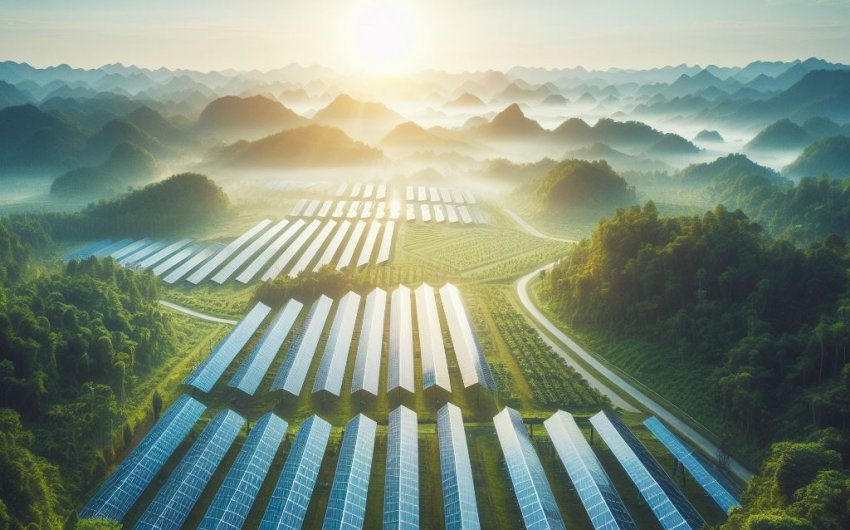
Solar farms are large-scale installations of photovoltaic (PV) panels designed to convert sunlight directly into electricity, representing a beautiful and efficient way to harness the sun's energy. These expansive arrays of solar panels are a critical component in the global shift towards renewable energy sources, offering a clean and sustainable alternative to traditional fossil fuels.
What Exactly is a Solar Farm?
A solar farm, also known as a solar power plant or photovoltaic power station, is a utility-scale facility that generates electricity using a multitude of interconnected solar panels. Unlike rooftop solar installations on individual homes, solar farms are built to produce electricity for the grid, supplying power to thousands or even hundreds of thousands of homes and businesses. Their primary purpose is to convert sunlight into usable alternating current (AC) electricity, which is then fed into the local or national power grid. The sheer scale and visual impact of these installations, often spanning acres of land, showcase the immense potential of solar energy.
How Do Solar Farms Work?
The fundamental principle behind a solar farm is the photovoltaic effect. This is where specific materials, typically silicon-based semiconductors, produce an electric current when exposed to light.
Here's a simplified breakdown of the process:
- Sunlight Absorption: Individual solar cells within the panels absorb photons from sunlight.
- Electron Excitation: This absorption energizes electrons in the semiconductor material, causing them to break free from their atoms.
- Electric Current Generation: These free electrons flow, creating a direct current (DC) electricity.
- DC to AC Conversion: The DC electricity from the panels is then fed into inverters. Inverters are crucial devices that convert the DC electricity into alternating current (AC) electricity, which is the type of electricity used in homes and businesses and by the grid.
- Transformer Step-Up: The AC electricity from the inverters then goes to transformers, which "step up" the voltage to make it suitable for long-distance transmission over power lines.
- Grid Connection: Finally, this high-voltage AC electricity is fed into the electrical grid, where it can be distributed to consumers.
What are the Different Types of Solar Farms?
While all solar farms aim to convert sunlight into electricity, they can vary in their design and technology. The two primary types are photovoltaic (PV) solar farms and concentrated solar power (CSP) farms.
Photovoltaic (PV) Solar Farms
PV solar farms are the most common type and what most people visualize when they hear "solar farm." They use solar panels made up of numerous individual photovoltaic cells.
- Fixed-Tilt Systems: In this setup, the solar panels are installed at a fixed angle, optimized for the sun's path throughout the year. These systems are simpler and less expensive to install and maintain.
- Single-Axis Tracking Systems: These systems allow the panels to track the sun's movement from east to west throughout the day. This increases the amount of sunlight captured and, consequently, the electricity generated, especially during the morning and late afternoon.
- Dual-Axis Tracking Systems: The most advanced tracking systems, dual-axis trackers allow solar panels to follow the sun's path both horizontally (east to west) and vertically (seasonal changes in sun angle). This maximizes energy capture but comes with higher installation and maintenance costs. You can find robust tracking systems, like the Arctech Solar Tracking System, which significantly boosts energy output.
Concentrated Solar Power (CSP) Farms
CSP farms operate differently. Instead of directly converting sunlight into electricity using PV cells, they use mirrors to concentrate sunlight onto a receiver. This concentrated sunlight heats a fluid, which then generates steam to drive a turbine and produce electricity, similar to a traditional power plant.
Common CSP technologies include:
- Parabolic Troughs: Long, curved mirrors focus sunlight onto a receiver tube running along their focal line, heating a fluid.
- Power Towers: A field of flat mirrors (heliostats) tracks the sun and reflects sunlight onto a central receiver atop a tower, superheating a fluid.
- Dish Stirling Systems: Parabolic dishes focus sunlight onto a receiver at their focal point, powering a Stirling engine directly.
While CSP offers thermal energy storage capabilities, allowing for power generation even after sunset, PV solar farms are generally more scalable and cost-effective for most large-scale applications today.
Why Are Solar Farms So Important for Our Future?
Solar farms play a crucial role in building a sustainable future. Their importance stems from a multitude of environmental, economic, and societal benefits. They are a cornerstone of the renewable energy revolution.
Environmental Benefits
- Reduced Greenhouse Gas Emissions: Unlike fossil fuel power plants, solar farms produce electricity without burning fuel, meaning they release no greenhouse gases like carbon dioxide (CO₂) or methane (CH₄). This is vital in combating climate change and reducing our carbon footprint.
- Cleaner Air: By displacing coal and natural gas power generation, solar farms help reduce emissions of pollutants like sulfur dioxide (SO₂), nitrogen oxides (NOx), and particulate matter, leading to cleaner air and improved public health.
- Conservation of Water Resources: Traditional power plants, especially thermal ones, often require vast amounts of water for cooling. Solar farms, particularly PV systems, use significantly less water, making them a more water-efficient choice, especially in arid regions.
- Reduced Fossil Fuel Reliance: Every kilowatt-hour generated by a solar farm means one less kilowatt-hour generated by burning finite and polluting fossil fuels, contributing to energy independence.
Economic Advantages
- Job Creation: The solar industry is a significant job creator, from manufacturing and installation to maintenance and research. This provides new economic opportunities in both urban and rural areas. Tools like a Solar Panel Installation Kit are integral to this growth.
- Lower Operating Costs: Once built, solar farms have very low operating costs compared to fossil fuel plants, which need continuous fuel purchases. The "fuel" for a solar farm—sunlight—is free.
- Price Stability: As the "fuel" source (sunlight) is free, the cost of generating electricity from solar farms is stable and predictable, insulating consumers from the volatility of fossil fuel prices.
- Economic Development in Rural Areas: Solar farms often occupy large tracts of land, frequently in rural areas, bringing economic development, tax revenue, and employment opportunities to these communities.
Energy Security and Reliability
- Diversified Energy Mix: Integrating solar energy into the grid diversifies a nation's energy portfolio, reducing reliance on a single source and enhancing energy security.
- Decentralized Power Generation: Solar farms can be built closer to demand centers, reducing transmission losses and enhancing grid resilience by providing more distributed sources of power.
- Scalability: Solar technology is highly scalable, allowing for rapid deployment of new capacity to meet growing energy demands.
Where Are Solar Farms Typically Located?
The ideal location for a solar farm is crucial for its efficiency and economic viability. Several factors influence site selection, primarily focusing on maximizing sunlight exposure and minimizing environmental impact.
Key Site Selection Factors
- High Solar Irradiance: This is the most critical factor. Solar farms need areas that receive abundant, consistent sunlight throughout the year. Regions closer to the equator generally have higher solar irradiance, making them prime locations.
- Flat, Open Land: Large, relatively flat areas free from obstructions like trees or mountains are ideal. This allows for optimal panel placement and minimizes shading.
- Proximity to Transmission Lines: Connecting to the existing electrical grid is essential for distributing the generated power. Sites near high-voltage transmission lines reduce the need for costly new infrastructure.
- Accessibility: Easy access for construction vehicles, equipment delivery, and ongoing maintenance is important.
- Minimal Environmental Impact: Developers strive to choose sites that avoid sensitive ecosystems, protected wildlife habitats, or prime agricultural land.
- Land Availability and Cost: Large parcels of land are required, so the availability and cost of suitable land are significant considerations.
- Permitting and Regulatory Environment: Favorable local and state regulations, along with a clear permitting process, can significantly impact project timelines and costs.
Common Locations for Solar Farms
- Deserts and Arid Regions: Areas like the Southwestern United States, parts of North Africa, the Middle East, and Australia are naturally suited due to their high solar insolation and often vast, open, sparsely populated lands.
- Former Industrial or Brownfield Sites: Reusing contaminated or previously developed land can be an environmentally responsible way to site solar farms, revitalizing disused areas.
- Agricultural Land (with careful consideration): While prime agricultural land is generally avoided, some solar farms are being developed on less productive agricultural land, sometimes even combining agriculture with solar panels in an approach called agrivoltaics.
- Coastal Areas (where suitable): Some coastal regions with high sun exposure and available land are also being considered, though hurricane risks need to be mitigated.
- Abandoned Mines or Quarries: These disturbed lands can be repurposed for solar farm development, turning an environmental liability into a renewable energy asset.
Examples of prominent solar farm locations include the Mojave Desert in California, which hosts some of the world's largest solar power plants, and regions across China, India, and Europe that are rapidly expanding their solar energy infrastructure.
How Efficient Are Modern Solar Farms?
The efficiency of solar farms has steadily improved over the years, driven by advancements in solar panel technology and overall system design. When we talk about efficiency, we're primarily referring to how effectively the solar panels convert sunlight into usable electricity.
Factors Influencing Efficiency
- Panel Efficiency: This refers to the percentage of sunlight that a solar panel can convert into electricity. Commercial monocrystalline solar panels, commonly used in solar farms, typically have efficiencies ranging from 19% to 23%. Laboratory records for experimental cells are even higher.
- System Losses: Not all the energy captured by the panels makes it to the grid. Losses occur due to:
- Temperature: Solar panels perform less efficiently at very high temperatures.
- Shading: Even partial shading of a panel can significantly reduce its output.
- Dirt and Dust: Accumulation of dirt, dust, or snow on panels reduces light absorption. Regular cleaning, often automated with robotic systems, is crucial.
- Inverter Efficiency: Inverters also have an efficiency rating, typically 95-98%, meaning a small amount of energy is lost during the DC to AC conversion.
- Wiring Losses: Resistance in the wiring leads to small energy losses.
- Module Mismatch: Slight variations in the performance of individual panels can lead to overall system efficiency reduction.
- Tracking Systems: As mentioned earlier, solar farms with tracking systems (single or dual-axis) can significantly increase their energy output (often 20-35% or more annually) compared to fixed-tilt systems because they constantly optimize their angle to the sun.
- Maintenance: Regular maintenance, including cleaning panels, inspecting electrical components, and promptly addressing any faults, is vital for maintaining peak efficiency. For example, a Solar Panel Cleaning Brush can help keep panels performing optimally.
Improving Efficiency Over Time
The solar industry is continuously innovating to boost efficiency. Key areas of advancement include:
- Perovskite Solar Cells: This emerging technology promises higher efficiencies at potentially lower costs, though it's still in the research and development phase for large-scale application.
- Bifacial Solar Panels: These panels can absorb sunlight from both their front and back sides, increasing overall energy capture, especially when installed over reflective surfaces like white gravel or sand.
- Advanced Inverters and Optimizers: Smarter inverters and module-level power electronics (MLPEs) like optimizers can mitigate the effects of shading and improve the performance of individual panels within an array.
- Energy Storage Systems: Integrating large-scale battery storage with solar farms allows for the storage of excess electricity generated during peak sun hours for use during periods of low sunlight or high demand. This makes solar energy more dispatchable and reliable, enhancing the grid's overall efficiency.
While not 100% efficient, the continuous advancements mean that modern solar farms are becoming increasingly productive and cost-effective, making solar energy a truly competitive power source.
What are the Environmental Considerations of Building Solar Farms?
While solar farms are crucial for mitigating climate change and reducing reliance on fossil fuels, their development is not without environmental considerations. Responsible planning and design are essential to ensure these installations contribute net positive benefits.
Land Use
- Habitat Fragmentation and Loss: Large-scale solar farms require significant land areas. This can lead to the fragmentation or loss of natural habitats, impacting local wildlife and ecosystems. Careful site selection, often prioritizing previously disturbed land or lower-value agricultural land, is crucial.
- Agricultural Land Conversion: In some cases, prime agricultural land might be converted for solar farm use, raising concerns about food security. Solutions like agrivoltaics (combining solar with agriculture) are being explored to address this.
- Visual Impact: The sheer scale of some solar farms can alter landscapes, leading to visual impacts that may be a concern for local communities.
Water Use
- Panel Cleaning: While PV solar farms use far less water than thermal power plants, water is still needed for cleaning panels, especially in dusty or arid regions, to maintain efficiency. Innovative cleaning methods, including robotic dry cleaning or low-water techniques, are being developed.
- Construction Phase: Water is also required during the construction phase for dust suppression and other activities.
Wildlife Impacts
- Bird Interactions: In some early CSP (Concentrated Solar Power) projects, concentrated sunlight could harm birds. However, this is less of a concern for PV solar farms, and new designs and operational strategies for CSP are mitigating these issues.
- Habitat Disruption: During construction and operation, wildlife can be displaced or their movement corridors disrupted. Environmental impact assessments and mitigation strategies, such as creating wildlife corridors or using less impactful fencing, are standard practice.
Resource Extraction and Manufacturing
- Material Sourcing: The manufacturing of solar panels and other components requires various materials, including silicon, aluminum, and small amounts of rare earth elements. The extraction and processing of these materials have their own environmental footprints, including energy consumption and potential for localized pollution.
- End-of-Life Management: As solar panels have a lifespan of 25-30 years, managing their disposal or recycling at the end of their useful life is an emerging concern. Developing efficient and economically viable solar panel recycling processes is a key area of research and development. This includes specialized equipment for Solar Panel Recycling initiatives.
Mitigating Environmental Impacts
- Strategic Siting: Prioritizing degraded lands, brownfields, or land with low ecological value for solar farm development.
- Environmental Impact Assessments (EIAs): Thorough EIAs are conducted to identify potential impacts and propose mitigation measures.
- Ecological Restoration: Post-construction, efforts are often made to restore native vegetation around the solar farm to enhance biodiversity.
- Agrivoltaics: Integrating solar panels with agricultural practices to maximize land use efficiency.
- Responsible Supply Chains: Encouraging manufacturers to adopt sustainable sourcing and production practices.
- Developing Recycling Infrastructure: Investing in technologies and facilities for the effective recycling of solar panel materials.
By addressing these considerations through careful planning, design, and ongoing management, solar farms can indeed be a beautiful and sustainable part of our energy future.
How Do Solar Farms Benefit Local Communities?
Beyond the global impact of reducing carbon emissions, solar farms can bring tangible benefits directly to the local communities where they are built. These benefits often extend to economic opportunities, improved infrastructure, and a stronger local tax base.
Economic Benefits
- Job Creation: The construction of a solar farm provides temporary jobs for engineers, construction workers, and electricians. Once operational, ongoing maintenance and security require permanent local employment. These are skilled jobs that can boost local economies.
- Increased Tax Revenue: Solar farms often represent a significant investment, leading to increased property tax revenue for local municipalities. This additional revenue can be used to fund local schools, infrastructure projects, emergency services, and other vital public services without raising taxes on residents.
- Lease Payments to Landowners: Many solar farms are built on leased land. Landowners receive regular lease payments, providing a stable, long-term income stream, especially beneficial for farmers or rural landowners with less productive land.
- Local Spending: Developers often source materials and services locally during the construction phase, injecting money directly into local businesses, from hardware stores to catering services.
- Energy Cost Savings: If the solar farm supplies power directly to local communities, it can sometimes lead to more stable or even lower electricity rates for residents and businesses.
Community Development and Infrastructure
- Infrastructure Improvements: In some cases, the development of a solar farm might lead to upgrades in local infrastructure, such as improved roads or new transmission lines, which can benefit the entire community.
- Educational Opportunities: Solar farms can serve as educational resources, providing opportunities for local schools and colleges to learn about renewable energy technology and career paths in the green energy sector.
- Community Funds and Programs: Some solar farm developers establish community benefit funds or programs, contributing directly to local charities, schools, or environmental initiatives as part of their commitment to social responsibility.
- Energy Independence: For isolated communities or those reliant on distant and vulnerable energy sources, a local solar farm can offer a greater degree of energy independence and resilience.
Environmental Stewardship and Reputation
- Local Environmental Pride: Hosting a solar farm can foster a sense of pride within the community for contributing to a cleaner, more sustainable future and being at the forefront of renewable energy.
- Positive Reputation: For regions or states actively promoting renewable energy, hosting solar farms enhances their reputation as environmentally progressive and forward-thinking.
It's important that solar farm developers engage early and transparently with local communities to ensure that the project addresses local concerns and maximizes shared benefits. This collaborative approach ensures that the "beauty" of solar farms extends beyond their visual appeal to the positive impact they have on people's lives.
What Technologies Make Solar Farms So Powerful?
The power and efficiency of modern solar farms are not just due to the sheer number of panels; they are the result of sophisticated technologies working in harmony. These innovations maximize energy capture, ensure reliable operation, and integrate seamlessly with the grid.
Advanced Solar Panels
- Monocrystalline and Polycrystalline Silicon: These are the workhorses of solar farms. Monocrystalline panels (like the Canadian Solar BiHiKu7 N-Type are known for higher efficiency and sleek black appearance, while polycrystalline panels are slightly less efficient but often more cost-effective.
- Thin-Film Solar Cells: While less common for utility-scale PV due to lower efficiency, advancements in thin-film technologies (e.g., Cadmium Telluride - CdTe) are making them more competitive, especially for large areas where efficiency per square foot is less critical than overall cost.
- Bifacial Solar Panels: These innovative panels capture sunlight from both sides, increasing overall energy yield, especially when light reflects off the ground or other surfaces.
Inverter Technology
- Central Inverters: Large-scale solar farms typically use powerful central inverters that convert DC power from many strings of panels into AC power. These are robust and efficient for massive installations.
- String Inverters: While more common in smaller commercial installations, some distributed solar farm designs might use multiple string inverters to manage smaller groups of panels, allowing for more granular control and potentially mitigating shading effects.
- Microinverters & Optimizers: Less common for the main grid connection of utility-scale solar farms but crucial for maximizing output, particularly in complex layouts or where shading is a factor. Optimizers pair with string inverters, and microinverters convert DC to AC at each panel, both reducing losses from panel-level issues.
Solar Tracking Systems
- Single-Axis Trackers: These systems allow panels to rotate on one axis, typically east to west, following the sun's daily path. They significantly increase energy production (often 15-25% over fixed-tilt).
- Dual-Axis Trackers: The most advanced, these trackers rotate on both horizontal and vertical axes, constantly pointing the panels directly at the sun throughout the day and year. They offer the highest energy yield but come with higher initial cost and maintenance. A Solar Tracker Kit can demonstrate how these systems work.
Monitoring and Control Systems
- SCADA (Supervisory Control and Data Acquisition) Systems: These sophisticated systems allow operators to remotely monitor the performance of every component of the solar farm in real-time. They track power output, identify faults, and manage operations, ensuring optimal performance and rapid troubleshooting.
- Predictive Analytics: AI and machine learning are increasingly used to analyze vast amounts of data from solar farms, predicting potential issues, optimizing maintenance schedules, and forecasting energy production based on weather patterns.
Energy Storage Solutions
- Grid-Scale Batteries: While not part of the solar farm's core generation, large battery energy storage systems are increasingly integrated with solar farms. They store excess energy generated during peak sun hours and dispatch it to the grid when needed, making solar power more reliable and dispatchable. Lithium-ion batteries are currently the dominant technology.
- Advanced Inverters for Grid Services: Modern inverters in solar farms are designed not just to convert power but also to provide grid support services, such as voltage regulation and frequency response, enhancing grid stability.
These technologies, when combined, make solar farms incredibly effective power generators, capable of producing clean, reliable electricity on a massive scale.
What is the Future of Solar Farms?
The future of solar farms is incredibly bright, characterized by continued innovation, increasing scale, and deeper integration into the global energy landscape. As the world accelerates its transition to renewable energy, solar farms will play an even more prominent role.
Continued Cost Reduction and Efficiency Gains
- Lower Manufacturing Costs: Advances in materials science, manufacturing processes, and economies of scale will continue to drive down the cost of solar panels and associated equipment.
- Higher Panel Efficiencies: Research and development in perovskite solar cells, multi-junction cells, and other next-generation technologies promise to push panel efficiencies beyond current limits, meaning more power from less land.
- Balance of System (BOS) Cost Reduction: Innovations in mounting structures, inverters, wiring, and installation techniques will reduce the "soft costs" of solar farms.
Enhanced Integration with Energy Storage
- Dominant Hybrid Systems: The future will see more solar farms seamlessly coupled with large-scale battery storage (e.g., Grid-Scale Battery Storage). This will make solar power dispatchable 24/7, overcoming its intermittency and enhancing grid stability.
- Long-Duration Storage: Beyond lithium-ion, research into long-duration energy storage technologies (e.g., flow batteries, compressed air, thermal storage) will allow solar farms to provide power for longer periods, even across multiple days without sun.
Smart Grid Integration
- AI and Machine Learning: Advanced AI will be used for predictive maintenance, optimizing power output based on weather forecasts, and participating in energy markets more effectively.
- Grid Services: Solar farms will not just supply power but actively provide grid services like voltage support, frequency regulation, and black start capabilities, becoming essential "virtual power plants" within a smart grid.
Innovative Land Use Approaches
- Agrivoltaics: The practice of co-locating solar panels with agriculture will become more widespread, optimizing land use, increasing crop yields for certain plants, and providing shade benefits for livestock.
- Floating Solar (Floatovoltaics): Installing solar farms on bodies of water (reservoirs, lakes, wastewater treatment ponds) will expand available land, reduce evaporation, and often lead to cooler panels and higher efficiency.
- Reclamation of Degraded Land: More solar farms will be built on former mining sites, landfills, or other brownfield sites, turning liabilities into assets.
Global Expansion and Decentralization
- Emerging Markets: Solar farms will proliferate in developing countries, providing access to clean, affordable energy for millions.
- Microgrids and Community Solar: While utility-scale, solar farms will also play a role in supporting smaller, localized microgrids, enhancing energy resilience for communities.
The vision of a world powered primarily by renewable energy sources hinges significantly on the continuous evolution and expansion of solar farms. Their beauty lies not just in their physical presence but in their promise of a cleaner, more sustainable, and energy-secure future for generations to come. The solar farm is truly harvesting the sun's power for all.