
How to Grow Strawberries Vertically in Containers?
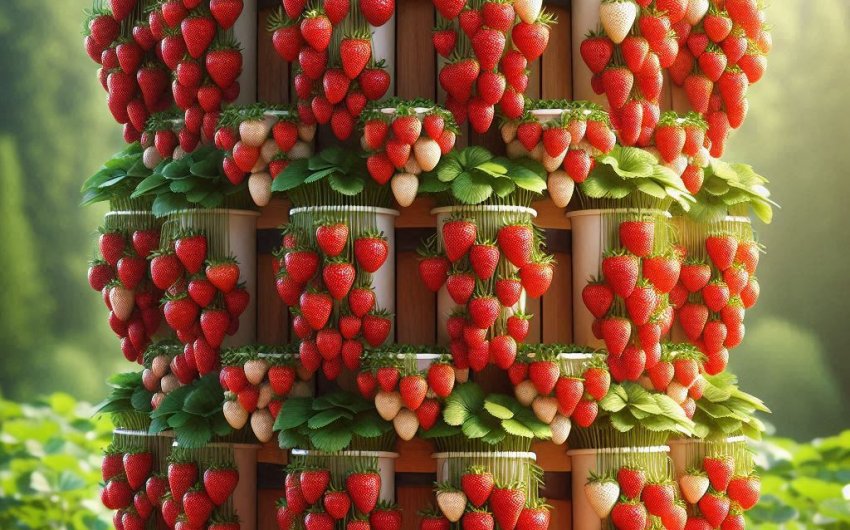
Growing your own sweet, juicy strawberries is a dream for many gardeners, but not everyone has a large yard or ample garden space. If you're short on horizontal room, don't despair! Vertical gardening offers an ingenious solution, allowing you to maximize your harvest in a compact footprint. Imagine a tower of vibrant green leaves dotted with bright red berries, all within arm's reach on your patio or balcony.
Growing strawberries vertically in containers is not only space-efficient but also incredibly rewarding. It keeps the fruit off the ground, reducing common pest and disease issues, and makes harvesting a breeze. With a bit of planning and the right setup, you can enjoy a continuous supply of fresh berries even in the smallest urban garden. Let's dive into how you can create your very own strawberry paradise, reaching for the sky.
Why Grow Strawberries Vertically?
Choosing to grow strawberries upwards rather than outwards offers a multitude of benefits, making it an attractive option for many gardeners, especially those with limited space.
Space Saving
This is arguably the biggest draw of vertical strawberry gardening.
- Maximize Small Spaces: If you have a small balcony, patio, or even just a sunny wall, vertical containers allow you to grow a surprising number of plants in a very small area. Instead of spreading out, your garden goes up, turning unused vertical space into a productive zone.
- Urban Gardening Solution: For city dwellers, apartment dwellers, or anyone without a traditional garden plot, vertical growing makes fresh, homegrown produce a reality. You can create a mini-farm right outside your door.
- High Density Planting: Vertical systems are designed to hold multiple plants in close proximity while still providing each plant with enough room for roots and foliage, leading to a higher yield per square foot.
Easier Harvesting
Bending over to pick strawberries can be a backache. Vertical setups change that entirely.
- Ergonomic Access: The fruit ripens at various heights, making it easy to pick without excessive bending or kneeling. This is especially beneficial for those with mobility issues or anyone who just prefers a more comfortable gardening experience.
- Clean Fruit: Since the berries hang freely or rest on elevated surfaces, they are less likely to come into contact with soil. This means cleaner fruit with less need for washing, and less risk of rot or pest damage from direct ground contact.
Pest and Disease Control
Elevating your strawberries can naturally deter some common garden problems.
- Reduced Soil-Borne Diseases: Many strawberry diseases, such as fungal issues, are spread through soil contact. Keeping the plants and fruit off the ground significantly reduces the risk of these infections.
- Fewer Pests: Slugs, snails, and other crawling pests that love to munch on ground-level berries have a harder time reaching fruit in elevated systems. This doesn't eliminate all pests, but it definitely reduces their presence.
- Improved Air Circulation: Vertical setups often promote better air circulation around the plants. Good airflow helps foliage dry out faster after watering or rain, which is crucial for preventing fungal diseases like powdery mildew and botrytis.
Aesthetic Appeal
A well-designed vertical strawberry planter can be a beautiful addition to any outdoor space.
- Decorative Element: Lush green foliage and bright red berries cascading down a tower or hanging planter create a visually appealing display. It's gardening that doubles as decor.
- Engaging Feature: A living wall of strawberries can be a focal point on a patio, inviting conversation and admiration.
Better Drainage
Most vertical container systems are designed with good drainage in mind, which is critical for strawberry health.
- Prevents Waterlogging: Excess water can easily drain away from individual pockets or tiers, preventing root rot, a common problem in traditional ground planting or poorly drained pots. This ensures roots stay healthy and aerated.
What Are the Best Vertical Container Options for Strawberries?
When it comes to vertical strawberry planters, you have several exciting options, each with its own advantages. The best choice depends on your space, budget, and desired aesthetic.
Strawberry Towers
These are perhaps the most iconic vertical strawberry planters. They are typically freestanding structures designed with multiple planting pockets or tiers.
- Types:
- Tiered Stacking Planters: These consist of several individual layers or rings that stack on top of each other. Each layer has cutouts or pockets where you plant the strawberries. They are easy to assemble and disassemble. You can find tiered stacking planters in plastic, terracotta, or even fabric.
- Vertical Columns/Tubes: Some towers are single, tall columns with planting holes cut into the sides. These often have a central watering tube to ensure even moisture distribution throughout the height of the column.
- Rotating Towers: Some advanced designs even allow the tower to slowly rotate, ensuring all sides of the plants get even sunlight throughout the day.
- Pros: Maximize plant count in a small footprint, good drainage, easy to manage, some come with integrated watering systems.
- Cons: Can be heavy when filled with soil and plants, may require rotating for even sunlight if not designed to rotate.
- Ideal for: Patios, decks, balconies, small yards.
Hanging Baskets
A classic choice for many plants, hanging baskets also work wonderfully for strawberries.
- Setup: Choose a good-sized hanging basket (at least 10-12 inches in diameter) with good drainage. You can plant around the top and also through side openings if the basket is designed for that. Use a sturdy hanging basket and a strong hook.
- Pros: Excellent air circulation, keeps fruit clean and easy to pick, adds visual appeal, can be moved easily.
- Cons: Dries out quickly, requires frequent watering (sometimes daily in hot weather), can get heavy when watered.
- Ideal for: Porches, balconies, pergolas, anywhere you can hang a sturdy hook.
Wall-Mounted Planters
These allow you to create a beautiful "living wall" of strawberries.
- Types:
- Pocket Planters: Fabric or felt pocket planters hang vertically and have multiple individual pockets for plants. Fabric wall planters are lightweight and easy to install.
- Cascading Planters: These are often made of plastic or metal and are designed to hang in a cascading fashion, with each pot spilling into the one below, allowing for multiple plants in a vertical line.
- Pallet Gardens: Upcycled wooden pallets can be modified to create vertical planting spaces. This is a popular DIY option.
- Pros: Maximizes wall space, creates a stunning visual display, keeps plants off the ground.
- Cons: Can be trickier to water evenly, might require a drip irrigation system for larger setups, can be heavy depending on material.
- Ideal for: Walls, fences, railings, anywhere you can securely mount a planter.
DIY Vertical Solutions
Get creative with repurposed materials!
- PVC Pipe Towers: Large diameter PVC pipes can be drilled with holes, stood vertically, and filled with soil. This creates an inexpensive and durable tower.
- Stacked Tires/Pots: Old tires or various sized pots can be stacked creatively to form a tiered planter. Ensure good drainage and stability.
- Plastic Bottle Planters: Cut plastic bottles can be strung together vertically to create small, individual planters.
- Pros: Economical, customizable, environmentally friendly.
- Cons: Requires some DIY skills, may not be as aesthetically pleasing as commercial options, can be less durable.
- Ideal for: Budget-conscious gardeners, those who enjoy DIY projects.
When choosing a system, consider how much sun the spot receives, how easy it will be to water, and whether it needs to be moved. Durability and material are also important factors for long-term success.
Which Strawberry Varieties Are Best for Vertical Growing?
Not all strawberries are created equal when it comes to vertical gardening. Choosing the right strawberry variety can significantly impact your success and harvest size. For vertical containers, you generally want varieties that produce fruit over a longer period and don't send out too many runners, which can quickly overcrowd a confined space.
Everbearing Strawberries
These are often the top choice for vertical and container gardening.
- Fruiting Habit: Everbearing strawberries produce two to three flushes of fruit per growing season, typically in late spring, mid-summer, and early fall. This means you get a more continuous supply of berries throughout the warmer months, rather than one big harvest.
- Runner Production: They tend to produce fewer runners (the horizontal stems that send out new plants) compared to June-bearing varieties. This is a huge advantage in vertical systems where space is limited and overcrowding can be an issue. Fewer runners means the plant puts more energy into fruit production.
- Popular Varieties:
- 'Ozark Beauty': A very popular and reliable everbearing variety, known for its sweet, medium-sized berries and good disease resistance. It's a great all-around choice for containers.
- 'Quinault': Another excellent everbearer that produces large, flavorful berries. It's also known for being quite vigorous.
- 'Seascape': Valued for its firm, delicious fruit and good heat tolerance, making it suitable for warmer climates.
- 'Tristar': Produces smaller, very sweet berries. It's a consistent producer and performs well in containers.
- Pros: Extended harvest period, less runner management, well-suited to confined spaces.
- Cons: Berry size might be slightly smaller than some June-bearing varieties.
Day-Neutral Strawberries
These are a special type of everbearing strawberry, often considered superior for continuous harvests.
- Fruiting Habit: Day-neutral strawberries produce fruit continuously throughout the growing season, as long as temperatures are between 35°F and 85°F (1.7°C and 29.4°C). Their fruiting is not dependent on day length, unlike June-bearing or even traditional everbearing varieties that have distinct flushes.
- Runner Production: Like everbearing types, they produce very few runners, directing most of their energy into producing flowers and fruit.
- Popular Varieties:
- 'Albion': Highly regarded for its large, firm, and extremely sweet berries. It's a premium variety that does exceptionally well in containers and vertical systems. It's also quite disease resistant.
- 'San Andreas': Similar to 'Albion' in fruit quality and yield, with good disease resistance.
- 'Selva': Produces large, firm berries, good for fresh eating and processing.
- 'Evie 2': A newer variety known for its excellent flavor and consistent production.
- Pros: Longest harvest period, very consistent fruit production, minimal runner management.
- Cons: May be slightly less cold-hardy than some other types, so protection might be needed in very cold climates.
Alpine Strawberries (Fragaria vesca)
These are a different species of strawberry, smaller in stature and fruit, but highly rewarding.
- Fruiting Habit: Alpine strawberries are day-neutral and produce tiny, intensely flavorful berries continuously from spring until frost. They don't produce runners at all, instead forming small clumps.
- Size: The plants themselves are much smaller and daintier than common garden strawberries. The fruit is also tiny, about the size of a raspberry.
- Pros: Exquisite, concentrated flavor; no runners to manage; very compact plants; shade tolerant (can produce in partial shade where others won't).
- Cons: Very small fruit, lower yield per plant compared to larger varieties, can be slow to establish.
- Ideal for: Gourmet gardeners who prioritize flavor over size, very small spaces, or decorative purposes. A tiny alpine strawberry plant can fit almost anywhere.
June-Bearing Strawberries (Generally NOT Recommended for Vertical)
- Fruiting Habit: June-bearing strawberries produce one large crop of berries over a 2-3 week period, usually in late spring or early summer.
- Runner Production: They produce a large number of runners. While this is great for propagating new plants in a traditional matted row system, it's a huge disadvantage in a vertical container where runners will quickly choke out the limited space.
- Why Avoid for Vertical: The prolific runner production makes them very difficult to manage in containers, leading to overcrowded plants, reduced airflow, and smaller yields. Most of their energy goes into making new plants, not fruit for your limited vertical space.
When selecting your strawberries, think about your climate, how much fruit you want, and how much maintenance you're willing to do. For most vertical gardeners, everbearing or day-neutral varieties will provide the best experience and yield.
How Do I Prepare My Vertical Strawberry Planter?
Setting up your vertical strawberry garden correctly from the start will ensure your plants thrive and produce a bountiful harvest. It involves choosing the right spot, preparing your growing medium, and planting with care.
Choosing the Right Location
Sunlight is absolutely critical for sweet strawberries.
- Full Sun: Strawberries need at least 6-8 hours of direct sunlight per day to produce well and develop sweet fruit. More sun usually means more berries.
- Protection from Wind: While good air circulation is beneficial, strong, persistent winds can dry out containers very quickly and damage delicate plants. Choose a location that offers some protection from harsh winds, or consider securing your vertical planter if it's lightweight.
- Accessibility: Place your planter where it's easy to reach for watering, harvesting, and pest checks. Think about how you'll reach the highest pockets if you choose a tall tower.
- Drainage: Ensure the location allows for proper drainage. Even though vertical planters often have good drainage built-in, you don't want excess water pooling around the base, especially on a patio or deck.
Selecting the Right Potting Mix
The soil you use in containers is far more important than the soil in a traditional garden bed.
- High-Quality Potting Mix: Do NOT use garden soil directly from your yard. It's too heavy, compacts easily, and doesn't drain well in containers. Instead, use a high-quality potting mix specifically designed for containers. Look for mixes that are light, airy, and drain well but also retain some moisture. A good potting mix for vegetables will often include peat moss or coco coir for moisture retention, perlite or vermiculite for drainage and aeration, and perhaps some compost.
- Avoid Compaction: A light, fluffy mix prevents compaction, which is vital for root health and water/nutrient uptake.
- Nutrient-Rich: While you'll be fertilizing, starting with a mix that has some initial nutrients (often included in bagged mixes) is a good start.
- pH: Strawberries prefer a slightly acidic to neutral pH, usually between 5.5 and 6.5. Most commercial potting mixes fall within this range.
Planting Your Strawberry Plants
Careful planting will give your strawberries the best start.
- Bare-Root vs. Potted Plants:
- Bare-root plants: These are dormant plants without soil around their roots. They are often more economical, especially if buying in bulk. Before planting, soak the bare roots in water for 20-30 minutes. Trim any overly long or damaged roots.
- Potted plants: These come with soil around their roots and are easier to plant directly. They often establish faster.
- Planting Depth (Crucial!): This is one of the most important aspects for strawberry success. The "crown" of the strawberry plant (the point where the roots meet the leaves) must be planted at the right depth.
- Do NOT bury the crown: If the crown is buried, the plant will likely rot.
- Do NOT expose the roots: If the crown is too high, the roots will dry out.
- Ideal planting: The top of the crown should be right at the soil surface, with all the roots covered and the leafy growth exposed.
- Filling the Planter:
- Bottom Layer: If using a tower or tiered system, start by filling the bottom tier or the lowest pockets with potting mix.
- Planting in Pockets/Holes: Gently place your strawberry plant into a pocket or planting hole, fanning out the roots. Ensure the crown is at the correct depth.
- Backfill and Firm: Carefully backfill with more potting mix around the roots, gently firming it down to remove large air pockets. Don't compact it too tightly.
- Repeat: Continue filling subsequent layers or pockets, planting as you go, until your vertical planter is full.
- Initial Watering: After planting, water thoroughly until water drains from the bottom of the planter. This helps settle the soil around the roots and eliminates any remaining air pockets.
- Spacing: Follow the specific guidelines for your vertical planter type, but generally, aim for 8-12 inches between plants in vertical pockets to ensure good airflow and room for growth. While vertical systems allow denser planting, overcrowding can still lead to issues.
By taking these steps to properly prepare your planter and plant your strawberries, you'll be laying a strong foundation for a thriving and productive vertical garden.
How Do I Care for Vertical Strawberries?
Once your vertical strawberry garden is set up, consistent care is essential for healthy plants and a bountiful harvest. While the vertical nature offers some advantages, it also comes with specific care needs, particularly regarding watering and feeding.
Watering
This is the most critical aspect of vertical strawberry care. Container plants dry out much faster than those in the ground.
- Frequent Checks: Check your vertical containers daily, especially during hot, sunny, or windy weather. Stick your finger about an inch or two into the soil; if it feels dry, it's time to water.
- Thorough Watering: When you water, do so thoroughly until water drains from the bottom of the planter. This ensures that the entire root ball gets adequately moistened. Shallow watering encourages shallow roots.
- Even Distribution (for Towers): In multi-tiered towers, it can be a challenge to get water to the lower levels. Many towers have a central watering tube or system. If not, water slowly and allow water to seep down, or water each tier individually. Consider a small drip irrigation kit for containers if you have many plants, as it can automate consistent watering.
- Avoid Overhead Watering on Fruit: Try to water the soil directly rather than spraying the leaves and fruit, especially as berries ripen. Wet fruit is more susceptible to fungal diseases.
Fertilizing
Strawberries are fairly heavy feeders, especially in containers where nutrients leach out with watering.
- Start with Balanced Fertilizer: About 2-3 weeks after planting, begin fertilizing. Use a balanced, slow-release granular fertilizer mixed into the potting mix, or a liquid fertilizer at half strength, diluted according to product instructions. A balanced liquid plant food works well.
- Regular Feeding: For everbearing and day-neutral varieties, fertilize every 2-4 weeks during the growing season, or as recommended by your chosen fertilizer. Follow the product's instructions carefully. Too much fertilizer can burn the roots.
- Phosphorus and Potassium: As the plants begin to flower and fruit, you might consider a fertilizer slightly higher in phosphorus and potassium to encourage fruit development.
Pruning and Runner Management
This is particularly important for vertical container systems to prevent overcrowding and ensure good fruit production.
- Remove Runners: Unless you want to propagate new plants, it’s generally best to remove the runners from everbearing and day-neutral varieties. Runners are energy sinks; the plant puts energy into creating new plants instead of fruit. Simply snip them off close to the parent plant. You can root these runners in small pots if you want to expand your strawberry patch.
- Remove Old/Diseased Leaves: Periodically inspect your plants and remove any yellow, brown, or diseased leaves. This improves air circulation and prevents disease spread.
- Flower Removal (First Year Everbearing/Day-Neutral): For everbearing and day-neutral varieties, many gardeners recommend picking off all flowers during the first 4-6 weeks after planting. This encourages the plant to put its energy into establishing strong roots, leading to a much healthier and more productive plant in the long run. It's hard to do, but worth it!
Pollination
Strawberries need to be pollinated to produce fruit.
- Natural Pollinators: If your vertical garden is outdoors, bees and other beneficial insects will usually do the job naturally.
- Hand Pollination (Indoor/Screened): If growing strawberries indoors or in a screened area where pollinators can't reach, you'll need to hand pollinate. Gently brush a small paintbrush or cotton swab over the center of each flower to transfer pollen between blossoms.
Pest and Disease Management
While vertical growing helps reduce some issues, constant vigilance is still key.
- Monitor Regularly: Inspect your plants frequently for signs of pests (like aphids, spider mites, or slugs) or diseases. Early detection makes control easier.
- Organic Pest Control: For small infestations, try strong jets of water to dislodge aphids, or use insecticidal soap. For slugs/snails, vertical systems naturally deter them, but if you see them, hand-picking at night can be effective.
- Good Air Circulation: Continue to ensure good airflow around your plants by not overcrowding them and removing old foliage. This is your best defense against fungal diseases.
- Remove Affected Parts: Immediately remove and dispose of any fruit or leaves showing signs of disease or heavy pest damage to prevent spread.
Winter Care (For Perennial Varieties)
Strawberries are perennials, meaning they come back year after year.
- Dormancy: As temperatures drop in late fall, your strawberry plants will go dormant.
- Protection: In colder climates (Zones 5 and below), your vertical containers will need winter protection.
- Bring Indoors: Small vertical planters or hanging baskets can be brought into an unheated garage, shed, or cool basement. They still need some light (even just ambient light from a window) and occasional watering to prevent complete drying out, but very little.
- Insulate Outdoors: Larger, heavier towers can be wrapped with burlap, straw, or bubble wrap for insulation. You can also temporarily bury them in the garden soil for insulation.
- Spring Wake-Up: In spring, gradually reintroduce your plants to warmer temperatures and more light. Start watering more regularly as new growth emerges.
By following these care tips, you can ensure your vertical strawberry plants remain healthy, productive, and provide you with a delightful harvest of fresh berries for many seasons to come. Enjoy your homegrown deliciousness!