
How to Grow Succulents Indoors Successfully?
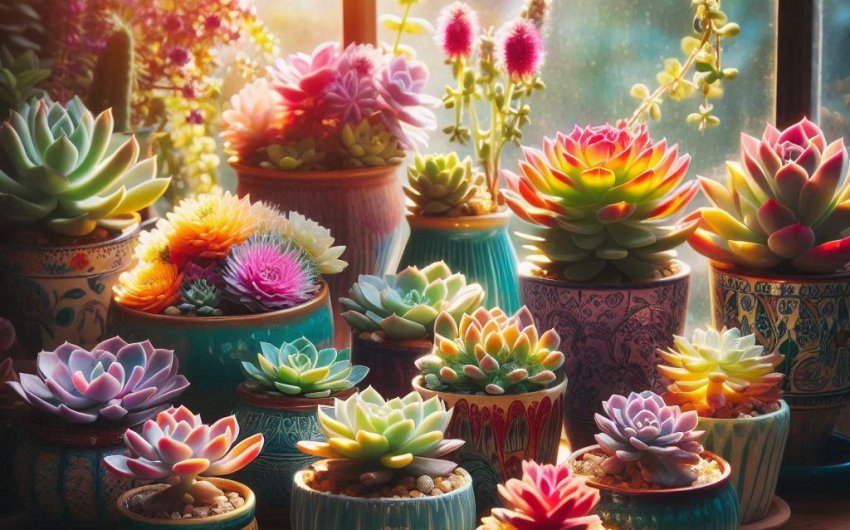
Cultivating these captivating plants in your home can bring a touch of natural beauty and unique form, and learning how to grow succulents indoors successfully is simpler than many people think. Their ability to store water in their leaves, stems, or roots makes them incredibly resilient and forgiving, perfect for both novice and experienced plant enthusiasts. This comprehensive guide will delve into every aspect of indoor succulent care, from selecting the right varieties and providing optimal light to proper watering, pest management, and propagation, ensuring your succulents thrive and add charm to your living space.
What is the best light for indoor succulents?
Light is arguably the most crucial factor for succulent growth indoors. These plants typically originate from arid, sunny regions and require ample bright light to maintain their compact form and vibrant colors. Without enough light, succulents can stretch out, lose their color, and become weak.
How much light do succulents need?
Most succulent plants require a minimum of 6 hours of direct sunlight per day to truly flourish. However, "direct sunlight" indoors isn't the same as direct outdoor sun, which is much more intense.
- Bright, direct light: An ideal spot is a south-facing window (in the Northern Hemisphere) or a west-facing window. These locations usually provide the most intense and prolonged exposure to natural light throughout the day.
- Bright, indirect light: East-facing windows offer good morning sun, which is less harsh. North-facing windows typically provide only low, indirect light and are generally not sufficient for most succulents without supplemental lighting.
What are signs of insufficient light?
- Etiolation: This is the most common sign. The succulent will stretch out, becoming leggy and spindly, with increased space between the leaves as it "reaches" for more light. Its natural compact shape will be lost.
- Fading colors: Vibrant colors will become duller, and variegated (multi-colored) succulents may lose their distinct patterns.
- Downward-facing leaves: Leaves might turn downward rather than remaining upright, indicating the plant is trying to expose more surface area to light.
- Weak growth: The plant may become generally weak and susceptible to pests and diseases.
What if natural light is limited?
If your home doesn't offer enough natural light, don't despair! Grow lights are an excellent solution to help your indoor succulents thrive.
- Type of light: LED grow lights are energy-efficient and effective. Look for "full-spectrum" LED grow lights that mimic natural sunlight.
- Distance: Place the grow light about 6-12 inches above your succulents, adjusting based on the specific light's intensity and the plant's reaction. Monitor for signs of too much light (scorching, bleaching) or too little.
- Duration: Provide 10-14 hours of artificial light per day, mimicking a long, sunny day. Consider using a light timer for consistency. You can find excellent LED grow lights for succulents.
How often should you water indoor succulents?
Watering is where most people go wrong with succulents, often leading to their demise. The key is to avoid overwatering, which causes root rot, their number one killer. Succulents are designed to withstand drought, not constant moisture.
What is the "soak and dry" method?
This is the golden rule for watering succulents. It mimics their natural environment where they receive intense rainfall followed by long periods of dryness.
- Wait for the soil to be completely dry: Before watering, stick your finger deeply into the soil (at least 1-2 inches, or even deeper for larger pots). The soil must be bone dry. If in doubt, wait a few more days.
- Soak thoroughly: Water deeply until water freely drains from the bottom of the pot. Do not let the pot sit in standing water. Discard any excess water from the saucer within 15-30 minutes.
- Repeat: Only water again when the soil is completely dry.
What factors influence watering frequency?
There's no fixed schedule because many factors affect how quickly your succulent's soil dries out.
- Light levels: More light means faster drying. Succulents in a bright, sunny window will need water more often than those in a dimmer spot.
- Temperature: Warmer temperatures increase evaporation, so you'll water more frequently in summer than in winter.
- Humidity: High humidity slows down drying.
- Pot material: Terracotta pots are porous and allow water to evaporate faster than glazed ceramic or plastic pots.
- Soil type: Fast-draining soil will dry out quicker than heavy, moisture-retentive soil.
- Season: Succulents typically need less water during their dormant period (usually winter for most common varieties, but research your specific plant).
What are signs of overwatering?
- Soft, mushy leaves: Leaves become translucent, yellow, and soft. They may fall off easily.
- Blackened stems or leaves: This indicates rot, which is often irreversible.
- Fungus gnats: These tiny flies are a sign of consistently wet soil.
What are signs of underwatering?
- Wrinkled, shriveled leaves: Leaves may appear deflated or thin.
- Crispy leaves: The lowest leaves may dry up and become brittle.
- Slow growth: The plant generally looks dehydrated.
- Note: Underwatering is generally less harmful than overwatering, as succulents can often recover quickly once watered.
What kind of soil is best for succulents?
The right potting mix is almost as important as proper watering. Succulents require extremely well-draining soil that allows water to pass through quickly and prevents roots from sitting in moisture.
Why is drainage critical?
In their natural habitats, succulents grow in sandy or rocky soils where water drains almost instantly. Replicating this indoors is vital. Standard potting soil holds too much moisture, suffocating roots and leading to rot.
What makes a good succulent soil mix?
A good succulent soil mix balances drainage, aeration, and just enough nutrient retention.
- Components:
- Pumice or Perlite: Essential for improving drainage and aeration. Pumice is volcanic rock that doesn't break down over time, while perlite is puffed volcanic glass.
- Coarse Sand or Grit: Adds drainage. Use horticultural sand, not play sand.
- Potting Mix (minimal): A small amount of well-draining potting mix (preferably one that's not peat-heavy).
- Optional: Coco Coir: A sustainable alternative to peat moss, offering good drainage and aeration when mixed with grit.
How to make your own succulent soil mix:
You can buy specialized "succulent and cactus soil" or create your own, which often offers better drainage.
- Basic Recipe:
- 1 part potting soil (or coco coir)
- 1 part perlite or pumice
- 1 part coarse sand or fine gravel (like poultry grit)
Adjust the ratios as needed. If you tend to overwater, add more grit. If you live in a very hot, dry climate, you might increase the potting mix slightly to retain a little more moisture.
What is the best pot for succulents?
The pot choice plays a significant role in successful indoor succulent care, directly impacting drainage and soil drying.
Why is drainage important for pots?
- Drainage holes are non-negotiable: This is the most critical feature. A pot without a drainage hole is a death sentence for most succulents, as excess water will collect at the bottom and lead to root rot.
- Material matters:
- Terracotta pots: These are excellent for succulents. Their porous nature allows air to circulate through the soil and excess moisture to evaporate quickly, reducing the risk of overwatering. You can find various terracotta pots with drainage.
- Glazed ceramic or plastic pots: These materials are non-porous and retain moisture longer. If using them, be extra diligent with your "soak and dry" watering method and ensure ample drainage holes.
- Size: Choose a pot that is appropriate for the size of your succulent. A pot that is too large will hold too much soil and thus too much moisture, leading to slow drying times and potential root rot. A pot that's only slightly larger than the root ball is ideal.
Should you use a drainage layer (e.g., pebbles)?
- No! Adding a layer of pebbles or gravel at the bottom of a pot with a drainage hole does not improve drainage. In fact, it can create a "perched water table," where water accumulates just above the gravel layer, keeping the soil above it soggy and contributing to root rot. Good drainage comes from the soil mix itself and a proper drainage hole.
How and when should you fertilize indoor succulents?
Succulents are not heavy feeders. In their natural, often nutrient-poor environments, they have evolved to survive with minimal nutrients. Over-fertilizing can easily burn their roots and cause more harm than good.
What kind of fertilizer?
- Low Nitrogen, Balanced Fertilizer: Look for a succulent and cactus fertilizer or a balanced liquid fertilizer with a low NPK ratio (e.g., 5-10-10 or 2-7-7). The lower nitrogen helps prevent excessive, leggy growth.
- Dilution: Always dilute the fertilizer to half or even quarter strength of what the package recommends.
When to fertilize?
- Growing Season Only: Fertilize only during the succulent's active growing season, which is typically spring and summer for most common varieties (e.g., Echeverias, Sedums, Haworthias).
- Frequency: Once a month or once every two months during the growing season is usually sufficient.
- Dormancy: Do not fertilize during the plant's dormant period (usually fall and winter), as it won't be actively using the nutrients, and salt buildup can occur.
- Newly Repotted: Avoid fertilizing newly repotted succulents for at least a month, as the fresh soil will contain some nutrients, and the plant needs time to recover from repotting stress.
What is the ideal temperature and humidity for succulents?
While light and water are paramount, temperature and humidity also play a role in successful succulent plant care.
Temperature requirements:
Most succulent plants are quite tolerant of a range of indoor temperatures.
- Ideal range: Daytime temperatures between 65-80°F (18-27°C) are generally ideal.
- Nighttime drop: Succulents appreciate a slight drop in temperature at night, mirroring their desert origins. Temperatures in the 50s Fahrenheit (10-15°C) are often beneficial.
- Avoid extremes: Protect succulents from extreme cold (below 40°F / 5°C) and hot drafts from heating vents, which can dry them out too quickly.
Humidity requirements:
- Low humidity: Succulents thrive in low humidity environments. They do not need misting; in fact, misting can cause water to sit on their leaves, leading to fungal issues or rot.
- Good air circulation: Good airflow helps prevent fungal problems and allows the soil to dry out more efficiently.
How and when do you repot succulents?
Repotting your indoor succulents is part of their long-term care, providing fresh nutrients and room for growth.
When to repot?
- Infrequent: Succulents don't need frequent repotting. They generally prefer to be a bit root-bound.
- Signs of needing repotting:
- Roots growing out of the drainage holes.
- The plant is clearly outgrowing its pot.
- The soil has become compacted or no longer drains well.
- You are seeing a white crust of mineral buildup on the soil surface or pot, indicating too many salts.
- Timing: The best time to repot is during the plant's active growing season (spring or early summer).
How to repot a succulent:
- Gather materials: New pot (only one size larger, with drainage holes), fresh succulent soil mix, garden gloves (especially for spiky varieties), and a trowel.
- Prepare the new pot: Add a small layer of your well-draining succulent soil mix to the bottom of the new pot.
- Carefully remove the plant: Gently tip the old pot on its side and slide the succulent out. If it's stuck, you might need to run a knife around the inner edge of the pot.
- Inspect roots: Gently shake off old soil and inspect the roots. Trim away any dead, mushy, or rotten roots with clean, sharp scissors. Allow any cuts to callus (dry and form a scab) for a few hours or even a day before replanting.
- Place the plant: Center the succulent in the new pot, ensuring the base of the plant is at the same level as it was in the old pot.
- Add soil: Fill the rest of the pot with fresh soil, gently tamping it down around the roots. Leave about a half-inch to an inch of space from the rim of the pot.
- Do not water immediately: Wait at least a few days, preferably a week, after repotting before watering. This allows any damaged roots to heal and prevents rot, as roots that are trying to heal are more susceptible to rot when wet.
How do you propagate indoor succulents?
One of the most exciting aspects of succulent plant care is their incredible ability to propagate from various parts, allowing you to easily expand your collection or share with friends.
What are common propagation methods?
- Leaf Cuttings: Many succulents (like Echeverias, Sedums, Crassulas) can be propagated from a single leaf.
- Take a healthy leaf: Gently twist a healthy leaf off the stem. Ensure you get a clean break, including the very base of the leaf, as this is where the new plant will form.
- Callus: Allow the leaf to callus over for 2-7 days in a dry, shaded spot. This forms a protective scab, preventing rot.
- Lay on soil: Place the callused leaf on top of well-draining succulent soil.
- Wait for roots and pups: After a few weeks to months, tiny roots and a "pup" (baby succulent) will emerge from the callused end.
- Mist lightly: Once roots appear, you can lightly mist the soil around the leaf every few days, but don't soak it. The mother leaf will eventually shrivel as the pup absorbs its nutrients.
- Stem Cuttings: Ideal for leggy succulents or those that branch readily (e.g., Kalanchoe, Echeveria, Crassula).
- Cut a healthy stem: Using clean, sharp shears or a pruning knife, cut a healthy stem section at least 2-4 inches long, removing the lower leaves.
- Callus: Allow the cut end to callus for 2-7 days (or longer for thicker stems).
- Plant in soil: Insert the callused end of the cutting into well-draining succulent soil. You can use a rooting hormone to encourage faster root development.
- Wait for roots: Do not water immediately. Wait about a week or two, then water sparingly only when the soil is completely dry. Gently tug on the cutting after a few weeks; resistance indicates root growth.
- Offsets/Pups: Many succulents naturally produce "pups" or "offsets" around the base of the mother plant (e.g., Hens and Chicks, Aloe, Haworthia).
- Separate: When the pup is a decent size (at least an inch or two), gently twist or cut it away from the mother plant, ensuring it has some roots attached.
- Callus: If no roots are present, allow the base to callus for a day or two.
- Plant: Pot the pup in its own small pot with succulent soil. Water sparingly until established.
How do you identify and treat common succulent problems?
Even with the best succulent plant care, issues can arise. Knowing how to spot and address common problems will help you keep your plants healthy.
What are common succulent problems?
- Etiolation (Stretching):
- Cause: Insufficient light.
- Solution: Move to a brighter location or provide supplemental grow lights. You can prune the stretched part and propagate the healthy top.
- Mushy/Yellow/Blackened Leaves/Stem (Rot):
- Cause: Overwatering, poor drainage.
- Solution: Immediately stop watering. If severe, unpot the plant, inspect roots. Cut away all soft, black, or smelly parts of roots and stem with a sterile knife. Allow cuts to callus for several days before repotting in fresh, dry succulent soil. In many cases, it may be too late, but you might be able to take healthy leaf or stem cuttings to start new plants.
- Wrinkled/Shriveled Leaves:
- Cause: Underwatering or sometimes too much direct, intense sun without enough water.
- Solution: Water thoroughly using the "soak and dry" method. The leaves should plump up within a day or two.
- Brown/Crispy Leaves (usually lower leaves):
- Cause: Normal aging (lower leaves die off), or severe underwatering.
- Solution: Remove dead leaves. If widespread, increase watering frequency slightly.
- Sunburn/Scorching:
- Cause: Too much sudden, intense direct sunlight, especially if the plant wasn't accustomed to it.
- Solution: Move the plant to a slightly less intense spot or slowly acclimate it to brighter light. Damaged leaves won't recover but new growth will be healthy.
What about pests?
Indoor succulents are generally pest-resistant, but they can occasionally attract some common houseplant pests, especially if stressed.
- Mealybugs: Small, white, cottony insects found in crevices, on stems, or under leaves. They suck plant sap.
- Treatment: Dip a cotton swab in rubbing alcohol and directly touch each mealybug to kill it. Repeat weekly until gone. For heavy infestations, use insecticidal soap or neem oil spray.
- Fungus Gnats: Tiny, black flying insects that are often seen buzzing around soil. Their larvae feed on organic matter in consistently moist soil.
- Treatment: This indicates overwatering. Let the soil dry out completely between waterings. Use yellow sticky traps to catch adults. For severe cases, use BT (Bacillus thuringiensis israelensis) dunks in your watering can.
- Spider Mites: Tiny arachnids that cause fine webbing and stippling on leaves. Common in dry environments.
- Treatment: Isolate the plant. Use a strong spray of water to dislodge them. Apply insecticidal soap or neem oil, ensuring full coverage.
Always isolate new plants before introducing them to your collection to prevent bringing in pests.
What are some popular indoor succulent varieties?
There's a vast world of succulent plants, each with unique characteristics and aesthetic appeal. Choosing the right varieties for your indoor conditions can enhance your success and enjoyment.
Here's a table of some popular and relatively easy-to-care-for indoor succulent varieties:
| Succulent Name | Common Name(s) | Key Features | Care Notes (indoors) |
|---|---|---|---|
| Echeveria | Hens and Chicks | Rosette-forming, wide range of colors (blue, pink, purple, green). Often chalky "farina." | Needs extremely bright light to maintain compact shape and color. Very susceptible to rot if overwatered. Many varieties available, e.g., 'Perle von Nurnberg', 'Lola'. |
| Sedum | Stonecrop, Jelly Bean Plant | Trailing or mounding growth, small fleshy leaves. Many colors and forms. | Generally very forgiving. Some (like 'Burro's Tail') are sensitive to touch, causing leaves to drop. Great for hanging baskets. |
| Haworthia | Zebra Plant, Window Haworthia | Small, compact rosettes. Often dark green with white stripes or translucent "windows." | Tolerates slightly lower light than other succulents, but still prefers bright, indirect light. Less prone to etiolation. Ideal for smaller spaces. |
| Gasteria | Ox Tongue | Thick, tongue-shaped leaves, often speckled or textured. Resemble Haworthias. | Similar to Haworthias in care; can handle bright indirect light. Known for their unique leaf patterns. |
| Sansevieria | Snake Plant, Mother-in-Law's Tongue | Upright, sword-like leaves; some variegated. Extremely tolerant of neglect. | Very low maintenance. Tolerates low light but thrives in medium to bright indirect light. Can go for weeks without water. A great beginner plant. |
| Zamioculcas zamiifolia (ZZ Plant) | ZZ Plant | Shiny, dark green, oval leaves on upright stems. Stores water in rhizomes. | Extremely drought-tolerant and low-light tolerant. Often mistaken for a succulent but shares similar care principles due to water storage. |
| Aloe | Aloe Vera, Tiger Tooth Aloe | Rosettes of thick, fleshy leaves, often with teeth. Medicinal properties (Aloe Vera). | Needs bright, indirect light. Water deeply but infrequently. Aloe Vera needs good drainage. |
| Crassula ovata | Jade Plant | Tree-like growth with thick, oval, shiny green leaves. Can develop red edges in sun. | One of the easiest succulents. Can grow into a substantial indoor tree. Tolerates pruning and can live for decades. Needs bright light to stay compact. |
| Kalanchoe tomentosa | Panda Plant | Fuzzy, silver-green leaves with brown spots on the edges. Very textural. | Needs bright light. Don't let water sit on fuzzy leaves to prevent rot. |
| Portulacaria afra | Elephant Bush | Small, round, bright green leaves on reddish stems. Resembles a miniature jade plant. | Fast-growing and easy to propagate. Excellent for beginner bonsai. Needs bright light. |
Successfully nurturing succulent plants indoors truly elevates your home decor, bringing distinct shapes and colors into your living space. By diligently providing adequate light, mastering the "soak and dry" watering technique, using proper draining soil, and understanding their unique needs, you can ensure your succulents not only survive but truly thrive, adding a resilient and captivating element to your indoor plant collection.