
Homesteading Garden Layout: Building Self-Sufficiency from the Ground Up!
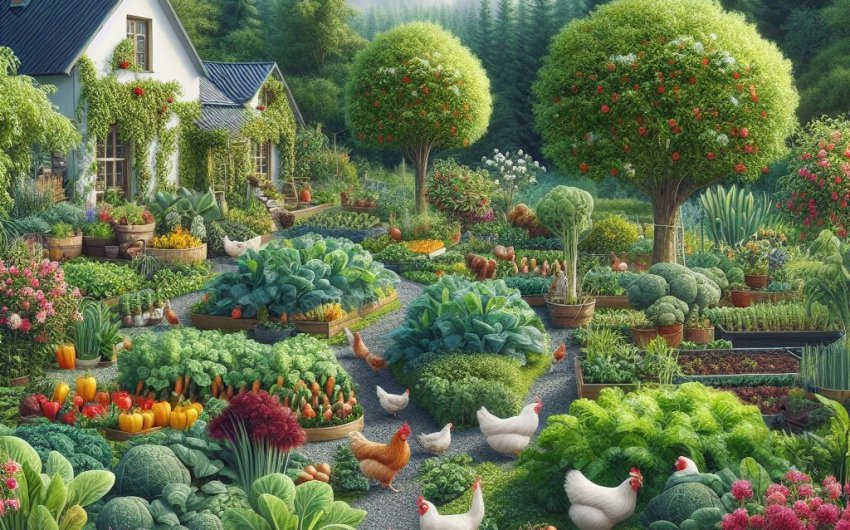
The dream of self-sufficiency, of providing for one's own needs directly from the land, often begins in the garden. A homesteading garden layout isn't just about planting rows of vegetables; it's a strategic blueprint for food production, resource management, and creating a resilient, productive outdoor space. It's about maximizing every inch, integrating various elements, and working with nature to ensure a continuous supply of food, medicine, and beauty. Far more than a hobby, a homestead garden is a foundational step towards a more sustainable and independent lifestyle.
Designing such a garden involves careful planning, considering everything from sunlight patterns and soil health to efficient water use and the integration of diverse crops. It's a journey of learning, adapting, and transforming a patch of ground into a vibrant ecosystem that feeds your family and nurtures your spirit. This comprehensive guide will delve into the principles and practicalities of creating an effective homesteading garden layout, providing you with the insights and inspiration to begin building self-sufficiency from the ground up. Let's cultivate a thriving and sustainable future, one carefully planned bed at a time.
What Are the Core Principles of a Homesteading Garden Layout?
How Does Self-Sufficiency Influence Garden Design?
The concept of self-sufficiency profoundly influences garden design in a homesteading garden layout. It shifts the focus from purely ornamental planting to maximizing edible yields, resource efficiency, and long-term sustainability.
- Prioritize Food Production: The primary goal is to grow enough food to feed your household for as much of the year as possible, including crops suitable for storage (canning, freezing, drying). This means selecting high-yielding varieties and planning for succession planting.
- Diversification: Relying on a wide variety of crops (fruits, vegetables, herbs, grains, nuts) reduces risk. If one crop fails due to pests or disease, others will still provide food. This also ensures a diverse, balanced diet.
- Resource Management: Every resource is valuable.
- Water: Design for efficient water use (e.g., drip irrigation, rainwater harvesting, swales).
- Nutrients: Focus on soil health through composting, cover cropping, and nutrient cycling within the garden.
- Space: Maximize production in limited space through vertical gardening, intercropping, and intensive planting.
- Long-Term Planning: A self-sufficient garden isn't just for one season. It involves perennial food crops (fruit trees, berry bushes), seed saving, and building soil health for future generations.
- Integration with Livestock (if applicable): If you have chickens or other livestock, the garden layout might integrate their roles (e.g., chickens for pest control or compost turning).
The garden design becomes a reflection of a commitment to living off the land as much as possible.
Why Is Maximizing Yield and Efficiency Important?
Maximizing yield and efficiency is paramount in a homesteading garden layout to ensure that your efforts produce a significant and reliable food supply.
- Feeding the Household: To achieve self-sufficiency, the garden must produce enough food to meet the dietary needs of everyone. This requires strategic planning to get the most out of every square foot.
- Resource Optimization: Every bit of water, sunlight, soil nutrients, and gardener's time is a valuable resource. An efficient layout minimizes waste of these resources.
- Succession Planting: This involves planting new crops in sequence as others are harvested, ensuring a continuous supply of fresh produce throughout the growing season.
- Vertical Gardening: Utilizing vertical space (trellises, arbors, wall planters) allows you to grow vining crops upwards, freeing up ground space for more plants.
- Intensive Planting: Planting crops more densely than in traditional rows (but still allowing adequate space for growth) can increase yields per square foot, especially in raised beds.
- Pathways and Access: Efficient garden layout minimizes unproductive pathways, but ensures all beds are easily accessible for planting, weeding, watering, and harvesting.
A well-designed layout turns your garden into a highly productive food factory.
How Does Permaculture Influence Homesteading Gardens?
Permaculture, a design philosophy based on ecosystem principles, profoundly influences homesteading gardens by emphasizing sustainability, resilience, and working with nature.
- Observation and Interaction: Start by observing your site's natural patterns (sun paths, water flow, wind direction) to inform your garden design.
- Relative Location: Place elements where they can benefit each other and minimize effort (e.g., kitchen herbs near the house, compost near garden beds).
- Multi-Functionality: Each element in the garden should serve multiple functions (e.g., a rain barrel provides water and a base for a trellis).
- Mimic Natural Ecosystems: Design plant guilds and polycultures (multiple species growing together) that mimic natural systems, creating mutually beneficial relationships and reducing reliance on external inputs. This often includes companion planting.
- Energy Efficiency: Capture and store energy (e.g., sunlight with passive solar design, water with swales).
- Waste is a Resource: Treat all "waste" as a valuable resource (e.g., food scraps to compost, pruning debris as mulch).
- Small and Slow Solutions: Start small, observe, and expand gradually.
- Productivity and Resilience: The goal is a highly productive system that is resilient to stresses like drought, pests, and diseases.
Permaculture principles guide the creation of a harmonious, productive, and truly self-sufficient garden.
What Are Key Elements to Plan in Your Garden Layout?
How to Assess Sunlight and Water Sources?
Assessing sunlight and water sources is the fundamental first step in planning any homesteading garden layout, as these resources dictate what and where you can grow.
- Sunlight Assessment:
- Map Sun Paths: Observe your property throughout the day and across seasons (especially spring, summer, fall) to see where full sun (6+ hours of direct sun), partial sun (4-6 hours), and full shade (less than 4 hours) fall. Use tools like a sunlight calculator app or simply stakes and string with hourly photos.
- Prioritize Sun for Edibles: Most vegetable crops require full sun. Locate your primary vegetable beds in the sunniest areas.
- Utilize Shade: Plan for shade-loving crops (leafy greens, some herbs) in areas with partial shade.
- Consider Winter Sun: Even in winter, passive solar design can be crucial for greenhouses or cold frames.
- Water Source Assessment:
- Main Water Access: Identify existing spigots or water lines.
- Rainwater Harvesting: Plan for rain barrels or larger cisterns to collect rainwater from rooftops. This is a sustainable and free water source for your garden.
- Greywater System (if feasible): Consider diverting filtered greywater (from showers, laundry) for non-edible plants.
- Well/Pond Access: If available, assess their capacity.
- Water Pressure: If planning drip irrigation, check water pressure at your proposed tap points.
- Water Flow/Drainage: Observe how water naturally flows across your property after rain. Identify low spots, areas prone to pooling, or areas with runoff. This informs placement of raised beds, swales, or berms for water harvesting or drainage.
Thorough assessment ensures you leverage natural resources efficiently.
How to Plan for Optimal Soil Health?
Planning for optimal soil health is crucial for long-term productivity and a truly self-sufficient garden. Healthy soil reduces the need for external inputs.
- Soil Test: Start with a comprehensive soil test (pH, nutrient levels, texture). This will inform your initial amendments. A Garden Soil Test Kit is a good starting point.
- Build with Organic Matter: The cornerstone of soil health. Plan for continuous addition of compost, well-rotted manure, and other organic matter.
- Compost Area: Designate a convenient, accessible location for your compost pile or bins.
- Sheet Mulching/Lasagna Gardening: Plan for new beds to be built up using layers of organic matter.
- Cover Cropping: Integrate cover crops into your rotation schedule for garden beds that are not actively producing. Cover crops protect soil from erosion, suppress weeds, add organic matter, and some (legumes) fix nitrogen.
- Minimize Soil Disturbance: Embrace no-dig or no-till gardening practices to protect soil structure and soil microbes.
- Improve Drainage: If your soil test indicates heavy clay, plan for incorporating significant organic matter or constructing raised beds to ensure good drainage.
- Nutrient Cycling: Design for nutrient cycling within the garden. For example, locate compost bins near your primary garden beds for easy transfer of finished compost.
A focus on soil health yields vibrant, productive plants year after year.
What Is the Best Layout for Vegetable Beds?
The best layout for vegetable beds in a homesteading garden focuses on maximizing yield and ease of access.
- Raised Beds: Highly recommended for homesteading gardens.
- Pros: Excellent drainage, allow for custom potting mix, easier to manage weeds and pests, extend the growing season (warms up faster), reduce bending/kneeling.
- Design: Typically 3-4 feet wide (allowing access from both sides without stepping in them) and any length. Can be built from wood, stone, or even galvanized metal. You can find Raised Garden Bed Kits.
- In-Ground Beds (Wide Rows): If not using raised beds, plant in wide rows (1-3 feet wide) instead of single rows. This maximizes planting area and reduces unproductive pathways.
- North-South Orientation: For most crops in the Northern Hemisphere, orient rows or the long side of raised beds in a north-south direction to ensure all plants receive maximum sunlight throughout the day.
- Pathways: Keep pathways between beds wide enough for a wheelbarrow (2-3 feet). Use permanent, mulched pathways to minimize soil compaction in planting areas.
- Zone Planning: Group plants with similar needs (e.g., root vegetables together, heavy feeders together).
This layout prioritizes productivity and ease of management.
How to Incorporate Perennial Food Crops and Fruit Trees?
Incorporating perennial food crops and fruit trees is a cornerstone of homesteading garden layout for long-term self-sufficiency.
- Long-Term Investment: These crops provide reliable harvests year after year with less annual effort once established.
- Placement:
- Fruit Trees: Place fruit trees (apples, pears, peaches, plums, citrus) where they won't shade your primary vegetable beds when mature. Consider dwarf or semi-dwarf varieties for smaller spaces. Allow adequate spacing for their mature size.
- Berry Bushes: Plant berry bushes (blueberries, raspberries, blackberries) in dedicated areas. Blueberries need acidic soil. Raspberries and blackberries often need trellising.
- Perennial Herbs/Vegetables: Incorporate perennial herbs (rosemary, thyme, oregano, mint - in containers to control spread) and vegetables (asparagus, rhubarb, artichokes) into dedicated perennial beds or at the edges of vegetable beds.
- Edible Landscaping: Integrate fruit trees and berry bushes into your ornamental landscape around your home for dual purpose (beauty and food).
- Succession Planning: Consider when fruit trees and berries will begin producing. They are a long-term investment.
Planning for perennials is a key step towards a truly self-sufficient homestead.
How to Maximize Efficiency and Resources in Your Garden?
What Is the Role of Composting in the Layout?
The role of composting in the layout of a homesteading garden is absolutely central to its self-sufficiency and efficiency.
- Nutrient Cycling: Compost is the engine of nutrient cycling. It transforms garden waste (plant trimmings, leaves, grass clippings) and kitchen scraps into nutrient-rich compost, which is then returned to the garden beds, creating a closed-loop system for soil fertility. This reduces reliance on external fertilizers.
- Soil Amendment: Finished compost is the best organic matter for amending soil, improving its structure, water retention, and drainage.
- Waste Reduction: Diverting organic waste from landfills means less trash, further contributing to self-sufficiency.
- Location: Place your compost pile or bins in a convenient, easily accessible location near your garden beds. This minimizes effort for adding materials and for retrieving finished compost. It should also be a spot that receives some partial shade to prevent it from drying out too quickly, and a water source nearby is helpful. A Compost Bin for Garden can fit various sizes.
A well-integrated compost system is indispensable for a productive and sustainable homestead garden.
How Can Efficient Watering Systems Be Incorporated?
Efficient watering systems are vital for maximizing efficiency and conserving resources in a homesteading garden, especially given unpredictable weather patterns.
- Drip Irrigation: This is the most efficient watering method for most vegetable beds.
- How it works: Delivers water slowly and directly to the plant roots through emitters or perforated tubing.
- Benefits: Minimizes water loss to evaporation or runoff, reduces weed growth (as only desired plants are watered), prevents fungal diseases (by keeping foliage dry), and saves water.
- Soaker Hoses: Similar to drip irrigation, these porous hoses slowly seep water along their length, perfect for rows or dense beds.
- Rainwater Harvesting:
- Rain Barrels: Collect rainwater from downspouts to use for garden watering. A Rain Barrel for Garden is a simple addition.
- Cisterns: Larger storage tanks for greater capacity.
- Swales and Berms: Contour lines in the landscape that capture and slow down runoff, allowing water to infiltrate the soil rather than escaping.
- Timers: Use automatic timers with your drip irrigation or soaker hoses to ensure consistent and hands-free watering.
- Mulching: Always apply a thick layer of mulch to garden beds to reduce evaporation and retain soil moisture.
Investing in efficient watering systems saves time, effort, and a precious resource.
What Is the Importance of Crop Rotation?
Crop rotation is an essential practice in a homesteading garden layout for maintaining long-term soil health and yields, and for managing pests and diseases.
- Disease Prevention: Many plant diseases are specific to certain plant families and can build up in the soil if the same crop is grown in the same spot repeatedly. Crop rotation disrupts the life cycle of these soil-borne pathogens.
- Pest Management: Similarly, certain pests are specific to certain crops. Crop rotation helps starve out these pests or confuses them by moving their preferred food source.
- Nutrient Management: Different plant families have different nutrient needs and root depths.
- Heavy feeders (corn, cabbage) deplete nutrients.
- Light feeders (carrots, lettuce) are less demanding.
- Legumes (beans, peas) fix nitrogen, enriching the soil. Rotation helps balance soil nutrient use and can even build soil fertility.
- Soil Structure: Varied root structures from different crops can improve soil structure over time.
Divide your garden beds into sections and rotate plant families through these sections over a 3-4 year cycle. Keep a garden journal to track your rotation.
How Can Intercropping and Companion Planting Maximize Space?
Intercropping and companion planting are powerful techniques for maximizing space and efficiency in a homesteading garden layout.
- Intercropping: Growing two or more different crops in the same space at the same time.
- Benefits: Maximizes yields per square foot, utilizes space efficiently (e.g., planting fast-growing, short-season crops between slower-growing, long-season crops), and can reduce weed growth by shading the soil faster.
- Examples: Planting radishes or lettuce between rows of slower-growing corn or tomatoes.
- Companion Planting: Strategically placing different plant species near each other for mutual benefit.
- Pest Deterrence: Marigolds repel nematodes. Onions deter aphids. Basil is said to deter tomato hornworms.
- Attract Beneficial Insects: Dill, cilantro, cosmos, and yarrow attract pollinators and beneficial insects that prey on pests.
- Growth Enhancement: Some pairings are believed to enhance flavor or growth (e.g., basil and tomatoes).
- Nutrient Cycling: Legumes (beans, peas) fix nitrogen for nearby plants.
- Shade/Support: Tall plants can provide shade for sun-sensitive plants, or support for vining plants.
These methods foster a more diverse, resilient, and productive garden ecosystem. A good Companion Planting Guide Book can provide specific pairings.
What Are Other Considerations for a Self-Sufficient Garden?
What Role Do Pollinators Play in Your Garden?
Pollinators play an absolutely critical role in your garden for achieving self-sufficiency, particularly for fruiting vegetable crops and fruit trees.
- Fruit and Vegetable Production: Many common vegetables (tomatoes, peppers, squash, beans, cucumbers, melons) and almost all fruit trees and berry bushes rely on pollinators (bees, butterflies, hoverflies, etc.) for fruit set. Without them, flowers may form but no edible fruit will develop, severely impacting your yield.
- Increased Yield and Quality: Effective pollination can lead to larger, better-formed fruits and higher yields.
- Biodiversity: Encouraging pollinators contributes to overall garden biodiversity, leading to a healthier and more resilient ecosystem.
- Attracting Pollinators:
- Plant pollinator-friendly flowers: Integrate flowers that provide diverse nectar and pollen sources (e.g., cosmos, sunflowers, coneflowers, calendula, zinnias, herbs like dill and cilantro left to flower).
- Avoid pesticides: Refrain from using broad-spectrum chemical pesticides that harm pollinators.
- Provide water source: A shallow bird bath or a dish with pebbles can provide a water source.
- Offer shelter: Undisturbed areas, rock piles, or insect hotels can provide nesting sites.
A homesteading garden actively nurtures its pollinator population.
How to Plan for Seed Saving and Propagation?
Planning for seed saving and propagation is essential for true self-sufficiency in a homesteading garden.
- Seed Saving:
- Choose Open-Pollinated Varieties: Prioritize open-pollinated (OP) or heirloom varieties over F1 hybrids. Seeds saved from OP varieties will grow true to type (produce plants like the parent). F1 hybrid seeds often do not, or produce inferior plants.
- Designate Plants: Plan to let a few healthy, vigorous plants of each desired crop go to seed. These plants should not be harvested for food.
- Proper Collection and Storage: Learn the correct techniques for harvesting, drying, and storing seeds to maintain viability.
- Seed Exchange: Participate in local seed exchanges to diversify your seed stock.
- Propagation:
- Cuttings: Learn to propagate herbs, shrubs, and some perennials from cuttings.
- Division: Divide perennials (e.g., asparagus, rhubarb, some herbs) to create new plants.
- Rooting hormone: Can aid in propagation from cuttings. A Rooting Hormone Powder can be helpful.
Seed saving and propagation reduce your reliance on external seed suppliers and nurseries, making your garden truly self-sustaining.
What Is the Role of a Garden Journal?
A garden journal is an invaluable tool for any homesteading garden, playing a vital role in learning, planning, and achieving self-sufficiency.
- Tracking and Observation: Record key information:
- Planting dates, germination rates, transplant dates.
- Harvest dates and yields (essential for assessing productivity).
- Weather patterns (rainfall, temperatures, frost dates).
- Pest and disease outbreaks and their treatment.
- Fertilizing and watering schedules.
- Bloom times for pollinator plants.
- Learning and Improvement: A garden journal allows you to reflect on what worked well and what didn't. You can analyze data year after year to make informed decisions for future seasons.
- Planning Tool: Use it to sketch garden layouts, plan crop rotations, succession plantings, and seed saving schedules.
- Problem Solving: Documenting problems helps you diagnose recurring issues and find effective solutions.
- Personal Notes: Include observations on plant vigor, flavor, fragrance, and aesthetic qualities.
A comprehensive Garden Journal Planner helps you track your progress.
How Can I Integrate Wildlife-Friendly Features?
Integrating wildlife-friendly features into your homesteading garden layout creates a more balanced, resilient, and beautiful ecosystem.
- Pollinator Gardens: Dedicate areas to pollinator-friendly flowers that bloom throughout the season.
- Water Sources: Provide clean water for birds, bees, and other wildlife (bird baths, shallow dishes with pebbles for bees).
- Shelter: Create brush piles, log piles, or leave some areas of perennial grasses/shrubs undisturbed to provide shelter and nesting sites for beneficial insects, small mammals, and birds.
- Native Plants: Incorporate native plants into your landscape. They are adapted to your local climate, require less water and fertilizer, and provide food and habitat specifically suited for local wildlife.
- Pest Control: By attracting beneficial insects (like ladybugs, lacewings, predatory wasps) and birds, you create natural pest control systems, reducing reliance on external inputs.
- Diversity: A diverse range of plants attracts a diverse range of wildlife, contributing to a more robust ecosystem.
A self-sufficient garden works in harmony with nature, attracting allies that contribute to its overall health and productivity.