
How do I train espaliered apple trees?
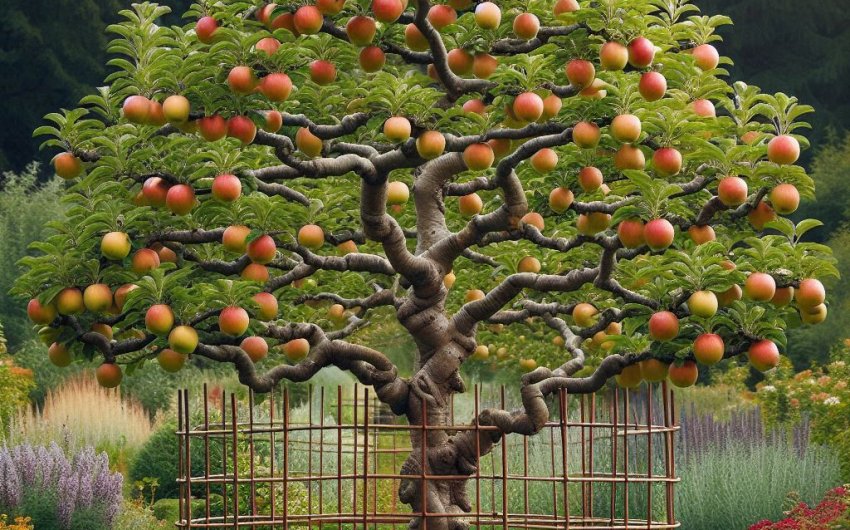
To train espaliered apple trees, you must select a suitable dwarf variety, establish a strong support structure, and then meticulously prune and tie branches to the desired flat, two-dimensional pattern over several years. This precise technique encourages fruit production while optimizing space.
What is Espalier and Why Train Apple Trees This Way?
Espalier is an ancient horticultural technique where fruit trees, or other woody plants, are trained to grow flat against a wall, fence, or a system of wires. The word "espalier" refers both to the practice and to the plant itself. This sophisticated method transforms a functional fruit tree into a living work of art, while also offering significant practical benefits.
Why Train Apple Trees as Espaliers?
- Space Efficiency: This is the primary reason. Espalier allows you to grow apple trees in incredibly tight spaces – against narrow walls, along walkways, or in small urban gardens – where a traditional, free-standing tree would never fit. It maximizes fruit production in limited areas.
- Increased Fruit Production: By training branches horizontally, the technique encourages the tree to produce more fruiting spurs (short, stubby branches where apples develop). The horizontal positioning and controlled growth restrict vegetative (leafy) growth and redirect the tree's energy into fruit development.
- Improved Fruit Quality:
- Sunlight Exposure: Each apple on an espaliered tree receives maximum sunlight, leading to better coloration, increased sugar content, and enhanced flavor.
- Air Circulation: The open, two-dimensional form promotes excellent air circulation, which significantly reduces the incidence of fungal diseases like powdery mildew and apple scab.
- Easier Maintenance and Harvesting:
- Accessibility: Pruning, pest inspection, thinning fruit, and harvesting are all performed at comfortable heights, without the need for ladders or extensive bending. Every part of the tree is easily accessible.
- Pest Control: Identifying and addressing pest issues becomes simpler due to the open structure.
- Aesthetics and Ornamental Value:
- Espaliered apple trees are stunning architectural features. They can soften a blank wall, define garden spaces, or create living fences, adding beauty and sophistication to any landscape.
- Various patterns (candelabra, fan, horizontal cordon) offer creative design possibilities.
- Warmth Retention: When trained against a south-facing wall (in the Northern Hemisphere), the wall absorbs solar heat during the day and radiates it back at night, creating a warmer microclimate. This can benefit apple trees in cooler climates, potentially extending their growing season and protecting against late frosts.
While espalier requires patience and diligent pruning, the long-term rewards of beautiful, space-efficient, and highly productive apple trees make it a truly worthwhile endeavor for dedicated gardeners.
What's the Ideal Apple Variety for Espalier Training?
Choosing the ideal apple variety is critical for successful espalier training. Not all apple trees are well-suited for this precise, restrictive technique. The best varieties are those that are naturally dwarf or semi-dwarf, produce fruit on spurs, and are adaptable to consistent pruning.
Key Characteristics of Ideal Espalier Apple Varieties:
- Dwarf or Semi-Dwarf Rootstock:
- This is non-negotiable. Always start with an apple tree grafted onto a dwarfing rootstock (e.g., M27, M9, M26, G.11, G.41). These rootstocks naturally limit the tree's vigor and mature size, making them much easier to control and train within the espalier framework. Standard or vigorous rootstocks will produce too much rampant growth, making training impossible.
- Spur-Bearing Habit:
- Apple varieties are classified by how they produce fruit:
- Spur-Bearing: Produce most of their fruit on short, stubby branches called "spurs" that remain productive for many years. These are ideal for espalier as the spurs are compact and easily managed within the flattened form.
- Tip-Bearing: Produce fruit primarily on the tips of new, longer growth. These are not suitable for espalier because the constant pruning required for training would remove most of the fruiting wood.
- Partial Tip-Bearing: A mix of both, less ideal but sometimes manageable.
- Look for varieties explicitly labeled as "spur-bearing."
- Apple varieties are classified by how they produce fruit:
- Good Disease Resistance:
- Espaliered trees, while having better air circulation, are still susceptible to common apple diseases. Choosing varieties with resistance to apple scab, powdery mildew, and cedar apple rust can significantly reduce your maintenance efforts.
- Known Bloom Time (for Pollination):
- Remember, most apple varieties are not self-fertile and require a different, compatible apple variety nearby (or on the same espalier if you graft) for cross-pollination. Ensure you choose varieties that bloom at the same time.
Recommended Apple Varieties for Espalier (Look for Dwarf Rootstock):
- 'Gala': Excellent flavor, good spur-bearer, generally adaptable.
- 'Honeycrisp': Very popular for its crisp texture and sweet-tart flavor, a reliable spur-bearer.
- 'Fuji': Sweet and crisp, often grown as a spur-bearer.
- 'Liberty': Excellent disease resistance (scab, powdery mildew, rust), good flavor, productive spur-bearer. Highly recommended for organic gardeners.
- 'Golden Delicious': A classic, good pollinator for many varieties, and a spur-bearer.
- 'Macintosh': Traditional flavor, but can be more susceptible to scab and powdery mildew in some regions.
- 'Arkansas Black': Tart, firm, excellent storage, good spur-bearer.
- 'King' (also known as 'King of Tompkins County'): Vigorous, but adaptable to espalier if well-controlled, good for northern climates.
When purchasing a tree for espalier, always confirm both the variety and the rootstock with the nursery. The success of your espalier depends heavily on this initial selection.
What Kind of Support Structure Do Espaliered Apples Need?
A robust and permanent support structure is absolutely foundational for successfully training espaliered apple trees. The structure guides the tree's growth, holds its branches in place, and supports the weight of the developing fruit for many years. It needs to be durable, well-anchored, and positioned to allow proper training.
Key Components of an Espalier Support Structure:
Sturdy Upright Posts:
- Material: Use durable, rot-resistant materials like pressure-treated lumber (4x4 or 6x6 inches), galvanized steel posts, or heavy-duty metal T-posts.
- Height: The posts should be tall enough to support the full desired height of your espalier pattern, plus an extra 1-2 feet for burying securely in the ground. For a typical espalier, posts might be 6-8 feet above ground.
- Anchoring: Posts must be securely anchored. Dig deep post holes (1/3 of the post length in the ground) and consider using concrete to ensure stability, especially if the structure will be free-standing.
- Spacing: Space posts 8-15 feet apart, depending on the length of your espalier and the vigor of your chosen apple variety.
Horizontal Wires:
- Material: Use strong, durable, and rust-resistant wire, such as galvanized steel wire (12-14 gauge), or plastic-coated garden wire specifically designed for trellising. Avoid thin twine or string, as it will rot or break.
- Attachment: The wires need to be held taut. Use eye bolts, turnbuckles, or strong staples attached to the posts. Turnbuckles are excellent as they allow you to adjust the tension of the wires over time.
- Spacing: The spacing between horizontal wires depends on the espalier pattern you choose (e.g., typically 12-18 inches apart for horizontal cordons or candelabra patterns). This spacing determines where you will train the horizontal tiers.
Wall Anchors (if against a wall/fence):
- If you are training against an existing wall or fence, you will need to install specialized stand-off brackets or eye bolts that hold the wires 4-6 inches away from the surface.
- Why stand-off? This crucial step allows for better air circulation behind the tree (preventing fungal issues), makes it easier to tie and prune branches, and prevents the tree from becoming embedded in the wall.
Setting Up the Structure:
- Plan Your Pattern: Before building, decide on the espalier pattern (e.g., horizontal cordon, fan, candelabra). This will dictate the height and spacing of your wires.
- Mark Wire Heights: Use a level and measuring tape to accurately mark the desired heights for your horizontal wires on the posts.
- Install Wires: Securely attach the wires to the posts using your chosen method. Use turnbuckles on at least one end of each wire to allow for tightening as needed. The wires must be taut to provide rigid support.
- Plant Placement: Plant your apple tree directly in front of the center of your support structure, ensuring its central leader aligns with the lowest wire.
Important Considerations:
- Longevity: This is a long-term commitment. Build a structure that will last for decades.
- Sun Aspect: If training against a wall, a south-facing wall (in the Northern Hemisphere) is ideal for maximum sunlight and warmth.
- Drainage: Ensure good soil drainage around the base of your espaliered tree to prevent waterlogging.
A well-constructed support system is a non-negotiable prerequisite for a beautiful, healthy, and productive espaliered apple tree.
What is the Step-by-Step Process for Training a Horizontal Cordon Espalier?
The horizontal cordon is one of the most popular and straightforward espalier patterns, characterized by a central vertical leader with symmetrical horizontal tiers (cordons). Training it requires patience and consistent pruning over several years.
Step-by-Step Training Process for a Horizontal Cordon Espalier:
Year 1: Planting and Establishing the Central Leader
- Select Your Tree: Choose a one-year-old whip (a young tree with a single stem, no branches) grafted onto a dwarfing rootstock (M9, M26 are common).
- Install Support: Set up your support structure before planting. This should have strong posts and taut horizontal wires spaced 12-18 inches apart, with the lowest wire about 18 inches above the ground.
- Plant the Tree: Plant the whip directly in front of the lowest wire, ensuring the graft union is 2-4 inches above the soil line.
- Initial Heading Cut: Measure 1 inch above the lowest wire. Make a clean, sharp cut to the main stem (the leader) at this point. This "heading cut" encourages the development of buds below the cut.
- Train the Leader: Tie the remaining portion of the central leader loosely to the vertical support to keep it straight.
- Summer Pruning (First Year):
- As new shoots emerge from the buds below your cut, select the two strongest, most horizontal shoots to form your first tier. Gently train and tie them to the lowest wire, horizontally.
- Select one strong, straight vertical shoot to become your new central leader, training it straight up to the next wire.
- Remove all other shoots (rub off or prune cleanly) that are not part of your chosen pattern.
- Keep the ties loose enough to allow for stem expansion.
Year 2: Developing the First Tier and Second Leader
- Dormant Pruning (Late Winter/Early Spring):
- Inspect your trained horizontal branches. Prune them back by about 1/4 to 1/3 of their growth to encourage branching and fruiting spurs.
- Inspect your new central leader. If it reached the next wire, head it back 1 inch above that second wire. If not, head it back above a strong bud or to about 18 inches of new growth.
- Summer Pruning (Second Year):
- Repeat the process from Year 1:
- Select two new strong, horizontal shoots to train as the second tier on the second wire. Tie them carefully.
- Select one strong vertical shoot to continue as the central leader towards the third wire.
- Remove all other unwanted shoots.
- Continue to tie new growth to maintain the desired horizontal plane.
- Fruiting Spur Development: Start to observe short, stubby growths (spurs) forming along your horizontal branches. These are where fruit will eventually appear. Protect them during pruning.
- Repeat the process from Year 1:
Subsequent Years (Year 3 and Beyond): Expanding Tiers and Maintaining Form
- Dormant Pruning (Each Year):
- Horizontal Tiers: Prune your horizontal branches back by about 1/4 to 1/3 of their new growth each dormant season. This continues to encourage spur development and density.
- Central Leader: Head back the central leader 1 inch above the next wire you intend to fill, or remove it entirely once you've reached your desired height for the espalier.
- Summer Pruning (Each Year – Most Important for Espalier):
- This is known as "pinching" or "nipping." Throughout the growing season (late spring through summer):
- As new shoots emerge from the main horizontal branches or the leader, allow them to grow 3-4 leaves, then pinch off the tip, leaving just 2-3 leaves. This transforms vegetative growth into fruiting spurs.
- Remove any unwanted vertical shoots (water sprouts) or shoots growing inward towards the wall.
- Keep tying new desirable growth to the wires as it extends.
- This is known as "pinching" or "nipping." Throughout the growing season (late spring through summer):
- Fruit Management:
- Begin to thin fruit once it sets (when pea-sized), aiming for apples spaced 6-8 inches apart on the spurs. Over-fruiting can stress the tree and lead to smaller, lower-quality fruit.
Key Principles for Success:
- Patience: Espalier is a multi-year project. Don't rush it.
- Consistency: Regular, timely pruning and tying are essential.
- Sharp, Clean Tools: Always use bypass pruners and a sharp knife, sterilizing between trees to prevent disease.
- Loose Ties: Use soft ties (like Velcro Plant Ties or cloth strips) that won't girdle (cut into) the expanding branches. Check and adjust ties periodically.
- Observe Your Tree: Learn to read your tree's growth. Vigorously growing shoots (water sprouts) should be removed or pinched back; slower, stocky growth often indicates future fruiting spurs.
Training an espaliered apple tree is a continuous journey of art and science, rewarding the diligent gardener with beauty and bountiful fruit.
What is Summer Pruning and Why is it Critical for Espalier?
Summer pruning, often referred to as pinching, nipping, or summer training, is a critical and distinct form of pruning that is absolutely essential for the success of espaliered fruit trees, particularly apples. Unlike dormant (winter) pruning which focuses on structure, summer pruning's primary goals are to control vigor, encourage fruiting spurs, and maintain the tree's two-dimensional form.
Why Summer Pruning is Critical for Espalier:
- Vigor Control:
- The act of training branches horizontally naturally reduces their vigor (growth rate) compared to vertical branches. Summer pruning further emphasizes this by removing excess leafy growth.
- It helps to balance the tree's energy, preventing it from putting all its effort into producing long, unruly shoots.
- Fruiting Spur Induction:
- This is one of the most vital functions. When a growing shoot is pinched back in summer, the plant's energy that was going into that shoot is redirected. This often encourages the development of fruiting spurs (short, sturdy branches that bear flowers and fruit) from the remaining buds at the base of the pruned shoot. Without summer pruning, espaliered apples would remain overly vegetative and produce very little fruit.
- Form Maintenance:
- Summer pruning keeps the espalier pattern neat, compact, and perfectly aligned with its support structure. It prevents the tree from becoming a tangled mess of unruly shoots that would break the flat form.
- It removes "water sprouts" (vigorous, upright shoots) and "suckers" (shoots from the rootstock) as they appear, which waste energy and detract from the desired shape.
- Improved Light Penetration and Air Circulation:
- By removing excess foliage, summer pruning ensures that sunlight can reach all developing fruit, promoting better coloration, sweetness, and ripening.
- It also improves air circulation within the tree's flattened canopy, which is a major factor in reducing fungal diseases like powdery mildew and apple scab.
How to Perform Summer Pruning:
- Timing: Begin summer pruning typically in late spring to early summer, once active growth has flushed out and the shoots have started to harden slightly. Continue throughout the summer as new growth emerges, usually from June to August in temperate climates.
- Technique:
- Pinch or Snip: Look for new, vigorously growing shoots that are not part of your desired espalier framework (i.e., not extending your horizontal cordons or developing into a new tier).
- Allow these new shoots to grow 3-4 leaves, then pinch or snip off the tip, leaving just 2-3 leaves at the base of the shoot.
- This encourages the remaining buds at the base to differentiate into fruit buds rather than continue as vegetative shoots.
- Remove Unwanted Growth: Completely remove any water sprouts (vertical shoots arising directly from the main trunk or cordons) and suckers (shoots from the rootstock below the graft union) as soon as you see them. These are purely vegetative and waste the tree's energy.
- Use Sharp Tools: Always use clean, sharp bypass pruners or a knife for clean cuts.
Summer pruning is a precise and ongoing task, but it is the secret to a highly productive and beautifully shaped espaliered apple tree. It's truly where the art of espalier comes alive.
What is the Role of Fruit Thinning in Espaliered Apple Trees?
Fruit thinning is a crucial practice for espaliered apple trees, arguably even more important than for conventionally grown trees. While it might seem counterintuitive to remove developing fruit, it is essential for the tree's health, the quality of your harvest, and ensuring consistent future production.
Why Fruit Thinning is Critical for Espaliered Apples:
- Prevents Biennial Bearing:
- Many apple varieties have a natural tendency towards biennial bearing (producing a heavy crop one year, followed by a very light or no crop the next). Over-fruiting in one year exhausts the tree, preventing it from forming enough flower buds for the following season. Thinning significantly reduces this tendency, encouraging a more consistent annual yield.
- Improves Fruit Size and Quality:
- When a tree sets too many fruits, it struggles to provide enough resources (water, sugars, nutrients) for all of them. Thinning reduces competition, allowing the remaining fruits to grow larger, develop better color, and achieve superior flavor and sweetness.
- Reduces Limb Breakage:
- The horizontal branches of an espalier are strong, but an excessive load of ripening apples can still cause them to bend excessively or even break. Thinning alleviates this stress.
- Enhances Tree Vigor:
- Producing a large crop is very energy-intensive for a tree. By reducing the fruit load, you conserve the tree's energy for vegetative growth (leaves, roots) and for forming next year's flower buds, leading to overall healthier and more vigorous trees.
- Pest and Disease Control:
- Crowded fruit clusters are breeding grounds for pests (like codling moth larvae) and diseases (like apple scab, bitter rot, or brown rot), as air circulation is poor and moisture gets trapped. Thinning improves airflow and makes it harder for pests/diseases to spread from fruit to fruit.
How to Thin Espaliered Apple Fruit:
- Timing:
- Thinning is typically done when the fruit is quite small, about pea-sized to marble-sized. This is usually 2-4 weeks after petal fall (when the blossoms drop). The earlier you thin, the more beneficial it is for fruit development and spur formation for the following year.
- Technique:
- Focus on Clusters: Apples usually set fruit in clusters of 3-5 or more. Your goal is to reduce each cluster to one or two of the strongest fruits.
- Select the Best: Look for the largest, healthiest, and best-formed fruits within each cluster. Choose the "king fruit" (the central fruit in a cluster, often slightly larger and earlier to develop) if it's well-formed.
- Remove Others: Carefully snip off the unwanted fruits in the cluster using small, sharp pruners or a sharp knife, taking care not to damage the remaining fruit or the fruiting spur.
- Spacing: Aim for final fruit spacing of about 6-8 inches apart along the horizontal cordon. This might mean removing entire clusters if they are too close together.
- Continue Monitoring:
- After initial thinning, continue to monitor your tree. Sometimes fruit drop naturally, or you might realize you left too many. You can do a secondary, lighter thinning if needed a few weeks later.
While it can feel difficult to remove perfectly good fruit, remember that fruit thinning is an investment in the long-term health and productivity of your espaliered apple tree. It ensures you get fewer, but significantly larger, tastier, and healthier apples.
How Do I Manage Pests and Diseases on Espaliered Apple Trees?
Managing pests and diseases on espaliered apple trees is crucial for maintaining their health, appearance, and fruit quality. While the open structure of espalier helps with air circulation (reducing some fungal issues), the close proximity of the branches can also make them susceptible if not managed proactively. The confined nature also makes detailed inspection and targeted treatment easier.
General Principles for Management:
- Prevention is Key: The most effective strategy. Focus on creating a healthy environment and choosing resistant varieties.
- Integrated Pest Management (IPM): A holistic approach that combines various strategies, prioritizing least-toxic methods first.
- Regular Inspection: Because espaliered trees are so accessible, you can easily inspect every leaf, branch, and fruit regularly. Early detection is critical for effective management.
Preventative Measures:
- Choose Resistant Varieties: Select apple varieties known for resistance to common diseases like apple scab, powdery mildew, and cedar apple rust (see 'Liberty' apple as a prime example).
- Proper Pruning & Air Circulation: The open, two-dimensional structure of espalier inherently promotes good air circulation, which is a major deterrent for many fungal diseases. Continue to summer prune to maintain this openness.
- Sanitation:
- Clean Up Debris: Rake up and destroy (do not compost) any fallen leaves or diseased fruit, as these can harbor overwintering fungal spores or pest eggs.
- Prune Diseased Wood: Promptly prune out and destroy (bag for trash) any branches or twigs showing signs of cankers, blights, or severe disease.
- Sterilize Tools: Always clean pruning tools with rubbing alcohol or a 10% bleach solution between cuts, especially when cutting diseased wood, to prevent spreading pathogens.
- Proper Watering: Water at the base of the tree (drip irrigation or soaker hose) to keep foliage dry, reducing humidity around leaves.
- Healthy Soil: A well-fed tree with healthy roots is more resilient to pest and disease pressure. Use compost and balanced organic fertilizers.
Organic Pest and Disease Control (Targeted Treatment):
When a problem arises, choose the least toxic effective option:
- Aphids:
- Symptoms: Small, soft-bodied insects clustering on new growth, sticky honeydew.
- Control: Blast with a strong stream of water, hand-squish, introduce beneficial insects (ladybugs), or use insecticidal soap.
- Codling Moth:
- Symptoms: Wormy apples (larvae bore into fruit).
- Control: Hang pheromone traps to monitor adult male populations. Apply Spinosad (an organic insecticide) when larvae are young, or consider bagging individual fruits (labor-intensive but very effective for espaliers).
- Apple Scab:
- Symptoms: Olive-green to brown spots on leaves and fruit.
- Control: Resistant varieties are best. For susceptible varieties, apply dormant oil in late winter. During the growing season, a Bordeaux mixture (copper sulfate and lime, an organic fungicide) or sulfur-based fungicides can be used preventatively according to label instructions.
- Powdery Mildew:
- Symptoms: White, powdery coating on leaves and shoots.
- Control: Resistant varieties, good air circulation, apply neem oil or potassium bicarbonate solution.
- Cankers/Blots:
- Symptoms: Sunken, discolored areas on branches.
- Control: Prune out infected branches well below the visible canker into healthy wood. Maintain tree vigor to help it naturally resist.
Important Application Considerations:
- Timely Application: Apply treatments as soon as symptoms appear, or preventatively as recommended for specific issues.
- Read Labels: Always follow product label instructions precisely, especially regarding mixing ratios, application timing, and safety precautions.
- Protect Pollinators: Never spray when trees are in bloom! Apply sprays in the late evening or early morning when bees are not active. Choose bee-safe options.
By combining preventative cultural practices with vigilant monitoring and targeted organic treatments, you can keep your espaliered apple trees healthy and productive for many years, yielding beautiful, unblemished fruit.