
How to Create a Permaculture Garden at Home?
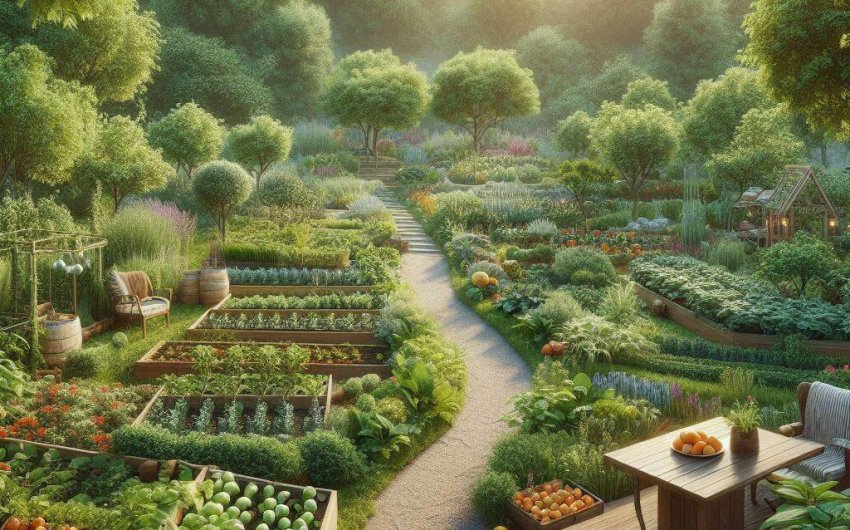
To create a permaculture garden at home, you should observe your site, design for efficiency and resilience, incorporate diverse plant layers, integrate water harvesting and composting, and focus on building healthy soil over time. This holistic approach minimizes waste and maximizes natural productivity.
What is Permaculture and Why is it Good for a Home Garden?
Permaculture is more than just a gardening technique; it's a design philosophy for creating sustainable, self-sufficient human settlements and agricultural systems that mimic the patterns and relationships found in natural ecosystems. Coined by Bill Mollison and David Holmgren in the 1970s, the word "permaculture" is a blend of "permanent agriculture" and "permanent culture."
The Core Principles of Permaculture
Permaculture is guided by three core ethics:
- Earth Care: Protecting and regenerating natural systems.
- People Care: Promoting self-reliance and community responsibility.
- Fair Share (or Return Surplus): Distributing surplus resources justly and reinvesting them into Earth and People Care.
These ethics are supported by a set of 12 design principles that help translate the philosophy into practical action, such as:
- Observe and Interact: Taking the time to understand your site and its natural patterns.
- Catch and Store Energy: Harvesting resources when they are abundant for later use.
- Obtain a Yield: Ensuring you get useful results from your efforts.
- Apply Self-Regulation & Accept Feedback: Learning from mistakes and adjusting designs.
- Use and Value Renewable Resources & Services: Relying on natural, endless inputs.
- Produce No Waste: Everything has a use; minimizing pollution.
- Design from Patterns to Details: Starting with broad patterns, then adding specifics.
- Integrate Rather Than Segregate: Connecting elements so they support each other.
- Use Small & Slow Solutions: Starting small, building slowly, and using appropriate scale.
- Use & Value Diversity: Creating resilient systems through variety.
- Use Edges & Value the Marginal: Maximizing productivity where different elements meet.
- Creatively Use & Respond to Change: Adapting to evolving conditions.
Why is Permaculture Good for a Home Garden?
Applying permaculture principles to your home garden can transform it into a highly productive, resilient, and low-maintenance system.
- Reduced Workload (Over Time): While initial setup requires effort, a well-designed permaculture garden aims to be self-sustaining. This means less weeding, less watering, less fertilizing, and fewer pest problems in the long run. You're working with nature, not against it.
- Increased Productivity: By mimicking natural ecosystems, permaculture gardens can produce a greater diversity and quantity of food, herbs, and other useful resources in a given space.
- Water Conservation: Permaculture emphasizes passive water harvesting, directing rainwater to where it's needed, and reducing reliance on external irrigation.
- Improved Soil Health: Instead of depleting the soil, permaculture focuses on continually building living, fertile soil through composting, mulching, and planting beneficial organisms.
- Pest and Disease Resilience: Diversity in planting, attracting beneficial insects, and creating healthy soil naturally deter pests and diseases.
- Sustainability: You reduce your ecological footprint by recycling nutrients, minimizing waste, and reducing the need for external inputs like synthetic fertilizers and pesticides.
- Biodiversity: Your garden becomes a thriving ecosystem, supporting a wide range of plants, insects, birds, and other wildlife.
- Food Security: By growing a diverse range of edibles, you increase your family's food security and reduce reliance on supermarket supply chains.
- Beauty and Connection: Permaculture gardens are often aesthetically pleasing, rich in sensory experiences, and foster a deeper connection to nature and the food you eat.
Creating a permaculture garden at home is a journey of learning and observation, but one that yields bountiful rewards for you and the environment.
What Are the First Steps to Creating a Permaculture Garden at Home?
The journey to creating a permaculture garden at home begins not with digging, but with careful observation and thoughtful design. These initial steps are fundamental to building a truly resilient and productive system.
1. Observe Your Site (The Longest, Most Important Step)
Before you do anything else, observe your property throughout a full year if possible, or at least across different seasons. This will give you crucial information for your design.
- Sunlight Patterns: Track how sunlight falls on your yard throughout the day and in different seasons (summer vs. winter sun angles). Note areas of full sun, partial sun, and deep shade. Most edibles need full sun (6-8+ hours).
- Water Flow: Where does rainwater go? Are there wet spots, dry spots, areas of runoff, or pooling? Observe how water drains (or doesn't drain) after a heavy rain. This helps you plan for water harvesting and drainage.
- Wind Patterns: Identify prevailing winds in different seasons. Strong winds can dehydrate plants or cause structural damage.
- Existing Features: Map out existing trees, shrubs, structures (house, shed), pathways, utility lines, and any existing garden beds.
- Slope and Contours: Note any changes in elevation. Slopes can be used for passive water harvesting (swales) or terracing.
- Soil Type: Get a Soil Test Kit to understand your soil's composition (clay, sand, loam), pH, and nutrient levels.
- Microclimates: Identify warmer, sheltered spots (e.g., against a south-facing wall) and colder, exposed areas.
- Pest & Disease Issues: Note any recurring pest or disease problems in your current garden.
- Human Use: How do you and your family use the space currently? Where do you walk, sit, or relax?
2. Draw a Base Map
- Create a scaled drawing of your property. Include your house, existing structures, trees, and any permanent features. This becomes your canvas for design.
- Mark on this map all your observations: sun paths, water flow, wind direction, problem areas, and potential resources.
3. Define Your Zones (Zone Planning)
Permaculture uses a zone system to organize elements based on frequency of human access and intensity of management. This helps you place the most frequently visited and high-maintenance elements closest to your home.
- Zone 0: The House: Your living space, where daily activities happen.
- Zone 1: Daily Use: Highly accessed areas, most intensively managed.
- Examples: Kitchen garden (frequently used herbs and vegetables), worm compost bin, highly accessed fruit trees, small propagation area.
- Placement: Right outside your most used door.
- Zone 2: Frequent Use: Less intensive than Zone 1, but still regularly visited.
- Examples: Main vegetable garden, small orchard, chicken coop, main compost bins, larger berry patches.
- Placement: A short walk from Zone 1.
- Zone 3: Extensive Use: Periodically visited, larger scale production.
- Examples: Larger orchards, nut trees, main pasturage for animals, firewood lot.
- Placement: Further from the house, requires more travel.
- Zone 4: Semi-Wild/Managed Woodland: Minimal human intervention, for timber, fodder, foraging, wildlife habitat.
- Zone 5: Wilderness/Wilderness: Unmanaged natural systems, for observation, inspiration, and biodiversity.
For most home gardens, you'll focus primarily on Zones 0, 1, and 2, possibly touching into Zone 3 if you have a larger property.
4. Design for Functions and Elements
- Identify Your Needs: What do you want your garden to provide? (e.g., food, medicine, beauty, wildlife habitat, privacy, shade).
- Brainstorm Elements: List all the elements you want in your garden (e.g., raised beds, fruit trees, compost bins, rainwater tanks, herb spiral, seating area).
- Connect Elements: This is the "integrate rather than segregate" principle. How can each element support others? (e.g., rainwater from the roof irrigates a raised bed; compost nourishes fruit trees; flowers attract pollinators for vegetables). Think about outputs of one element becoming inputs for another.
These initial observation and design steps form the blueprint for a permaculture garden that truly works with your specific site.
How Do I Build Healthy Soil in a Permaculture Garden?
Building healthy, living soil is the foundation of any successful permaculture garden. It's about feeding the soil, not just the plants, creating a vibrant ecosystem beneath the surface that provides nutrients, retains moisture, and supports resilient plant growth.
1. No-Dig Gardening (No-Till)
- Principle: Minimize disturbance to the soil. Tilling disrupts the intricate soil food web (beneficial fungi, bacteria, worms), destroys soil structure, and releases carbon.
- Method: Instead of tilling, build new garden beds directly on top of existing soil or grass using layers of organic matter (like the "lasagna garden" method).
- Benefits: Preserves soil structure, encourages soil life, improves water infiltration, and reduces weed germination.
2. Heavy Mulching (Compost and Other Organics)
- Principle: mimicking nature's forest floor, where decaying organic matter constantly replenishes the soil.
- Method: Apply a thick layer (2-6 inches) of organic mulch over your garden beds.
- Compost: The best choice. Provides a slow-release of nutrients, improves soil structure, and feeds microbes. Top-dress with compost annually. Large Bag of Organic Compost
- Wood Chips: Excellent for perennial beds, pathways, and around trees/shrubs. Decomposes slowly, retains moisture, suppresses weeds.
- Straw/Leaves: Good for vegetable beds. Decomposes faster, providing quicker nutrient release.
- Benefits: Suppresses weeds, conserves soil moisture, regulates soil temperature, adds organic matter as it breaks down, feeds the soil food web.
3. Composting and Vermiculture
- Principle: Closing the loop on nutrient cycles by turning kitchen and garden waste into valuable soil amendments.
- Method:
- Traditional Compost Bins: Create a hot or cold compost pile for garden trimmings, leaves, and non-diseased plant waste.
- Worm Composting (Vermiculture): Use a worm bin to process kitchen scraps into nutrient-rich worm castings, an excellent soil amendment. Worm Compost Bin
- Benefits: Reduces waste, creates free fertilizer, boosts soil microbiology.
4. Cover Cropping and Green Manures
- Principle: Keeping the soil covered with living plants, even when the main crop isn't growing.
- Method: Plant fast-growing "cover crops" (e.g., clover, vetch, oats, rye) in garden beds during off-seasons (fall/winter or after early harvests). When they reach maturity (before flowering), chop them down and leave them on the soil surface to decompose, or lightly turn them in.
- Benefits: Prevents soil erosion, adds organic matter, suppresses weeds, improves soil structure (especially legumes which fix nitrogen). Winter Cover Crop Seed Mix
5. Incorporate Mycorrhizal Fungi and Beneficial Microbes
- Principle: Supporting the invisible workforce in the soil that helps plants absorb nutrients.
- Method: Inoculate new plantings with mycorrhizal fungi, which form a symbiotic relationship with plant roots, extending their reach for water and nutrients. You can also use compost teas or effective microorganisms (EM) to boost soil biology.
- Benefits: Improved nutrient uptake, increased drought resistance, stronger plants. Mycorrhizal Fungi Inoculant
By consistently building and nurturing your soil, you lay the most robust foundation for a thriving permaculture garden that becomes increasingly self-sustaining over time.
How Do I Design with Layers and Guilds in a Permaculture Garden?
A key concept in permaculture design is mimicking the stacking and diversity found in natural ecosystems. This means designing with layers of plants and creating "guilds" or beneficial plant communities.
1. Designing in Layers (Vertical Stacking)
Natural forests are not just one layer of trees; they have multiple layers of vegetation. A permaculture garden aims to replicate this density and diversity in a smaller space.
- Canopy Layer: The tallest trees, typically fruit or nut trees (e.g., apple, pear, cherry, pecan, persimmon). Provide shade, structure, and a main yield.
- Understory Tree Layer: Smaller trees or large shrubs that tolerate some shade, or early successional trees (e.g., elderberry, hazelnut, serviceberry).
- Shrub Layer: Berry bushes (e.g., blueberries, raspberries, currants) and other productive shrubs.
- Herbaceous Layer: Non-woody plants that die back to the ground in winter. Includes most vegetables (e.g., tomatoes, peppers, squash), culinary herbs (e.g., mint, oregano), and many flowers (e.g., coneflowers, calendula).
- Groundcover Layer: Low-growing plants that spread horizontally and cover the soil (e.g., strawberries, clover, thyme). Suppress weeds, retain moisture.
- Rhizosphere (Root) Layer: Root crops (e.g., potatoes, carrots, radishes) and plants that break up soil or fix nitrogen.
- Vertical Layer (Climbers/Vines): Plants that grow upwards on other plants or trellises (e.g., pole beans, grapes, kiwis, cucumbers).
By integrating all these layers, you maximize the use of vertical space, create a more stable microclimate, and increase the overall yield and biodiversity of your garden.
2. Creating Plant Guilds (Beneficial Communities)
A plant guild is a mutually beneficial grouping of plants (and sometimes other elements like rocks or water) that work together to create a miniature ecosystem, supporting each other's growth, deterring pests, and enhancing overall health and productivity. The classic example is the "Three Sisters" guild (corn, beans, squash).
Key Functions of Guild Members: Each plant in a guild ideally performs one or more of these functions:
- Central Element (the "Star"): The main plant you want to grow (e.g., a fruit tree, a large vegetable like corn).
- Nitrogen Fixer: Legumes that enrich the soil with nitrogen (e.g., beans, clover, peas).
- Nutrient Accumulator/Dynamic Accumulator: Plants with deep taproots that bring up nutrients from deeper soil layers (e.g., borage, comfrey, dandelion, yarrow). When they die back or are chopped and dropped, these nutrients become available to other plants.
- Pest Deterrent/Repellent: Plants that repel harmful insects (e.g., marigolds, garlic, some aromatic herbs).
- Beneficial Insect Attractor: Plants that provide nectar and pollen for pollinators and pest predators (e.g., dill, fennel, calendula, borage, sweet alyssum).
- Groundcover: Suppresses weeds, retains moisture, and protects the soil (e.g., strawberries, thyme, clover).
- Support Plant: Provides a living trellis for climbing plants (e.g., corn, sunflowers).
Designing a Guild (Example: Fruit Tree Guild)
- Central Plant: Your chosen fruit tree (e.g., apple).
- Nitrogen Fixers: Clover planted around the base, or lupines.
- Nutrient Accumulators: Comfrey planted at the drip line (chop and drop its leaves around the tree).
- Pest Deterrents/Beneficial Attractors: Marigolds, calendula, chives planted around the tree's base.
- Groundcover: Strawberries or perennial herbs like oregano.
- Optional: Support for climbing edibles (e.g., kiwi trained up a separate trellis nearby).
By thoughtfully designing with layers and creating plant guilds, you build a diverse, resilient, and highly productive permaculture garden that works in harmony with nature.
How Do I Integrate Water Harvesting and Management in a Permaculture Garden?
Water is a precious resource, and permaculture design places a strong emphasis on catching, storing, and efficiently using it. Minimizing reliance on external irrigation is a core goal.
1. Passive Water Harvesting (Slow, Spread, Sink)
This involves designing your landscape to capture and infiltrate rainwater where it falls, rather than letting it run off.
- Swales: These are shallow, level ditches dug along contours with an earth mound on the downhill side. They slow down rainwater runoff, allowing it to soak slowly into the soil, creating a moist zone ideal for planting.
- Placement: Often dug on slopes or perpendicular to the flow of water.
- Benefits: Replenishes groundwater, rehydrates the soil, reduces erosion.
- Rain Gardens: Depressions planted with water-loving plants that temporarily hold and slowly infiltrate stormwater runoff from roofs, driveways, or lawns.
- Benefits: Filters pollutants, recharges groundwater, creates attractive landscape features.
- Keyline Design (for larger properties): A more advanced system of designing contours to evenly distribute water across a landscape.
2. Active Water Harvesting and Storage
This involves collecting and storing rainwater for later use.
- Rain Barrels: Simple and effective for capturing rainwater from downspouts. This water can then be used to water nearby garden beds.
- Benefits: Reduces reliance on municipal water, provides chlorine-free water for plants.
- Rain Barrel for Garden
- Cisterns: Larger storage tanks for collecting significant amounts of rainwater, suitable for larger gardens or areas with long dry seasons. Can be above or below ground.
- Greywater Systems (Advanced): Reusing lightly used water from sinks, showers, and laundry (not toilets) for irrigation. Requires careful planning and adherence to local regulations.
3. Efficient Water Application
- Mulching: As discussed, a thick layer of organic mulch significantly reduces water evaporation from the soil surface, meaning you water less often.
- Drip Irrigation/Soaker Hoses: Deliver water directly to the plant roots, minimizing waste from evaporation and runoff often associated with overhead sprinklers.
- Benefits: Highly efficient, reduces fungal diseases by keeping foliage dry.
- Drip Irrigation Kit for Gardens
- Ollas: Ancient low-tech irrigation method using unglazed clay pots buried in the soil. Water seeps slowly through the porous clay, providing consistent moisture to plant roots.
- Hydrozoning: Grouping plants with similar water needs together allows you to water specific zones more efficiently.
4. Improve Soil's Water Holding Capacity
- Add Organic Matter: Healthy soil, rich in organic matter (from compost, mulch, cover crops), acts like a sponge, dramatically improving its ability to absorb and retain water. This reduces the frequency of watering needed.
By integrating these water harvesting and management strategies, your permaculture garden will become more drought-resilient, requiring less external water input and thriving even in dry conditions.
What Are Other Key Elements to Consider When Creating a Permaculture Garden?
Beyond observation, soil, layers, and water, several other key elements contribute to the holistic design and long-term success of a permaculture garden.
1. Access and Pathways
- Design for Ease of Use: Plan pathways and access points from the beginning, especially in Zones 1 and 2. Well-placed paths reduce soil compaction in planting areas and make it easy to move around your garden for planting, weeding, and harvesting.
- Material Choice: Use permeable materials for pathways (e.g., wood chips, gravel, stepping stones) to allow water to infiltrate rather than run off.
- Swales as Paths: Sometimes, a swale can also serve as a pathway or a boundary between beds.
2. Energy Flows
- Sun Traps: Design to maximize winter sun exposure for warmth and light (e.g., south-facing walls, heat-sink materials like stone).
- Shade Structures: Plan for natural shade (e.g., deciduous trees, arbors covered with vines) to cool areas in summer.
- Windbreaks: Use hedges, fences, or strategically planted trees to slow down harsh winds, protecting tender plants and reducing moisture loss.
3. Fencing and Boundaries
- Deer/Pest Exclusion: If wildlife is an issue, integrate fencing early in your design to protect valuable crops.
- Defining Spaces: Fences or hedges can also define different garden zones, create privacy, or shelter specific areas.
4. Integration of Animals (Even Small Ones)
- Beneficial Insects: Encourage a diversity of beneficial insects (pollinators, pest predators) by planting a wide variety of flowering plants that provide nectar and pollen throughout the season. Provide habitat (e.g., bug hotels, brush piles).
- Worms: Actively encourage earthworms by maintaining healthy soil with plenty of organic matter.
- Chickens (if applicable): In larger systems, chickens can provide eggs, pest control, and fertilizer, but require careful management to prevent garden destruction.
- Birds: Provide bird baths or native berry-producing plants to attract birds, which can help with insect control.
5. Start Small and Expand
- Principle of Small & Slow Solutions: Don't try to transform your entire yard into a permaculture paradise overnight. Start with one small bed or one guild.
- Observe and Learn: Work with a small section, observe how it performs, learn from your successes and mistakes, and then apply those lessons as you gradually expand. This iterative process is key to successful permaculture design.
6. Continuous Learning and Adaptation
- Observation is Ongoing: Permaculture is not a static design; it's dynamic. Continue to observe your garden's performance, how the climate changes, and how your needs evolve.
- Adapt and Adjust: Be willing to adapt your design based on feedback from your garden. Experiment with new plant combinations or techniques.
- Documentation: Keep a garden journal to record planting dates, yields, successes, challenges, and observations. This invaluable information will guide future designs.
Creating a permaculture garden at home is a continuous, rewarding journey that fosters a deeper connection to nature, provides abundant resources, and contributes to a more sustainable lifestyle.