
How to Espalier Fruit Trees Against a Wall?
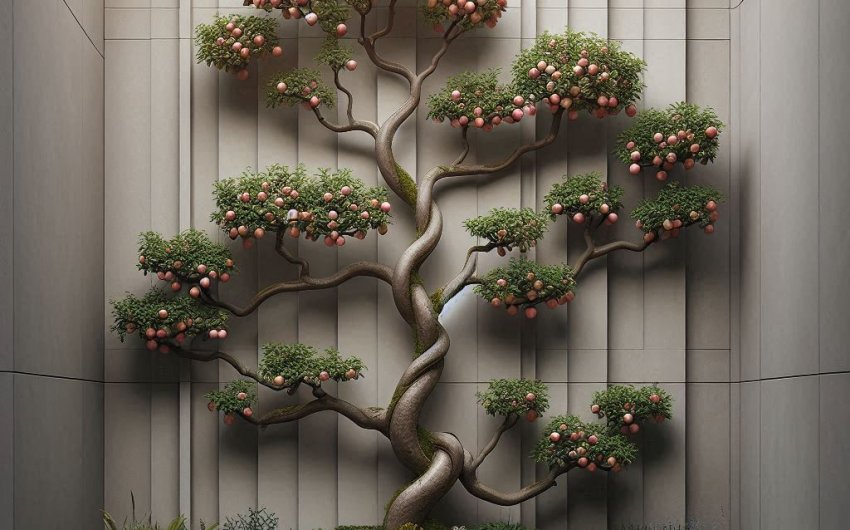
Transforming a bare wall into a living work of art that also yields delicious fruit is a centuries-old gardening technique known as espalier. If you're looking to maximize space, add a unique architectural element to your landscape, or grow fruit in cooler climates, learning how to espalier fruit trees against a wall is an incredibly rewarding skill. This method involves training trees to grow flat against a support structure, creating stunning patterns while also improving fruit production and ripeness. While it requires patience and consistent attention, the results are truly spectacular, making it a project well worth the effort for any aspiring fruit grower or garden enthusiast.
What is espalier and why do it?
Espalier is an ancient horticultural practice of training trees or shrubs to grow flat against a wall, fence, or trellis. The word itself comes from the Italian "spalliera," meaning a support for the shoulder. It's both an art form and a highly practical gardening technique.
What are the benefits of espaliering fruit trees?
Beyond the striking visual appeal, espaliering offers several practical advantages for growing fruit.
- Space saving: This is a major benefit for urban gardeners or those with small yards. Espalier allows you to grow fruit trees in narrow spaces where a traditional tree wouldn't fit.
- Increased fruit production: By exposing more of the tree's surface area to sunlight, espalier can lead to better flowering and fruiting.
- Improved fruit quality: Fruits ripen more evenly and often develop richer flavor and color due to better sun exposure and warmth radiating from the wall.
- Extended growing season: Walls (especially south or west-facing) absorb and radiate heat, creating a warmer microclimate that can protect trees from early frosts and help fruit ripen in cooler regions.
- Ease of care and harvest: Flat growth makes pruning, pest inspection, and harvesting much easier as all parts of the tree are easily accessible.
- Architectural appeal: An espaliered tree becomes a living piece of art, adding a unique and elegant feature to your home or garden.
What fruit trees are best for espalier?
Not all fruit trees are equally suited for espalier. Choosing the right species and rootstock is crucial.
- Pome fruits: These are generally the easiest and most successful for espalier.
- Apples: Most popular choice due to their flexibility and fruit-bearing habit. Look for dwarf or semi-dwarf rootstock like M27, M9, or M26.
- Pears: Also very well-suited, especially varieties that produce fruit on spurs (short, woody branches). Dwarf or semi-dwarf rootstock is recommended.
- Stone fruits: Can be espaliered but require more careful pruning and are more prone to diseases when wounded.
- Cherries: Sour cherries (tart) are often easier than sweet cherries.
- Plums, Apricots, Peaches: Possible, but more challenging. Dwarf rootstock is a must.
- Figs: Can be espaliered in warmer climates or overwintered in colder ones.
- Citrus: In warm climates, certain citrus varieties can be espaliered.
Rootstock choice is vital: Always choose dwarf or semi-dwarf rootstock for espalier trees. These rootstocks control the tree's size and vigor, making them easier to manage and train into the desired flat form. Ask your local nursery for suitable rootstock options for your chosen fruit tree.
What support structure do you need for espalier?
A robust and well-designed support structure is fundamental to successfully espaliering fruit trees against a wall. The tree will grow into this framework, so it needs to be strong and durable.
What kind of wall or surface is best?
Choosing the right wall is critical for the tree's health and fruit production.
- Orientation:
- South-facing wall: Ideal in cooler climates as it receives the most sun and radiates the most heat, extending the growing season and ripening fruit.
- West-facing wall: Also very good, getting intense afternoon sun.
- East-facing wall: Receives morning sun, which is gentler and can still be effective, especially for varieties prone to sunburn.
- North-facing wall: Generally not recommended for fruit trees unless you are in a very hot climate and want to mitigate intense heat.
- Material: Brick, stone, or concrete walls work well as they absorb and retain heat. Avoid wooden walls that are frequently painted or treated with harsh chemicals, or ensure there's a good air gap.
- Distance from wall: It's important to keep a small gap between the tree and the wall (4-6 inches) for air circulation, preventing disease, and allowing for maintenance.
How do you build a wire support system?
The most common and effective support system for espalier is a series of horizontal wires stretched taut between sturdy anchor points.
- Anchor points: Install eye bolts or vine eyes directly into the wall.
- For masonry walls: Use a masonry drill bit to drill holes, insert wall anchors, and then screw in the eye bolts or vine eyes. Ensure they are spaced out from the wall using spacers or stand-offs (about 4-6 inches) to allow air circulation behind the tree.
- For wooden fences/posts: Screw lag eye screws directly into sturdy posts.
- Wire spacing: For apples and pears, space horizontal wires 12-18 inches apart, starting about 12-18 inches above the ground.
- Wire material: Use strong, durable, galvanized steel wire or plastic-coated wire (12-14 gauge is good). Avoid thin, flimsy wire that will stretch or break.
- Tensioners: Use wire tensioners or turnbuckles at one end of each wire to keep them taut. Loose wires make training difficult.
- Tools: You'll need a drill, wire cutters, and possibly a wire tensioning tool.
Alternatively, you can use a strong garden trellis that stands off the wall, but ensure it's sturdy enough for the weight of a mature tree.
How do you plant an espalier fruit tree?
Once your support structure is in place, the next step in espaliering fruit trees against a wall is careful planting to give your tree the best start.
When is the best time to plant?
- Dormant season: The ideal time to plant bare-root fruit trees is during their dormant season, typically late fall or early spring, when the ground is not frozen.
- Container-grown trees: Can be planted throughout the growing season, but avoid planting during extreme heat.
What are the planting steps?
- Prepare the planting hole: Dig a hole that is twice as wide as the tree's root ball and deep enough so that the root collar (where the roots meet the stem) is at or slightly above ground level. If planting a grafted tree, ensure the graft union (the swollen part where the scion meets the rootstock) is at least 2-4 inches above the soil line to prevent the scion from rooting and losing its dwarf characteristics.
- Amend the soil: Mix the excavated soil with some compost or aged manure to improve drainage and fertility.
- Position the tree: Place the tree in the center of the hole, ensuring the side with the most vigorous growth or the desired branches faces the wall. Orient the tree so that branches can be easily trained onto the wires.
- Backfill: Gently backfill the hole with the amended soil, lightly tamping down to remove air pockets.
- Water thoroughly: Water deeply to settle the soil around the roots.
- Mulch: Apply a 2-4 inch layer of organic mulch (like wood chips or shredded bark) around the base of the tree, keeping it a few inches away from the trunk. Mulch conserves moisture, regulates soil temperature, and suppresses weeds.
Remember that fruit trees need full sun (at least 6-8 hours of direct sunlight daily) to produce well.
How do you prune and train an espalier?
This is where the art and patience of espaliering fruit trees against a wall truly come into play. Regular, strategic pruning and tying are essential to shape the tree into your desired pattern.
What are common espalier forms?
While many intricate patterns exist, some common forms are good starting points:
- Cordon: A single vertical or angled stem with short fruiting spurs. Simplest form, often used for small spaces.
- Horizontal Cordon (Tiered Espalier): The most popular and iconic form. A central vertical leader with symmetrical horizontal branches at regular intervals (tiers).
- Fan: Branches spread out from a short central trunk in a fan shape, ideal for stone fruits.
- Candelabra: Similar to tiers, but the horizontal branches turn upwards at the end.
How do you perform initial pruning and training?
This is done immediately after planting, or with a young, whip-like tree (a single, unbranched stem).
- First heading cut: If your tree is a single whip, cut it back to about 18-24 inches from the ground, just above a bud. This encourages branching lower down.
- Select scaffold branches: As new shoots emerge, select the strongest two shoots that are roughly opposite each other at the height of your lowest wire. These will become your first horizontal branches. Select a strong vertical shoot for your central leader.
- Tie branches: Gently bend the chosen horizontal branches down and tie them loosely to the lowest wire using soft garden ties or velcro plant ties. Ensure the ties don't girdle (constrict) the growing stem.
How do you perform ongoing pruning and training?
This is a continuous process throughout the growing season, primarily in summer and winter.
- Summer pruning (growth control): Done during the active growing season (late spring to mid-summer).
- Remove unwanted growth: Rub off or snip off any shoots that are growing directly into the wall, away from the wall, or in undesirable directions.
- Promote fruiting spurs: Shorten strong side shoots (laterals) to 2-3 leaves beyond the base. This encourages the formation of fruiting spurs (short, stubby branches where fruit will form) closer to the main branches.
- Maintain form: Continuously tie in new growth along your wires to maintain the desired pattern.
- Winter pruning (dormant pruning): Done when the tree is dormant (late fall to early spring).
- Structural pruning: Remove any dead, diseased, or damaged wood.
- Shape refinement: Prune to maintain the espalier shape and open up the tree for good air circulation.
- Leader training: If growing a tiered espalier, cut the central leader back to the height of the next desired wire, above a bud, to encourage the next set of horizontal branches.
- Spur pruning: Refine fruiting spurs by shortening them to a few buds.
Key principles:
- Patience: Espalier is a multi-year project. Don't expect a perfect form in the first year.
- Observation: Regularly check your tree's growth and adjust your pruning and tying accordingly.
- Clean cuts: Always use sharp, clean pruning shears to prevent disease.
How do you water and fertilize espalier trees?
Proper watering and balanced nutrition are crucial for the health and fruit production of your espalier fruit trees against a wall. Their unique growing environment can affect these needs.
How do you water espalier trees?
Because espalier trees are often planted closer to a wall, the soil might dry out faster, and rainfall might not reach the root zone as effectively.
- Deep watering: Water deeply and regularly, especially during dry spells and when fruit is developing. The goal is to encourage deep root growth.
- Check soil moisture: Don't rely solely on a schedule. Stick your finger into the soil a few inches deep; if it feels dry, it's time to water. A soil moisture meter can also be helpful.
- Drip irrigation: A drip irrigation system or soaker hose can deliver water directly to the root zone efficiently, minimizing evaporation.
How do you fertilize espalier trees?
Fertilizing provides essential nutrients for growth, flowering, and fruiting.
- Soil test: Ideally, get a soil test kit to understand your soil's nutrient levels before fertilizing.
- Balanced fertilizer: Apply a balanced, slow-release fruit tree fertilizer in early spring, before new growth begins.
- Compost: Top-dressing with a layer of compost annually provides a slow, steady supply of nutrients and improves soil structure.
- Avoid over-fertilizing: Too much nitrogen can promote excessive leafy growth at the expense of fruit production.
How do you protect espalier fruit trees from pests and diseases?
Maintaining the health of your espalier fruit trees is vital for abundant harvests. Their close proximity to a wall can sometimes influence pest and disease pressure.
What are common pests and how do you manage them?
- Aphids: Small, soft-bodied insects that cluster on new growth. They suck plant sap, causing distorted leaves.
- Solution: Spray with a strong jet of water, or use insecticidal soap or neem oil.
- Spider Mites: Tiny arachnids that cause stippling (tiny dots) on leaves and sometimes fine webbing. Thrive in hot, dry conditions.
- Solution: Increase humidity (misting), spray with water, or use neem oil.
- Codling Moth: A major pest of apples and pears; larvae tunnel into the fruit.
- Solution: Use pheromone traps to monitor, or use organic sprays during egg laying.
- Apple Maggot: Another common apple pest.
- Solution: Use red sticky sphere traps.
General pest management tips:
- Regular inspection: Inspect your trees frequently, especially the undersides of leaves, to catch problems early.
- Beneficial insects: Encourage natural predators like ladybugs and lacewings.
- Horticultural oil: Apply dormant oil in late winter/early spring to smother overwintering pest eggs.
What are common diseases and how do you manage them?
- Powdery Mildew: A white, powdery coating on leaves and shoots, common in humid conditions.
- Solution: Improve air circulation through pruning, use fungicides if severe.
- Apple Scab: Dark, scabby spots on leaves, fruit, and twigs.
- Solution: Choose resistant varieties, prune for air circulation, clean up fallen leaves.
- Fire Blight: Bacterial disease that causes branches to look scorched and shriveled.
- Solution: Prune out infected branches immediately, cutting several inches into healthy wood. Disinfect tools between cuts. Choose resistant varieties.
General disease management tips:
- Good air circulation: Ensure adequate spacing between branches by proper pruning. This helps leaves dry quickly, reducing fungal issues.
- Sanitation: Remove fallen leaves and diseased plant material from around the tree.
- Resistant varieties: Choose fruit tree varieties known to be resistant to common diseases in your area.
What advanced espalier forms can you try?
Once you master the basic patterns, you might be ready to explore more intricate and artistic forms of espaliering fruit trees against a wall.
What are Palmette Verrier and Belgian Fence?
These are popular and visually striking advanced espalier forms.
- Palmette Verrier: This form involves a central vertical leader with multiple pairs of symmetrical, upswept arms. It's a formal and elegant choice, creating a candlestick-like appearance. Each pair of arms usually rises at a steep angle before gently curving outwards and upwards. This form can be very productive.
- Belgian Fence: This is a stunning, living fence created by planting a series of trees close together (often 12-18 inches apart) and training them to cross each other diagonally, forming a lattice or diamond pattern. The branches are grafted where they cross, creating strong, permanent connections. This is a truly architectural use of espalier.
These forms require more precision in pruning and tying, and sometimes even grafting, but the visual impact is extraordinary.
How do you combine multiple fruit types?
While challenging, it is possible to espalier different fruit types on the same wall or even graft them onto a single tree.
- Adjacent espaliers: The simplest way is to plant different fruit tree espaliers side-by-side, each with its own root system and support. Ensure they have similar light and water requirements.
- Multi-grafted tree: You can purchase a multi-grafted fruit tree (a single rootstock with several different fruit varieties grafted onto it). This allows you to have multiple apple varieties on one tree, for example, which can also help with cross-pollination.
- Self-grafting: For a Belgian fence, branches are often gently abraded and tied together where they cross. Over time, the bark will fuse, creating a strong, living graft that adds structural integrity and connects the sap flow between trees.
Always consider the pollination requirements of your chosen fruit varieties. Some trees are self-fertile, while others need a different variety nearby for cross-pollination to produce fruit. This might mean having two different espaliered trees or ensuring a suitable pollinator is within range. Mastering how to espalier fruit trees against a wall is a journey of patience, precision, and rewarding harvests.