
How to Grow Crepe Myrtle Trees?
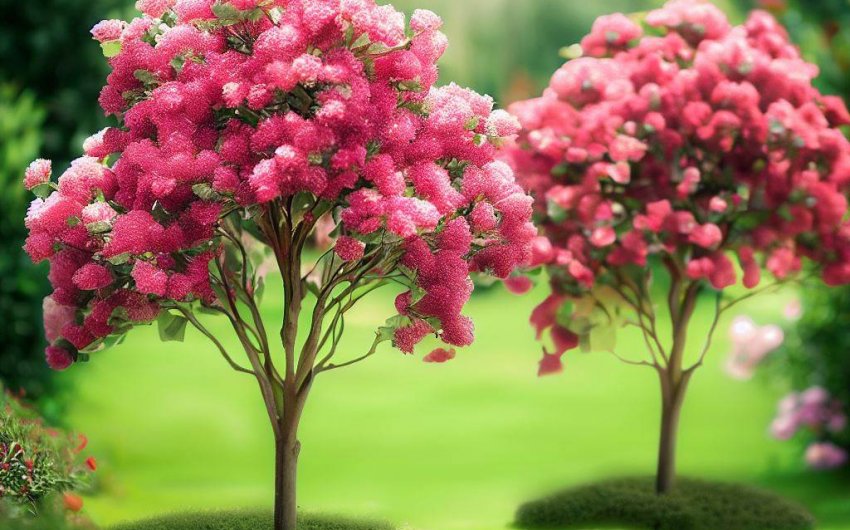
To grow Crape Myrtle trees successfully, plant them in a location with full sun and well-draining soil, provide consistent watering during establishment, and prune them correctly in late winter or early spring to encourage vigorous blooms. These vibrant, summer-flowering trees are cherished for their long-lasting color and attractive bark.
What makes Crape Myrtle trees so popular in landscapes?
Crape Myrtle trees (Lagerstroemia spp.) are quintessential summer-flowering trees, beloved for their incredibly long blooming season, which often spans from late spring through fall. Their stunning, crinkled, crepe-paper-like flowers come in a wide array of colors, from vibrant pinks and reds to purples and whites. Beyond their flowers, they offer year-round interest with attractive peeling bark, graceful growth habits, and often brilliant fall foliage, making them a cornerstone of many warm-climate landscapes.
What are the main ornamental features of Crape Myrtles?
- Prolific summer blooms: The most iconic feature, providing a burst of color when many other plants have finished flowering.
- Exfoliating bark: Many varieties have smooth, mottled bark that peels away to reveal various shades of cinnamon, gray, or tan, offering year-round visual interest, especially in winter.
- Graceful form: Can be grown as multi-stemmed shrubs or single-trunked trees, adding elegance to the garden.
- Fall foliage: Some cultivars display brilliant red, orange, or yellow fall leaf colors.
- Drought tolerance: Once established, they are quite tolerant of dry conditions.
What are the different sizes and types of Crape Myrtles?
Crape Myrtles come in a surprising range of sizes and forms, suitable for various landscape needs:
- Dwarf varieties: Grow 3-5 feet tall, perfect for containers, borders, or small hedges.
- Shrub varieties: Grow 5-12 feet tall, ideal for foundation plantings or mixed borders.
- Small tree varieties: Grow 10-20 feet tall, can be used as specimen trees or for accent planting.
- Standard tree varieties: Grow 20-30+ feet tall, excellent as shade trees or street trees.
Cultivars also vary in flower color, bark exfoliation, and disease resistance.
What are the ideal growing conditions for Crape Myrtle trees?
To ensure your Crape Myrtle tree thrives and produces abundant blooms, understanding its preferred growing conditions is crucial. These trees love warmth and sunshine.
How much sun does a Crape Myrtle tree need?
Crape Myrtles absolutely require full sun for optimal flowering and health. This means at least 6-8 hours of direct sunlight per day. In shadier conditions, they will produce fewer flowers, have weaker growth, and be more susceptible to powdery mildew.
What kind of soil is best for a Crape Myrtle tree?
Crape Myrtles are adaptable to a wide range of soil types, but they thrive in well-draining soil that is neutral to slightly acidic (pH 6.0-7.0). They can tolerate clay soils if drainage is adequate, and sandy soils if amended with organic matter to retain some moisture. Good drainage is essential to prevent root rot.
What climate zones are suitable for Crape Myrtle trees?
Most Crape Myrtle varieties are hardy in USDA Zones 7-9. Some newer, cold-hardy cultivars can survive in Zone 6, while some tropical varieties may extend into Zone 10 or 11. Knowing your specific hardiness zone is key to selecting a variety that will thrive in your area.
How do you plant a Crape Myrtle tree correctly?
Proper planting techniques are essential to give your Crape Myrtle tree a strong start and ensure its long-term health, bloom production, and structural integrity.
What are the steps for planting a Crape Myrtle tree?
- Choose the right location: Select a sunny spot with good drainage, keeping in mind the tree's mature size (height and width) and ensuring it's not too close to buildings, utility lines, or other large plants.
- Dig the hole: Dig a planting hole that is twice as wide as the root ball and just as deep. The goal is to provide plenty of loosened soil for roots to spread.
- Prepare the tree: Gently remove the tree from its container. Inspect the root ball; if roots are circling tightly, gently tease them apart or make a few vertical cuts with a clean knife to encourage outward growth.
- Place the tree: Position the tree in the center of the hole so that the root flare (where the trunk widens at the base) is level with or slightly above the surrounding soil surface. This is critical to prevent future problems like girdling roots.
- Backfill: Backfill the hole with the excavated soil, gently tamping it down to remove large air pockets. You can amend the backfill soil with a small amount of compost, but avoid making it too rich compared to the native soil.
- Water deeply: Water thoroughly immediately after planting to settle the soil around the roots.
- Mulch: Apply a 2-4 inch layer of organic mulch (like wood chips or shredded bark) over the root zone, extending out to the drip line, but keep it 6-12 inches away from the trunk to prevent rot and pest issues. A tree ring mulch barrier can help maintain this gap.
- Staking (optional): Only stake if necessary (e.g., in very windy areas or if the root ball is unstable), and remove stakes after one year.
How much water does a Crape Myrtle tree need?
Consistent watering is essential for newly planted Crape Myrtles. Once established, they become remarkably drought-tolerant, making them an excellent choice for water-wise landscapes.
How often should you water a newly planted Crape Myrtle?
Newly planted Crape Myrtles need regular and consistent watering for their first 1-2 years to establish a strong root system. Water deeply 2-3 times a week, ensuring the soil remains consistently moist but not waterlogged. The goal is to soak the entire root ball.
How much water do established Crape Myrtles need?
Once established (after 1-2 years), Crape Myrtles are very drought-tolerant and often require little to no supplemental watering, especially in areas with regular rainfall. However, during prolonged periods of extreme heat and drought, deep watering once every 2-3 weeks can be beneficial to maintain vigor and flowering. A soil moisture meter can help you gauge the soil's dampness.
Does a Crape Myrtle tree need fertilizer?
Crape Myrtles are not exceptionally heavy feeders. If planted in reasonably fertile soil, they may require minimal or no additional fertilizer. Over-fertilization, especially with high nitrogen, can lead to excessive leafy growth at the expense of flowers and can make them more susceptible to powdery mildew.
When should you fertilize a Crape Myrtle tree?
- Established trees: If your soil is poor, growth is slow, or flowering is diminished, apply a balanced, slow-release granular fertilizer in early spring, just as new growth begins. A balanced ratio like 8-8-8 or 10-10-10 is suitable.
- New plantings: Avoid fertilizing newly planted trees for their first year.
- Avoid late-season fertilization: Do not fertilize after mid-summer, as this can stimulate tender new growth that will be damaged by fall frosts.
Always base fertilization decisions on a soil test to avoid over-fertilizing. Follow the instructions on the fertilizer product label for proper application rates.
How do you prune Crape Myrtle trees correctly?
Proper pruning is essential for Crape Myrtles to encourage abundant flowering, develop attractive bark, and maintain a graceful, healthy shape. However, improper pruning, often called "crape murder," is a common mistake that can severely disfigure and harm the tree.
When is the best time to prune a Crape Myrtle?
The best time to prune Crape Myrtles is in late winter or early spring, when the tree is dormant. This allows you to clearly see the plant's structure and ensures you are removing old wood, as Crape Myrtles bloom on new wood (wood grown in the current season). Pruning during the growing season can reduce flowering.
What are the proper pruning techniques for Crape Myrtles?
- Remove suckers: Prune any suckers (new shoots) that emerge from the base of the tree or from the roots throughout the growing season. This helps maintain a tree-like form.
- Remove crossing or rubbing branches: These can create wounds and entry points for disease.
- Remove dead, diseased, or damaged branches: This can be done at any time of year.
- Thin the canopy: Remove some small, weak, or inward-growing branches to improve air circulation and light penetration, which helps reduce powdery mildew.
- Shape for tree form: If you want a multi-trunked tree, select 3-5 strongest, most attractive stems to be the main trunks and remove others at ground level. For a single-trunk tree, remove all but one main stem.
- Deadhead (optional): Removing spent flower clusters (deadheading) during the summer can sometimes encourage a second flush of blooms, but this is a time-consuming task for large trees and not strictly necessary for health.
What is "Crape Murder" and why should you avoid it?
"Crape Murder" refers to the severe, incorrect pruning practice of indiscriminately cutting back Crape Myrtle branches to large stubs each year. This is highly detrimental:
- Weak, unsightly growth: Promotes a dense flush of weak, twiggy shoots (watersprouts) at the cut ends, which are poorly attached and prone to breaking, and look unnatural.
- Reduced flowering: Although Crape Myrtles bloom on new wood, the rapid, weak growth from topping often produces smaller, less abundant flower clusters.
- Decay and disease: The large, open wounds created by topping rarely heal properly, leaving the tree highly vulnerable to decay, pests, and disease.
- Disfigured appearance: Creates an ugly, club-like structure on the tree's top.
Instead of topping, aim for natural thinning, shaping, and removing only what's necessary, always making cuts to a lateral branch or back to the trunk. Use clean, sharp pruning shears or loppers.
What common problems affect Crape Myrtle trees?
While Crape Myrtles are relatively tough, they can encounter a few common problems, primarily related to fungal diseases and insect pests, especially if grown in less-than-ideal conditions.
What diseases commonly affect Crape Myrtles?
- Powdery mildew: A white, powdery coating on leaves, buds, and flowers. This is the most common disease, especially in humid conditions, shady locations, or with susceptible varieties.
- Cercospora leaf spot: Causes circular, reddish-brown spots on leaves, often leading to premature leaf drop.
- Sooty mold: A black, superficial fungal growth that develops on honeydew secreted by sap-sucking insects. It doesn't directly harm the plant but blocks sunlight.
How do you prevent and treat Crape Myrtle diseases?
- Choose resistant varieties: Many modern cultivars are bred for resistance to powdery mildew. Look for these "mildew-resistant" types.
- Full sun and good air circulation: Plant in full sun and ensure proper spacing to allow for good airflow through the canopy. Avoid overcrowding.
- Watering practices: Water at the base of the plant to keep foliage dry, especially if susceptible to mildew.
- Sanitation: Rake up and discard fallen infected leaves.
- Fungicides: For severe or persistent fungal issues, apply a suitable fungicide for ornamental trees as per product instructions.
What pests might attack a Crape Myrtle tree?
- Aphids: Small, soft-bodied insects that cluster on new growth and flower buds, sucking sap and secreting sticky honeydew (leading to sooty mold).
- Crape Myrtle Bark Scale (CMBS): A relatively new and increasingly problematic pest. Appears as white or gray, felt-like bumps on branches and trunks. Secretes honeydew and causes sooty mold.
- Japanese beetles: Can feed on leaves, creating a skeletonized appearance.
How do you treat pests on Crape Myrtles?
- Aphids: A strong spray of water from a hose can dislodge them. Insecticidal soap or neem oil can be effective.
- Crape Myrtle Bark Scale: Requires more intensive treatment. Options include scrubbing infested areas with a brush and soapy water for small infestations, or using systemic insecticides (applied to the soil or as a drench) in spring once active growth begins. Always consult local extension offices for the best recommendations.
- Japanese beetles: Hand-picking or using appropriate insecticides.
Growing Crape Myrtle trees correctly means providing them with full sun, well-draining soil, and consistent watering during establishment. Crucially, it involves understanding and practicing proper pruning techniques to encourage abundant, vibrant blooms and healthy growth, while always avoiding the harmful practice of "crape murder." With thoughtful care, these showy trees will reward your garden with stunning color and beauty from summer through fall.