
How to Rotate Crops in an Organic Vegetable Garden?
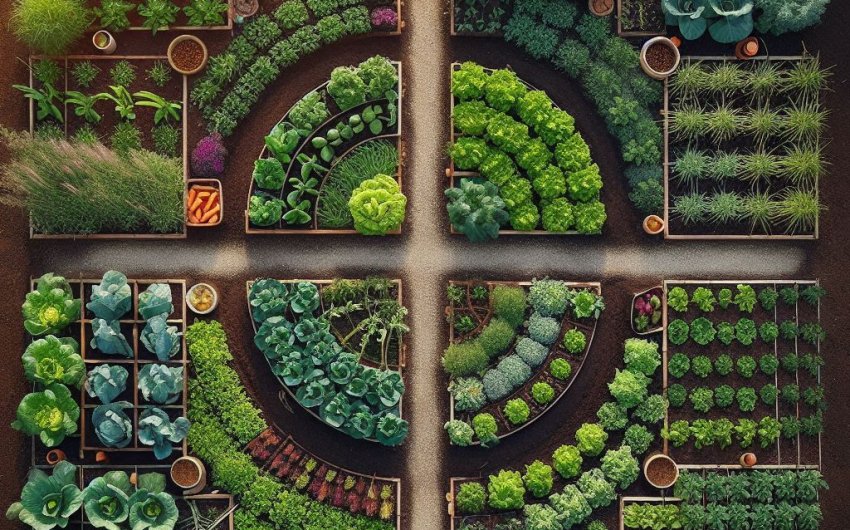
To rotate crops in an organic vegetable garden successfully, group plants by family and their specific nutrient needs, then plan a sequence that moves each family to a different section of the garden annually. This practice naturally improves soil fertility, prevents pest buildup, and reduces disease transmission.
Why Rotate Crops in an Organic Vegetable Garden?
Crop rotation is a cornerstone of organic gardening, offering a powerful, natural way to maintain garden health and productivity without synthetic inputs. It's a key strategy for long-term sustainability.
- Pest and Disease Control: Many garden pests and diseases are specific to certain plant families. By moving plant families to different locations each year, you disrupt the life cycles of these pests and pathogens, starving them out.
- Nutrient Management: Different plant families have varying nutrient demands and contributions. Rotating them helps balance soil nutrients, ensuring no single nutrient is depleted excessively in one area.
- Improved Soil Structure: Different root systems explore different soil depths, improving aeration and breaking up compaction. Legumes (beans, peas) even add nitrogen back into the soil.
- Weed Suppression: Healthy, rotated crops often outcompete weeds more effectively.
- Increased Yields: Healthier plants growing in balanced soil with fewer pest and disease pressures naturally produce more abundant harvests.
- Reduced Reliance on Inputs: Less need for organic pesticides, fungicides, or excessive fertilizers, saving time and money.
What Are the Principles of Organic Crop Rotation?
Effective organic crop rotation relies on understanding plant families and their impact on the soil. It’s about moving groups of plants, not just individual species.
1. Group Plants by Family
- The most important principle. Pests and diseases are often family-specific.
- Example: If you plant tomatoes (Solanaceae family) in the same spot year after year, tomato blight spores or hornworm eggs can build up in the soil. Moving them breaks this cycle.
2. Understand Nutrient Needs and Contributions
- Heavy Feeders: Plants that require a lot of nutrients (especially nitrogen) to produce their yield.
- Examples: Corn, Brassicas (cabbage, broccoli, kale), Potatoes, Squash, Tomatoes.
- Light Feeders: Plants with moderate nutrient needs.
- Examples: Carrots, Beets, Onions, Radishes, Herbs.
- Soil Builders (Legumes): Plants that fix nitrogen from the air into the soil through a symbiotic relationship with bacteria in their roots.
- Examples: Beans, Peas, Clover.
3. Consider Root Depth
- Deep-rooted plants: Tap into nutrients deeper in the soil (e.g., carrots, parsnips, tomatoes).
- Shallow-rooted plants: Feed closer to the surface (e.g., lettuce, spinach, radishes).
- Varying root depths helps utilize nutrients throughout the soil profile and improves soil structure.
4. Aim for at Least a 3-Year Cycle
- Many common pest and disease cycles last for 2-3 years. A 3-year minimum rotation (and ideally 4-5 years) helps ensure that the specific pathogens or pests for a plant family won't find their preferred host plant in the same location for a sufficient period.
How Do You Group Vegetables for Crop Rotation?
Categorizing your vegetables into families or groups with similar needs simplifies the rotation process in your organic vegetable garden.
Common Rotation Groups
Most crop rotation plans categorize plants into 3-4 main groups. Here's a widely used approach:
Legumes (Nitrogen Fixers)
Advertisement- Family: Fabaceae
- Plants: Beans (bush, pole, runner), Peas (snap, snow, shell), Clover (used as cover crop).
- Role in Rotation: These plants leave behind nitrogen in the soil, enriching it for the next hungry group.
- Nutrient Needs: Light to moderate feeders themselves.
Fruiting Vegetables (Heavy Feeders)
- Families: Solanaceae (Nightshades), Cucurbitaceae (Gourds), Poaceae (Grasses).
- Plants:
- Nightshades: Tomatoes, Potatoes, Peppers, Eggplant.
- Gourds: Squash (summer & winter), Zucchini, Pumpkins, Cucumbers, Melons.
- Grasses: Corn.
- Role in Rotation: These plants produce fruit and flowers, demanding a lot of energy and nutrients, especially nitrogen and phosphorus. They benefit greatly from being planted after legumes.
- Nutrient Needs: Heavy feeders.
Leafy Greens & Brassicas (Heavy Feeders, Leaf Producers)
- Families: Brassicaceae (Cruciferous), Asteraceae, Amaranthaceae.
- Plants:
- Brassicas: Cabbage, Broccoli, Kale, Cauliflower, Brussels Sprouts, Collards, Kohlrabi, Radishes, Turnips.
- Greens: Lettuce, Spinach, Swiss Chard, Arugula.
- Role in Rotation: Primarily grown for their leaves, these are often nitrogen-hungry. Brassicas are also prone to specific soil-borne diseases (e.g., clubroot) and pests (e.g., cabbage worms).
- Nutrient Needs: Moderate to heavy feeders.
Root Crops (Light/Moderate Feeders)
- Families: Apiaceae (Parsley family), Amaranthaceae, Brassicaceae (some root types).
- Plants: Carrots, Beets, Parsnips, Onions, Garlic, Leeks, Turnips, Radishes (can overlap with Brassicas).
- Role in Rotation: Primarily grown for their underground parts, they generally need fewer nutrients and benefit from looser soil.
- Nutrient Needs: Light to moderate feeders.
Why Not Use 4-Year Rotation?
A 4-year rotation is highly effective because it ensures that no plant family returns to the same plot for a substantial period, disrupting even longer-lived pest and disease cycles. It also allows for a more comprehensive nutrient cycling strategy.
How Do You Design a Crop Rotation Plan?
Designing a crop rotation plan involves mapping your garden and charting the movement of plant families over the years.
Step-by-Step Planning
Divide Your Garden:
- Mentally or physically divide your garden into 3 or 4 (or more) equal sections or "beds." Label them (e.g., Section A, Section B, Section C, Section D).
- The size of the sections depends on your garden's overall layout.
Assign Groups to Sections for Year 1:
- Choose one plant family/group for each section for the current growing season (Year 1).
- Example (4-year rotation):
- Section A: Legumes (Beans, Peas)
- Section B: Fruiting Vegetables (Tomatoes, Peppers, Corn, Squash)
- Section C: Leafy Greens & Brassicas (Lettuce, Cabbage, Broccoli, Spinach)
- Section D: Root Crops (Carrots, Beets, Onions)
Rotate for Subsequent Years:
- For Year 2, simply move each group to the next section in a clockwise or counter-clockwise pattern.
- Year 2:
- Section A: Root Crops
- Section B: Legumes
- Section C: Fruiting Vegetables
- Section D: Leafy Greens & Brassicas
- Year 3:
- Section A: Leafy Greens & Brassicas
- Section B: Root Crops
- Section C: Legumes
- Section D: Fruiting Vegetables
- Year 4:
- Section A: Fruiting Vegetables
- Section B: Leafy Greens & Brassicas
- Section C: Root Crops
- Section D: Legumes
- By Year 5, you'll be back to the Year 1 plan for each section.
Incorporate Soil Building:
- After heavy feeders, you can plant nitrogen-fixing legumes.
- Consider planting a Cover Crop Seeds in a section over winter, especially after a heavy feeding group, to replenish soil, suppress weeds, and prevent erosion.
Keep a Garden Journal:
- Record what you plant in each section every year. This is essential for remembering your rotation plan and observing results. A simple notebook or a Gardening Journal works well.
Considerations for Small Gardens or Raised Beds
- Mini-Sections: Even in a small raised bed, you can divide it into quarters or smaller sections.
- Vertical Space: Utilize vertical gardening to maximize space.
- Container Gardening: For very small spaces, use containers and move them around or swap out the soil each year.
How Does Crop Rotation Prevent Pests and Diseases Organically?
Crop rotation is a powerful organic defense mechanism against common garden ailments. It starves out pathogens and disrupts pest breeding cycles.
Disrupting Disease Cycles
- Soil-Borne Pathogens: Many plant diseases, such as early blight (tomatoes/potatoes), clubroot (brassicas), and fusarium wilt (various), can overwinter or reside in the soil for years.
- Starve Them Out: By moving the susceptible host plant (e.g., tomato) to a new bed, the disease organisms in the old bed don't have a host to feed on and reproduce, causing their populations to decline significantly or die off over time.
- Spore Dispersal: Reduces the chance of spores splashing from infected soil onto new, susceptible plants.
Interrupting Pest Life Cycles
- Host-Specific Pests: Many insect pests are particular about which plants they feed on and where they lay their eggs.
- Colorado Potato Beetle: Overwinters in the soil. If potatoes are planted in the same spot, new beetles emerge directly onto their preferred food source. Rotating potatoes prevents this easy access.
- Cabbage Root Maggot: Lays eggs near brassica stems. Rotating brassicas prevents larvae from finding new plants easily.
- Squash Vine Borer: Larvae burrow into squash stems. Rotating cucurbits helps avoid subsequent infestations.
- Pest Confusion: While not direct rotation, varying plantings (and companion planting) can confuse pests looking for a monoculture.
Benefits Table for Pest & Disease
| Strategy | How Crop Rotation Helps | Examples |
|---|---|---|
| Starvation | Deprives specific pathogens/pests of their food source | Clubroot (Brassicas), Blights (Tomatoes), Colorado Potato Beetles |
| Disruption | Breaks the life cycle (egg laying, pupating) | Cabbage Root Maggot, Squash Vine Borer |
| Soil Health | Healthy soil and strong plants are more resistant | Overall reduction in susceptibility to many opportunistic diseases |
| Reduced Build-up | Prevents high concentrations of specific problems | Less intense infestations year after year for specific pests/diseases |
How Does Crop Rotation Help with Nutrient Management?
Different plant families are like different eaters at a buffet: some eat a lot, some less, and some even bring their own food. Crop rotation takes advantage of these varied appetites.
Balancing Nutrient Draw
- Heavy Feeders (e.g., Corn, Brassicas, Tomatoes): These plants extract large amounts of nitrogen, phosphorus, and potassium from the soil. If planted in the same spot continuously, they can quickly deplete these nutrients, leading to stunted growth and lower yields.
- Root Crops (e.g., Carrots, Beets): These are generally lighter feeders than leafy or fruiting vegetables. They primarily focus on developing their roots underground and don't demand as much from the topsoil nutrient profile.
- Legumes (e.g., Beans, Peas): These are the garden's unsung heroes. They don't just consume nutrients; they actively add nitrogen back into the soil through a process called nitrogen fixation. Bacteria in their root nodules convert atmospheric nitrogen into a plant-usable form, leaving the soil richer for the next crop.
Strategic Nutrient Replenishment
- Follow Heavy Feeders with Legumes: After a season of hungry crops like corn or tomatoes, planting beans or peas in that same section allows the soil to naturally replenish its nitrogen levels. This sets up the bed perfectly for another heavy feeder in a future season.
- Varying Root Depths: Different plants have different root depths.
- Deep-rooted plants (like carrots or some tomatoes) draw nutrients from deeper in the soil profile.
- Shallow-rooted plants (like lettuce or radishes) feed closer to the surface.
- Rotating these allows the soil's nutrient reserves to be utilized more evenly throughout the soil column, preventing depletion in one specific layer.
- Organic Matter Contribution: As different plants grow and their roots decay, they contribute diverse types of organic matter to the soil. This varied input supports a wider range of beneficial soil microorganisms, further enhancing nutrient cycling and availability.
By cycling your crops, you ensure that no single area of your garden is perpetually depleted of the same nutrients, promoting a more balanced and sustainable use of your soil's natural fertility.
What Are Some Challenges and Considerations for Crop Rotation?
While highly beneficial, organic crop rotation can present a few challenges, especially for beginners or in specific garden setups.
- Small Garden Size: In very small gardens or a single raised bed, it can be difficult to create distinct enough sections for a multi-year rotation.
- Solution: Divide beds into quarters. Focus on rotating the most susceptible plant families (e.g., Solanaceae and Brassicaceae) away from each other for at least 2-3 years. Consider removing all soil from a raised bed every few years and replacing it with fresh, organic soil if rotation isn't fully possible.
- Perennial Crops: Permanent crops like asparagus, rhubarb, or perennial herbs don't fit into a rotation scheme.
- Solution: Dedicate a specific area of your garden for these perennials, outside of your main rotation beds.
- Long-Term Planning: Requires careful record-keeping and planning over several years.
- Solution: A detailed garden journal or digital spreadsheet is essential. Draw out your rotation plan for at least 3-4 years in advance.
- Understanding Plant Families: Initially, it might be confusing to remember which plants belong to which family.
- Solution: Keep a list handy. Focus on the main groups (Legumes, Fruiting, Leafy/Brassicas, Roots) which cover most common vegetables.
- Varied Light/Water Needs: Not all plants in a family have identical needs. For example, tomatoes need more sun than lettuce.
- Solution: While rotating families, still place plants with higher light requirements in the sunniest parts of each section. Water individual plants as needed, rather than blindly watering an entire bed.
- Pest/Disease Persistence: Some pathogens (like clubroot) can persist in the soil for many years.
- Solution: For highly persistent issues, a 5-7 year rotation might be necessary, or consider solarizing the soil in that spot if possible.
- Cost of Cover Crops/Amendments: Incorporating cover crops or adding compost/manure can have an initial cost or require effort.
- Solution: Consider making your own compost. Source free arborist chips or leaves for mulch. The long-term savings in reduced pest/disease issues and fertilizer costs often outweigh initial efforts.
Beyond the Basics: Advanced Crop Rotation Techniques
Once you're comfortable with basic rotation, you can explore more advanced strategies to fine-tune your organic vegetable garden.
1. Incorporating Cover Crops
- What they are: Plants grown specifically to improve soil health, suppress weeds, and prevent erosion during periods when your main crops aren't growing (e.g., over winter or in between main crops).
- Benefits:
- Nitrogen Fixation: Leguminous cover crops (clover, vetch) add nitrogen.
- Organic Matter: When tilled in, they add biomass to the soil, boosting organic matter.
- Weed Suppression: Smother weeds.
- Erosion Control: Protect bare soil from wind and rain.
- Soil Structure: Deep-rooted cover crops break up compaction.
- How to Use: Plant in a section that has just finished its main crop cycle, especially after heavy feeders. Turn them into the soil (or "chop and drop") before they go to seed and before planting the next main crop. Find various Cover Crop Seeds.
2. Green Manures
- What they are: Specific plants grown primarily to be tilled into the soil while still green, acting as an in-situ organic fertilizer and soil builder.
- Benefits: Rapidly adds organic matter and nutrients.
- Examples: Vetch, annual rye, buckwheat.
3. pH Considerations
- Some plant families prefer specific soil pH ranges. While a multi-year rotation can help average this out, monitoring your soil pH with a Soil pH Meter and making slight adjustments (e.g., adding wood ash for alkalinity, elemental sulfur for acidity) can further optimize conditions for the current crop.
4. Resting Periods
- In larger gardens, you might dedicate a section to a "fallow" period, allowing it to rest for a season or two, planted only with cover crops. This can be beneficial for soil regeneration, especially if issues like nematodes or persistent diseases are a problem.
5. Micro-Climates within Rotation
- Even within a rotating bed, consider how individual plants might create micro-climates. Taller plants can provide shade for heat-sensitive leafy greens in summer. While not strictly rotation, it's part of holistic garden planning.
The Sustainable Future of Your Organic Vegetable Garden
Learning how to rotate crops in an organic vegetable garden is a foundational skill that will transform your gardening experience. It moves you from merely planting to actively managing a living ecosystem. By embracing this practice, you'll witness a noticeable reduction in pest and disease problems, an improvement in soil health, and consistently more abundant, vibrant harvests. It's a key step towards a truly sustainable, resilient, and thriving organic garden for years to come.