
How to Start Seeds Indoors for Early Planting?
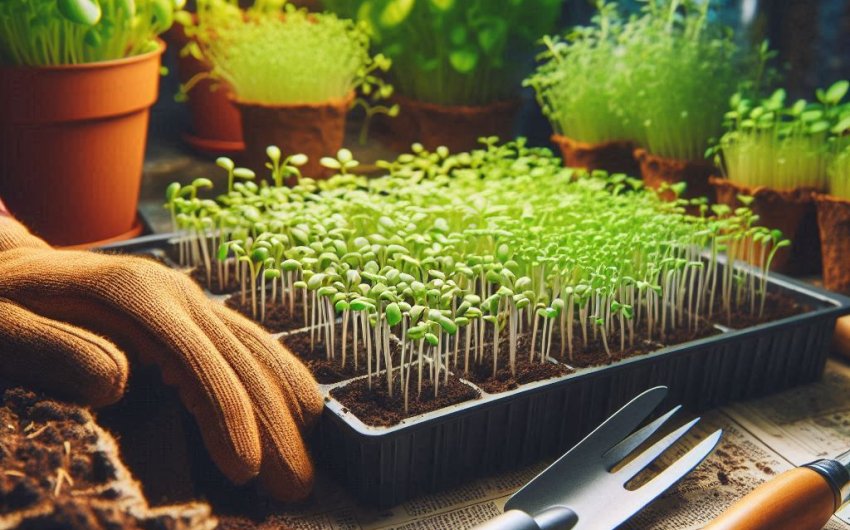
Why Start Seeds Indoors?
Have you ever dreamed of a garden overflowing with vibrant flowers and delicious vegetables, but felt limited by a short growing season or the high cost of buying plants from the nursery? Starting seeds indoors is your secret weapon to achieving that dream! This simple yet rewarding technique allows you to get a jump start on the gardening season, giving your plants a significant head start before they even touch the outdoor soil.
One of the biggest reasons to start seeds indoors is to extend your growing season. For many popular plants, especially warm-season vegetables like tomatoes, peppers, and eggplants, or flowers like impatiens and petunias, the outdoor growing season simply isn't long enough for them to fully mature if planted directly from seed. By starting them indoors, you give them weeks, or even months, of valuable growth time in a protected environment.
Another huge benefit is cost savings. A packet of seeds costs far less than buying individual plants from a garden center. For the price of just a few nursery plants, you can buy enough seeds to grow dozens, even hundreds, of your own! Plus, starting seeds indoors gives you access to a much wider variety of plants. Nurseries typically only carry the most popular varieties, but seed catalogs offer an astonishing array of unique heirloom vegetables, unusual flowers, and disease-resistant hybrids that you might never find as young plants. It's a truly rewarding way to connect with your garden from the very beginning.
When Should You Start Your Seeds Indoors?
Timing is everything when it comes to starting seeds indoors. Plant too early, and your seedlings might become leggy and weak before it's safe to transplant them outside. Plant too late, and you lose the advantage of an early start.
How Do You Determine Your Last Frost Date?
The most critical piece of information you need is your average last frost date. This is the estimated date in spring after which there is a very low chance of frost in your area. This date signals when it's generally safe to move your tender, warm-season plants outdoors.
- Online Search: The easiest way to find your last frost date is to do a quick online search for "average last frost date [your zip code or city, state]". Many gardening websites and weather resources provide this information.
- Local Extension Office: Your local cooperative extension office is an excellent resource for localized gardening information, including frost dates.
- Regional Variation: Keep in mind that frost dates can vary even within a small area due to elevation, proximity to large bodies of water, or urban heat island effects. Pay attention to microclimates in your own yard.
It's important to remember that the last frost date is an average. There's always a chance of an unseasonably late frost, so always keep an eye on the weather forecast as your planting date approaches.
How Do You Calculate Your Seed Starting Date?
Once you know your average last frost date, you can work backward to figure out when to start each type of seed. This information is typically found on the back of your seed packets.
- Seed Packet Instructions: Look for text like "Start indoors 6-8 weeks before last frost date" or "Transplant out 2 weeks after last frost." This is your primary guide.
- Example Calculation:
- Let's say your average last frost date is May 15th.
- If a seed packet says "Start indoors 6-8 weeks before last frost," you would count back 6-8 weeks from May 15th.
- 8 weeks before May 15th is around March 20th.
- 6 weeks before May 15th is around April 3rd.
- So, you would aim to plant those seeds indoors between late March and early April.
- Consider Plant Type:
- Slow-Growing/Long Season Plants: Tomatoes, peppers, eggplants, onions, and many perennial flowers often need a longer head start (8-12 weeks).
- Moderate Growth: Most annual flowers, broccoli, cabbage, and lettuce typically need 6-8 weeks.
- Fast Growers/Direct Sow: Plants like beans, corn, cucumbers, squash, and sunflowers generally grow very quickly and don't benefit much from an indoor start, or they dislike transplanting. They are usually direct sown outdoors after the last frost.
- Succession Planting: For crops like lettuce or basil, where you want a continuous harvest, you might do succession planting by starting a small batch of seeds every 2-3 weeks.
Create a seed starting calendar for yourself! List your last frost date, and then for each plant you want to grow, note its recommended indoor starting time. This helps keep you organized and on schedule.
What Supplies Do You Need to Start Seeds Indoors?
Before you dive in, gathering the right seed starting supplies will make the process much smoother and more successful. You don't need a fancy setup to begin, but having the essentials is important.
What are Essential Containers and Trays?
You need something to hold your seed starting mix and nurture those tiny sprouts.
- Seed Starting Trays: These are shallow plastic trays, often with individual cells (like 6-cell or 12-cell packs). They are designed for easy transplanting. You can find durable plastic seed starting trays that can be reused for years.
- Nursery Pots/Small Pots: For larger seeds or plants that need a bit more room before transplanting (like pumpkins or larger herbs), small 2-4 inch nursery pots or recycled yogurt cups (with drainage holes added!) work well.
- Peat Pots/Coir Pots: These are biodegradable pots made from peat moss or coconut coir. You plant the entire pot directly into the garden, minimizing transplant shock. However, they can sometimes dry out faster or wick moisture away from the soil.
- Soil Blocks: A more advanced option, soil blocks are self-contained cubes of compressed seed starting mix. They eliminate the need for plastic pots and reduce transplant shock but require a special soil block maker.
- Humidity Domes/Propagators: These clear plastic covers fit over seed trays, creating a mini-greenhouse effect by trapping moisture and warmth, which is ideal for germination. Many seed starting kits come with them.
Make sure any containers you reuse are thoroughly cleaned and disinfected (a 10% bleach solution works) to prevent the spread of diseases.
What Kind of Soil Mix is Best?
This is crucial! Do NOT use regular garden soil or potting mix for starting seeds. They are too heavy, can compact easily, and may contain weed seeds, pests, or diseases.
- Sterile Seed Starting Mix: Always use a high-quality, sterile seed starting mix. These mixes are specially formulated to be lightweight, fine-textured, and free of pathogens. They typically contain ingredients like sphagnum peat moss, vermiculite, and perlite for excellent drainage and aeration, which are perfect for delicate seedlings. You can find options like Espoma Organic Seed Starting Mix.
- No Garden Soil: Garden soil is too dense for tiny roots and can harbor disease organisms that cause "damping-off" (where seedlings suddenly collapse and die).
- No Potting Mix (initially): While a good potting mix is great for mature plants, it's usually too coarse and contains too many nutrients for fragile seedlings. Save it for when you pot up your seedlings to larger containers.
Why is Light So Important for Seedlings?
This is perhaps the most overlooked, yet most critical, aspect of indoor seed starting. A sunny window often isn't enough!
- Grow Lights: For strong, stocky seedlings, you almost certainly need grow lights. Sunlight from a window is often too weak and comes from only one direction, causing seedlings to stretch and become leggy (tall, thin, and weak) as they reach for the light.
- Types:
- Fluorescent Lights (T5 or T8): These are common, affordable, and effective. T5 lights are brighter and more efficient than T8. Look for full-spectrum fluorescent grow lights.
- LED Grow Lights: Becoming increasingly popular, LED grow lights are energy-efficient, long-lasting, and can provide a broad spectrum of light. They are often a larger initial investment but save money on electricity in the long run.
- Placement: Hang your grow lights very close to the tops of your seedlings – usually 2-4 inches (5-10 cm) above the foliage. As the seedlings grow, raise the lights.
- Duration: Provide light for 12-16 hours a day. Use an outlet timer to automate this. You can find reliable grow light systems with timers.
- Types:
Without adequate light, your seedlings will be weak and unhealthy, making them vulnerable when it's time to transplant. Don't underestimate the power of good light!
What About Heat Mats and Fertilizers?
- Heat Mat: A heating mat placed under your seed trays provides bottom warmth, which is crucial for the germination of many seeds, especially warm-season plants like peppers and tomatoes. It speeds up germination and improves success rates. Once seeds sprout, you can remove the heat mat. A good example is the Hydrofarm Seedling Heat Mat.
- Fertilizer: Seed starting mixes contain very few nutrients because the seed itself provides the initial food for the sprout. You generally don't need to fertilize until your seedlings develop their first "true leaves" (the second set of leaves that appear after the initial "cotyledons" or seed leaves). Once true leaves appear, you can start feeding with a very dilute solution (1/4 to 1/2 strength) of a balanced liquid organic fertilizer every 1-2 weeks. Something like liquid seaweed or fish emulsion is great.
How Do You Plant Seeds Indoors?
Once you have all your supplies, the actual planting of the seeds is a straightforward process. Take your time, be gentle, and follow a few key steps for success.
What are the Steps for Sowing Seeds?
- Prepare Your Containers: Fill your seed-starting trays or pots with your sterile seed starting mix. Lightly tap the trays on your work surface to settle the mix, but don't compact it too much. You want it loose and airy.
- Moisten the Soil Mix: Thoroughly moisten the seed starting mix before sowing. Water slowly until it’s damp throughout, like a wrung-out sponge. This prevents small seeds from washing away when you water after planting.
- Create Planting Holes/Furrows:
- For larger seeds, you can poke individual holes with a pencil or your finger to the recommended planting depth.
- For tiny seeds, you can sprinkle them evenly over the surface or create shallow furrows with a ruler or stick.
- Sow the Seeds: Refer to your seed packet instructions for planting depth and spacing.
- Depth: A general rule of thumb is to plant seeds at a depth roughly two to three times their width. Tiny seeds (like petunias or snapdragons) should often be sown on the surface and lightly pressed into the soil, as they need light to germinate.
- Spacing: If using individual cells, plant 1-3 seeds per cell to ensure at least one strong seedling emerges. If using open trays, space seeds according to the packet.
- Cover and Gently Tamp: Gently cover the seeds with the appropriate amount of seed starting mix. For very small seeds on the surface, you might just sprinkle a very fine layer of vermiculite or sand. Lightly tamp down the soil over the seeds to ensure good seed-to-soil contact.
- Label Everything: This is CRITICAL! It's incredibly easy to forget what you planted where. Use plant labels or popsicle sticks and a permanent marker to label each cell or row with the plant name and the date planted.
- Water Gently: Lightly mist the surface with a spray bottle or water from the bottom (placing the tray in a shallow pan of water) to avoid disturbing the newly sown seeds.
- Cover with Humidity Dome: Place your clear humidity dome over the tray. This creates a mini-greenhouse effect, keeping the humidity high and soil consistently moist, which is ideal for germination.
- Place on Heat Mat (if applicable): If using, place your covered tray on a heat mat.
What Conditions are Best for Germination?
Seeds don't need light to germinate (unless specified on the packet). They need warmth and moisture.
- Warmth: Most seeds germinate best at temperatures between 70-85°F (21-29°C). A heat mat is ideal for maintaining this warmth.
- Consistent Moisture: The soil should remain consistently moist but never soggy. The humidity dome helps with this. Check daily and mist lightly if the surface starts to dry out.
- Patience: Some seeds germinate in a few days, others take weeks. Refer to your seed packet for estimated germination times.
Once you see the first sprouts emerge, it's time to adjust their environment!
How Do You Care for Your Seedlings?
Germination is just the first step. Nurturing your tiny sprouts into strong, healthy seedlings requires consistent care, especially with light and watering.
How Much Light and What Kind?
This is where many beginner seed starters go wrong, leading to "leggy" seedlings.
- Immediate Light: As soon as you see the first tiny green sprouts (called cotyledons or seed leaves) emerge, remove the humidity dome and immediately place your seedlings under a grow light. Do not wait! Every minute they are without adequate light, they stretch.
- Proximity: Position your grow lights very close to the tops of your seedlings, usually 2-4 inches (5-10 cm) away. As the seedlings grow taller, continually raise your lights to maintain this distance.
- Duration: Keep the lights on for 12-16 hours a day. Use an outlet timer to automate this cycle, ensuring consistent light exposure.
- Strong Light is Key: The goal is to provide intense light that encourages compact, bushy growth, not tall, stretched-out stems.
How to Water and When to Fertilize Seedlings?
Proper watering is crucial – too much or too little can cause problems.
- Watering Technique:
- Bottom Watering: This is often the best method for seedlings. Place your seed tray or pots in a shallow tray filled with water. The soil will soak up the water from the bottom. Remove the tray once the surface of the soil appears moist. This encourages roots to grow downwards and avoids disturbing delicate seedlings or washing away seeds.
- Gentle Top Watering: If you must water from the top, use a watering can with a very fine rose or a spray bottle with a gentle mist.
- Watering Frequency: Allow the top surface of the soil to dry slightly between waterings, but don't let the seedlings completely wilt. Overwatering can lead to damping-off disease (a fungal disease that causes seedlings to collapse at the soil line).
- When to Fertilize: Your seed starting mix has very few nutrients. The seed itself contains enough food for the initial sprout (the cotyledons). Wait until your seedlings develop their first set of true leaves (the leaves that look like miniature versions of the mature plant's leaves, appearing after the cotyledons).
- Dilute Solution: Once true leaves appear, begin fertilizing every 1-2 weeks with a very weak (1/4 to 1/2 strength) balanced liquid organic fertilizer. A product like Alaska Fish Emulsion or liquid seaweed is excellent. This provides gentle nourishment without burning the tender roots.
What is Thinning and Why is it Necessary?
Thinning seedlings is essential for ensuring your remaining plants have enough space, light, and nutrients to grow strong. It feels tough to remove healthy sprouts, but it's vital for robust growth.
- Why Thin? If you planted multiple seeds per cell, or if you broadcast tiny seeds, they will be too crowded. Crowding leads to competition for light, water, and nutrients, resulting in weak, spindly seedlings that are more prone to disease.
- When to Thin: Thin your seedlings once they have developed their first set of true leaves.
- How to Thin: Choose the strongest, healthiest-looking seedling in each cell or cluster. Use a small pair of scissors to snip off the weaker seedlings at the soil line. Avoid pulling them out, as this can disturb the roots of the seedling you want to keep. Aim for one healthy seedling per cell.
What is Potting Up?
Potting up (also known as transplanting up or bumping up) is the process of moving your seedlings from their initial small seed-starting cells to slightly larger containers once they outgrow their original space.
- When to Pot Up:
- When roots start to show through the drainage holes.
- When the seedlings are getting too tall or crowded for their original cells.
- When they have developed 2-3 sets of true leaves.
- How to Pot Up:
- Gently loosen the seedling from its cell using a small trowel or a pencil, being careful not to damage the roots. Handle the seedling by its leaves or root ball, never by the stem (if the stem breaks, the plant is likely gone; if a leaf breaks, the plant will recover).
- Fill a slightly larger pot (e.g., a 4-inch pot) with a good quality, all-purpose potting mix (not seed starting mix, as this mix is richer in nutrients and coarser).
- Make a hole in the center of the new pot.
- Carefully place the seedling in the hole, ensuring it's at the same depth it was in the original container. For tomatoes, you can bury them deeper up to their first true leaves, as they will root along the stem.
- Gently backfill with potting mix and lightly tamp around the base.
- Water thoroughly to settle the soil.
Potting up gives your growing seedlings more room for root development and access to more nutrients before their final move outdoors.
How Do You Harden Off Seedlings?
Before your precious, pampered indoor seedlings can face the harsh realities of the outdoor world, they need a period of hardening off. This crucial step gradually acclimates them to outdoor conditions, preventing transplant shock.
What is Hardening Off and Why is it Important?
Hardening off is the process of slowly exposing your indoor-grown seedlings to outdoor elements like direct sunlight, wind, cooler temperatures, and fluctuating humidity. Think of it as a boot camp for plants!
- Why it's Important: Indoor conditions are very mild and protected compared to the outdoors. Seedlings grown indoors are tender and have not developed the tough cell walls, thicker cuticles, or stronger root systems needed to withstand sun, wind, and temperature swings. Without hardening off, they would suffer from transplant shock, wilting, sunscald, or even die shortly after being planted outdoors.
- Preventing Transplant Shock: Hardening off minimizes the stress of transplanting, allowing your plants to continue growing vigorously once they are in the garden.
What are the Steps for Hardening Off?
The hardening off process typically takes 7-14 days. Start about 1-2 weeks before your projected outdoor planting date.
- Day 1-2 (Shade & Warmth): On the first couple of days, place your seedlings outdoors in a protected, shady spot (like under a porch, a patio table, or a dense tree) for just a few hours (2-3 hours). Make sure temperatures are mild (above 50°F or 10°C, or warmer for heat-loving plants). Bring them back indoors in the evening.
- Day 3-4 (Partial Sun): Gradually increase the amount of time they spend outdoors (4-6 hours) and expose them to slightly more direct sunlight, perhaps dappled shade or morning sun. Continue to bring them indoors at night.
- Day 5-7 (More Sun & Longer Hours): Increase sun exposure to a few hours of direct sun. Leave them out for longer periods (6-8 hours). Continue to monitor the weather and bring them in if temperatures drop too low or if there's heavy rain or strong wind.
- Day 8-10 (Full Sun & Overnight (if safe)): Most plants can now handle full sun for most of the day. If nighttime temperatures are consistently above their safe threshold (e.g., above 50°F or 10°C for tomatoes/peppers), you can begin to leave them out overnight.
- Day 11-14 (Full Exposure): Your seedlings should now be fully acclimated and ready for full-time outdoor living. They can stay outside day and night, ready for transplanting.
Important Considerations During Hardening Off:
- Watering: Seedlings will dry out faster outdoors. Check them daily and water as needed. Don't let them wilt!
- Wind: Protect them from strong winds, especially in the first few days, as strong winds can damage tender stems.
- Frost Risk: Always bring tender plants indoors if there's any forecast of frost.
- Observation: Pay close attention to your seedlings. If they show signs of stress (wilting, yellowing leaves, scorched spots), bring them in or move them to a more protected spot, and slow down the hardening off process.
By diligently hardening off your seedlings, you're preparing them for a smooth transition to the garden, setting them up for robust growth and a successful season.