
How to Start Seeds Indoors: Your Guide to Early Garden Success
The anticipation of spring, with its promise of new growth and bountiful harvests, often begins long before the last frost melts away. For many gardeners, the secret to a thriving and productive season lies in gaining a head start by starting seeds indoors. This simple yet incredibly rewarding practice allows you to cultivate stronger, healthier seedlings, extend your growing season, save money on costly nursery plants, and experiment with a wider variety of unique crops that might not be available as transplants. While the idea of nurturing tiny seeds into robust young plants under your roof might seem daunting at first, the process is surprisingly straightforward and incredibly satisfying. This comprehensive guide will demystify the art of how to start seeds indoors, providing step-by-step instructions and practical tips to ensure your germination efforts lead to a flourishing garden, ready for planting when the weather warms.
Why start seeds indoors?
Starting seeds indoors is a practice embraced by countless gardeners for a variety of compelling reasons, offering advantages that stretch far beyond mere convenience.
What are the main benefits of indoor seed starting?
The advantages of starting seeds indoors are numerous and contribute significantly to gardening success:
- Extend Your Growing Season: This is a major benefit, especially for gardeners in regions with short growing seasons. By giving plants a head start indoors, you can transplant larger, more mature seedlings into your garden once the weather warms, allowing them to produce earlier and longer. This is particularly crucial for slow-growing crops like tomatoes, peppers, and eggplants.
- Save Money: Seed packets are significantly cheaper than purchasing individual young plants from a nursery. Starting your own seeds can lead to substantial savings, especially if you plan a large garden.
- Wider Variety of Plants: Nurseries typically stock only the most popular or common plant varieties. When you start from seed, you gain access to an enormous selection of unique, heirloom, and specialty varieties of vegetables, herbs, and flowers that you'd likely never find as young plants. This opens up a world of culinary and aesthetic possibilities.
- Stronger, Healthier Plants: When properly cared for, homegrown seedlings often develop into stronger, more robust plants. You control their environment from day one, minimizing stress and ensuring they get optimal conditions before facing the outdoors.
- Avoid Pests/Diseases: Young seedlings started indoors are protected from early-season pests and diseases that might affect them if direct-sown outdoors.
- Sense of Accomplishment: There's immense satisfaction in nurturing a tiny seed into a thriving plant ready for your garden. It connects you deeply to the gardening process from its very beginning.
- Timing Control: You dictate exactly when your plants emerge, allowing you to time them perfectly for transplanting after your last frost date.
Which plants are best to start indoors?
Some plants benefit much more from indoor seed starting than others.
- Slow Growers: Tomatoes, peppers, eggplants, onions, leeks, and many perennial flowers take a long time to reach transplanting size.
- Heat Lovers: Crops like cucumbers, squash, melons, and basil prefer warm soil and warm temperatures. Starting them indoors ensures they get a strong start before being moved outside when the weather is consistently warm.
- Delicate Transplants: Certain plants, while they can be direct-sown, often perform better and are less susceptible to early pest pressure when started indoors and transplanted as larger seedlings (e.g., lettuce, broccoli, cabbage).
- Avoid starting indoors: Some plants, like carrots, radishes, spinach, and corn, dislike having their roots disturbed and are best direct-sown into the garden.
When should you start seeds indoors?
The timing for starting seeds indoors is critical and depends on your last expected spring frost date.
- Know your last frost date: This is the most important piece of information. You can find this data online for your specific region or ask local gardeners.
- Read seed packets: Seed packets typically provide guidance on when to start seeds indoors relative to your last frost date (e.g., "Start indoors 6-8 weeks before last frost").
- Count backwards: If your last frost is May 15th, and a seed packet says "6-8 weeks before last frost," you would start those seeds between March 20th and April 3rd.
- Don't start too early: Starting too early can lead to leggy, root-bound, or overgrown seedlings that struggle to adapt when transplanted. It's often better to start a little late than too early.
What supplies do you need to start seeds indoors?
Gathering the right supplies for starting seeds indoors before you begin will make the process smooth, organized, and much more successful. Most items are readily available online or at local garden centers.
What kind of seed starting mix is best?
A high-quality seed starting mix is perhaps the most important supply.
- Why not garden soil or potting mix? Garden soil is too heavy, can contain weed seeds, pests, or disease pathogens, and compacts easily in containers. Regular potting mix can be too coarse and too rich for delicate seedlings.
- Characteristics of seed starting mix: It's a "soilless" blend, typically made of peat moss (or coco coir), vermiculite, and/or perlite. It's fine-textured, light, sterile, and drains well while retaining moisture.
- Recommended: Look for seed starting mix specifically formulated for germination.
What type of containers should you use for seeds?
There's a wide variety of containers suitable for starting seeds indoors:
- Seed Starting Trays: Shallow plastic trays with individual cells are common. Standard seed starter trays often come with a clear plastic dome to create a mini-greenhouse effect.
- Peat Pots/Pellets: Peat pots and jiffy pellets are biodegradable. You plant the whole pot directly into the garden, minimizing transplant shock.
- Recycled Containers: Repurpose clean yogurt cups, plastic clam-shells, paper towel rolls (cut to size), or toilet paper rolls. Always ensure they have drainage holes poked in the bottom.
- Size: Cells or pots should be at least 1.5 to 2 inches deep to allow for adequate root development.
Is a grow light necessary for starting seeds indoors?
While some sunny windowsills might suffice, a grow light is highly recommended for robust, healthy seedlings.
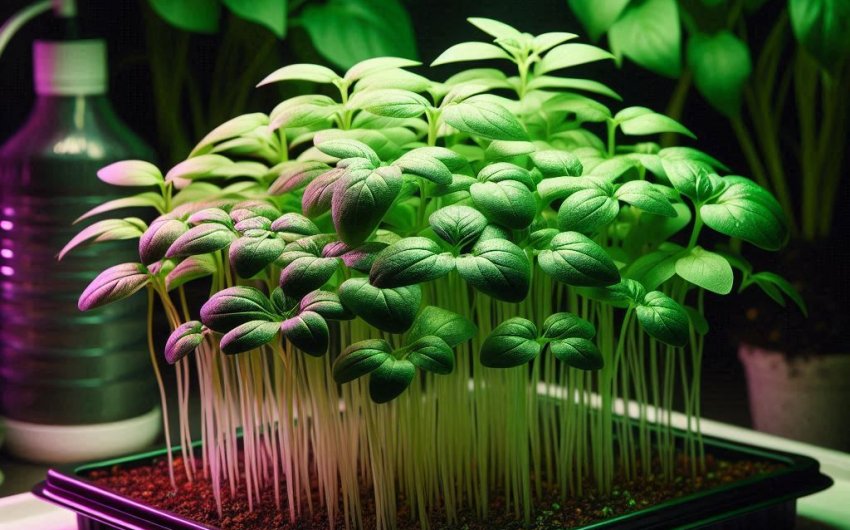
- Why recommended: Natural windowsill light is often insufficient, especially during winter months, leading to "leggy" (tall, thin, weak) seedlings that stretch excessively towards the light. A grow light provides consistent, direct, full-spectrum light.
- Types:
- Fluorescent Shop Lights: Inexpensive and effective. Use "full spectrum" or "daylight" bulbs. A T5 fluorescent grow light is a popular choice.
- LED Grow Lights: More energy-efficient, longer-lasting, and often come in various spectrums. Look for full-spectrum LED grow lights for seedlings.
- Placement: Position the light 2-4 inches above the top of the seedlings. As seedlings grow, raise the light to maintain this distance.
- Duration: Provide 12-16 hours of light per day. Use an outlet timer for consistency.
Do you need a heat mat for germination?
A heat mat is often very beneficial for germination, especially for heat-loving plants like tomatoes, peppers, and eggplants.
- Purpose: It provides gentle, consistent bottom heat to the seed starting mix, which speeds up germination rates and improves overall success, mimicking warm spring soil temperatures.
- Recommendation: While not strictly necessary for all seeds, a seedling heat mat with thermostat is an excellent investment for more reliable germination. Remove the heat mat once seeds have sprouted to prevent excessive leggy growth.
What other useful tools are needed?
- Spray bottle: For gently misting the soil surface, especially during germination.
- Watering can: Small, gentle watering can for bottom watering.
- Labels: Essential for keeping track of what you planted! Use plant labels and a permanent marker.
- Fan (optional but recommended): A small oscillating fan running for a few hours a day can strengthen seedling stems and reduce damping-off disease.
How to start seeds indoors step by step?
Once you have your supplies ready, starting seeds indoors is a simple, methodical process. Follow these steps for the best chance of success.
Step 1: Prepare your seed starting mix
- Moisten the mix: Before filling your containers, put your seed starting mix in a large bowl or bucket. Add warm water gradually, mixing it in until the entire batch is evenly moist. It should feel like a wrung-out sponge – damp but not soggy, and no water should drip out when squeezed. This ensures consistent moisture for germination.
Step 2: Fill containers and sow seeds
- Fill containers: Loosely fill your chosen seed starting containers with the moistened mix. Don't pack it down too tightly, as this can hinder root development. Leave about 1/2 inch of space from the rim.
- Make planting holes: For larger seeds, make small depressions in the center of each cell. For tiny seeds, you can simply scatter them over the surface. The seed packet will tell you the recommended planting depth. A general rule is to plant a seed twice as deep as it is wide.
- Sow seeds:
- Small seeds: Lightly scatter tiny seeds (like lettuce, some herbs) directly on the surface or barely cover with a thin layer of mix.
- Medium seeds: Place 2-3 seeds per cell/pot for medium-sized seeds (like tomatoes, peppers) to ensure at least one germinates.
- Large seeds: Plant 1 seed per cell for large seeds (like squash, melon), usually a bit deeper.
- Cover seeds: Gently cover the seeds with a thin layer of moistened seed starting mix according to packet directions.
- Lightly tamp: Gently pat the surface to ensure good seed-to-soil contact.
- Mist: Lightly mist the surface again with your spray bottle to settle everything.
- Label: Label each tray or pot immediately with the plant type and date. This is crucial as seedlings look similar!
Step 3: Provide warmth and humidity for germination
- Place on heat mat (if using): If you're using a heat mat, place the seeded trays directly on top. Set the thermostat (if applicable) to the recommended temperature for your seeds (often 70-80°F for warm-season crops).
- Cover for humidity: Cover the trays with a clear plastic dome or a sheet of plastic wrap. This creates a mini-greenhouse effect, maintaining high humidity crucial for germination and preventing the surface from drying out.
- Monitor: Check daily for signs of germination. Once seeds start to sprout, remove the dome or plastic cover immediately. This prevents fungal diseases and leggy growth.
Step 4: Provide ample light and air circulation after sprouting
This is where many beginners go wrong, leading to weak seedlings.
- Move to light: As soon as seedlings emerge, place them directly under your grow light. Position the light 2-4 inches above the top of the seedlings. Adjust the light height as they grow to maintain this distance. Provide 12-16 hours of light per day.
- Water carefully: Water from the bottom whenever possible. Place the seeded tray inside a larger, water-tight tray. Pour about 1 inch of water into the bottom tray and allow the mix to absorb water from below. Remove any excess water after 30 minutes. This keeps the foliage dry, reducing disease.
- Improve air circulation: Once seedlings have true leaves, run a small fan for a few hours daily near your seedlings. This strengthens stems and further reduces damping-off and mold.
Step 5: Thinning and feeding seedlings
- Thinning: Once seedlings have their first set of true leaves (the second set of leaves to emerge, which look like miniature versions of the mature plant's leaves), thin them to one strong seedling per cell or pot. Use small scissors to snip off the weaker seedlings at the soil line; don't pull them, as this can disturb the roots of the keepers.
- Feeding: Most seed starting mixes provide enough nutrients for the first few weeks. Once seedlings have developed 1-2 sets of true leaves, they will need supplemental feeding. Use a balanced liquid fertilizer (e.g., 5-1-1 or 2-4-2 NPK) diluted to 1/4 strength, every 1-2 weeks. Always water the seedlings before fertilizing.
Step 6: Hardening off before transplanting
Hardening off is a crucial step to prepare your indoor-grown seedlings for the harsh outdoor environment. Skipping this step can lead to transplant shock or death.
- Start gradually: About 7-14 days before your target transplant date, begin exposing your seedlings to outdoor conditions.
- Day 1-2: Place trays in a sheltered, shady spot outdoors for 2-3 hours.
- Day 3-4: Move to a slightly brighter, still-sheltered spot for 3-4 hours.
- Day 5-6: Expose to more direct sun and longer periods (4-6 hours).
- Remaining days: Gradually increase sun exposure and time outdoors. Bring them in if temperatures drop below ideal ranges.
- Reduce water: Lightly reduce watering during this period to encourage toughening.
- Transplant: Once hardened off, your robust seedlings are ready for their new home in the garden after the danger of frost has passed.
Troubleshooting common indoor seed starting problems
Even with the best intentions, you might encounter a few common issues when learning how to start seeds indoors. Knowing how to identify and fix them will greatly improve your success rate.
Why are my seedlings leggy and weak?
Leggy seedlings (tall, thin, and stretched) are the most common problem and are almost always caused by insufficient light. The seedlings are desperately reaching for a light source.
- To fix: Immediately move your grow light closer to the seedlings (2-4 inches above). Ensure the light is on for 12-16 hours a day. If using a windowsill, it might not be enough; consider investing in a grow light. Increasing air circulation with a fan can also help strengthen stems.
Why are my seedlings wilting and collapsing at the soil line (damping off)?
Damping off is a fungal disease that causes young seedlings to suddenly rot and collapse at the soil line.
- Causes: Too much moisture, poor air circulation, non-sterile soil, or cool temperatures.
- To fix:
- Prevention is key: Use sterile seed starting mix. Don't overwater; allow the top of the soil to dry slightly between waterings. Ensure good air circulation (use a fan). Remove humidity domes as soon as seeds sprout.
- If already present: Affected seedlings are usually lost. Remove them immediately to prevent spread. Improve conditions (airflow, less water). A very light sprinkle of cinnamon powder (a natural antifungal) on the soil surface can sometimes help prevent further spread.
Why aren't my seeds germinating?
If your seeds aren't germinating, consider these factors:
- Old or non-viable seeds: Seeds have a shelf life. Purchase fresh high-germination seeds from a reputable source.
- Incorrect temperature: Seeds need specific temperature ranges to germinate. Heat-loving seeds won't sprout in cold conditions. Consider a heat mat.
- Too dry or too wet: Seeds need consistent moisture to germinate but will rot if waterlogged. Ensure the seed starting mix is consistently damp like a wrung-out sponge.
- Planting depth: Seeds planted too deep might not have enough energy to reach the surface. Seeds planted too shallow might dry out. Follow packet instructions.
- Seed dormancy: Some seeds have natural dormancy requirements (e.g., stratification or scarification) before they will germinate. Research your specific seed type.
What are those small flies hovering around my seedlings (fungus gnats)?
Fungus gnats are tiny, black, mosquito-like flies that typically indicate consistently wet soil. Their larvae feed on fungi in the soil and sometimes delicate seedling roots.
- To fix: Let the soil surface dry out completely between waterings. Use bottom watering. You can use yellow sticky traps to catch adult gnats. For severe infestations, use BT (Bacillus thuringiensis israelensis) dunks in your watering can.
By mastering the art of how to start seeds indoors, you'll unlock a world of gardening possibilities, growing healthier, more diverse plants and enjoying the immense satisfaction of nurturing your garden from its very inception.