
The Mini Farming Bible: Essential Tips for Year-Round Cultivation
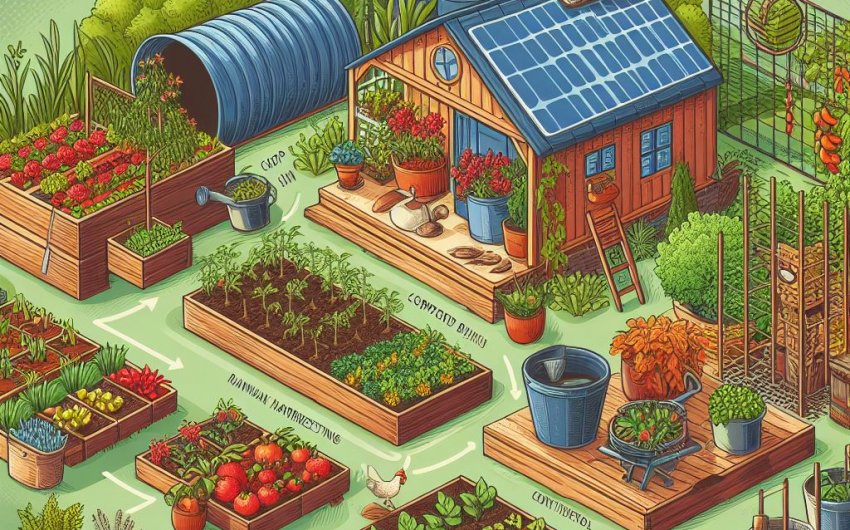
The Mini Farming Bible provides essential tips for year-round cultivation by emphasizing intensive planting, succession planting, season extension techniques, and optimizing soil health within limited spaces. The core principle is to make every square foot productive across all four seasons, ensuring a continuous harvest of fresh produce for increased self-sufficiency.
Why is year-round cultivation crucial for a mini farm?
Year-round cultivation is crucial for a mini farm because it maximizes the productivity of limited space, ensuring a continuous supply of fresh produce and significantly enhancing self-sufficiency. Rather than limiting harvests to a single growing season, year-round farming leverages diverse crops and season extension techniques to produce food even in colder months, making the mini farm a truly sustainable and bountiful resource.
What are the challenges of year-round cultivation in a mini farm?
- Climate limitations: Managing temperature, light, and humidity for plants outside their natural growing seasons.
- Space constraints: Requires creative solutions to grow diverse crops in small areas throughout the year.
- Increased planning: Demands meticulous planning for succession planting, crop rotation, and seasonal transitions.
- Energy and resource use: Season extension techniques (like heated greenhouses) can require more energy inputs.
- Pest and disease pressure: Can be exacerbated in closed environments or with continuous cropping.
What are the benefits of year-round cultivation?
- Continuous fresh harvests: Enjoy fresh produce even in winter, reducing reliance on grocery stores.
- Maximized yield: Get significantly more food from your small plot over 12 months than over just 6 months.
- Increased self-sufficiency: Boosts food security and reduces food miles.
- Reduced food waste: Harvest what you need when you need it.
- Enhanced soil health: Continuous planting and crop rotation contribute to living, active soil.
- Greater learning and satisfaction: An engaging and rewarding endeavor.
What are the core principles of intensive planting for mini farms?
Intensive planting techniques are fundamental to year-round cultivation in a mini farm, as they allow you to grow significantly more food in a smaller space by optimizing every square inch.
How does Square Foot Gardening (SFG) maximize yield?
Square Foot Gardening (SFG) is a popular method that divides garden beds (often raised beds) into a grid of 1x1 foot squares. Each square is then planted with a specific, often dense, number of plants based on their mature size.
- Benefits: Maximizes yield by optimizing spacing, reduces weeding (plants shade out weeds), efficient water use, easy to plan and manage.
- Method:
- Build raised beds.
- Divide into 1x1 ft squares.
- Fill with a rich, loose growing medium (e.g., Mel's Mix: 1/3 compost, 1/3 peat moss/coco coir, 1/3 vermiculite).
- Plant each square densely according to SFG guidelines (e.g., 1 tomato per square, 9 spinach per square, 16 radishes per square). You can find square foot gardening grids for easy setup.
What is wide-row planting, and why is it effective?
Wide-row planting involves planting crops in broad bands (1-3 feet wide) rather than single, narrow rows. This creates more planting area per foot of bed length.
- Benefits: Increased yield, plants shade out weeds in the middle of the row, improves microclimate.
- Method: Sow seeds or plant seedlings across the entire width of the bed, ensuring plants are spaced adequately within the band.
How does vertical gardening contribute to intensive planting?
Vertical gardening leverages unused vertical space to grow plants upwards, dramatically increasing your effective growing area without needing more ground space.
- Benefits: Maximizes yield in small footprints, improves air circulation, keeps fruits clean, reduces bending for harvesting.
- Systems: Trellises, arbors, stackable planters, wall-mounted planters, repurposed pallets.
- Crops: Vining vegetables (cucumbers, pole beans, indeterminate tomatoes), strawberries, leafy greens, herbs.
What is succession planting for year-round harvests?
Succession planting is a crucial strategy for year-round cultivation, ensuring a continuous supply of fresh produce by staggering your plantings rather than planting everything at once.
What are the main types of succession planting?
- Staggered Planting: Planting small batches of the same crop every 2-4 weeks. As one batch is harvested, the next is ready.
- Crops: Lettuce, radishes, spinach, bush beans, carrots.
- Relay Planting: Planting a new crop in the space immediately after the previous crop has been harvested.
- Crops: Following early spring peas with summer bush beans, then fall kale.
- Interplanting/Catch Cropping: Planting a fast-growing, short-season crop (e.g., radishes) in between slower-growing crops (e.g., tomatoes) that will eventually fill the space. Harvest the fast crop before the main crop needs the room.
- Crops: Radishes/lettuce between rows of corn, broccoli.
- Cut-and-Come-Again: Harvesting outer leaves of plants (e.g., lettuce, spinach, kale) rather than harvesting the entire plant, allowing it to continue producing new leaves.
- Crops: Leafy greens, some herbs.
How do you plan a succession planting schedule?
- Know your last and first frost dates: Essential for timing.
- Research crop maturity: Know how many days to harvest for each crop.
- Plan small batches: Instead of planting a full row of lettuce, plant 1/4 of a row every two weeks.
- Use a garden journal: Track planting dates, harvest dates, and crop performance to refine your schedule. A garden planner journal is invaluable.
What season extension techniques enable year-round growing?
Season extension techniques allow mini farmers to defy traditional growing seasons, protecting plants from cold in spring and fall, and sometimes enabling winter harvests.
How do cold frames and cloches extend the season?
- Cold frames: Bottomless boxes with clear lids that sit over garden beds. They trap solar heat, warm the soil, and protect plants from frost and cold winds. Used in early spring for starting seeds and in fall/winter for extending harvests of cool-season crops. You can find mini cold frame kits for small beds.
- Cloches: Small, bell-shaped covers (plastic or glass) placed over individual plants for frost protection.
- Benefits: Extend planting/harvest windows, protect tender crops, acclimate (harden off) seedlings.
What role do hoop houses and greenhouses play?
- Hoop houses (Polytunnels): Simple structures made of hoops covered with clear plastic sheeting. Provide significant warmth and protection, extending the growing season by months.
- Greenhouses (Mini/Small): More permanent structures offering greater environmental control. Can enable true year-round growing in many climates, especially if heated.
- Benefits: Greatly extend growing season, allow for overwintering plants, provide controlled environment. You can find small portable greenhouses for home use.
What other season extension techniques are useful?
- Row covers: Lightweight fabric (floating row covers) placed directly over plants protects from light frost, wind, and some pests. Floating row covers for vegetables are versatile.
- Thermal mass: Materials like dark-colored rocks or water-filled barrels absorb solar heat during the day and release it at night, warming the immediate area.
- Cover crops: Planted in off-seasons to protect and enrich soil (not necessarily for harvest), they are a form of long-term season extension for soil health.
How do you optimize soil health for continuous cultivation?
Continuous cultivation in a mini farm places intense demands on the soil. Optimizing soil health is paramount for sustained fertility and robust plant growth year-round.
Why is a living, rich soil essential?
A living, rich soil, teeming with beneficial microorganisms and organic matter, is the powerhouse of your mini farm. It:
- Feeds plants naturally: Microbes break down organic matter, releasing nutrients in plant-available forms.
- Improves soil structure: Enhances aeration, drainage, and water retention.
- Suppresses disease: Beneficial microbes outcompete pathogens.
- Increases resilience: Healthy soil helps plants withstand stress.
What are key soil health practices for year-round mini farming?
- Compost, compost, compost: Continually amend your beds and containers with generous amounts of organic compost. This is your primary nutrient and organic matter source.
- Mulching: Maintain a 2-4 inch layer of organic mulch (straw, shredded leaves, wood chips) around plants. This conserves moisture, suppresses weeds, and feeds the soil.
- Organic Fertilizers: Supplement with balanced organic granular or liquid fertilizers during active growth periods, guided by soil tests.
- Crop rotation: Crucial for continuous cultivation. Rotate plant families annually to prevent nutrient depletion and break pest/disease cycles.
- No-till/Minimal-till: Disturb the soil as little as possible to protect soil structure and microbial networks.
What are the best crops for cold-season mini farming?
Even in winter, many delicious crops can be harvested, especially with the help of season extension. Focus on cold-tolerant vegetables that can handle frost or grow well in protected environments.
What vegetables thrive in cool/cold weather?
- Hardy leafy greens: Kale, collards, spinach, Swiss chard, arugula, mustard greens, Mache (corn salad).
- Root vegetables: Carrots, radishes, beets (can be left in the ground with mulch or in cold frames).
- Brassicas: Broccoli raab, Brussels sprouts, some cabbage and broccoli varieties.
- Lettuce: Many varieties are surprisingly cold-hardy.
- Asian greens: Tatsoi, pac choi.
- Herbs: Parsley, cilantro, chives (often overwinter well).
How do you protect winter crops?
- Cold frames/hoop houses: Essential for protecting crops from harsh freezes and accumulating heat during sunny winter days.
- Row covers: Provide a few degrees of frost protection.
- Mulch: A thick layer of straw around plants insulates the soil and roots.
- Harvesting strategy: Harvest outer leaves first, allowing the plant to continue growing from the center.
What about pest and disease management in year-round mini farms?
Year-round cultivation, especially in confined or protected environments, can sometimes increase pest and disease pressure. Organic strategies are crucial for maintaining balance.
What are organic pest control strategies?
- Vigilance: Daily inspection is crucial, especially in enclosed spaces.
- Hand-picking: Remove larger pests.
- Beneficial insects: Attract natural predators by planting diverse flowers; consider purchasing beneficial insects for enclosed spaces.
- Row covers: Physical barrier against flying insects.
- Organic sprays: Insecticidal soap, neem oil for targeted outbreaks.
- Good air circulation: Prune to improve airflow, essential in greenhouses.
How do you prevent and treat plant diseases organically?
- Disease-resistant varieties: Always choose resistant cultivars.
- Proper watering: Water at the base of plants; ensure proper drainage.
- Good air circulation: Space plants adequately, prune dense growth.
- Sanitation: Remove and destroy diseased plant material promptly. Sterilize tools.
- Compost tea: Can boost plant immunity.
The Mini Farming Bible for year-round cultivation emphasizes a dynamic and adaptive approach to gardening in limited spaces. By mastering intensive planting, embracing succession planting and season extension techniques, and diligently nurturing living soil, mini farmers can transform their small plots into incredibly productive, continuously yielding oases, ensuring a fresh supply of homegrown food through every season of the year.