
Incorporating Permaculture into Your Mini Farm Design
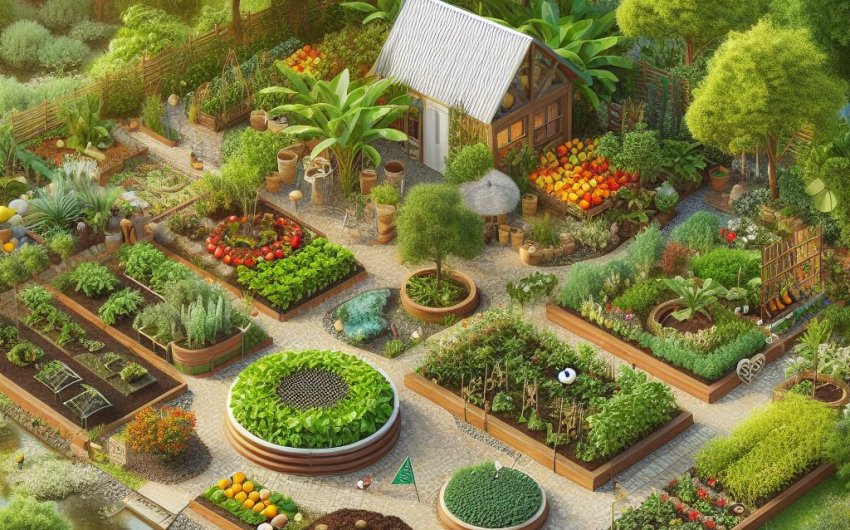
Incorporating permaculture into your mini farm design involves creating self-sustaining, ecologically harmonious systems that mimic natural ecosystems, aiming for efficiency, productivity, and reduced labor. Key principles include observing nature, maximizing edges, integrating diverse elements, and harnessing natural energy flows to build a resilient and abundant food-producing space.
What exactly is permaculture, and why apply it to a mini farm?
Permaculture is more than just gardening; it's a design philosophy for creating sustainable human habitats and agricultural systems. It's built on ethical principles and draws inspiration from the resilience and efficiency of natural ecosystems. Applying permaculture to a mini farm means intentionally designing your small space to work with nature, minimizing waste and labor while maximizing productivity and ecological health.
What are the core ethics of permaculture?
Permaculture design is guided by three core ethics:
- Earth Care: Protecting and nurturing the Earth's natural resources (soil, water, forests).
- People Care: Promoting self-reliance and community responsibility.
- Fair Share (Return of Surplus): Redistributing any excess produce or resources to benefit the Earth and people, rather than accumulating it.
These ethics inform every design decision in a permaculture mini farm.
What are the main benefits of permaculture for a mini farm?
- Increased self-sufficiency: Maximizes food production from a small area.
- Reduced labor: Systems are designed to be low-maintenance and self-regulating over time.
- Lower input costs: Minimizes the need for external fertilizers, pesticides, and excessive watering.
- Enhanced biodiversity: Creates a diverse and resilient ecosystem, attracting beneficial wildlife.
- Improved soil health: Focuses on building living, fertile soil.
- Sustainable living: Reduces environmental impact and creates a regenerative system.
- Resilience: Designed to withstand environmental stressors and adapt over time.
What are the key permaculture design principles for a small space?
Permaculture offers a set of design principles that, when applied to a mini farm, help create efficient and productive systems. These principles encourage thoughtful observation and holistic thinking.
1. Observe and Interact
This is the starting point. Before doing anything, spend time observing your mini farm space.
- Sunlight paths: Track how sun moves throughout the day and seasons.
- Water flow: Where does water collect, and where does it run off?
- Wind patterns: Identify prevailing winds.
- Existing life: What plants, insects, or animals are already present?
- Microclimates: Notice warmer, cooler, wetter, or drier spots.
This observation guides intelligent design, allowing you to work with your environment rather than against it.
2. Catch and Store Energy
Think about all forms of energy: water, sun, wind, biomass.
- Water harvesting: Collect rainwater in barrels or build swales (shallow ditches on contour) to slow, spread, and sink water into the landscape. A rain barrel kit is essential for water conservation.
- Solar gain: Use south-facing walls or fences for heat-loving plants. Design structures to maximize winter sun exposure.
- Biomass: Grow plants that produce abundant organic matter to create compost and mulch.
3. Obtain a Yield
Every element in your mini farm should have a purpose, preferably multiple purposes, and ultimately contribute to a yield, whether it's food, medicine, or resources for other elements.
- Productivity: Choose plants that are high-yielding for their space (e.g., dwarf fruit trees, vertical vegetables).
- Diversity: Plant a wide variety of crops to ensure continuous harvests and resilience.
4. Apply Self-Regulation and Accept Feedback
Permaculture encourages monitoring your systems and being willing to adjust. If something isn't working, don't force it; learn from it and change your design. Nature is constantly providing feedback.
5. Use and Value Renewable Resources and Services
Minimize reliance on external inputs. Use what nature provides: sun, rain, wind, and natural biological processes.
- Composting: Turn your own waste into soil food.
- Nitrogen fixation: Incorporate legumes.
- Natural pest control: Attract beneficial insects.
6. Produce No Waste
Design systems where outputs from one element become inputs for another.
- Compost: Kitchen scraps and yard waste feed the soil.
- Manure: From chickens or rabbits feeds the compost or garden beds.
- Greywater: Reusing filtered sink water for non-edible plants (check local regulations).
7. Design from Patterns to Details
Start with the big picture (zones, sectors) before focusing on individual plants.
8. Integrate Rather Than Segregate
Instead of separate beds for each crop, mix plants in polycultures (guilds). Integrate chickens with gardens (with protection).
9. Use Small and Slow Solutions
Start small, observe, and expand gradually. Slow, thoughtful changes are more sustainable.
10. Use and Value Diversity
Polycultures are stronger than monocultures. Diverse plants and animals create a resilient ecosystem.
11. Use Edges and Value the Marginal
Edges (where two ecosystems meet, like a forest edge) are often the most productive and biodiverse. Maximizing edge space in a mini farm (e.g., curving beds, keyhole gardens) can increase yield.
12. Creatively Use and Respond to Change
Anticipate and adapt to changes in your environment and systems.
How do you apply permaculture zones to a mini farm design?
Permaculture zone planning helps you place elements strategically based on how frequently you interact with them. In a mini farm, these zones are compressed but still vital.
What are the permaculture zones for a mini farm?
- Zone 0 (The House): Your home, where you frequently interact.
- Mini farm elements: Indoor herb garden, sprouts, microgreens, worm bin for kitchen scraps.
- Zone 1 (Intensive Use): Immediately surrounding your house, visited daily.
- Mini farm elements: Herb spiral, high-producing raised beds near the kitchen, cut-and-come-again leafy greens, small vegetable beds, small chicken coop.
- Zone 2 (Moderate Use): Further out, visited less frequently (a few times a week).
- Mini farm elements: Larger vegetable beds, berry patches, dwarf fruit trees, main compost bin, small rabbit hutch.
- Zone 3 (Less Frequent Use): Outer edges of the property, visited occasionally.
- Mini farm elements: Nut trees (if space allows), larger fruit trees, bee hives, perennial forage crops, woodlot (for firewood/mulch).
- Zone 4 & 5 (Wild/Minimal Interference): Beyond a typical backyard scale, usually not applicable to mini farms unless you have a larger property or integrate with a natural area.
How does zone planning improve efficiency?
- Reduced labor: High-maintenance plants (like daily-harvested herbs) are placed closest to the kitchen.
- Optimized resources: Water systems can be designed to flow from higher zones to lower ones.
- Integrated elements: Animals and compost are positioned to easily feed the garden.
How do you integrate diverse elements for a resilient mini farm?
Diversity is a cornerstone of permaculture. Integrating a variety of plants, animals, and functions creates a resilient, healthy ecosystem that supports itself.
What are plant guilds and polycultures?
- Plant guilds: Are groups of plants (and sometimes animals) that work together to mutual benefit, mimicking natural plant communities.
- Example: A "tree guild" might include a dwarf fruit tree (central element), nitrogen-fixing plants (clover, comfrey), pest-deterring plants (marigolds), groundcovers (strawberries), and dynamic accumulators (yarrow).
- Polyculture: Growing multiple crops together in the same space, rather than monoculture (single crop rows).
- Benefits: Increased biodiversity, improved soil health, pest deterrence, reduced disease spread, enhanced nutrient cycling.
- Examples: "Three Sisters" (corn, beans, squash), mixed leafy greens.
How do animals integrate into a permaculture mini farm?
- Chickens: Provide eggs and meat, eat insects and weeds, turn compost, produce valuable manure. Can be free-ranged (with protection) or in movable "chicken tractors" for controlled grazing. You can find small chicken tractors for backyard use.
- Rabbits: Provide meat or fiber, produce rich manure. Can be kept in "tractor" style hutches or moved around the garden.
- Bees: Essential pollinators for your crops and produce honey.
- Worms: In vermicomposting bins, break down kitchen scraps into nutrient-rich castings for the garden.
How do you harness natural energy flows in a permaculture mini farm?
Working with natural energy flows (sun, water, wind) rather than against them is a core permaculture principle that reduces labor and optimizes productivity.
How do you manage water efficiently?
- Rainwater harvesting: Collect rainwater from rooftops in rain barrels for irrigation.
- Swales and berms: On sloped land, create swales (shallow ditches on contour) to catch and sink water into the soil, preventing runoff. The excavated earth forms berms (raised mounds) for planting.
- Mulching: A thick layer of organic mulch conserves soil moisture, reducing the need for irrigation.
- Drip irrigation: For targeted, efficient water delivery. A mini drip irrigation kit is perfect.
How do you utilize solar energy?
- Planting orientation: Plant heat-loving crops (tomatoes, peppers) on south-facing slopes or against heat-retaining walls.
- Season extension: Use cold frames, hoop houses, or mini greenhouses to trap solar energy and extend growing seasons.
- Deciduous trees: Plant deciduous trees on the south side of buildings or growing areas to provide shade in summer and allow winter sun.
How do you design with wind in mind?
- Windbreaks: Plant dense hedges or erect fences on the prevailing wind side to protect sensitive crops.
- Shelterbelts: Use taller, sturdy plants to create a living windbreak.
- Maximize airflow: Ensure good air circulation within beds to prevent fungal issues in humid climates.
What is the long-term vision and evolution of a permaculture mini farm?
A permaculture mini farm is not a static garden; it's a dynamic, evolving ecosystem. The long-term vision is to create a resilient, low-labor, highly productive system that improves with age.
How does a permaculture mini farm become more self-sustaining?
- Closed loops: Inputs (waste) from one part of the system become outputs (resources) for another (e.g., kitchen scraps to compost, compost to garden, garden waste to chickens, chicken manure to compost).
- Reduced external inputs: As soil health improves and ecosystems balance, the need for external fertilizers, pesticides, and excessive watering decreases.
- Perennial systems: Focus on establishing perennial food crops (fruit trees, berries, asparagus) that provide harvests for many years with minimal replanting.
- Natural pest/disease control: A diverse, healthy ecosystem often manages its own pest and disease issues.
Why is patience and observation key to permaculture success?
- Nature works slowly: Permaculture often involves working with natural processes that take time to establish. Patience is essential.
- Continuous learning: You'll constantly observe, learn from your successes and failures, and adapt your design.
- Incremental changes: Start small, implement one change at a time, and build up your system gradually.
- Resilience through diversity: Over time, your permaculture mini farm will become more diverse and therefore more resilient to challenges. A garden journal is crucial for documenting observations and learnings.
Incorporating permaculture into your mini farm design is a transformative journey toward creating a highly productive, self-sustaining, and ecologically harmonious food-producing space. By adhering to core ethical principles, meticulously observing your site, applying thoughtful design strategies like zone planning and diverse integration, and harnessing natural energy flows, you can build a resilient, low-labor mini farm that yields abundant fresh produce for years to come.