
What Are the Best Perennial Flowers for Attracting Hummingbirds?
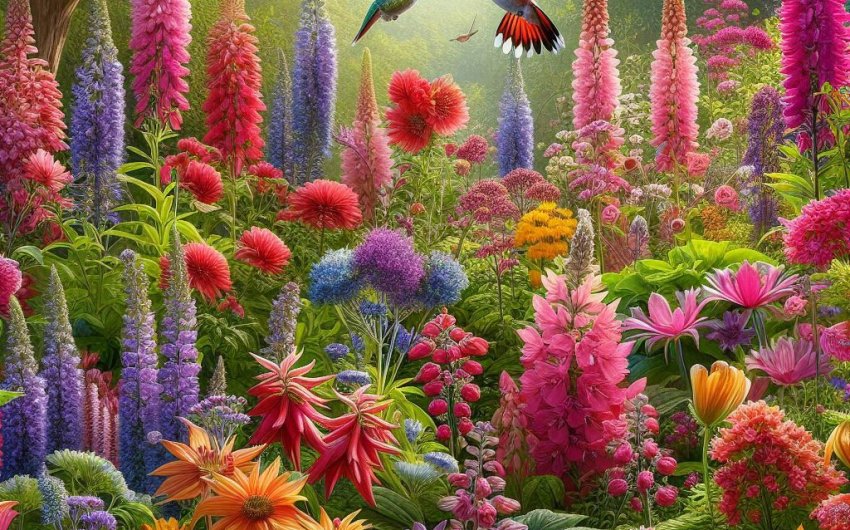
Cultivating a garden vibrant with activity often includes the mesmerizing sight of hummingbirds flitting among the blooms. To truly transform your outdoor space into a haven for these tiny, iridescent jewels, strategic plant selection is key. Understanding what are the best perennial flowers for attracting hummingbirds allows you to create a continuous, nectar-rich buffet that brings these aerial acrobats back year after year. This comprehensive guide will explore the ideal floral characteristics that entice hummingbirds and highlight a variety of stunning perennials that are guaranteed magnets for these enchanting visitors.
Why Attract Hummingbirds to Your Garden?
Attracting hummingbirds to your garden offers a myriad of benefits beyond the sheer delight of observing these tiny, iridescent creatures. Their presence adds a vibrant, dynamic energy to any outdoor space and contributes positively to the garden ecosystem.
1. Aesthetic Appeal and Joy
The most immediate and obvious benefit is the sheer beauty and wonder they bring.
- Mesmerizing Sight: Hummingbirds are incredibly captivating with their rapid wingbeats, iridescent colors, and agile flight patterns. Watching them dart among flowers is a source of endless fascination and relaxation.
- Dynamic Garden: Their constant movement and bright flashes of color add a unique sense of life and dynamism to your garden that still plants or slower insects can't quite replicate.
- Connect with Nature: Attracting wildlife like hummingbirds fosters a deeper connection to the natural world right in your own backyard, providing moments of awe and tranquility.
2. Natural Pollinators
Hummingbirds are efficient and valuable pollinators for many plants.
- Cross-Pollination: As they flit from flower to flower, sipping nectar, pollen inadvertently clings to their beaks and heads. When they visit the next flower, they transfer pollen, aiding in the fertilization process.
- Specific Plant Relationships: Many tubular, red, or orange flowers have evolved specifically to be pollinated by hummingbirds, showcasing a fascinating co-evolutionary relationship. By planting these, you support this natural partnership.
- Increased Yields: For some fruit-bearing plants or vegetables (if you have them near your flower garden), successful pollination can lead to better fruit set and higher yields.
3. Pest Control (Minor)
While not their primary role, hummingbirds can help with minor pest control.
- Insectivores: Nectar is their primary fuel, but hummingbirds also feed on small insects (like gnats, aphids, tiny mosquitoes, and spiders) to get protein. While they won't clear a major infestation, their presence contributes to the overall balance of beneficial predators in your garden.
4. Eco-Friendly Gardening
Creating a hummingbird-friendly garden promotes sustainable practices.
- Reduced Pesticide Use: To keep your hummingbird visitors safe and your garden healthy, you'll naturally gravitate towards avoiding harmful chemical pesticides. This benefits all pollinators and the entire garden ecosystem.
- Biodiversity: A garden that attracts hummingbirds is typically rich in diverse plant species, contributing to local biodiversity and supporting a healthier environment.
5. Year-Round Interest (for Perennials)
By choosing the best perennial flowers for attracting hummingbirds, you ensure their continued return.
- Consistent Nectar Source: Perennials, returning year after year, provide a reliable and consistent source of nectar throughout their blooming season, encouraging hummingbirds to establish territories and return to your garden.
- Habitat: A well-established perennial garden offers not just food but also shelter and perching spots for these tiny birds.
By intentionally designing your garden to attract these aerial jewels, you not only enhance its beauty and vitality but also play a meaningful role in supporting local wildlife and promoting a healthier ecosystem.
What Flower Characteristics Attract Hummingbirds?
To truly understand what are the best perennial flowers for attracting hummingbirds, it's essential to know what visual and structural cues these unique birds seek out. Their feeding habits have led to a fascinating co-evolution with certain types of flowers.
1. Color Preference: Red is King!
Hummingbirds are highly attracted to bright, vibrant colors, with a strong preference for red.
- Primary Attractor: Red flowers are like a beacon to hummingbirds. They perceive red very strongly and are drawn to it more than other colors.
- Other Favored Colors: While red is number one, they are also highly attracted to orange, pink, fuchsia, purple, and bright blue.
- Why Color? Unlike bees, which are attracted to ultraviolet patterns (often invisible to humans), hummingbirds rely heavily on visible color cues to find nectar sources. Many hummingbird-pollinated flowers have evolved to be bee-unattractive (e.g., no landing pads, deep tubes) and brightly colored to specifically signal hummingbirds.
2. Flower Shape: Tubular is Best!
The shape of the flower is designed to accommodate a hummingbird's long beak and tongue.
- Tubular or Trumpet-Shaped: Flowers with long, narrow, tubular, or trumpet-shaped corollas (the petals forming the tube) are perfect for hummingbirds. This shape makes it difficult for most insects (like bees) to access the nectar, effectively reserving it for the hummingbird.
- Accessibility: The nectar is typically located deep within the tube, requiring the hummingbird to insert its long beak and extend its even longer, grooved tongue to reach it.
- Lack of Landing Pads: Many hummingbird flowers lack wide petals or platforms that would serve as landing pads for insects. Hummingbirds hover, so they don't need a place to land.
3. Nectar Quantity and Quality
It's all about the energy.
- Abundant Nectar: Hummingbirds have extremely high metabolic rates and need a constant supply of energy. They seek flowers that produce a copious amount of high-sugar nectar.
- High Sugar Content: The nectar of hummingbird-pollinated flowers is typically rich in sucrose, providing the quick energy they need for their rapid wingbeats.
- Constant Production: Flowers that produce nectar throughout the day or that have a continuous succession of blooms are highly valued.
4. Bloom Time and Succession
A continuous food source keeps them coming back.
- Long Bloom Period: Choose perennials that bloom for an extended period throughout the growing season.
- Staggered Blooms: Plant a variety of perennials that bloom at different times (early spring, summer, late summer, fall). This ensures a continuous supply of nectar from the time they arrive in spring until they migrate in fall.
- Migratory Patterns: Providing early spring and late fall blooms is especially important for feeding migrating hummingbirds.
5. Plant Structure and Growth Habit
How the plant grows can also make it more appealing.
- Clustering Flowers: Plants with clusters of many flowers, rather than single, isolated blooms, are more efficient for hummingbirds, as they can extract a lot of nectar from one stop.
- Sturdy Stems: Strong stems that can support the weight of a hovering hummingbird or provide a perch.
- Open Access: While tubular, the flower entrance should be relatively open and clear of obstructions for easy beak insertion.
By incorporating these characteristics into your planting choices, you'll naturally draw in these tiny pollinators, ensuring that your selection of the best perennial flowers for attracting hummingbirds creates a successful and vibrant habitat.
What are the Best Perennial Flowers for Attracting Hummingbirds?
Now that we understand what makes a flower attractive to hummingbirds, let's explore some of the best perennial flowers for attracting hummingbirds, guaranteed to turn your garden into a bustling nectar bar. These plants offer vibrant colors, tubular shapes, and abundant nectar, ensuring a continuous feast for these energetic birds.
1. Bee Balm (Monarda didyma)
A North American native known for its unique, shaggy blooms.
- Key Features: Tubular flowers clustered in dense, shaggy heads. Available in vibrant shades of red, pink, purple, and white. Highly attractive to hummingbirds and other pollinators.
- Bloom Time: Mid to late summer.
- Growing Conditions: Full sun to partial shade, well-drained, moist soil. Some varieties can be prone to powdery mildew, so choose resistant cultivars and ensure good air circulation.
- Hardiness Zone: USDA Zones 4-9.
- Notes: A true workhorse for pollinators. Pinch back spent blooms to encourage more flowering.
- Amazon Link for Plants/Seeds: Red Bee Balm Plants
2. Hyssop (Agastache spp.)
Aromatic plants with spikes of tubular flowers.
- Key Features: Long, bottlebrush-like spikes of tiny, tubular flowers in shades of purple, blue, pink, orange, and red. Highly fragrant foliage.
- Bloom Time: Long blooming, typically summer to fall.
- Growing Conditions: Full sun, well-drained soil. Drought-tolerant once established.
- Hardiness Zone: Varies by species, typically USDA Zones 5-10.
- Notes: 'Blue Fortune' (purple-blue) and 'A. rupestris' (orange/red) are particularly attractive to hummingbirds. Also a magnet for bees.
- Amazon Link for Plants/Seeds: Agastache Blue Fortune Seeds
3. Cardinal Flower (Lobelia cardinalis)
A stunning native wetland plant with brilliant red spires.
- Key Features: Tall, erect spikes covered in intensely vibrant scarlet-red, tubular flowers. A true hummingbird magnet due to its color and shape.
- Bloom Time: Mid-summer to early fall.
- Growing Conditions: Full sun to partial shade, consistently moist to wet soil. Prefers rich, boggy conditions, so excellent for rain gardens or moist borders.
- Hardiness Zone: USDA Zones 3-9.
- Notes: Short-lived perennial but readily self-seeds in ideal conditions. Cannot tolerate dry soil.
- Amazon Link for Plants/Seeds: Cardinal Flower Seeds
4. Columbine (Aquilegia spp.)
Elegant, delicate flowers with intricate spurs.
- Key Features: Distinctive spurred flowers that come in a wide range of colors, including red, pink, yellow, blue, and bi-colors. The spurs at the back of the flower contain nectar, which hummingbirds access with their long beaks.
- Bloom Time: Late spring to early summer.
- Growing Conditions: Full sun to partial shade, well-drained soil. Tolerates some dryness.
- Hardiness Zone: USDA Zones 3-9.
- Notes: Delicate appearance but quite tough. Hybrid varieties are widely available. Attracts early arriving hummingbirds.
- Amazon Link for Plants/Seeds: Columbine Seeds Mixed Colors
5. Delphinium (Delphinium elatum hybrids)
Tall, stately spires of vibrant color.
- Key Features: Impressive tall flower spikes (some reaching 6-8 feet) densely packed with individual flowers in shades of blue, purple, pink, white, and sometimes red. Hummingbirds are particularly drawn to the blue and purple varieties.
- Bloom Time: Early to mid-summer, with a potential rebloom if deadheaded.
- Growing Conditions: Full sun, rich, well-drained soil. Requires consistent moisture. Tall varieties may need staking.
- Hardiness Zone: USDA Zones 3-7.
- Notes: A classic cottage garden plant. The spurs at the back of the flowers contain nectar.
- Amazon Link for Plants/Seeds: Delphinium Seeds Blue
6. Lupine (Lupinus spp.)
Striking spires of pea-like flowers.
- Key Features: Tall, conical flower spikes covered in dense clusters of individual flowers. Available in a rainbow of colors, including vibrant reds, pinks, purples, yellows, and whites.
- Bloom Time: Late spring to early summer.
- Growing Conditions: Full sun, well-drained, slightly acidic soil. Does not tolerate heavy clay or highly alkaline conditions.
- Hardiness Zone: USDA Zones 4-8.
- Notes: A beautiful addition to cottage gardens. Attracts hummingbirds that hover near the spikes.
- Amazon Link for Plants/Seeds: Lupine Russell Hybrids Seeds
7. Penstemon (Penstemon digitalis and others)
Also known as Beardtongue, a diverse group of North American natives.
- Key Features: Spikes of charming, tubular flowers. Many species have colors highly attractive to hummingbirds, especially red, pink, and purple. P. digitalis 'Husker Red' is popular for its dark foliage and white flowers, also drawing hummingbirds.
- Bloom Time: Late spring to mid-summer, depending on species.
- Growing Conditions: Full sun, well-drained soil. Many are drought-tolerant once established.
- Hardiness Zone: Varies widely by species, typically USDA Zones 3-9.
- Notes: An excellent native choice, often very adaptable.
8. Salvia (Perennial Varieties)
A vast genus, many of which are hummingbird magnets.
- Key Features: Tubular flowers on spikes or in clusters, perfect for hummingbird beaks. Available in a huge range of colors, with red, pink, and purple salvias being particularly attractive.
- Bloom Time: Many salvias have incredibly long bloom times, from late spring through summer and even into fall.
- Growing Conditions: Most prefer full sun and well-drained soil. Some are drought-tolerant once established.
- Hardiness Zone: Varies greatly by species, typically USDA Zones 5-10.
- Notes: Look for Salvia splendens (scarlet sage), Salvia guaranitica (Anise Sage), Salvia 'Hot Lips' (red and white bi-color) for high hummingbird appeal.
- Amazon Link for Plants/Seeds: Red Salvia Plants
9. Bleeding Heart (Dicentra spectabilis)
While not tubular, their unique shape still appeals.
- Key Features: Heart-shaped flowers with a dangling "drop" that form along arching stems. The deep pink and white varieties are stunning.
- Bloom Time: Early to mid-spring.
- Growing Conditions: Partial to full shade, consistently moist, rich soil.
- Hardiness Zone: USDA Zones 3-9.
- Notes: Provides a crucial early-season nectar source for newly arriving hummingbirds. Foliage often dies back in summer heat.
- Amazon Link for Plants/Seeds: Pink Bleeding Heart Plant
10. Crocosmia (Crocosmia x crocosmiiflora)
Vibrant, fiery spikes of bell-shaped flowers.
- Key Features: Tall, arching stems with fiery red, orange, or yellow, funnel-shaped flowers arranged in a fan-like manner.
- Bloom Time: Mid to late summer.
- Growing Conditions: Full sun, well-drained soil. Can be somewhat drought-tolerant once established.
- Hardiness Zone: USDA Zones 5-9.
- Notes: Also known as Montbretia. Spreads by corms and can naturalize. Excellent for adding vertical interest and late-season color.
By incorporating a diverse selection of these stunning and reliable bloomers, you'll ensure your garden provides a continuous and irresistible feast, making it truly one of the best examples of what are the best perennial flowers for attracting hummingbirds.
How to Design a Hummingbird-Friendly Perennial Garden?
Attracting hummingbirds effectively goes beyond just planting individual flowers; it involves thoughtful garden design that caters to their needs. Knowing what are the best perennial flowers for attracting hummingbirds is amplified by strategic placement and grouping.
1. Group Flowers Together
Create large, visible targets for hummingbirds.
- Mass Plantings: Plant multiple specimens of the same species in drifts or large clumps rather than scattering individual plants. Large blocks of color are much more noticeable from a distance, acting like a beacon.
- Efficiency: Hummingbirds are attracted to areas where they can efficiently gather a lot of nectar without expending too much energy. Mass plantings provide this density.
2. Provide a Continuous Bloom Sequence
Ensure there's always nectar available throughout the season.
- Early Bloomers: Start with plants that bloom in early spring (e.g., Bleeding Heart, Columbine, certain early Salvias) to greet the first migrating hummingbirds.
- Mid-Season Bloomers: Include plenty of summer bloomers (e.g., Bee Balm, Penstemon, other Salvias, Delphinium) for the core of the season.
- Late Bloomers: Extend the feast into late summer and fall with plants like Agastache, Crocosmia, and late-blooming Salvias, which are crucial for hummingbirds fueling up for migration.
- Perennial Choices: The beauty of perennials is they return each year, ensuring your sequence is largely set once established.
3. Incorporate Red (and Other Bright Colors) Strategically
Capitalize on their strongest color preference.
- Red "Welcome Mats": Place prominent red flowers near high-traffic areas (like a patio or window) where you can easily observe them.
- Vibrant Palette: Mix in oranges, bright pinks, fuchsias, and purples to create a rich, inviting tapestry of color.
- Contrasting Foliage: Use plants with dark foliage (e.g., 'Husker Red' Penstemon) or silver foliage to make the flower colors pop even more.
4. Provide Water Sources
Hummingbirds need water for drinking and bathing.
- Shallow Water: Offer a shallow bird bath or a flat dish with clean water. Hummingbirds prefer very shallow water where they can hover and dip.
- Misters: A fine misting nozzle attached to a hose or fountain can be highly attractive, as they love to fly through fine sprays.
- Drippers: A slow drip from an outdoor faucet or a dedicated garden dripper into a shallow basin can also attract them.
5. Offer Perches and Shelter
Hummingbirds need places to rest and survey their territory.
- Tall Shrubs or Trees: Include nearby trees or shrubs that offer thin branches for perching. They often perch high to survey their feeding territory.
- Bare Branches: Consider leaving a few bare branches on a shrub or adding a small, spindly branch directly in the garden for perching.
- Protective Cover: Dense shrubs or evergreens provide shelter from predators and harsh weather.
6. Avoid Pesticides and Nectar-less Flowers
Protect your visitors and manage expectations.
- No Pesticides: This is non-negotiable. Chemical pesticides can be deadly to hummingbirds and the insects they also feed on. Embrace organic pest control methods.
- Focus on Nectar-Rich Flowers: While beautiful, double-flowered varieties or those bred primarily for appearance often have less accessible nectar. Stick to single, open, tubular, or trumpet-shaped blooms for nectar production.
- Hummingbird Feeders (Supplemental): While flowers are best, a hummingbird feeder (filled with 1 part white sugar to 4 parts water, no red dye) can supplement natural nectar, especially during migration or if blooms are scarce. Keep feeders clean to prevent mold.
By thoughtfully applying these design principles, you'll create a welcoming and bountiful habitat, maximizing the effectiveness of what are the best perennial flowers for attracting hummingbirds and bringing unparalleled vibrancy to your garden.