
What Perennial Flowers Attract Pollinators Like Bees and Butterflies?
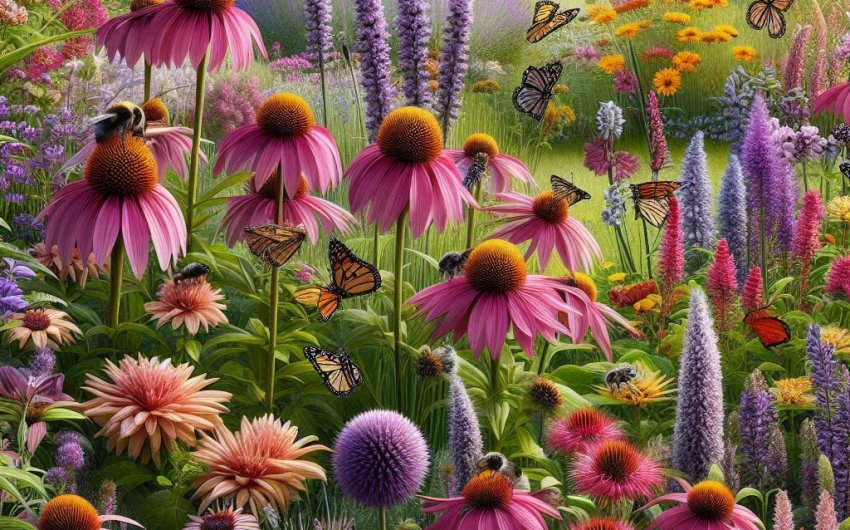
Cultivating a vibrant garden that buzzes with life is a rewarding experience, and a key component of a thriving ecosystem is attracting beneficial insects. If you're wondering what perennial flowers attract pollinators like bees and butterflies, you're embarking on a journey to create a sustainable and beautiful haven for these vital creatures. By thoughtfully selecting long-lasting blooms, you can provide a continuous source of nectar and pollen, supporting local biodiversity and enhancing the health of your garden.
Why are Pollinators Important?
Pollinators, including bees, butterflies, birds, and other animals, play an indispensable role in maintaining healthy ecosystems and supporting global food production. Their activity is far more crucial than simply adding a charming buzz to your garden; it's fundamental to life on Earth. Understanding their significance underscores the importance of planting perennial flowers that attract pollinators.
What Do Pollinators Do for Plants?
Pollinators facilitate the reproduction of over 75% of the world's flowering plants and approximately 35% of global food crops.
- Reproduction: As pollinators move from flower to flower, they transfer pollen (the male reproductive cells) from the anther of one flower to the stigma (the female reproductive part) of another. This act of pollination enables plants to produce seeds and fruits. Without it, many plants cannot reproduce effectively.
- Food Production: Many of our staple crops, including fruits (apples, berries), vegetables (squash, tomatoes), nuts, and even coffee, rely on animal pollination. A decline in pollinator populations directly threatens food security.
- Ecosystem Health: Pollinators support biodiversity by enabling a wide array of wild plants to reproduce. These plants, in turn, provide food and habitat for countless other organisms, forming the base of many food webs.
Why are Pollinator Populations Declining?
Unfortunately, pollinator populations worldwide are facing significant threats, leading to alarming declines.
- Habitat Loss: Urbanization and agricultural expansion lead to the destruction of natural habitats, reducing nesting sites and foraging areas for pollinators.
- Pesticide Use: Broad-spectrum pesticides, especially insecticides, can directly kill pollinators or weaken their immune systems. Even systemic pesticides can make pollen and nectar toxic.
- Climate Change: Shifting weather patterns, extreme temperatures, and altered flowering times can disrupt the delicate synchrony between pollinators and the plants they rely on.
- Diseases and Parasites: Honey bees, for example, are severely impacted by diseases like American foulbrood and parasites like the Varroa mite.
- Monoculture Farming: Large fields of single crops offer limited dietary diversity for pollinators, weakening their health.
How Can Gardeners Help?
Home gardeners play a crucial role in supporting pollinator populations by creating pollinator-friendly habitats.
- Plant Pollinator-Friendly Flowers: Choose a diverse array of native and non-invasive perennial flowers that provide nectar and pollen throughout the growing season.
- Reduce or Eliminate Pesticides: Opt for organic pest control methods or tolerate a certain level of pest activity. If pesticides are necessary, choose least-toxic options and apply them responsibly (e.g., in the evening when pollinators are less active).
- Provide Water Sources: Shallow dishes of water with pebbles or a bird bath with stones offer a safe drinking spot.
- Offer Shelter: Leave small patches of undisturbed ground for ground-nesting bees or provide "bee hotels" for solitary bees.
What Characteristics of Flowers Attract Pollinators?
To effectively design a pollinator garden, it's helpful to understand what qualities of perennial flowers specifically appeal to bees, butterflies, and other beneficial insects. It's not just about color; shape, scent, and bloom time all play a role in creating an irresistible floral beacon.
Flower Shape and Structure
Different flower shapes are adapted to different types of pollinators.
- Flat, Open Flowers: These provide an easy landing pad and readily accessible nectar and pollen. They attract a wide range of generalist pollinators, including many types of bees and butterflies. Examples: Daisies, Coneflowers, Sedum.
- Tubular Flowers: Flowers with long, narrow tubes are favored by pollinators with long tongues or proboscises, such as butterflies, hummingbirds, and certain moths. Examples: Penstemon, Bee Balm, Honeysuckle.
- Clustered Flowers: Many small flowers grouped together (like those on a flat-topped umbel) create a large landing platform and offer many nectar rewards in a small area, efficient for smaller bees and flies. Examples: Dill, Fennel, Yarrow.
- Disk and Ray Flowers (Composite): Flowers like sunflowers and coneflowers have a central "disk" made of many tiny florets and outer "ray" petals. The disk florets provide abundant pollen and nectar to numerous small pollinators.
Flower Color and Scent
Pollinators perceive colors and scents differently from humans.
- Bees: Attracted to blue, purple, and yellow flowers. They can see ultraviolet light, which often creates patterns invisible to the human eye, guiding them to nectar. Bees are less attracted to pure red. Many bee-attracting flowers have a fresh, mild scent.
- Butterflies: Attracted to bright colors like red, orange, yellow, pink, and purple. Many butterfly-attracting flowers have strong, sweet scents that help them locate nectar from a distance. Butterflies have good vision but a less developed sense of smell than bees.
- Scent: Strong, sweet scents are often associated with copious nectar, drawing pollinators from afar. Some flowers release scent at specific times (e.g., evening for moths).
Nectar and Pollen Availability
Ultimately, pollinators visit flowers for food:
- Nectar: A sugary liquid that provides energy. Flowers that produce abundant nectar are highly attractive.
- Pollen: A protein-rich substance essential for the growth and development of bees (especially larvae) and other insect diets. Many plants offer both.
- Avoid "Double" Flowers: While beautiful, many highly hybridized double flowers (with extra petals) have little or no accessible pollen or nectar because the reproductive parts have been converted to petals. Stick to single-petal varieties for better pollinator benefits.
What Perennial Flowers Attract Bees?
Bees are incredibly diverse, from tiny native solitary bees to fuzzy bumblebees and the familiar honeybees. To attract a wide range of these essential pollinators, focus on perennial flowers that offer accessible nectar and pollen, typically in shades of blue, purple, yellow, and white, with open or clustered flower forms.
Early Season Bloomers (Spring)
Providing early food sources is crucial as bees emerge from winter dormancy.
- Crocus (Crocus vernus): One of the earliest flowers, providing vital nectar and pollen when other sources are scarce. Plant crocus bulbs in fall.
- Snowdrop (Galanthus nivalis): Another very early bloomer, offering small, delicate white flowers with accessible pollen.
- Hyacinth (Hyacinthus orientalis): Highly fragrant, attracting bees with its sweet scent and abundant nectar. Hyacinth bulbs are beautiful additions.
- Lungwort (Pulmonaria officinalis): Early spring bloomer with bell-shaped flowers, often blue or pink, that are attractive to long-tongued bees.
- Pasque Flower (Pulsatilla vulgaris): Early, hairy flowers that provide pollen for early emerging bees.
Mid-Season Bloomers (Summer)
These provide the bulk of nectar and pollen during bees' most active foraging period.
- Lavender (Lavandula angustifolia): Highly aromatic purple flowers, a huge magnet for bees. Drought-tolerant once established. Plant English lavender plants.
- Bee Balm (Monarda didyma): Tubular flowers in red, pink, or purple that are a favorite of long-tongued bees, including bumblebees. Red Bee Balm plants are vibrant.
- Coneflower (Echinacea purpurea): Daisy-like flowers with prominent central cones, providing abundant pollen and nectar. Purple coneflower seeds are easy to grow.
- Aster (Symphyotrichum spp.): Daisy-like flowers in various shades of purple, blue, and white. Important for late-season bee foraging.
- Salvia (Salvia nemorosa or Salvia sp.): Many perennial salvias, especially those with blue or purple spires, are highly attractive to bees. Look for perennial Salvia plants.
- Catmint (Nepeta x faassenii): Long-blooming, low-maintenance plant with lavender-blue flowers that bees adore. Walker's Low Catmint is a popular cultivar.
- Yarrow (Achillea millefolium): Flat-topped clusters of tiny flowers provide an easy landing pad and accessible nectar/pollen for various bees. Common Yarrow seeds establish easily.
- Sedum (Stonecrop) (Hylotelephium spectabile): Late summer to fall bloomer with flat-topped flower heads, providing essential late-season nectar for bees. Autumn Joy Sedum is a popular choice.
Late Season Bloomers (Fall)
Crucial for bees preparing for winter.
- Goldenrod (Solidago spp.): A powerhouse for late-season pollinators, often blooming vigorously when other plants are fading. Choose native, non-invasive species.
- Sneezeweed (Helenium autumnale): Bright yellow, orange, and red daisy-like flowers provide abundant late-season nectar.
What Perennial Flowers Attract Butterflies?
Butterflies are drawn to different flower characteristics than bees. To attract these elegant fliers, choose perennial flowers with vibrant colors (red, orange, yellow, pink, purple), often with a sweet fragrance, and tubular or clustered flower shapes that accommodate their long proboscises.
Host Plants for Caterpillars
Remember that a true butterfly garden provides for all life stages, not just the adult. Planting host plants for caterpillars is vital.
- Milkweed (Asclepias tuberosa or Asclepias incarnata): Absolutely essential for Monarch butterflies, as their caterpillars feed exclusively on milkweed leaves. Plant butterfly milkweed seeds.
- Fennel (Foeniculum vulgare): Host plant for Swallowtail butterfly caterpillars.
- Dill (Anethum graveolens): Also a host plant for Swallowtail caterpillars.
Nectar Plants for Adult Butterflies
These provide the sugary fuel that adult butterflies need.
- Butterfly Bush (Buddleja davidii): A classic butterfly magnet with long, fragrant flower spikes in various colors. While attractive to butterflies, Buddleja davidii can be invasive in some regions; check local guidelines and consider native alternatives like buttonbush (Cephalanthus occidentalis) or non-invasive butterfly bush varieties.
- Phlox (Phlox paniculata): Tall garden phlox produces large clusters of fragrant flowers in pink, purple, white, or red, irresistible to butterflies. Garden Phlox plants are beautiful.
- Liatris (Liatris spicata): Also known as blazing star or gayfeather, it has tall spikes of purple flowers that are very attractive to butterflies, especially Monarchs. Liatris spicata bulbs are easy to grow.
- Coneflower (Echinacea purpurea): As mentioned for bees, coneflowers are also a great nectar source for butterflies.
- Sedum (Stonecrop) (Hylotelephium spectabile): Provides abundant late-season nectar when other sources dwindle.
- Shasta Daisy (Leucanthemum x superbum): Classic white daisy flowers with yellow centers, providing landing pads and nectar for various butterflies.
- Zinnia (Annual but often self-seeds): While technically an annual, zinnias are incredibly popular with butterflies. Consider growing them annually or letting them self-seed. Look for single-petal zinnia seeds.
Long-Blooming and Diverse Options
- Lavender (Lavandula angustifolia): Attracts both bees and butterflies with its rich nectar and fragrance.
- Salvia (Salvia nemorosa or Salvia sp.): Many perennial salvias, especially those with blue or purple spires, are highly attractive to butterflies.
- Thyme (Thymus vulgaris): Small, clustered flowers on creeping or upright thyme provide nectar for small butterflies and bees. Creeping Thyme plants are great for groundcover.
How Do You Design a Pollinator-Friendly Garden?
Creating a garden that consistently supports pollinators involves more than just planting a few attractive perennial flowers. It requires thoughtful design principles that provide continuous food sources, shelter, and water, mimicking a natural ecosystem. A well-designed pollinator garden ensures a steady flow of visitors throughout the seasons.
Provide a Continuous Bloom Sequence
- Spring to Fall Blooms: The most crucial aspect of a pollinator garden is to have something in bloom from early spring until late fall. This ensures a consistent food source for pollinators throughout their active seasons.
- Planning: Research the bloom times of your chosen perennial flowers and select a variety that flowers sequentially. For example:
- Early Spring: Crocus, Snowdrop, Hellebore.
- Late Spring/Early Summer: Allium, Penstemon, Salvia.
- Mid-Summer: Coneflower, Bee Balm, Lavender, Phlox.
- Late Summer/Fall: Aster, Sedum, Goldenrod, Sneezeweed.
- Staggered Planting: If you're using seeds, consider staggered plantings of some varieties to extend their bloom time.
Plant in Clumps or Drifts
- Visual Impact: Planting flowers in large groups or drifts (at least 3-5 of the same plant) creates a more impactful visual signal for pollinators, making it easier for them to spot the flowers from a distance.
- Efficient Foraging: Once a pollinator finds a clump of its preferred flowers, it can efficiently forage for nectar and pollen without having to expend extra energy flying between scattered plants. This maximizes their energy intake.
Offer a Diversity of Flower Shapes and Colors
- Attract More Species: Different pollinators are attracted to different flower shapes, sizes, and colors. A diverse array of flower forms ensures you cater to a wider variety of bees, butterflies, moths, and other beneficial insects.
- Example Diversity: Include:
- Flat-topped clusters (Yarrow, Sedum)
- Daisy-like flowers (Coneflower, Aster)
- Spike-shaped flowers (Salvia, Liatris, Bee Balm)
- Bell-shaped or tubular flowers (Penstemon, Fuchsia)
- Open single flowers (Roses, Poppies)
Incorporate Native Plants
- Ecosystem Adaptation: Native plants are often the best choice for a pollinator garden because they are perfectly adapted to your local climate and soil conditions, requiring less maintenance.
- Co-evolution: Local pollinators have co-evolved with native plants, meaning they are often the most effective at pollinating them and derive the most nutritional benefit from their nectar and pollen.
- Local Sourcing: Source native plants from reputable local nurseries that specialize in them. They can advise on what thrives best in your specific region. Many excellent native plant seed mixes for pollinators are available.
Provide Water and Shelter
- Water Source: Pollinators need water for drinking. Provide a shallow water source like a bird bath with stones (to give them a place to land safely) or a shallow dish filled with pebbles and water. Change the water regularly to keep it fresh.
- Shelter: Offer shelter from wind and rain, and nesting sites.
- Undisturbed Areas: Leave small patches of bare, undisturbed soil for ground-nesting bees.
- Brush Piles: Small piles of brush or log sections can provide shelter.
- Bee Hotels: Install bee hotels for solitary cavity-nesting bees.
- Dense Shrubs/Tall Grasses: Provide protection from harsh weather.
What are Important Considerations for Pollinator Garden Care?
Once you've designed and planted your pollinator-friendly garden, ongoing care is essential to ensure it remains a thriving habitat for bees and butterflies. Thoughtful maintenance practices, especially regarding pest control and pruning, will maximize its effectiveness and beauty.
Reduce or Eliminate Pesticide Use
This is perhaps the most critical step for any pollinator garden.
- Avoid Systemic Pesticides: These chemicals are absorbed by the plant and can make pollen and nectar toxic to pollinators, even if the insect isn't directly sprayed.
- Choose Least-Toxic Options: If pest problems are severe, opt for the least-toxic pest control methods, such as:
- Hand-picking: Physically remove pests.
- Strong Water Sprays: Dislodge pests with a hose.
- Insecticidal Soap: Effective on soft-bodied insects and breaks down quickly. You can purchase organic insecticidal soap.
- Neem Oil: A natural botanical insecticide/fungicide. Look for cold-pressed neem oil.
- Targeted Application: If chemical controls are absolutely necessary, apply them only to affected areas, not broadcast, and at times when pollinators are least active (e.g., late evening) to allow the spray to dry before morning. Never spray blooming flowers.
- Embrace Imperfection: A truly pollinator-friendly garden will have some insect damage. Acknowledge that your garden is a living ecosystem, not a sterile display.
Practice Deadheading and Pruning
- Deadheading: Removing spent flowers encourages many perennial flowers to produce more blooms, extending the flowering season and providing more continuous nectar/pollen. This is particularly beneficial for long-blooming salvias, coneflowers, and phlox.
- Pruning: Proper pruning helps maintain plant health, shape, and promotes stronger flowering. For certain plants, cutting back after the first flush of blooms can encourage a second, smaller flush later in the season.
- Leaving Seed Heads (Selectively): While deadheading extends blooms, consider leaving some spent flower heads (like those of coneflowers or sunflowers) to develop seeds. These provide food for birds in the fall and winter, adding another layer of biodiversity support.
Provide Rich Soil and Consistent Watering
- Soil Health: Healthy soil supports healthy plants, which in turn produce more abundant and nutrient-rich nectar and pollen. Amend your garden beds with organic compost annually to improve soil structure and fertility.
- Watering: While many established perennials are drought-tolerant, consistent watering during dry spells ensures continuous blooming and prevents plants from becoming stressed. A stressed plant will produce less nectar. A drip irrigation system can provide efficient watering.
- Mulch: Apply a 2-4 inch layer of organic mulch (like shredded bark or straw) around your plants. Mulch helps conserve soil moisture, suppresses weeds, and moderates soil temperature, all of which benefit plant health.
Winter Clean-Up and Overwintering Sites
- Leave Some Stems: Instead of cutting back all perennial stems in fall, leave some hollow or pithy stems (e.g., Bee Balm, Sedum, Joe Pye Weed) standing over winter. These can provide overwintering sites for solitary bees and other beneficial insects.
- Leaf Litter: Allow a layer of leaf litter to remain in garden beds. This provides insulation for plant roots and shelter for overwintering insects and pupae. You can shred leaves with a leaf shredder for a neater look while still providing benefits.
By thoughtfully selecting perennial flowers that attract pollinators like bees and butterflies and implementing mindful care practices, you can cultivate a thriving garden that not only beautifies your outdoor space but also actively contributes to the health of crucial pollinator populations.