
Seasonal Splendor: Planning a Year-Round Cut Flower Garden
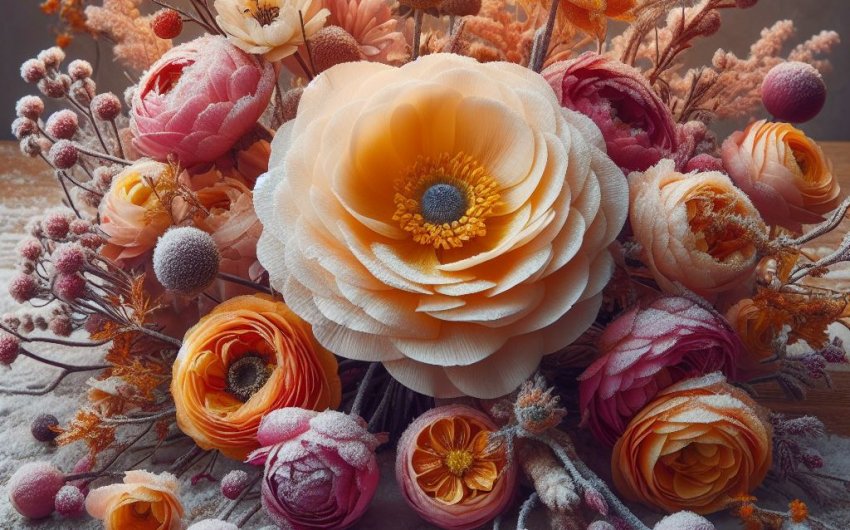
To achieve seasonal splendor and enjoy fresh blooms year-round, planning a year-round cut flower garden requires a strategic approach that leverages succession planting, embraces diverse plant types, and utilizes protective structures for season extension. By carefully curating flowers for every season, you can cultivate a continuous harvest of beauty.
Why Plan a Year-Round Cut Flower Garden?
Planning a year-round cut flower garden is an ambitious but incredibly rewarding endeavor that maximizes your garden's productivity and provides continuous beauty for your home. It's about breaking free from the limitations of a single season.
What are the Benefits of Continuous Bloom for Cutting?
Achieving continuous bloom for cutting offers numerous benefits, transforming your garden into a perpetual source of fresh flowers and enriching your life throughout the year. It's the ultimate goal of seasonal splendor.
- Fresh Flowers All Year: The most obvious benefit is having a consistent supply of beautiful, homegrown flowers for bouquets, arrangements, and gifts, regardless of the season. This eliminates the need to purchase store-bought flowers.
- Maximizes Garden Productivity: By strategically planning, you make the most of your garden space, ensuring it's actively producing flowers for a longer period, rather than lying dormant for several months.
- Cost Savings: Significantly reduces the expense of buying flowers from florists or grocery stores year-round.
- Wider Variety of Blooms: To achieve continuous harvests, you'll naturally grow a more diverse range of flowers, including unique cool-season and warm-season varieties you might not typically encounter.
- Enhanced Home Decor: Fresh flowers consistently brighten indoor spaces, improving mood and aesthetics throughout all seasons.
- Deeper Connection to Nature: You'll become more attuned to the subtle shifts in seasons and the specific needs of plants throughout the year, fostering a deeper connection to natural cycles.
- Gift Giving: Always having a fresh bouquet on hand makes spontaneous and thoughtful gift-giving easy.
The joy and abundance of having continuous blooms is the ultimate reward of a year-round cut flower garden.
How Does Season Extension Maximize Your Gardening Efforts?
Season extension maximizes your gardening efforts by allowing you to push the boundaries of your local climate, effectively lengthening the growing season for a wider variety of flowers. This strategic use of tools and techniques ensures a continuous supply of blooms beyond typical frost dates.
- Earlier Starts: Protecting plants from late spring frosts or providing a warmer microclimate allows you to sow seeds and transplant tender seedlings much earlier, resulting in earlier harvests.
- Later Finishes: Shielding plants from early fall frosts or maintaining warmer soil temperatures allows heat-loving flowers to continue producing weeks, or even months, longer than they would unprotected.
- Winter Production (for some crops): In many climates, with the right protection, hardy cool-season flowers can be grown or overwintered right through the coldest months, providing unexpected winter blooms.
- Succession Planting Efficiency: Season extension tools (like cold frames or low tunnels) make succession planting more reliable, as they offer a controlled environment for starting new batches of flowers even when outdoor conditions are variable.
- Increased Diversity: By extending the season, you gain the ability to grow flowers that require a longer growing window than your climate typically allows, or to bridge the gap between different seasonal bloomers.
Season extension is a crucial component of planning a year-round cut flower garden, turning a seasonal hobby into a year-long passion.
Why is Detailed Planning Crucial for a Year-Round Garden?
Detailed planning is absolutely crucial for a year-round cut flower garden because it involves orchestrating a complex succession of different plants, each with specific timing and environmental needs. Without meticulous planning, you risk gaps in bloom, wasted effort, and disappointing harvests.
- Ensures Continuous Bloom: A detailed plan maps out bloom times for different flowers, allowing you to select varieties that overlap and provide a seamless transition of flowers from one season to the next.
- Optimizes Space and Resources: Planning helps you efficiently allocate garden space, manage seed/plant orders, and schedule watering, fertilizing, and harvesting throughout the year.
- Manages Timing: It helps you determine precise sowing dates (indoor vs. outdoor), transplanting dates, and harvesting windows for dozens of different varieties, crucial for succession planting.
- Prevents Gaps and Overlap: A good plan minimizes periods with no flowers to cut and avoids having too many flowers bloom at once with nothing to replace them.
- Matches Climate and Conditions: Planning ensures you select flowers suitable for your specific hardiness zone and integrate appropriate season extension techniques.
- Budget and Labor Management: A detailed plan helps estimate seed, plant, and material costs, and allows you to anticipate labor demands across the seasons.
- Learning and Adaptation: The planning process forces you to research and learn about different flowers, and the plan itself becomes a valuable document for adapting and improving your garden in future years.
For anyone aiming for seasonal splendor year-round, detailed planning is your most indispensable tool.
How Do You Plan Your Year-Round Bloom Calendar?
To achieve seasonal splendor, planning your year-round bloom calendar involves a systematic approach to selecting flowers with staggered bloom times and integrating techniques like succession planting and season extension. This ensures a continuous supply of fresh cut flowers.
What Flowers Bloom in Early Spring (Pre-Frost)?
For early spring blooms (pre-frost), you need hardy flowers that can tolerate cold temperatures and even some light freezes, often planted in the fall of the previous year. These welcome blooms are a delightful start to your year-round cut flower garden.
Key early spring flowers:
- Bulbs (Fall-Planted):
- Tulips (Tulipa spp.): Wide range of colors and forms. Plant hardy, long-stemmed varieties in fall.
- Daffodils (Narcissus spp.): Reliable, cheerful, and critter-resistant. Plant in fall. (Note: Condition separately as their sap can affect other flowers).
- Hyacinths (Hyacinthus orientalis): Fragrant, vibrant spikes.
- Muscari (Muscari armeniacum): Grape hyacinths provide small, delicate blue spikes.
- Alliums (Allium spp.): Globe-shaped flowers, excellent structural elements.
- Hardy Annuals/Biennials (Fall-Sown or Early Spring Sown Indoors/Directly):
- Sweet Peas (Lathyrus odoratus): Best fall-sown or very early spring-sown for spring blooms. Require support.
- Ranunculus (Ranunculus asiaticus): Exquisite, ruffled blooms. Plant corms in fall (mild climates) or very early spring. Often benefit from row covers.
- Anemone (Anemone coronaria): Delicate, poppy-like blooms. Similar planting to ranunculus.
- Bachelors Buttons (Centaurea cyanus): Cheerful, easy-to-grow blue flowers.
- Poppies (Papaver spp.): Delicate, ethereal blooms. Direct sow in fall or very early spring.
- Larkspur (Consolida ajacis): Delicate spires, fall-sown often yields the best.
- Perennials:
- Hellebore (Helleborus orientalis): Lenten rose provides exquisite blooms in late winter/early spring, excellent as foliage too.
- Bleeding Heart (Dicentra spectabilis): Charming heart-shaped flowers.
These cold-tolerant beauties kick off the cutting season, providing early seasonal splendor.
What Flowers Provide Abundant Blooms in Summer?
Summer is the peak season for abundant blooms, with a vast array of heat-loving flowers providing the bulk of your cut flower garden's harvest. These are the workhorses that deliver continuous flowers for a truly prolific display.
Key summer flowers:
- Annuals (Heat-Loving & Prolific):
- Zinnia (Zinnia elegans): The queen of the summer cutting garden. Prolific, diverse in form and color.
- Cosmos (Cosmos bipinnatus): Airy, elegant filler, continuous bloomer.
- Celosia (Celosia argentea): Unique texture and vibrant, long-lasting colors.
- Sunflower (Helianthus annuus): Bold, cheerful, especially multi-branching varieties.
- Lisianthus (Eustoma grandiflorum): Elegant, rose-like flowers, long vase life. Often started indoors very early.
- Dahlia (Dahlia spp.): Exquisite, diverse, show-stopping blooms. Plant tubers in spring.
- Gladiolus (Gladiolus spp.): Tall, elegant spikes. Plant corms in succession.
- Amaranth (Amaranthus spp.): Unique upright or cascading plumes, great texture.
- Basil (Ocimum basilicum 'Genovese' or 'Dark Opal'): Grown for fragrant foliage and flower spikes as fillers.
- Perennials (Mid-to-Late Summer):
- Echinacea (Echinacea purpurea): Coneflower, sturdy, daisy-like.
- Rudbeckia (Rudbeckia hirta / fulgida): Black-Eyed Susan, cheerful yellow.
- Yarrow (Achillea millefolium): Flat-topped clusters, great filler.
- Phlox (Phlox paniculata): Fragrant clusters, various colors.
- Delphinium (Delphinium elatum): Majestic spires (often re-bloom if cut back).
Summer offers the widest selection for your year-round cut flower garden, ensuring peak seasonal splendor.
What Flowers Extend the Season into Fall (Post-Frost)?
To extend the season into fall (post-frost), you need flowers that can withstand cooler temperatures and still produce after the first light frosts, providing essential color and texture as most other blooms fade.
Key fall flowers:
- Annuals (Tolerant of Light Frosts):
- Chrysanthemum (Chrysanthemum spp.): Hardy mums provide classic fall color.
- Aster (Symphyotrichum spp.): Perennial asters (fall-blooming) offer a wealth of daisy-like flowers.
- Sedum (Hylotelephium spectabile): Large, flat-topped flowerheads, excellent texture.
- Gomphrena (Gomphrena globosa): Papery globes, very long-lasting, tolerates light frost.
- Late-planted Zinnias, Cosmos, Celosia: If planted in mid-summer, they will hit their stride in early fall.
- Dahlias (Dahlia spp.): Continue to bloom profusely until a hard frost kills the foliage.
- Grasses: Ornamental grasses provide wonderful texture and movement for fall arrangements.
- Foliage:
- Eucalyptus (Eucalyptus spp.): Continues to provide silvery-blue foliage.
- Ninebark (Physocarpus opulifolius): 'Amber Jubilee' or 'Summer Wine' offer beautiful fall foliage for texture and color.
- Sedum foliage: Sturdy, often reddish-tinged.
These plants brave the cooling temperatures, ensuring your garden maintains its seasonal splendor well into autumn.
Can You Harvest Flowers in Winter (with Protection)?
Yes, you can harvest flowers in winter (with protection), especially hardy cool-season crops or evergreens, allowing for unexpected blooms and foliage even in cold climates. This pushes the boundaries of a year-round cut flower garden.
Key winter harvests (with protection):
- Under Cover (Cold Frames, Low Tunnels, Unheated Greenhouses):
- Hardy Annuals (Winter-Sown/Fall-Planted):
- Ranunculus & Anemone: Often overwintered under low tunnels or a cold frame for early spring blooms, but sometimes offer very late winter harvests in mild spells.
- Hellebore: Can bloom through snow.
- Pansies/Violas: Small, cheerful blooms that can often pop up during mild winter days under protection.
- Hardy Annuals (Winter-Sown/Fall-Planted):
- Evergreen Foliage:
- Eucalyptus: In zones where it's hardy, provides evergreen foliage.
- Conifer Boughs: Various evergreens (pine, fir, cedar) offer beautiful, aromatic winter greenery.
- Dusty Miller (Senecio cineraria): Often tolerates light snow and provides silvery foliage.
- Holly (Ilex spp.): Offers classic berries and foliage.
- Dried Materials:
- Seed Pods: From Nigella, Lunaria (Money Plant), ornamental grasses.
- Dried Flowers: Celosia, Statice, Gomphrena, Strawflower can be harvested and dried in late summer/fall for winter arrangements.
With careful planning and a little protection, you can truly extend your cut flower garden into the coldest months, providing year-round seasonal splendor.
How Do You Plan for a Continuous Harvest Throughout the Year?
Planning for a continuous harvest throughout the year requires a strategic mindset, focusing on variety selection, succession planting, and utilizing season extension techniques. It's about orchestrating nature to deliver seasonal splendor without interruption.
What is Succession Planting and How Do You Implement It?
Succession planting is a crucial technique for a year-round cut flower garden that involves making multiple, staggered plantings of the same crop (or different crops) throughout the growing season to ensure a continuous harvest rather than a single large flush. It maximizes productivity in your garden space.
How to implement succession planting:
- Identify Short-Harvest Crops: Choose annuals or biennials that have a relatively short bloom period, or that benefit from continuous cutting (e.g., Zinnias, Cosmos, Snapdragons, Lisianthus).
- Determine Planting Intervals: Based on the crop's "days to maturity" and bloom window, decide on planting intervals.
- For fast-growing annuals, plant a small batch of seeds or transplants every 2-4 weeks.
- For longer-season crops, intervals might be longer.
- Calculate Planting Dates: Work backward from your desired harvest date or forward from your last frost date.
- Example: If Zinnias bloom for 4-6 weeks after 75 days, plant a new batch of zinnia seeds every 3 weeks to have a continuous supply.
- Rotate Locations (Optional but Recommended): If you have space, rotate the location of succession plantings to help with soil health and pest/disease management.
- Remove Spent Plants: As one batch of flowers finishes its production or fades, remove those plants to make space for the next succession or for a different crop.
- Extend with Season Extension: Use cold frames or low tunnels to start early successions or extend late successions, pushing the boundaries of your climate.
Succession planting is an invaluable tool for ensuring a steady stream of flowers, a true hallmark of a year-round cut flower garden.
How Can Season Extension Structures Help Your Garden?
Season extension structures are indispensable tools for a year-round cut flower garden, allowing you to protect plants from extreme temperatures, extend harvest windows, and defy the natural limitations of your local climate. They create a microclimate for your plants.
Common season extension structures:
- Cold Frames:
- Description: Low, bottomless boxes with a transparent lid that traps solar heat.
- Use: Ideal for hardening off seedlings, starting cool-season crops very early, or overwintering hardy plants in pots.
- A garden cold frame is a great investment for spring and fall.
- Low Tunnels:
- Description: Hoops (made of PVC, metal conduit, or flexible pipe) covered with plastic sheeting or row cover fabric.
- Use: Creates a mini-greenhouse effect over entire beds. Excellent for protecting cool-season crops from early/late frosts, warming soil, and extending the harvest of annuals.
- Row Covers (Floating Row Covers):
- Description: Lightweight fabric (spun-bonded polyester) draped directly over plants or supported by small hoops.
- Use: Provides a few degrees of frost protection, deters pests, and offers light shade in summer.
- A floating row cover for garden plants is easy to use.
- Greenhouses (Heated or Unheated):
- Description: Larger, permanent structures. Unheated ones extend seasons significantly; heated ones allow for true winter production.
- Use: Maximize options for year-round growing, especially for tender annuals or tropical foliage.
- A small walk-in greenhouse kit is an option.
These tools are indispensable for any gardener committed to planning a year-round cut flower garden and enjoying continuous seasonal splendor.
How Do You Manage Garden Space for Continuous Production?
Managing garden space for continuous production in a year-round cut flower garden involves maximizing every square foot through smart layout, intensive planting, and succession planning. It's about making your garden work harder for you.
- Intensive Planting: Plant flowers closer together than traditional ornamental spacing. This encourages straight, long stems and increases yield per bed.
- Defined Beds and Pathways: Use permanent beds (no wider than 3-4 feet) with dedicated pathways. This minimizes soil compaction and allows easy access for planting, weeding, and harvesting.
- Vertical Gardening: Utilize vertical space with trellises, netting, or cages for vining flowers (e.g., Sweet Peas) or to support tall plants.
- Intercropping/Companion Planting: Maximize space by planting different crops in close proximity that have different growth habits or maturation times.
- Efficient Rotation: Plan your succession plantings not just over time, but also across your beds, rotating where different plant families grow to maintain soil health and reduce disease buildup.
- Dedicated Seed-Starting Area: Have a dedicated indoor seed-starting setup (grow lights, heat mats) to ensure you always have new seedlings ready to fill beds as others finish.
- Maximize Sunlight: Design beds to get maximum sunlight exposure, especially south-facing.
Efficient space management is a cornerstone of a productive year-round cut flower garden, ensuring constant seasonal splendor for your home.