
How to Set Up a Drip Irrigation System for Beginners?
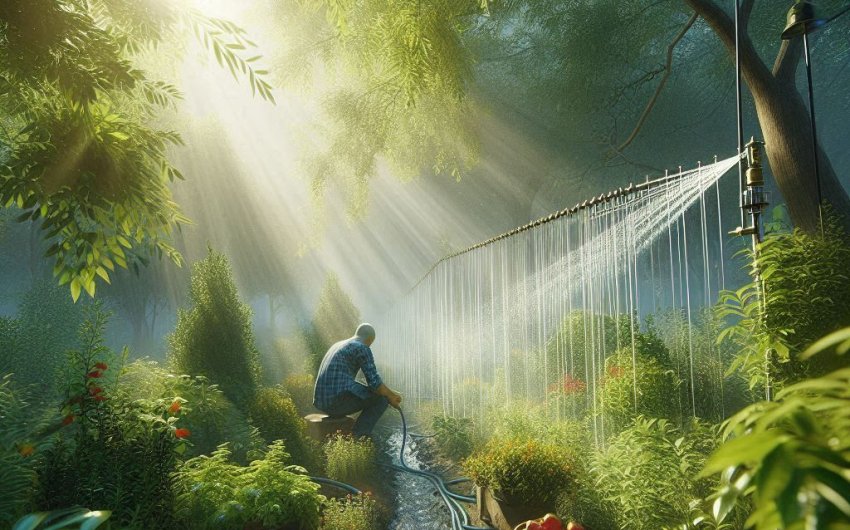
Setting up a drip irrigation system for beginners is a straightforward process that delivers water directly to plant roots, minimizing waste and promoting healthier growth. It involves connecting a few key components to your outdoor faucet, laying out tubing, and installing emitters tailored to your garden's needs.
Why Should You Set Up a Drip Irrigation System?
Drip irrigation is a highly efficient watering method that delivers water directly to the root zone of plants, drop by drop. This targeted approach offers numerous advantages over traditional watering methods like hoses or sprinklers, making it an excellent choice for both new and experienced gardeners looking to conserve water and improve plant health.
Water Conservation
- Up to 50% Water Savings: Drip systems are incredibly efficient. Unlike sprinklers that lose a significant amount of water to evaporation, wind drift, and runoff, drip irrigation applies water precisely where it's needed. This can lead to substantial reductions in water usage and lower water bills.
- Reduced Evaporation: Water is delivered at or below the soil surface, minimizing direct exposure to sun and wind, thus reducing evaporation rates.
- No Runoff: Slow application rates allow water to soak deeply into the soil rather than running off, even on slopes or compacted soils.
Improved Plant Health
- Consistent Moisture: Plants prefer consistent moisture rather than cycles of drought and deluge. Drip irrigation provides a steady supply of water, reducing plant stress and encouraging healthier growth.
- Reduced Disease: Keeping foliage dry prevents many common fungal diseases like powdery mildew, black spot, and blight, which thrive in wet leaf conditions.
- Deeper Root Growth: Slow, deep watering encourages roots to grow deeper into the soil, making plants more resilient to drought.
- Precise Nutrient Delivery: Fertilizers can be applied directly to the root zone through the drip system (fertigation), making nutrients more readily available to the plants and reducing waste.
Convenience and Time Savings
- Automated Watering: Once set up with a timer, your drip system can water your garden automatically, freeing up your time. No more standing with a hose or forgetting to water! A Rain Bird Timer with Drip Kit can make this effortless.
- Flexible Scheduling: Easily adjust watering times and durations based on weather, plant needs, or seasonal changes.
- Water While You're Away: Perfect for vacations, ensuring your plants stay hydrated without manual effort.
- Reduced Weeds: Since water is delivered only to your plants, the areas between them stay drier, discouraging weed growth and reducing weeding chores.
Versatility
- Multiple Applications: Drip irrigation can be used for a wide variety of gardening setups:
- Vegetable gardens
- Flower beds
- Container gardens
- Raised beds
- Shrubs and trees
- Even window boxes and hanging baskets.
- Adaptable: Systems are highly customizable and expandable to suit changing garden layouts or plant needs.
What Components Do I Need for a Basic Drip Irrigation System?
A basic drip irrigation system, especially for beginners, is made up of a few key components that work together to deliver water efficiently. You can often buy these as a complete Drip Irrigation Starter Kit, which is a great way to begin.
1. Connection to Water Source
- Faucet/Hose Bib: This is where your system begins. You'll typically connect directly to an outdoor spigot.
- Y-Connector (Optional but Recommended): A Y-connector allows you to connect the drip system to one side and still have an open faucet for your regular garden hose on the other. A Brass Y Hose Splitter is durable.
2. Backflow Preventer
- Purpose: Crucial for preventing contaminated garden water from flowing back into your household's potable (drinking) water supply.
- Types: Often a simple screw-on device (atmospheric vacuum breaker) that attaches directly to your faucet.
3. Pressure Regulator (or Pressure Reducer)
- Purpose: Drip irrigation systems operate at much lower pressures (usually 10-30 PSI) than typical household water pressure (40-60 PSI or higher). A pressure regulator reduces and maintains the water pressure within the system, preventing emitters from popping off or tubing from bursting.
- PSI Rating: Most regulators are fixed at a certain PSI (e.g., 25 PSI).
4. Filter
- Purpose: Prevents small particles (sediment, rust) from clogging the tiny openings of emitters.
- Placement: Usually installed after the pressure regulator.
- Types: Screen filters are common for basic systems and can be cleaned periodically.
5. Mainline Tubing (Header Line)
- Description: The primary, larger diameter tubing (typically 1/2 inch or 3/4 inch) that carries water from your faucet setup to the various parts of your garden.
- Material: Usually black polyethylene tubing, which is UV resistant.
- Function: It acts like the main artery of your system.
6. Emission Devices (Emitters)
These are the components that actually deliver water to the plants. There are several types:
- Individual Emitters (Drippers):
- Description: Small devices that plug directly into the mainline tubing, delivering water at a specific, slow rate (e.g., 0.5 GPH, 1 GPH).
- Best For: Individual plants, widely spaced plants, containers.
- Types: Emitters can be pressure-compensating (deliver consistent flow regardless of pressure fluctuations) or non-pressure compensating.
- Drip Line (Emitter Tubing):
- Description: Polyethylene tubing with pre-installed emitters spaced at regular intervals (e.g., 6, 12, or 18 inches apart).
- Best For: Row crops, densely planted beds, hedges.
- Micro-Sprayers/Sprinklers:
- Description: Deliver water in a fine spray or mist over a small area.
- Best For: Groundcovers, closely spaced plants where individual emitters might be too many.
- Soaker Hoses (Not always true drip):
- Description: Porous hoses that "sweat" water along their entire length. Can be an alternative but may not be as precise as true drip emitters.
7. Connectors and Fittings
A variety of fittings are used to connect tubing and emitters:
- Barbed Fittings: Push-on fittings that secure tubing tightly. Include:
- Couplings: To connect two pieces of tubing.
- Elbows: For 90-degree turns.
- Tees: To branch off in three directions.
- End Caps: To seal the end of a tubing line.
- Hole Punch Tool: Specifically designed to punch small, clean holes in the mainline tubing for inserting emitters or barbed fittings. A Drip Tubing Punch Tool is essential.
- Stakes/Staples: To hold tubing and emitters in place on the ground.
How Do I Plan My Drip Irrigation System Layout?
Proper planning is crucial for an efficient and effective drip irrigation system. A little time spent on design can save you headaches and wasted materials later.
1. Sketch Your Garden
- Draw a Diagram: On a piece of paper, draw an overhead view of your garden area. Include all elements: house, fence, driveway, existing beds, plants, and your water source (faucet).
- Measure: Accurately measure the dimensions of your garden beds.
- Mark Plants: Indicate where your plants are or where you plan to plant them. Note if they are individual plants, rows, or dense plantings.
2. Identify Your Water Source
- Location: Mark your outdoor faucet or hose bib on the diagram. This is your starting point.
- Pressure/Flow: While not always necessary for a basic system, understanding your home's water pressure (PSI) and flow rate (GPM - gallons per minute) can help you avoid overloading your system later. Most residential systems can handle a basic drip setup.
3. Choose Mainline Tubing Path
- Route: Draw a line from your water source to the areas you want to water. This will be your 1/2-inch or 3/4-inch mainline tubing.
- Minimize Bends: Try to run the mainline as straight as possible to reduce the need for elbow fittings and maintain pressure.
- Looping (Optional for Larger Systems): For larger gardens, running the mainline in a loop can help equalize water pressure throughout the system.
4. Select Emission Devices for Each Area
Based on your plant layout, decide which type of emitter is best for each section.
- Individual Plants/Containers: Use individual emitters (drippers) for precise watering. Place one emitter per plant, or more for very large, thirsty plants.
- Rows of Vegetables/Flowers: Use drip line (emitter tubing). The pre-spaced emitters make it easy to lay rows parallel to your planting lines.
- Dense Plantings/Groundcovers: Consider micro-sprayers or multiple individual emitters placed strategically.
- Shrubs/Trees: Use ring emitters, multiple individual emitters in a circle around the drip line, or adjustable emitters.
5. Calculate Materials Needed
Using your sketch, estimate the lengths of tubing and the number of fittings and emitters you'll need.
- Mainline Tubing: Measure the total length of your planned mainline. Add 10-15% extra for flexibility.
- Drip Line/Emitter Tubing: Measure the length of each row or section where you'll use drip line.
- Emitters: Count the number of individual plants that will get emitters.
- Fittings: Count elbows, tees, couplings, and end caps based on your layout. Don't forget stakes and a punch tool!
- Start Small: For beginners, it's often best to start with a smaller, manageable section of the garden. You can always expand later.
How Do I Assemble and Install My Drip Irrigation System?
Once you have your plan and all your components, assembling a drip irrigation system is a series of straightforward steps. Even for beginners, this process is mostly about connecting pieces like a puzzle.
Step 1: Connect to the Water Source
- Attach Y-Connector (if using): Screw the Y-connector onto your outdoor faucet.
- Attach Backflow Preventer: Screw the backflow preventer onto one side of the Y-connector, or directly onto the faucet if not using a Y.
- Attach Pressure Regulator: Screw the pressure regulator onto the backflow preventer.
- Attach Filter: Screw the filter onto the pressure regulator.
- Attach Mainline Adapter: Attach the adapter that connects your filter to the 1/2-inch or 3/4-inch mainline tubing. This is often a compression fitting or a barbed fitting.
Step 2: Lay Out Mainline Tubing
- Roll Out Tubing: Unroll your mainline tubing along the path you designed in your sketch. It helps if the tubing is warm and pliable (leave it in the sun for a while).
- Rough Placement: Don't cut or make final connections yet. Just get the tubing roughly in place.
- Secure with Stakes: Use tubing stakes to hold the mainline in position.
Step 3: Add Emitters and Drip Lines
- Cut Mainline (as needed): If you're branching off with T-fittings or creating zones, use sharp tubing cutters or heavy-duty scissors to cut the mainline.
- Insert Barbed Fittings:
- For runs of drip line: Use a barbed tee or elbow to connect your drip line to the mainline. Push the barbed end firmly into the punched hole or cut end of the mainline tubing.
- For individual emitters: If the emitter has a barbed end, punch a hole in the mainline tubing using your punch tool. Push the emitter's barbed end firmly into the hole.
- Lay Drip Line: Run the drip line along your rows or beds, ensuring the emitters are aligned with your plants. Secure with stakes.
- Install Individual Emitters: For individual plants, punch a hole in the mainline tubing near each plant. Insert the individual emitter into the hole.
- Secure all Tubing: Use additional stakes to keep all tubing runs neatly in place, preventing them from shifting.
- Cap Ends: At the end of each run of mainline or drip line, install an end cap or fold and secure the tubing with a figure-eight clamp to seal the system.
Step 4: Flush the System
- Remove End Caps: Before final sealing, temporarily remove all end caps from your mainline and drip lines.
- Turn On Water: Turn on the water at your faucet for a few minutes to flush out any dirt or debris that might be in the tubing. This prevents emitters from clogging.
- Replace End Caps: Turn off the water, replace all end caps, and ensure they are tightly secured.
Step 5: Test and Adjust
- Turn On Water Slowly: Slowly turn on the water at your faucet. Check all connections for leaks. Tighten any loose fittings.
- Observe Emitters: Watch the emitters to ensure they are all dripping or spraying as expected. If an emitter isn't working, it might be clogged (try clearing with a thin wire) or not properly inserted.
- Adjust Layout: Make any final adjustments to tubing placement or emitter position to ensure optimal watering for each plant.
How Do I Maintain and Troubleshoot My Drip Irrigation System?
Once your drip irrigation system is set up, a little routine maintenance and knowing how to troubleshoot common issues will keep it running smoothly and efficiently for years.
Routine Maintenance
- Check Emitters Regularly: Periodically walk your garden and check each emitter to ensure it's dripping or spraying as intended. Look for clogs or disconnected emitters.
- Clean the Filter: Every few weeks (or more often if your water source is dirty), unscrew the filter housing and rinse the screen filter under running water.
- Flush the System: At the beginning of each growing season, and maybe once or twice during the season, remove the end caps and flush the lines as described in the installation steps.
- Inspect for Leaks: Check all connections, especially at the faucet and major fittings, for any drips or leaks. Tighten or replace fittings as needed.
- Adjust for Plant Growth: As plants grow larger, ensure the emitters are still positioned correctly at their root zone. You might need to move stakes or add additional emitters for very large plants.
- Winterization (in cold climates): Before the first hard freeze, drain all water from your system to prevent freezing and bursting pipes/tubing. Disconnect the system from the faucet, remove the backflow preventer, pressure regulator, and filter, and store them indoors. Open all end caps to drain lines.
Common Troubleshooting Issues
- No Water or Low Flow:
- Check Faucet: Is the faucet fully open?
- Check Timer: Is the timer working and set correctly?
- Clogged Filter: Clean the filter.
- Kinked Tubing: Look for kinks in the mainline or drip lines.
- Disconnected Tubing: Check for loose connections, especially at the beginning of the system.
- Excessive Emitters: You might have too many emitters for your water pressure.
- Emitters Not Dripping or Clogged:
- Clogged: Remove the emitter and clear the tiny opening with a thin wire or paperclip. If it's a permanent clog, replace the emitter.
- Insufficient Pressure: Check pressure regulator and other components for kinks or blockages.
- Air Lock: Sometimes, air gets trapped. Open the end of the line to let air escape.
- Leaking Connections:
- Not Tight Enough: Push barbed fittings in more firmly.
- Damaged Tubing: If the hole is too big or ripped, cut out the damaged section and insert a coupling.
- Damaged Fitting: Replace the faulty fitting.
- Tubing Kinks:
- Prevention: Warm the tubing in the sun before laying it out. Avoid sharp bends.
- Repair: Use an elbow fitting for sharp turns. For existing kinks, you might need to cut out the kinked section and use a coupling.
How Does Drip Irrigation Compare to Other Watering Methods?
Understanding how drip irrigation stacks up against traditional watering methods can help you appreciate its benefits and decide if it's the right choice for your garden.
Hosing vs. Drip Irrigation
| Feature | Hand Watering with Hose | Drip Irrigation |
|---|---|---|
| Water Efficiency | Low (high evaporation, runoff) | High (minimal evaporation, direct root zone delivery) |
| Time/Labor | High (requires manual presence) | Low (can be automated) |
| Plant Health | Can lead to uneven watering, wet foliage (disease risk) | Consistent moisture, dry foliage (reduces disease) |
| Weed Growth | Encourages weeds (waters entire area) | Discourages weeds (only waters plants) |
| Cost | Low initial cost | Moderate initial cost (pays for itself in water savings) |
| Fertigation | Difficult and inefficient | Easy and efficient |
| Compaction | Can cause soil compaction from water force or foot traffic | Gentle water application, no compaction |
Sprinklers vs. Drip Irrigation
| Feature | Overhead Sprinklers (e.g., oscillating, pop-up) | Drip Irrigation |
|---|---|---|
| Water Efficiency | Moderate to Low (high evaporation, wind drift, runoff) | High (minimal losses) |
| Time/Labor | Low (can be automated) | Low (can be automated) |
| Plant Health | Wet foliage (increased disease risk), uneven coverage | Dry foliage (reduced disease), consistent moisture |
| Weed Growth | Encourages weeds (waters entire area) | Discourages weeds (only waters plants) |
| Initial Cost | Moderate to High (complex pop-up systems) | Moderate |
| Best For | Lawns, large uniform areas | Beds, rows, containers, individual plants, slopes |
| Pressure Req. | High | Low (requires pressure reducer) |
By learning how to set up a drip irrigation system, even as a beginner, you unlock a powerful tool for efficient, effective, and convenient garden watering. It’s an investment that will benefit your plants, conserve precious water, and free up your time, allowing you to enjoy your thriving garden even more.